


 Česky (CZK)
 Slovensky (EUR)
 Deutsch (EUR)
 Austria
 Belgium
 Bulgaria
 Croatia
 Denmark
 Estonia
 Finland
 France
 Germany
 Greece
 Hungary
 Italy
Italy Latvia
 Lithuania
 Luxembourg
 Netherlands
 Poland
 Portugal
 Romania
 Slovenia
 Spain
Spain Sweden










Kimchi, miso, and other fermented bases: how they work, how they differ, and how to start with them at home
Fermentation in Asian cuisine is not a "health trend," but one of the main ways to achieve flavor: umami, depth, subtle acidity, and interesting texture. Kimchi and miso are the two most accessible fermented worlds that clearly show why some ferments are eaten alone as side dishes, while others act more like an engine under sauces and soups. In the article, we'll also clarify the common misconception "fermented = probiotic" and add practical tips on how to incorporate fermented bases into everyday cooking without complicated recipes.
Why fermentation is so essential in Asian cuisine (and it’s not just about shelf life)
Fermentation is one of the oldest ways people preserved food, but in Asian cuisines, it has another important role: creating flavors that can't be replaced by salt or sugar alone. Fermented ingredients can "round out" a dish, deepen umami, add subtle acidity, or completely change texture – often making even a simple dish with a few ingredients taste complete.
That’s exactly why fermented "base" products developed in many regions of Asia for daily cooking: various soy sauces, miso, Korean jang pastes and sauces (such as doenjang or gochujang), fish sauces, shrimp pastes, fermented vegetables like kimchi, but also distinct specialties like natto or tempeh. The important idea is that each of these ferments is a different world – results are not universal and it doesn’t make sense to expect the same use from all of them.
In Japanese cuisine (washoku – traditional Japanese food culture), fermentation especially shows how it helps keep flavors clean and yet complex. The logic "less is more" partly rests on the fact that a small amount of miso, soy sauce or vinegar adds depth without overpowering the dish.
Fermented foods are not the same as probiotics: what this means in practice
Fermented foods and probiotics overlap, but they are not synonyms. Probiotics are live microorganismsthat, when administered in adequate amounts, have been proven to provide health benefits. This is a fairly strict definition – and not every fermented food automatically meets it.
From a culinary perspective, a more useful rule of thumb is:
- fermented foods can contain live microorganisms,
- some can be sources of live cultures,
- but not every fermented food is automatically probiotic.
The reason is simple: some fermented products are heat-treated, in others the microbial profile changes during storage – and often you don’t have clearly described and verified strains to strictly qualify as a probiotic by the definition. This has one big advantage for cooking: you can love ferments primarily for their flavor and their role in the kitchen, without exaggerated health claims that don’t belong to them.
Kimchi vs miso: two fermented worlds worth distinguishing
🍜 Kimchi is not one dish: fermented vegetables as side dish and ingredient
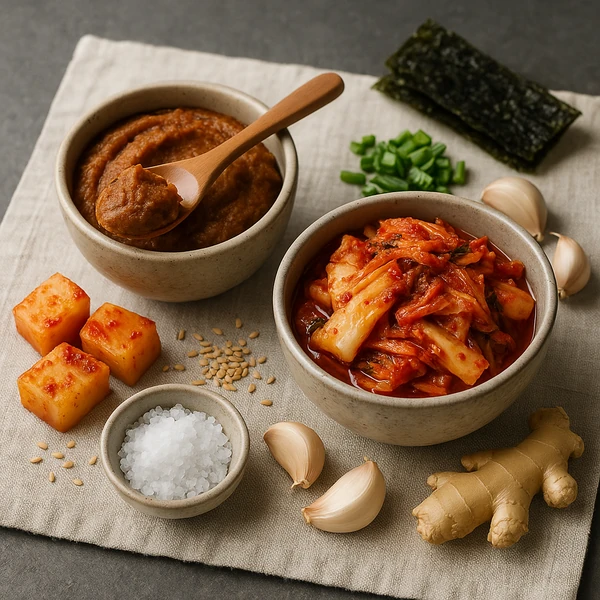
Kimchi is the most famous Korean fermented vegetable "world," but it is not just one thing – it's a wide family of fermented side dishes. In cooking, kimchi can function in several ways:
- as a side dish,
- as a sour, fermented contrast to rice,
- as a base for stews and soups,
- as an ingredient in rice and noodle dishes,
- as a flavor accent in fillings or pancakes.
Texture is also important: kimchi can be crunchy and gradually soften with age, so it naturally fits both "on the table" and "in the pot" – just in a different role.
In Korea, kimchi also has a strong cultural anchor (and in connection with fermentation, traditions like kimjang are often mentioned with UNESCO recognition). For home cooking, the most important thing to understand is that kimchi is not just "spicy cabbage," but a complete flavor component that can provide contrast, acidity, and depth all at once.
Miso: Japanese fermented paste and the "engine" of umami
Miso is a Japanese fermented paste, usually made from soybeans, salt, and koji. It may also contain rice or barley, and there are many styles. Miso is a great example of what fermentation does in the kitchen:
- it creates deep umami,
- one "category" has many regional variants,
- the aging time and production style greatly change the result.
In the kitchen, miso is used in soups, sauces, marinades, glazes, dips, and sometimes even in sweeter modern dishes. The key is not to think of it only as a "salty paste." Overheated or improperly used miso loses its subtle nuances – and it is precisely these nuances that make it worthwhile to distinguish between milder/sweeter styles and darker/more robust styles, or miso "for soup" versus miso for more pronounced dishes.
Other fermented bases you’ll most often encounter: liquid seasonings
Besides kimchi and miso, practical bases also include fermented liquid seasonings – typically soy sauces and in many cuisines also fish sauces. Historically, these were (among other things) a way to create stable seasonings for everyday cooking and transfer flavor to periods outside the harvest.
For home use, it’s useful to think of them as "flavor concentrates": a few drops or teaspoons should do the job, not overwhelm the whole dish.
How to start with fermented bases at home: small steps that work
The best approach is usually not to start with extremes but with practical steps. From a home cooking perspective, fermentation can be approached very simply: pick one base and use it as a seasoning until it "settles" in your hand and on your tongue.
1) Start with one base product (and learn to dose it)
In practice, the most natural starting points are miso, quality fermented soy sauce, or kimchi.
- Miso: if you are choosing your first miso for home, it makes sense to start with the category Soy and miso pastes and mainly think according to what you want to use it for (soups vs marinades and stronger dishes).
- Soy sauce (shoyu): a good soy sauce is not just aggressively salty, but has depth and balance. As a practical all-rounder for home cooking, for example, Kikkoman soy sauce (shoyu)can be used; for broader orientation in types, the guide Japanese soy saucesis useful.

Think of dosing as "fine-tuning": start with a small amount (typically a teaspoon for pastes, a few drops to a teaspoon for liquid seasonings) and add gradually. Fermented bases are concentrated – and their strength lies in the fact that they work even in small amounts.
2) Use ferments as seasonings (not every time as the main ingredient)
Simple formulas work here, which you can repeat in various dishes:
- A teaspoon of miso in sauce or soup adds umami and a "finished taste."
- A bit of kimchi adds contrast and acidity to rice without extra effort.
- A few drops of fish sauce (if you use it) can lift the flavor of soups and noodles – but it is a typical example of an ingredient that should work in small quantities.
A practical technique for miso: a reasonable habit is to dissolve miso in part of the warm liquid (e.g., in a ladle of broth) and add it only when you are gently warming the dish. This is not a dogma, but a way to avoid losing subtle nuances that disappear with overheating.
3) Build a simple "Japanese" meal around it: rice + soup + sides
To understand Japanese flavor logic, the principle ichiju-sansai ("one soup and three dishes") is helpful: rice, soup, one main dish, and two side dishes. Not that you have to strictly follow it at home every time, but because this framework shows where ferments naturally belong:
- miso typically in soup or dressing,
- soy sauce in sauces, dips, and seasonings,
- fermented vegetables (e.g., kimchi) as a distinctive side,
- mild acidity from rice vinegar for balance.
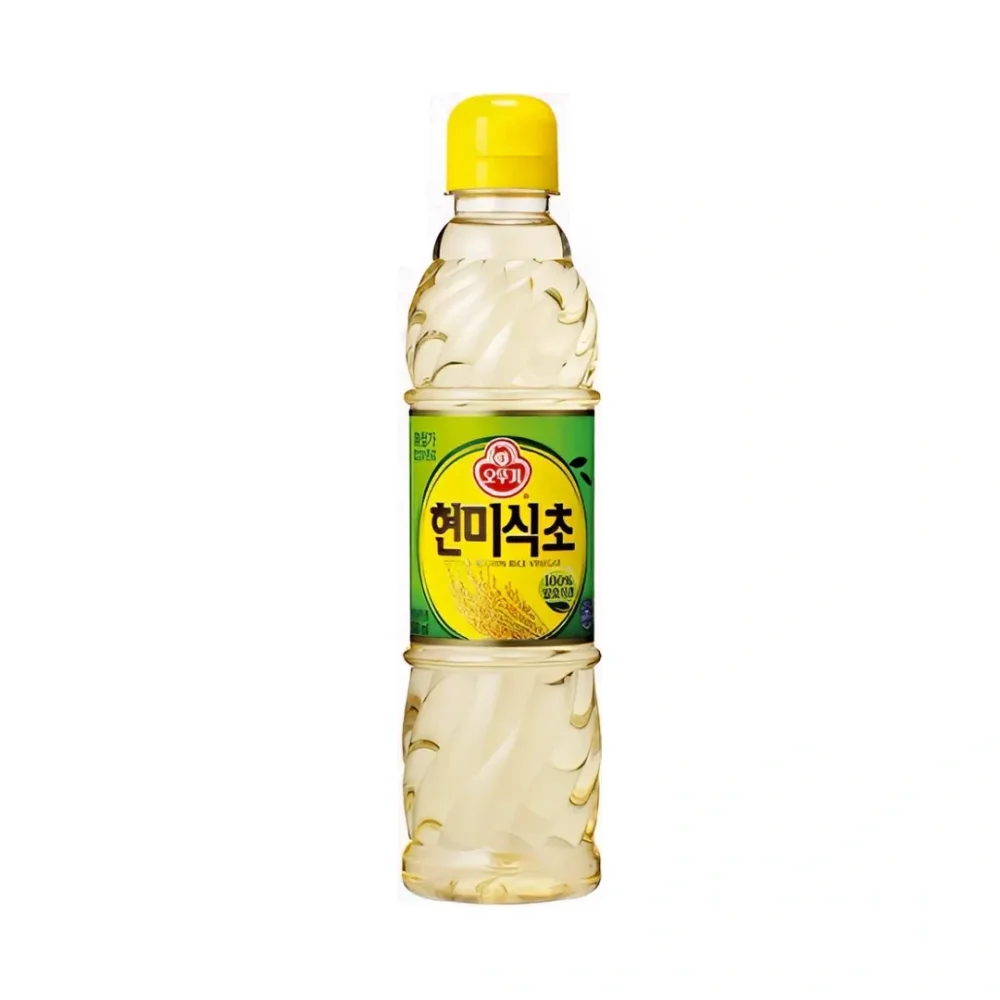
For mild acidity in home cooking, rice vinegar fits well: for example, Ottogi brown rice vinegar is a type of ingredient that works well in sushi rice, dressings, and marinades without overpowering the flavors. If your main goal is rice as the base, the guide Sushi ricemay also help.
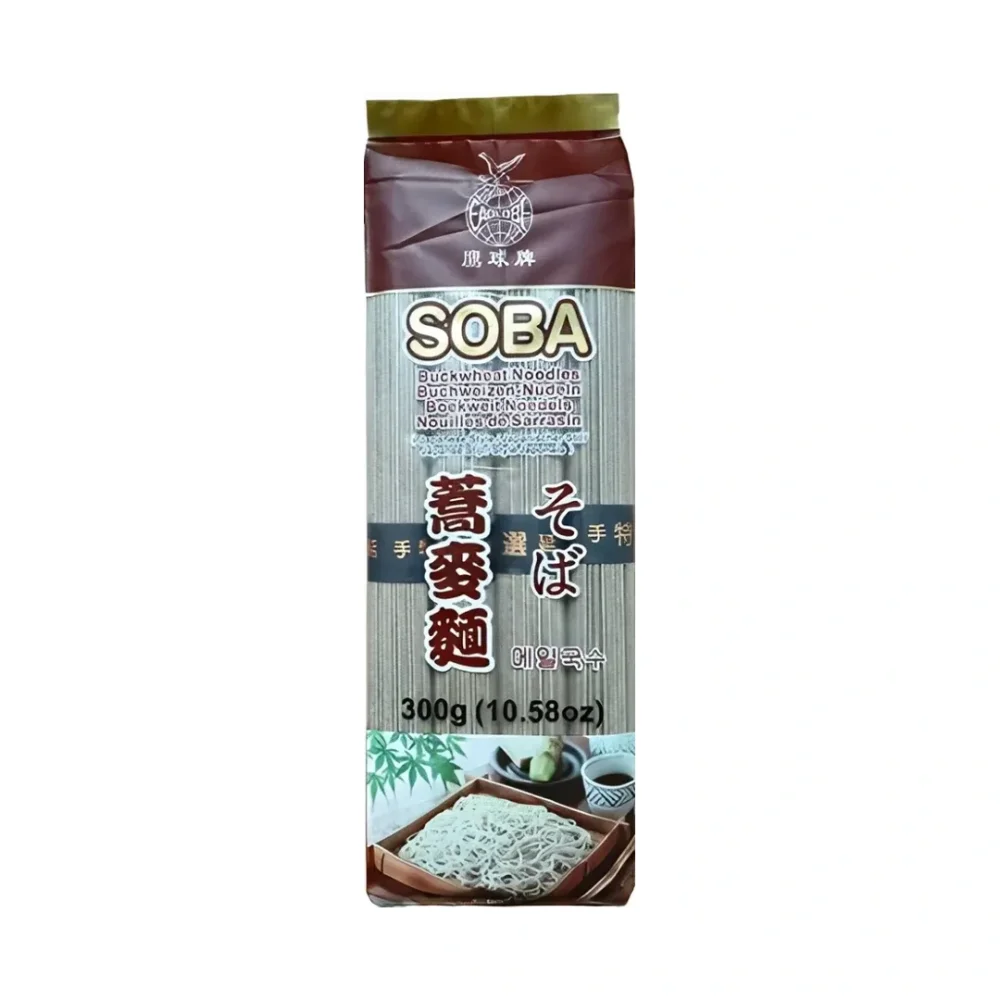
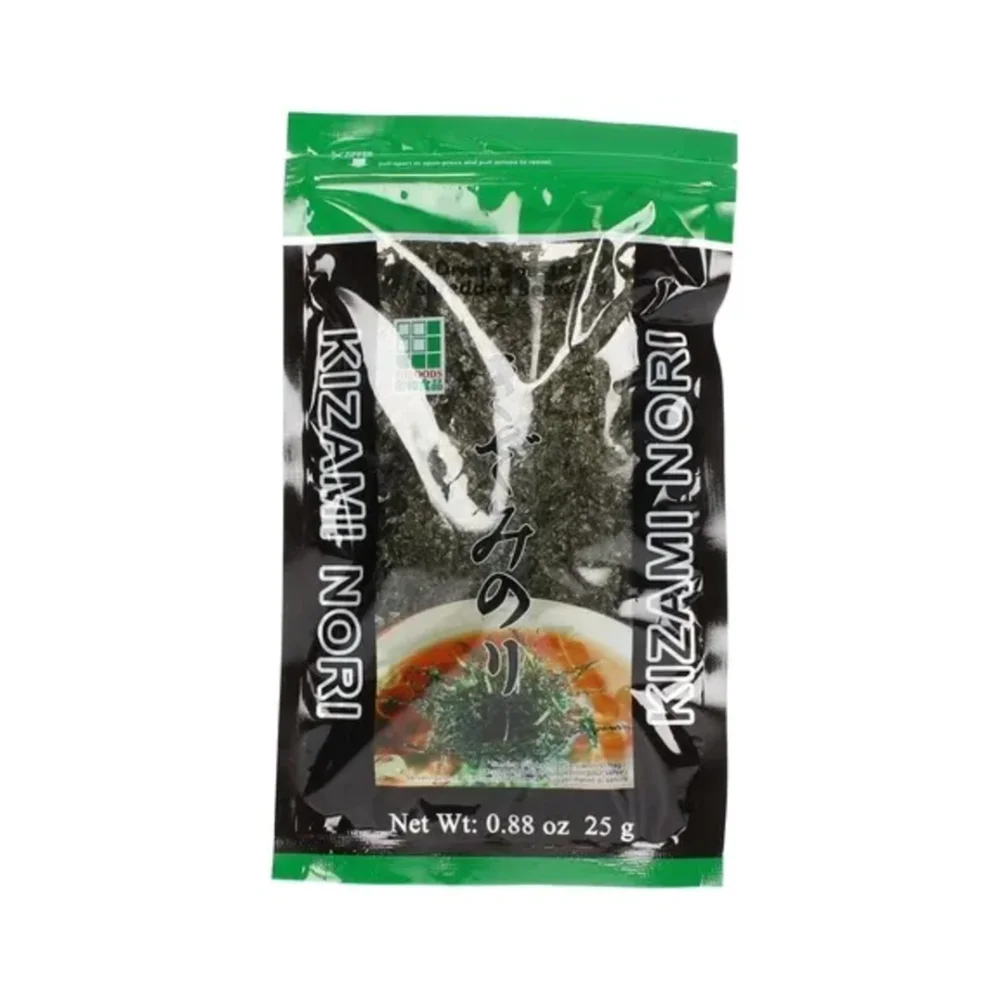
To clarify how fermented seasoning translates into everyday meals (without a recipe): with cold noodles or a simple broth, "done" can be as simple as seasoning the noodles lightly with soy sauce and optionally an umami sprinkle. Buckwheat soba noodlesare an example of an ingredient that pairs well with this. And if you want a quick topping without chopping, ready-made nori strips exist, for example, Kizami Nori seaweed.
4) When you encounter "rice wine": why it's good to read the ingredients and know what to expect
With Japanese sauce bases, you often come across sake and mirin. Sake is sometimes simply called "rice wine" in Europe, but it’s more accurate to understand it as a separate fermented rice drink – and in cooking, it’s used because it helps carry aroma, softens the smell of meat and fish, and adds subtle depth. Mirin is important in Japanese cuisine as a seasoning.
Practical advice for purchase and use (regardless of brand): for these ingredients, it makes sense to watch whether it’s a genuine seasoning of the type, alcohol content, added sugar or syrups, salt, and overall ingredient logic. The clearer the ingredients, the easier it is to predict what the ingredient will do in the dish.
Common mistakes and misunderstandings: why ferments sometimes "don’t work"
- "Fermented = probiotic": Fermentation and probiotics are not the same. For food, put the flavor role of the ferment first and frame health expectations cautiously.
- Overheated miso: Miso is not just a salty paste. When you "cook it fully" unnecessarily, you often lose subtle nuances. It helps to add it at the end and only warm gently.
- Using miso and soy sauce as plain salt: Ferments are concentrated. When you dose them as regular salt, the food can get overly salty and lose their depth.
- Taking kimchi as one universal thing: Kimchi is a family of fermented side dishes and also cooking ingredients. It works differently as a crunchy complement to rice and differently as a base for soups or stews.
- Starting with too "intense" a ferment without context: Some ferments are acquired tastes (typically natto or some shrimp pastes). That doesn’t mean they are bad – it’s just better not to start with them if you are new to fermentation.
- Confusing different types of "rice wine": When a recipe depends on the specific role of sake or mirin, substituting with another type of cooking wine can change the result. It helps to know what the ingredient is supposed to do in the dish (aroma, gentleness, sweetness) and select accordingly.
What to take away from the article
- Fermentation in Asian cuisine is primarily a tool for flavor (umami, depth, rounding, texture), not just preservation.
- Fermented foods are not automatically probiotics; sometimes they can contain live cultures, but it’s not correct to promise that universally.
- Kimchi and miso are two different fermented worlds: kimchi often works as a ready vegetable component (side and ingredient), miso is a concentrated "engine" of soups, sauces, and marinades.
- Start with one base and dose carefully: ferments are strong – a teaspoon or a few drops is often enough.
- The most common mistake is overheating or overpowering the ferment (especially with miso) and expecting all ferments to work the same.

Read next
If you want to explore this topic further, continue with these related blog guides and articles:
