


 Česky (CZK)
 Slovensky (EUR)
 Deutsch (EUR)
 Austria
 Belgium
 Bulgaria
 Croatia
 Denmark
 Estonia
 Finland
 France
 Germany
 Greece
 Hungary
 Italy
Italy Latvia
 Lithuania
 Luxembourg
 Netherlands
 Poland
 Portugal
 Romania
 Slovenia
 Spain
Spain Sweden










Curry pastes and when to reach for them: how to get the most out of them (and when not to)
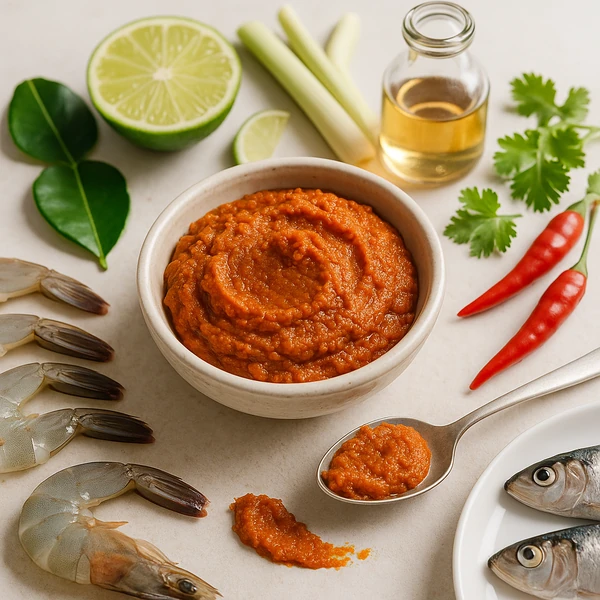
Curry paste can be a great shortcut to a "ready-made" flavor – but only if you understand it as a base, not as a universal seasoning for everything. In the article, we clarify what to expect from curry paste, how it differs from other pastes and sauces (soy, fish, chili), and how to use it in practice so that the final dish is not just spicy or salty, but truly flavorfully built.
Why curry pastes are important: they are not "just spices," but a flavor framework
In Asian cooking, often one thing decides the outcome: whether the dish has a clear flavor backbone or is just vaguely "Asian." This is doubly true for sauces and pastes – they are not just small garnishes, but building blocks that carry the main direction of flavor.
Curry paste fits this logic as a concentrated base that can quickly establish the character of a dish. At the same time, the paste itself usually does not solve everything: typically, you still need to consider saltiness, umami, possible sweetness, color, and whether you want to build the flavor "at the base" or just highlight it at the end.
🌶️ What is curry paste (and what to expect from it in the kitchen)
Practically, it is useful to think of curry paste as a basic cooking paste – that is, an ingredient meant to create the main flavor direction into which other components then fit. This is a different role than sauces mainly used at the table, and different from purely salty sauces that act like “flavor salt” with umami.
When choosing or using curry paste, it helps to ask the same questions that are safe for most Asian sauces and pastes:
- What will be the main source of saltiness?
- What will carry the umami?
- What will add color?
- What will add sweetness?
- Is it a base for cooking or for finishing (seasoning at the end)?
If you take curry paste as a “ready sauce,” you often encounter two typical problems: the dish is either excessively strong (especially salty) or flat because it lacks other supporting points (umami/roundness/contrast).
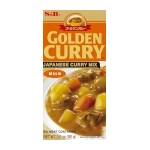
For orientation in the assortment it helps to start with a guide curry pastes and perceive them as one family of “base” pastes, not as a single product with one use.
Variants and differences: curry paste is not the same as chili paste (and certainly not soy sauce)
🍳 1) Don’t confuse “dark and salty”: in the kitchen, it works differently than it looks
One of the most common mistakes with Asian seasonings is the idea that when two things are dark and salty, they will behave similarly. However, dark color can mean different things – longer fermentation, higher sugar and caramelizing components, thicker texture, different ingredient ratios, or a completely different regional style. Similarly, density alone guarantees nothing: thick can be sweet, fermented, or “glazing,” and thin can be extremely concentrated.
For curry pastes, this has a practical impact: if you start to “dilute” or “replace” them with random sauces just by color, you easily break the flavor intent and end up with a dish that is salty and strong but lacks a clean profile.
2) Curry paste vs. chili pastes: it’s not just about spiciness, but function
With chili sauces and chili pastes, it is very clear that it is not enough to distinguish only by how spicy they are: there are thin table sauces, thick fermented pastes, fried/baked chili mixtures, chili oils, and rough relishes. Each group has a different role.
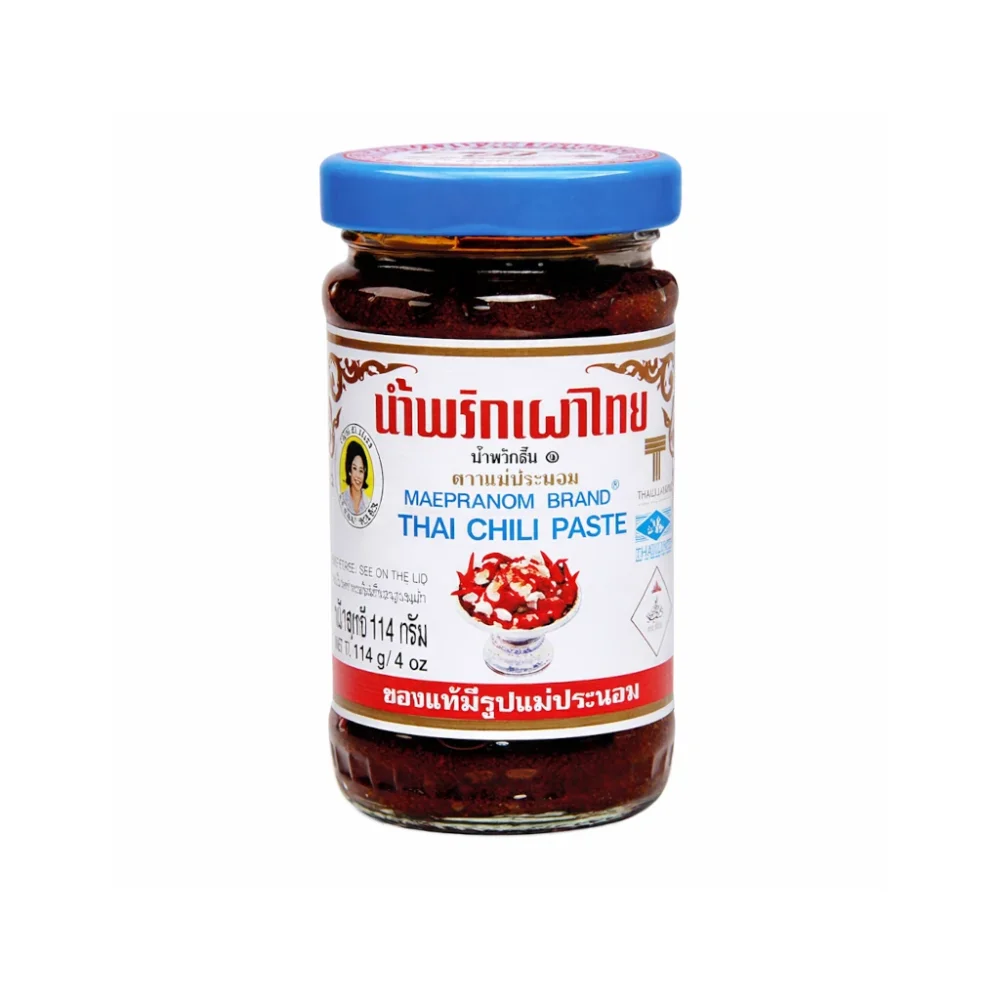
The same “functional” consideration is beneficial for curry pastes: sometimes you want a base for cooking, other times just a sharp dot on the plate. If you want more of a finishing (final seasoning), it makes more sense to reach for a chili paste meant for seasoning and serving – typically something oily, used in drops. A good example illustrating this role is Maepranom chili paste in oil, which suits rice, noodles, woks, dips, or as a sharp final touch.
If, on the other hand, you need to “build” flavor, it is more logical to start with curry paste and then adjust with other components.
For a broader orientation in spicy pastes and styles, a guide can be useful sambal and chili pastes – not as a replacement for curry pastes, but as a “side branch” for situations where you mainly handle spiciness and finishing.
3) Fermented umami depth: fish sauce and fish/shrimp pastes are not just "extra fish flavor"
Fish sauce is a fundamental tool in Southeast Asia because in small amounts it brings saltiness, intense umami, fermentation depth, and a long aftertaste. It is useful not to think of it as “something fishy” but as a concentrated building block.
At the same time, it is not a universal “better salt” for everything: without consideration, it can overwhelm delicacy (for example in clear broths without other strong flavors, in dishes where you want a purely Japanese profile based mostly on dashi, miso, and soy, or when you already have saltiness from other sources).
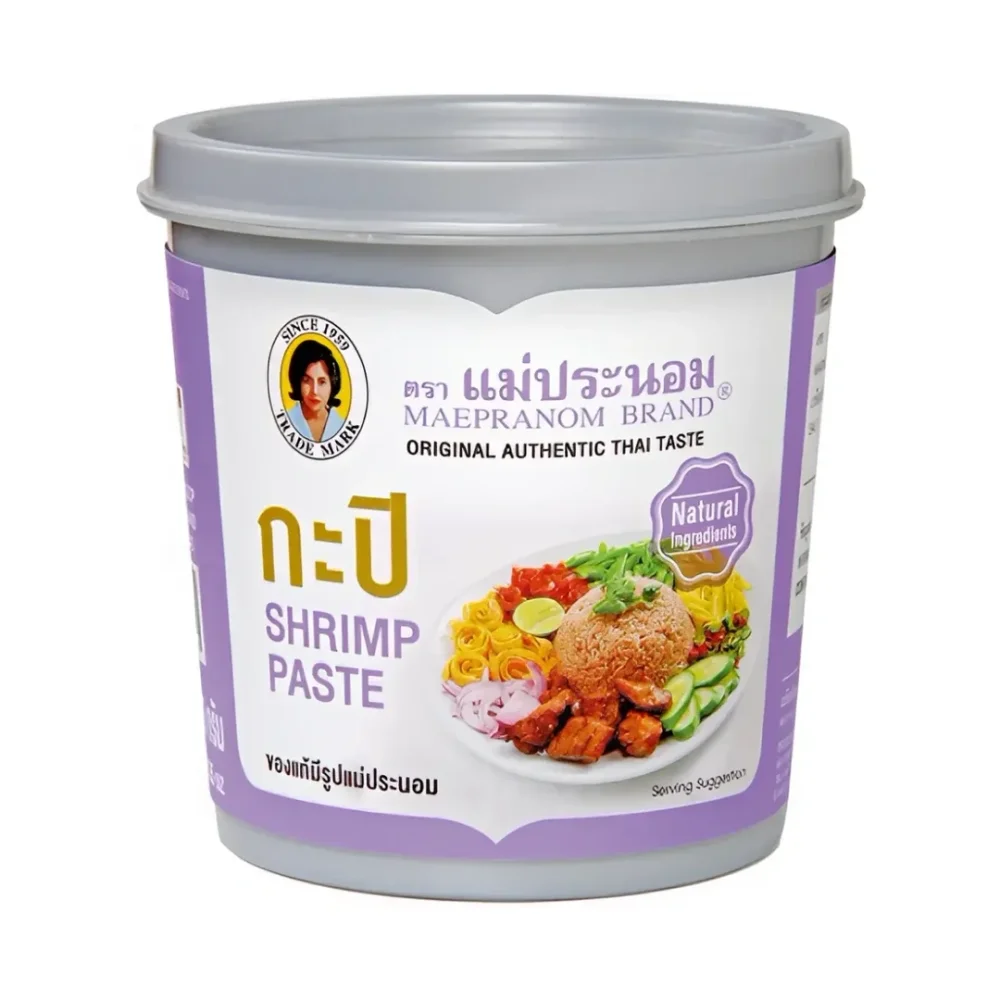
A similar role of umami concentrate can be had by fish and shrimp pastes – again more as a dosing tool rather than an ingredient “by the spoon.” If you want to work with this kind of depth, it’s sensible to start with a guide fish and shrimp pastes. A specific example where dosing matters is Maepranom shrimp paste – it is typically intense and therefore makes sense to add it in very small amounts.
4) Soy sauces: a broad family that solves saltiness and umami differently than curry paste
Soy sauce is not one product with one profile. Under one name, different styles meet – from light and straightforwardly salty to dark, rounded, sweeter, or very aromatic. Their strength is that they can combine saltiness, umami, fermentation depth, and often also influence the color of the dish.
In practice, it is important mainly that “light” and “dark” do not mean the same everywhere (it is handled differently in Chinese light/dark logic than in Japanese shoyu classification). Therefore, it’s better not to treat soy sauce as a universal substitute for curry paste – they play different roles in a dish.
✨ 5) Finishing sauces (e.g., ponzu): excellent at the end, weak as a base
Some sauces are strongest when they open and enhance the dish only at the end. A typical example is ponzu and citrus-soy sauces: they have the power to lighten, highlight, and add precision but are not universal cooking bases. When used as a base, they can unnecessarily “thin out” or break the result.
In the context of curry pastes, this is a good reminder: curry paste is usually a tool for building a base; finishing sauces are, on the contrary, tools for tuning contrast.
How to choose and use curry paste at home: practical onboarding
When to reach for curry paste
- When you want to quickly build a flavor direction without composing many partial spices and aromas.
- When you cook a dish where the "curry profile" should be the main identity – that is, not just a light seasoning trace, but the basic character.
- When you need a consistent result– the paste is a concentrated, repeatable base that can be controlled by dosing.
When it’s better to choose a different seasoning type
- When you mainly address saltiness and umami (e.g., in a simple stir-fry): often, a properly chosen soy sauce helps more than curry paste.
- When you want just a spicy accent, not a “curry base”: chili paste/oil as finishing makes sense (see above).
- When you need a fresh contrast at the end: typically, finishing sauces are used, not curry paste as a base.
How to dose it so the dish isn’t overdone
Regardless of brand, a safe rule applies: start with a small amount and add gradually. With concentrated pastes (including fish/shrimp), it’s common that a “small spoon” makes a bigger difference than you expect.
If you want an approximate home procedure without a recipe, this framework works:
- Paste sets the direction – add it first in a smaller amount so the flavor can be gradually “built.”
- Adjust saltiness separately (for example with soy or fish sauce) instead of automatically adding more paste.
- Raise umami depth in drops: fish sauce is extremely effective, and this is even more true for fish/shrimp pastes – add really carefully.
- Deal with final “spiciness” at the end, if the goal is just higher heat (typically chili paste/oil), not necessarily another curry paste.
How to recognize what went wrong (and how to fix it)
- It’s just salty and aggressive → you probably added a “base” instead of targeted adjustment. Stop and fine-tune only with small doses, ideally with another kind of component (sweetness/contrast/finishing), not more paste.
- It’s spicy but flat in flavor → spiciness alone is not enough. It helps to return to the question “where is the umami” and “what unites it” (often a concentrated umami component works better than more chili).
- The flavor is “broken” and doesn’t come together → a typical sign of incompatible substitutions (e.g., substituting by color). Try next time to keep one clear axis: build the base with curry paste and only fine-tune the role (salty/umami/finishing) with other sauces.
Common mistakes and misconceptions we see most often with curry pastes
- “Dark and salty = interchangeable” – they are not. Color and texture can result from different processes (fermentation, sugar, texture, regional style) and behave differently in food.
- Trying to handle everything with one paste – curry paste is a base, but saltiness, umami, and finishing are often better addressed with other tools.
- Using fish sauce without consideration – it is very potent, but in some dishes can overwhelm delicacy or unnecessarily shift the profile away from the intended style.
- Confusing chili sauce for “curry” – chili products can be table sauces, fermented, oily, or cooking; their role is different from the role of curry paste as a base.
- Underestimating that soy sauce is not one thing – different styles have varying sweetness, depth, color, and aroma; “light/dark” doesn’t mean the same everywhere.
What to take away from the article
- Curry paste is a tool for building a base – it helps quickly create the flavor framework of a dish.
- Don’t confuse seasonings by color and saltiness: dark/thick can mean different things and makes a different effect in food.
- Distinguish roles in food – base (curry paste), salty umami (soy/fish sauce), and finishing (e.g., ponzu or chili oil/paste) are different categories.
- Dosing is key: with concentrated pastes (especially fish/shrimp), go “little by little.”

Read next
If you want to explore this topic further, continue with these related blog guides and articles:
