suše limetkové list

Articles

How to build bowls and plates with a good flavor balance: a practical guide for light and balanced Asian meals

How to build bowls and plates with a good flavor balance: a practical guide for light and balanced Asian meals

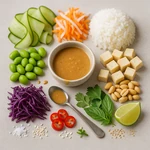
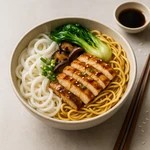
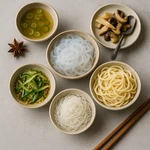
A "light" Asian bowl is not about having less food or making it bland. It works when the flavors are clearly readable, it doesn't feel heavy, and yet it fills you up: the starchy base holds its shape, the protein is flavor-specific, the vegetables and herbs are not just decoration, and the whole is linked by a precise (rather small) amount of sauce. The article offers a practical logic for assembling bowls and plates, differences between types of dishes, and the most common mistakes that make "home food taste unfinished."


Almond oil

Almond oil

Discover the power of almond oil in the kitchen! Ideal for cooking, baking, and seasoning, almond oil offers a delicate flavor and nutritional benefits. Read on to learn how to use it in your everyday cooking!


Golden Chicken Seasoning: How to Get a Gentle Flavor and a Beautiful Golden Color

Golden Chicken Seasoning: How to Get a Gentle Flavor and a Beautiful Golden Color

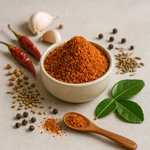
“Golden chicken” seasoning isn’t one single fixed recipe—it’s a style of spice blend designed to make chicken taste warmly seasoned (not aggressively hot) and look appetizingly golden. Here’s what creates that effect, how to use the blend for roasting, pan-frying, or quick Asian-style stir-fries, and how to pair it with sauces so the result stays juicy and balanced.


Basic Asian pantry for home cooking: what you really need to start

Basic Asian pantry for home cooking: what you really need to start

An Asian pantry is not an "exotic list" that you have to buy all at once. It is a thoughtful basic set of ingredients that allows you to repeatedly cook dishes with a clear flavor at home – even when your refrigerator is not full of fresh items. The key is not to think by countries, but by function: to have something for saltiness and umami, something for acidity, something for sweetness, something for spiciness, something for aroma and fat, and a reliable starchy base.


How to read the ingredients in Asian sauces: a short guide that will save you from bad purchases

How to read the ingredients in Asian sauces: a short guide that will save you from bad purchases

In Asian sauces, the small print on the label often matters more than the big name on the front. When you learn to read the ingredients practically (not academically), you’ll quickly recognize whether you’re buying a fermented "base" for cooking or a ready-made flavoring full of sugar, starches, and aromas. The result: sauces that make sense for your dishes and less disappointment at home.


Typical Japanese dishes: how to understand them (and why it's not just about sushi)

Typical Japanese dishes: how to understand them (and why it's not just about sushi)

Typical Japanese dishes are often reduced to a few "icons" like sushi, ramen, and tempura. In reality, though, they make sense mainly when you understand the logic of Japanese cuisine: cleaner flavors, seasonality, working with texture and umami – that is, the taste "depth" that doesn't have to rely on heavy seasoning. In this guide, we'll show the main families of dishes, how they differ, and how to start Japanese cooking at home practically and without unnecessary shortcuts.


Salad Seasoning Blend

Salad Seasoning Blend

A bowl of greens can be a quick, light meal—or it can feel like “just vegetables.” A ready-made salad seasoning blend is the shortcut that bridges that gap: it adds aroma, rounds out flavor, and helps your dressing taste intentional even when you’re short on time.


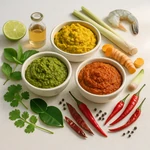
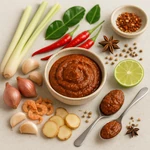
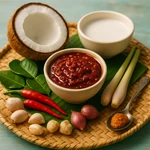
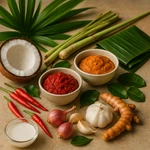
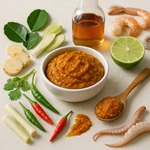
Red, green, yellow, panang, and massaman: what to expect

Red, green, yellow, panang, and massaman: what to expect

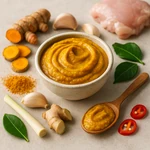
A practical guide to the five most common Thai curry pastes — red, green, yellow, panang, and massaman. I will explain the basic flavor profiles, when to choose each paste, how to use it at home, and what to watch out for when selecting and storing.


Asian ingredients and products: how to understand, choose and cook without disappointment

Asian ingredients and products: how to understand, choose and cook without disappointment

A good "Asian ingredient" is not the most expensive nor the one with the prettiest packaging. The difference mainly lies in whether you understand the function of the ingredient (what it is used for in food), its types and composition – and whether you select it for a specific use. This article is a practical guide: it will teach you to quickly read labels, distinguish between basic and flavored products, and choose the right type, for example with coconut, sesame, chili, and starches.


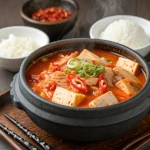
Kimchi Soup (Kimchi Jjigae) with Pork and Tofu

Kimchi Soup (Kimchi Jjigae) with Pork and Tofu

Kimchi soup is the kind of Korean comfort food that tastes bigger than its ingredient list: tangy, spicy, and deeply savory. This version uses pork and tofu for a hearty bowl you can cook on a weeknight—especially if you have well-fermented kimchi in the fridge.


10 ingredients with which you can cook the most

10 ingredients with which you can cook the most

A good "Asian pantry" is not about having dozens of sauces and pastes at home. It's about a few functional basics that repeat across many dishes: something for saltiness and umami, something for acidity and sweetness, something aromatic, something starchy and a few quick guarantees for texture. Here is a practical ten that will let you cook a surprisingly wide range of Asian dishes even from common fresh ingredients.


How to read a soy sauce label: what really matters (and what confuses you)

How to read a soy sauce label: what really matters (and what confuses you)

Soy sauce looks simple at first glance: dark, salty, “somehow Asian.” But under the same name, there are more distinctly different styles - from Japanese shoyu through Chinese light and dark sauces to Thai variants for wok cooking or sweet Southeast Asian directions. That's why it's worth reading the label: not for the details themselves, but so you don't bring home a sauce that behaves completely differently in the kitchen than you expect.


How to choose coconut milk: fat, consistency, and the right type for curry, soups, and desserts

How to choose coconut milk: fat, consistency, and the right type for curry, soups, and desserts

Coconut milk is one of the most important ingredients of tropical Asia – in Thai curries, soups like tom kha, Filipino dishes called "ginataan," but also in various desserts. At the same time, it is a category where significantly different products are sold under the same name. In practice, it is often not that the recipe "doesn't work," but that you have chosen the wrong type (or too thin a variant) for the specific dish.


Typical Malaysian ingredients: how to recognize the "Malaysian" taste and how to recreate it at home

Typical Malaysian ingredients: how to recognize the "Malaysian" taste and how to recreate it at home

Malaysian cuisine is not a single uniform "national taste," but a practical mix of several traditions that meet and often blend in one territory and often even in one dish. This makes it all the more important to recognize the ingredients that keep reappearing in Malaysian cooking: rice and noodles, coconut, chili and sambal, aromatic herbs, tamarind and lime, and pronounced fermented marine components. In this article, we will arrange them according to their function, explain the differences, and add specific tips on how to start with them without unnecessary mistakes.


How to start with Taiwanese cuisine: first dishes, flavor logic, and mistakes that unnecessarily hold you back

How to start with Taiwanese cuisine: first dishes, flavor logic, and mistakes that unnecessarily hold you back

Taiwanese cuisine is not just bubble tea and night markets. It is an independent, vibrant, and surprisingly diverse world where several layers of influences meet – and that's exactly why you can enter it smartly and step by step. In this guide, you will clarify what is typical for Taiwanese food, what the "Taiwanese taste" looks like in practice, and which first steps make the most sense at home without having to "cook the whole Taiwan" right away.


The simplest first meals from various Asian cuisines: choose your "entry door" and your first guaranteed success

The simplest first meals from various Asian cuisines: choose your "entry door" and your first guaranteed success

Starting with Asian cooking is surprisingly easy – if you don't choose five cuisines at once and instead of "exotic" select one dish that has few steps, forgives minor mistakes, and teaches you one important principle. This guide will help you choose the first cuisine according to taste and time and show several proven starter types of dishes (mainly rice bowls) on which you can quickly build a home routine.


How to choose fermented and specialty soy products: sauces, pastes and “not tofu”

How to choose fermented and specialty soy products: sauces, pastes and “not tofu”

Fermented and specialty soy products are two different things in the kitchen at once: some of them act as a flavor base (soy sauces, fermented pastes), others are standalone ingredients with their own texture (yuba, aburaage, fermented tofu). Once you clarify that role, the “similar” names will stop confusing you and you’ll start choosing based on what the ingredient should actually do in the dish.


Typical Sri Lankan ingredients: what makes up the flavor of Sri Lanka and how to get started with it at home

Typical Sri Lankan ingredients: what makes up the flavor of Sri Lanka and how to get started with it at home

Sri Lankan cuisine is not "Indian curry on an island." It is built on rice, coconut products, pronounced spices, chili and contrasts – alongside a gentle coconut component there is often acidity, heat and various sambols or pickled accompaniments. In this guide you will find typical Sri Lankan ingredients, their role in dishes, the main differences and practical tips on how to choose and use them.


Typical Indian ingredients: their role in food and how to recognize them

Typical Indian ingredients: their role in food and how to recognize them

Indian cuisine is not a single unified tradition, but a broad family of regional styles. That's why it's worth looking at "typical Indian ingredients" as practical building blocks: what forms the base (rice, breads, legumes), what gives the dish richness (ghee, yogurt, paneer), what builds aroma (spices, aromatics), and what provides an important contrast (for example tamarind). The article provides an overview of key ingredients, their functions, and concrete advice on how to start using them at home without unnecessary mistakes.


Basics of the Korean pantry: how to understand jang, kimchi, sesame, and soy sauce

Basics of the Korean pantry: how to understand jang, kimchi, sesame, and soy sauce

The Korean "pantry" is not a list of exotic groceries, but a set of flavor foundations that make even simple dishes start to make sense. When you understand how fermented pastes and sauces (jang) work, the role of kimchi, why sesame is often used only at the very end, and how Korean soy sauces differ, Korean cuisine will come together for you into a clear system – not a random spicy mix.


Provençal seasoning: a blend of herbs that enhances both vegetables and meat

Provençal seasoning: a blend of herbs that enhances both vegetables and meat

Provençal seasoning—often sold as “Herbs de Provence”—is a fragrant mix of dried Mediterranean herbs that can make everyday food taste more rounded and aromatic in seconds. It’s a classic for roasted vegetables and grilled meats, but it also fits surprisingly well into simple Asian-style meals when you want extra aroma without adding complexity.


Beginner in Asian cuisine: how to choose the first direction and start without unnecessary mistakes

Beginner in Asian cuisine: how to choose the first direction and start without unnecessary mistakes

The hardest part at the beginning of Asian cooking is not the "exotic" but the decision of exactly where to start. Different Asian cuisines vary in flavors, techniques, and how much you need to have stocked at home. In this guide, you will find a practical way to choose your first cuisine, how to build a reasonable minimum "Asian pantry," and which habits (cutting, preparation, working with temperature) will quickly raise your level.


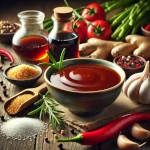
Sweet and sour sauce

Sweet and sour sauce

Discover the secrets of sweet and sour sauces. Learn how to make them and use them in various dishes, from fried foods to noodles and dips. This article will show you how to add new dimensions to your favorite meals.


Typical Korean dishes: how to understand them by rice, noodles, soups, and street food

Typical Korean dishes: how to understand them by rice, noodles, soups, and street food

Korean cuisine is often presented as a list of “iconic” names. For practical orientation, however, it works much better to understand in what format the food comes to the table: a bowl of rice, a noodle bowl, soup as a main dish, or a quick/street food approach. In this guide, we will show the main groups of typical Korean dishes, how to recognize them, what to expect from them, and how to start making them at home without unnecessary mistakes.


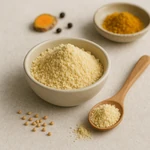
Ground White Mustard Seed: Flavor, Timing, and Smart Ways to Use It

Ground White Mustard Seed: Flavor, Timing, and Smart Ways to Use It

Ground white mustard seed is a quiet workhorse in the spice cupboard: it brings a gentle heat, a warm mustard aroma, and extra “body” to sauces and marinades. Used well, it can deepen everything from salad dressings and rubs to Asian-style curries and stir-fry sauces—without overpowering the dish.


Garam Masala: the Fragrant Heart of Indian Cooking

Garam Masala: the Fragrant Heart of Indian Cooking

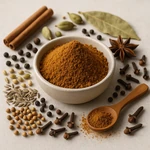
Garam masala is one of the most recognizable spice blends from India—and one of the easiest ways to give everyday meals a distinctly Indian aroma. Used in the right amount and at the right moment, it adds warm, rounded depth to curries, lentils, roasted vegetables, and even simple rice without necessarily making food hot or fiery.


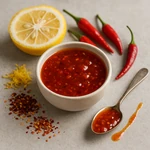
Sweet-Spicy Chili Sauce with Yuzu: Citrus Heat That Lifts Any Dish

Sweet-Spicy Chili Sauce with Yuzu: Citrus Heat That Lifts Any Dish

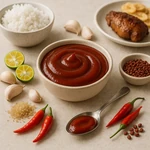
Sweet-spicy chili sauce is already a kitchen shortcut for instant flavor—but add yuzu and it becomes something brighter and more versatile. The gentle sweetness helps it cling to food, the chili brings warmth, and yuzu adds a crisp citrus aroma that can make fried, grilled, or rich dishes taste lighter and more defined.


Maengda Chilli Paste: Thai Heat with a Distinct Aroma (and How to Use It)

Maengda Chilli Paste: Thai Heat with a Distinct Aroma (and How to Use It)

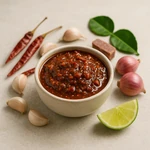
Maengda chilli paste is one of those Thai pantry shortcuts that can make plain rice, noodles, or a quick stir-fry taste “finished” in seconds. It’s not just about heat—its signature is a bold, lingering aroma and a concentrated savoury profile. Here’s what “Maengda” means, what to expect from the flavour, and how to use it well at home.


Tamarind: What It Tastes Like, How to Use It, and Which Form to Buy

Tamarind: What It Tastes Like, How to Use It, and Which Form to Buy

Tamarind is the ingredient behind that distinctive sweet-sour “tang” in many Asian dishes—from Pad Thai-style sauces to sour soups and chutneys. Here’s what tamarind actually is, how different tamarind products compare, and how to get the flavor right without guesswork.


Coconut sugar: what it is, how it tastes, and when it makes sense in Asian cuisine

Coconut sugar: what it is, how it tastes, and when it makes sense in Asian cuisine

Coconut sugar is important in Asian cuisine mainly because it sweetens differently than regular white sugar: it adds not just "pure sweetness" but also a warmer, caramel tone. To make it work well, you need to understand two things: it is not made from coconut flesh and its taste is not "coconut" in the sense of coconut milk. In the article, we will show which dishes it suits, how to start using it at home, and what to watch out for when choosing and using it.


Types of Meals and Occasions

Types of Meals and Occasions

How do fast street foods, festive menus, noodle bowls, or dishes based on seaweed and mushrooms differ in Asian cuisine? This guide explains the main types of meals according to the occasion, presents representative examples, and offers practical advice: what to buy at the start, how to combine ingredients, and how to avoid the most common mistakes.


Devil’s Seasoning: How to Find Your Ideal Heat—and Make It Taste Great

Devil’s Seasoning: How to Find Your Ideal Heat—and Make It Taste Great

“Devil’s seasoning” is a handy nickname for extra-spicy chili blends, pastes, and sauces that can turn plain rice, noodles, or a quick stir-fry into something exciting. The trick is choosing a heat level you’ll enjoy—and building flavor around it so the dish is bold, not just painful. This guide shows how to read spiciness cues, dose it confidently, and balance heat like Asian kitchens do.


Korean BBQ

Korean BBQ

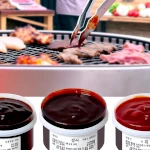
Discover the magic of Korean BBQ! With delicious sauces and tasty side dishes, you'll enjoy an unforgettable grilling experience full of flavors you'll love.


How to recognize good tofu (and why it’s not just about the brand)

How to recognize good tofu (and why it’s not just about the brand)

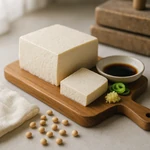
"Good tofu" is not universally the firmest or the softest. You recognize quality mainly by whether a particular tofu corresponds to what you need from it in a dish: a different type fits soup, another for the pan, and another for cream or dessert. The article explains clear differences between silken and firm tofu and practical signs to identify a quality piece right after opening and during cooking.


How to start with Filipino cuisine: flavor logic, first dishes, and mistakes beginners make

How to start with Filipino cuisine: flavor logic, first dishes, and mistakes beginners make

Filipino cuisine is not just adobo – it is a practical, "homey" island cuisine built on rice, strong sourness, and salty umami seasoning. In this guide, you will clarify how typical Filipino flavor works, how it differs from neighboring island styles (Indonesia, Malaysia, Singapore), and most importantly: what to start with at home so that your first attempts make sense and have quick success.


Rice vs. wheat noodles: when to choose which (and why it's not just "about taste")

Rice vs. wheat noodles: when to choose which (and why it's not just "about taste")

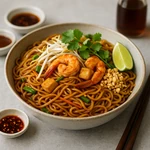
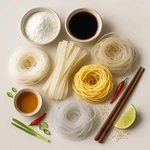
Rice and wheat noodles behave similarly at first glance, but they serve completely different roles in the bowl. The difference is not just in the ingredient – it reflects in elasticity, "bite", behavior in broth, in the wok, and how easily the noodles overcook. This guide will help you pick the right type based on the dish (pho, pad thai, ramen, udon, mie goreng…) and avoid the most common mistakes.


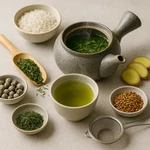
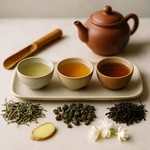
How to Prepare Asian Teas at Home: From "True Tea" to Modern Iced Drinks

How to Prepare Asian Teas at Home: From "True Tea" to Modern Iced Drinks

Preparing Asian teas at home is not about a single correct procedure, but about knowing what type of tea you have in hand and what to expect from it. Once you get oriented with the main tea categories, the differences between Chinese and Japanese styles, and learn to read the packaging information, even modern drinks like bubble tea, matcha latte, or citrus iced drinks will start to make sense.


Thai curries and their colors: why it's not just about "different shades" and how to choose the right one

Thai curries and their colors: why it's not just about "different shades" and how to choose the right one

Green, red, yellow, panang, massaman... In Europe, Thai curries are often described mainly by color, as if it were one sauce in several variations. In reality, these are different flavor systems based on different pastes, different aromatics, different "coconutiness" and suitability for both quick cooking and slow simmering. This guide will help you understand the differences and especially choose a curry that makes sense for your dish and taste.


Which sauces and noodles to watch out for in gluten-free Asian cooking

Which sauces and noodles to watch out for in gluten-free Asian cooking

Gluten-free Asian cooking often does not depend on whether you buy the "right" vegetables or meat, but on two tricky places: sauces and noodles. The basic ingredients can be naturally gluten-free, but one common soy sauce or wheat noodles can completely compromise the safety of the entire dish. The article provides specific guidance, the main risk situations, and practical procedures on how to handle this at home without unnecessary stress.


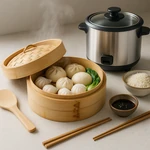
Steamers, rice cookers, and other helpers: what you will really use at home (and why)

Steamers, rice cookers, and other helpers: what you will really use at home (and why)

Good equipment for Asian cooking is not about "having a special set," but about choosing a few tools that really change the outcome or significantly simplify the work. This applies twice as much for steaming and rice: the right steamer and a sensible approach to cooking rice will help you maintain texture, moisture, and cooking rhythm – without unnecessary purchases based on impressions.


Taste of Singaporean cuisine: hawker energy, layers of umami, and final seasoning at the table

Taste of Singaporean cuisine: hawker energy, layers of umami, and final seasoning at the table

Singaporean cuisine is hard to summarize in one sentence – and that is exactly what makes it typical. It is a port, urban, and multicultural cuisine: Chinese, Malay, Indian, and Peranakan influences coexist side by side, but in practice, you recognize it best by how it works with sauces, broths, chili, coconut, and the "final touch" at the table. In the article, we will break down its flavor layers based on specific dishes (chicken rice, laksa, chili crab) and show how to bring this logic home without complicated recipes.


Typical Korean ingredients: how to understand “jang”, chili, and fermented bases

Typical Korean ingredients: how to understand “jang”, chili, and fermented bases

Korean cuisine is not just "spicy and kimchi." It is built on a thoughtful use of fermented bases, contrasts of flavors, and the harmony of rice, soup, and several smaller side dishes at the table. In this guide, you will clarify which ingredients make the Korean flavor Korean, what functions they have in the food, and how to select and use them at home without unnecessary mistakes.

What to buy for the first thousand crowns for Asian cuisine: the basics you can really cook with

What to buy for the first thousand crowns for Asian cuisine: the basics you can really cook with

The first purchase "for Asian cuisine" does not have to be a bunch of random sauces. When you divide your budget (for example around a thousand crowns) according to functions – saltiness and umami, acidity, sweetness, spiciness, fat and aroma, plus rice or noodles – you get a base from which you can cook repeatedly without unnecessary improvisation. The article provides a practical plan: how to choose the entry style of dishes, what makes sense to buy immediately, what to wait for, how to read labels and how to avoid typical beginner mistakes.

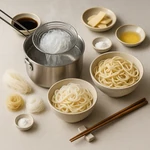
The most common mistakes when working with noodles (and how to quickly fix them at home)

The most common mistakes when working with noodles (and how to quickly fix them at home)

Noodles are one of the fastest ways to an "Asian" dinner, but at the same time they often show whether you understand the ingredient and timing. One wrong choice of noodle type, a few extra minutes in the pot, or a too wet sauce and instead of a springy texture, you end up with a stuck block, broken mash, or rubbery mass. In this article, you'll find specific mistakes that happen over and over again, and especially practical ways to avoid them – depending on whether you are cooking a broth bowl, wok, "dry" stir-fried noodles, or a cold bowl.


How to Choose Soy Sauce: Types, Uses, and Common Mistakes

How to Choose Soy Sauce: Types, Uses, and Common Mistakes

Soy sauce is often the first "Asian" bottle at home – and also one of the most common reasons why a dish ends up just vaguely salty. Under one name, there is an entire family of styles: from light working sauces for the wok to dark varieties for color, rounding, and sometimes a sweeter tone. In this guide, you will clarify the types, what to watch for on the label, and how to dose soy sauce so that it adds depth – not just salt.


Asian Street Food: Basic Overview

Asian Street Food: Basic Overview

Asian street food is not just "food from the street" for tourists. In many cities, it is an everyday way of eating: fast, affordable, often incredibly specialized, and closely connected to a specific place and distinctive taste. This overview will clarify what is typical for Asian street food, where you can encounter it, and how to quickly navigate it—even if you want to explore it mainly at home.


Cooking techniques in Asian cuisine: what makes food "Asian" and how to master it at home

Cooking techniques in Asian cuisine: what makes food "Asian" and how to master it at home

In Asian cuisine, it often matters not only what you cook but mainly how. The same ingredient can taste completely different depending on whether you quickly stir-fry it at a high temperature, slowly simmer it in broth, steam it, or briefly sear it and then braise it. In this guide, you will align key techniques, learn to recognize their differences, and get practical tips on how to avoid typical home cooking mistakes.


How to choose noodles for soup, stir-fry, and salad (so they work even after cooking)

How to choose noodles for soup, stir-fry, and salad (so they work even after cooking)

With Asian noodles, the most common disappointment doesn’t come from a “low-quality product” but from choosing the wrong type for the particular dish. In this guide, you’ll clarify based on the material (wheat, rice, buckwheat, starch, konjac), thickness, and behavior in broth, in a pan, and after cooling – and you’ll learn to choose noodles as practically as in Asian kitchens.


MSG, preservatives and allergens: what to really watch for on labels of Asian ingredients

MSG, preservatives and allergens: what to really watch for on labels of Asian ingredients

Asian sauces and pastes often have bold packaging, but the small print is what matters. If you want clarity in your purchase, it's worth stopping to worry about one “scary” abbreviation and instead adopting a few simple checks: the order of ingredients, the difference between a base and a seasoned product, and careful reading of allergens. This article shows what to watch for so the ingredient works in your cooking – and so it doesn't surprise you at home with its flavor, saltiness, or composition.


Shared tables and Asian-style feasts: how they work and how to understand them in practice

Shared tables and Asian-style feasts: how they work and how to understand them in practice

Shared food "Asian style" is not just a style of serving, but a way people communicate at the table. Often it is a board composed of several bowls and side dishes, where the order, placement, and how it is taken from the common dishes matter. In the article, we will show why food-sharing is so common in many parts of Asia, how the everyday shared table differs from a festive feast, and how to create a similar experience at home without stress.


How to Navigate Asian Teas

How to Navigate Asian Teas

The term "Asian tea" does not refer to one type of beverage but to several major traditions that differ in taste, aroma, and preparation style. The good news: for basic orientation, it is enough to understand a few fixed points – what "real tea" is, how the main types arise based on processing, and why the same name does not yet mean the same experience in a cup.


How to properly use chopsticks and share food: practical etiquette at an Asian table

How to properly use chopsticks and share food: practical etiquette at an Asian table

Chopsticks are not just cutlery and shared bowls are not just a “serving style.” In many parts of Asia, the way of dining and the small rules around chopsticks are part of the respect for food, the host, and others at the table. In this article you will find clear principles, typical differences (mainly Japan and Korea), and a practical guide on how to behave naturally at shared meals and avoid the most common missteps.


How to work with festive meals in the home menu

How to work with festive meals in the home menu

Festive meals in Asian cultures are not just "better versions" of regular dinners. They often function as a cultural code: they have symbolism, a fixed place in the calendar, a family dimension, and sometimes even service rules. In this article, you will find a practical guide on how to transfer these principles to a home menu in a way that makes sense even without perfect "authenticity" – and at the same time, you don't spoil the taste with a failed improvisation.


How to properly cook Asian noodles: choose the right type and do not overcook them

How to properly cook Asian noodles: choose the right type and do not overcook them

For Asian noodles, it's usually not a 'secret trick' that matters, but the correct choice of noodle type for a specific dish and the timing of the heat treatment. Noodles behave differently in broth, differently in a wok, differently in cold bowls – and the most common mistake (overcooking) often occurs because the noodles continue to soften until the final serving.


How to choose noodles according to the recipe: so they hold in soup and don't fall apart in the wok

How to choose noodles according to the recipe: so they hold in soup and don't fall apart in the wok

Noodles are a broad family of ingredients in Asian cuisine – and each works differently. When you reach for "some noodles," it often ends up that they get soggy in the broth, break in the wok, or lose texture after cooling. In this guide, we'll show you what to look for in a recipe, how to decide based on the type of dish (ramen, phở, pad thai, stir-fry, cold bowls), and what to watch out for during preparation to ensure the result tastes and looks just right.


Asian noodle guide: how to choose the right type for soup, wok, and cold bowls

Asian noodle guide: how to choose the right type for soup, wok, and cold bowls

Asian noodles are not a single universal ingredient, but a large family of products. They differ in base (wheat, rice, buckwheat, starch, konjac), thickness, elasticity, and how they react to broth, sauce, or quick stir-frying. When you know what to expect from noodles, you will choose much more easily—and stop struggling at home with clumped or overcooked "mash."


Taste of Indonesian cuisine: sambal, kecap manis, coconut, and rice as the center of the meal

Taste of Indonesian cuisine: sambal, kecap manis, coconut, and rice as the center of the meal

Indonesian cuisine is not a single "national taste," but a broad family of regional styles spread across a vast archipelago. Yet, it repeatedly returns to several fixed points: rice as the center of the meal, chili and sambal, sweet-salty depth thanks to kecap manis, aromatic pastes, and coconut, which can both soften and intensely concentrate the flavor. In this article, we will put these pillars together so that when cooking at home for the first time, you know what you are actually looking for and why it tastes "Indonesian."


How to start with Indonesian cuisine: rice, sambal, kecap manis, and a few dishes that will teach you the most

How to start with Indonesian cuisine: rice, sambal, kecap manis, and a few dishes that will teach you the most

Indonesian cuisine is not one "uniform" flavor, but a huge world of regional styles across the islands. The good news is that starting at home is surprisingly easy if you don't try to cook everything at once. In the article, we will show what is typical for Indonesia, how to recognize its flavor, what the most important differences are (including a brief orientation in island Southeast Asia), and how to choose your first ingredients and first dishes without unnecessary mistakes.


Regions of Thai cuisine: why Bangkok, the north, and Isan don’t taste the same

Regions of Thai cuisine: why Bangkok, the north, and Isan don’t taste the same

Thai cuisine is often described through famous dishes like tom yum, green curry, or pad thai. However, this easily creates the impression that "Thai tastes like this" – and that’s it. In reality, Thailand is regionally distinctive: the same principle of balancing flavors (saltiness and umami, sourness, sweetness, spiciness, herbal freshness) is composed differently in various parts of the country. If you want to cook Thai food at home or just better understand dishes on a menu, regions are one of the shortest ways for the flavors to start making sense to you.


Where to start in Asian cuisine based on what you like (and how much time you want to cook)

Where to start in Asian cuisine based on what you like (and how much time you want to cook)

The most common dead end for beginners is trying to start "Asian cuisine" as one package. In practice, however, individual cuisines (Japanese, Chinese, Korean, Vietnamese, Thai, Indian, etc.) work differently: they have different flavors, different cooking pace, and different pantry requirements. It is much better to choose your first entry door – according to the style of dishes you like – and only then deal with the details.


Overview of Asian teas and drinks: how to understand the types, flavors, and modern drinks

Overview of Asian teas and drinks: how to understand the types, flavors, and modern drinks

“Asian tea” is not one thing. The word tea covers true tea from the tea plant (Camellia sinensis), flavored blends, and also modern drinks that are based on tea but work with milk, ice, citrus, fruit concentrates, and especially texture (typically bubble tea). This overview gives you a quick orientation: what true tea is, what the major types are and why they taste completely different, how to read packaging, how to choose a style by taste, and what common misconceptions even people who “have been drinking tea for years” encounter.


Indian curry: basics and main styles (and how not to get lost in them)

Indian curry: basics and main styles (and how not to get lost in them)

"Indian curry" is not one recipe nor one universal sauce. It is a broad family of saucy dishes and techniques that vary from region to region and household to household. In this guide, you'll clarify terms (curry vs. curry powder vs. masala), understand the main Indian directions, and most importantly: you will learn how to practically choose the right base and set your expectations so that the result tastes exactly how you want.


How to read packaging and types of Asian noodles: how to recognize what will really work for you at home

How to read packaging and types of Asian noodles: how to recognize what will really work for you at home

With Asian noodles, the name on the front of the package is often only indicative. Whether the noodles are suitable for broth, wok, or a cold bowl is usually decided by their ingredients, thickness, and pre-treatment. In this guide, we will show you how to read labels, what the main noodle families are (wheat, rice, buckwheat, starch-based, and konjac), and how to choose a type that won’t overcook, fall apart, and gives the dish exactly the texture you expect.


Typical Taiwanese Ingredients: What Shapes the Island's Flavor (And How to Start Using Them at Home)

Typical Taiwanese Ingredients: What Shapes the Island's Flavor (And How to Start Using Them at Home)

Taiwanese cuisine is not just bubble tea and night markets. It is an independent and vibrant culinary world where local cooking meets various Chinese regional influences, a distinctive Hakka layer, indigenous traditions, Japanese heritage, and modern urban food culture. That's why it makes sense to start with the ingredients: how they taste, their role in the dish, and how to recognize if you've chosen the right type.


Island cuisines of Asia: what shapes them and how to navigate them

Island cuisines of Asia: what shapes them and how to navigate them

"Island cuisines of Asia" is not one style nor one typical flavor. It is a collection of regional cuisines that developed in island and coastal environments – where cooking is shaped by the sea, climate, local agriculture, as well as trade and migration. In this guide, we will focus on the island axis of Southeast Asia (Indonesia, the Philippines, Malaysia, and the Singaporean mix of influences) and show how to interpret these influences in the taste of food and how to assemble a foundation at home to orient yourself practically, not just based on impressions.


How to start with Singaporean cuisine: from hawker logic to your first meals at home

How to start with Singaporean cuisine: from hawker logic to your first meals at home

Singaporean cuisine is best understood as an urban, port “crossroads of flavors”: Chinese, Malay, Indian and other influences live side by side and create dishes with a clear identity. If you want to start at home, the goal is not to cook “all of Singapore,” but to pick a few typical hawker specialties, understand the role of rice and noodles, broth and coconut components, and learn to work with chilli dips (sambal) and table-seasonings.


Spices in Asian cuisine: how to understand aromas, herbs and the right use

Spices in Asian cuisine: how to understand aromas, herbs and the right use

Asian cuisine is not just about spiciness or "exotic" ingredients. It is often defined by the work with aroma: freshness, warmth, earthiness, citrus notes, bitterness and long aftertaste. Spices and herbs are not just a supplement – in many dishes they form the very backbone of flavor. And just as important as what you use is also when and how you use it.


Vegetarian Asian cuisine: how to build flavor without meat (and without disappointment)

Vegetarian Asian cuisine: how to build flavor without meat (and without disappointment)

Vegetarian (and often vegan) Asian cuisine is not a 'deprived' version of cooking with meat. In many parts of Asia, it has its own traditions, techniques, and flavor logics – and good food here is not based on substitutes, but on umami, fermentation, texture, spices, herbs, and smart bases. The article provides an orientation in main styles, solid building blocks (tofu, tempeh, legumes), a practical guide on how to start at home, and what to watch out for in 'hidden non-animal' sauces and broths.


Typical Filipino ingredients: what makes the taste of the Philippines and how to start with them at home

Typical Filipino ingredients: what makes the taste of the Philippines and how to start with them at home

Filipino cuisine is not just adobo. It is island "home" cooking based on rice, pronounced acidity (often from vinegar), salty seasonings with a touch of fermentation, and an aromatic base of garlic, onion, and pepper. In this guide, you will clarify which ingredients are truly typical for the Philippines, their role in dishes, how to recognize the right type, and what to avoid with your first purchases.


How to start with Malaysian cuisine: 5 logics to quickly get oriented at home

How to start with Malaysian cuisine: 5 logics to quickly get oriented at home

Malaysian cuisine is not one "typical taste," but a practical mix of several traditions meeting in one country – Malay, Chinese, Indian, Peranakan, and local Bornean. When you want to start with it at home, it doesn’t make sense to learn everything at once. In this guide, you will set simple orientation points (rice vs. noodles, coconut vs. broth, the role of sambal, accompanying sauces and dips) and pick a few first dishes to learn the Malaysian "system" fastest.


Typical Singaporean ingredients: what makes laksa, nasi lemak, and hawker dishes flavorful

Typical Singaporean ingredients: what makes laksa, nasi lemak, and hawker dishes flavorful

Singaporean cuisine originated in a port city where different communities and their techniques have long met. Therefore, you won't find a single "national" pantry here, but a functional mix: rice and noodles, coconut, chili and sambal, soy and fish umami seasonings, aromatics like garlic and ginger – alongside ready-made pastes that have a clear role in specific dishes. In the article, you'll sort out what is typical for Singapore, what the main variants are, and how to start with these ingredients at home without unnecessary mistakes.


Typical Thai ingredients: what they taste like, what they are for, and how to use them at home

Typical Thai ingredients: what they taste like, what they are for, and how to use them at home

Thai cuisine is based on balancing contrasts: saltiness and umami, acidity, sweetness, spiciness, and herbal freshness. To make food taste "Thai," one spicy component is not enough – it is more important to know the role of each ingredient and how to work with it in small amounts. This guide provides an overview of typical Thai ingredients, their function in the dish, the main differences between similar products, and practical tips on how to start using them at home without unnecessary mistakes.


Regional Styles of Asia: How to Quickly Orient Yourself by Taste, Ingredients, and Dishes

Regional Styles of Asia: How to Quickly Orient Yourself by Taste, Ingredients, and Dishes

"Asian cuisine" is not one universal flavor but a map of regional styles that arose under different climatic, agricultural, religious, and commercial conditions. In practice, this means that to understand (and cook well at home), knowing the base a region uses helps more than just the country names: rice vs. wheat, fermentation vs. coconut, spices vs. broths, herbs vs. umami. This guide will give you an orientation "compass" and concrete methods to choose the right direction even at home.


How to choose Asian ingredients: by function, not by impression

How to choose Asian ingredients: by function, not by impression

A good Asian ingredient is not automatically the most expensive one or the one with the "most authentic" packaging. In home cooking, it is much more important whether you have chosen the right type for a particular dish (and whether you understand what the ingredient does in the dish). This guide summarizes practical rules that will help you decide more confidently about sauces, pastes, rice, or tofu – and with less risk of disappointment.


Basic sauces of Asian cuisine: how to understand them and use them correctly

Basic sauces of Asian cuisine: how to understand them and use them correctly

The basic sauces of Asian cuisine are not just “something for seasoning.” In many dishes they form the very flavor backbone: they determine whether the result will be merely salty and flat, or deep, layered and flavorfully “anchored” in a particular cuisine. This guide will help you understand the roles of individual sauces, choose a sensible basic set for the home kitchen, and avoid the most common mix-ups.

%s ...
%s
%image %title %code %s
%s