


 Česky (CZK)
 Slovensky (EUR)
 Deutsch (EUR)
 Austria
 Belgium
 Bulgaria
 Croatia
 Denmark
 Estonia
 Finland
 France
 Germany
 Greece
 Hungary
 Italy
Italy Latvia
 Lithuania
 Luxembourg
 Netherlands
 Poland
 Portugal
 Romania
 Slovenia
 Spain
Spain Sweden










How to choose fermented and specialty soy products: sauces, pastes and “not tofu”
Fermented and specialty soy products are two different things in the kitchen at once: some of them act as a flavor base (soy sauces, fermented pastes), others are a standalone ingredient with its own texture (yuba, aburaage, fermented tofu). Once you clarify that role, the “similar” names will stop confusing you and you’ll start choosing based on what the ingredient should actually do in the dish.
The soy world is much broader than the “white block of tofu.” They differ in processing level, water content, fermentation and production technology — and therefore in whether the resulting product should be an inconspicuous carrier of sauce or, conversely, a pronounced, aromatic and flavor-dominant component. This is doubly true for fermented and specialty products: some you add drop by drop and by teaspoon, others make up a large part of the bite.
🍜 First clarify the role: main ingredient or flavor base?
A practical orientation that will save the most disappointment is a division by function in the dish:
- Flavor bases (seasonings) – typically soy sauces, miso, Korean fermented pastes like doenjang and gochujang. They bring saltiness, umami and fermentation depth to a dish. They are usually used sparingly because they significantly change the overall profile of the dish.
- Main ingredients (texture and volume) – this includes various “not tofu block” forms: tofu skin (yuba), aburaage (fried tofu), but also fermented tofu or tofu in brine or smoked tofu. Here it’s not just about seasoning – it’s about how it will be eaten and how the ingredient will hold its shape.
- In between – some products behave as both ingredient and seasoning at the same time (typically strong fermented tofu or some thick pastes), so it’s worth thinking about whether you want to “taste” them in the dish or just “support” the flavor.
Once you know the role, you’ll avoid the most common mistake: trying to interchange products just because they are “also made from soy.”
Liquid fermentation: how not to get lost among soy sauces
Soy sauce is not a single ingredient with a single flavor. It’s a family of liquid seasonings based on soy, salt and fermentation (or on a combination of fermented and technologically processed components). Very different styles meet under one name — and that’s precisely why confusion arises around them.
Why there is so much confusion about soy sauces
- Different countries use different divisions and different names – Chinese, Japanese, Korean and Southeast Asian approaches differ.
- “Light” and “dark” do not mean the same everywhere – somewhere it’s mainly about color and usage, elsewhere the flavor profile changes as well.
- Origin language, export nomenclature and marketing mix together – besides “pure” soy sauces there are also flavored derivatives and blends (e.g., seasoning sauce or various stylized sauces).
🍳 What to expect from soy sauce in the kitchen (and what not to expect)
Good soy sauce does not act merely as salt. During fermentation substances form that create umami, aroma, “roundness” and a longer aftertaste. Therefore one sauce can lift a dish into depth, while another will serve mainly for quick saltiness, color or a specific style.
If you want an overview of styles in one place to start, it makes sense to go through the guide to soy sauces and regard sauces as different tools, not as interchangeable bottles.
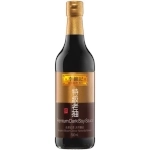
Specific directions it’s good to be able to at least “roughly” distinguish
- Chinese logic (light and dark) – in practice a sauce for saltiness and a sauce for color and a rounder tone are often combined.
- Japanese logic (shoyu as a separate world) – the most precisely classified system. It’s useful to know at least a few traditional types: koikuchi as a universal direction, usukuchi for a lighter color of broths and ingredients, tamari as thicker and more “soy-forward” (but not automatically gluten-free) and other specialized styles.
- Korean line (ganjang in the broader context of jang) – comes from its own system of fermented soy bases.
- Southeast Asia and sweet directions – typically kecap manis (sweet, thicker, glazing logic). It’s important not to perceive it as “regular” soy sauce, because it can fundamentally throw off the sweetness and overall tone of a dish.
Fermented pastes: miso, doenjang, gochujang (and why they behave differently than sauce)
Fermented pastes are more concentrated than soy sauces – not only in flavor but also in how they are used. In practice they often function as a flavor backbone: they provide saltiness, umami and a fermentation “body,” but they also add a certain texture (thickness, creaminess) and specific aroma.
It's important not to expect them to behave like a liquid seasoning: you usually need to work the paste in (for example, whisk into a small portion of the liquid, mix with oil or another sauce ingredient) so it distributes evenly.
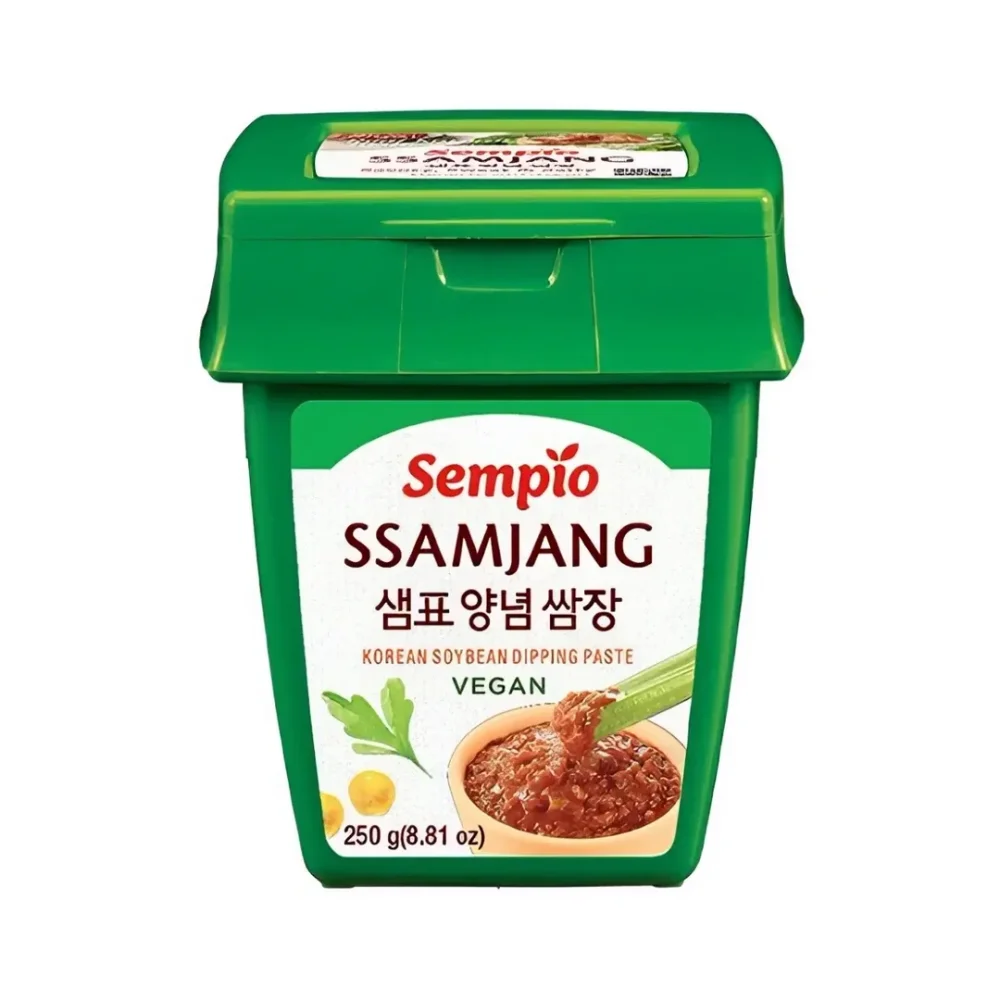
A practical example from the Korean direction is a paste like ssamjang – a fermented soy base combined with other bold ingredients. If you want to see what a “finished” Korean flavor base based on fermented soy looks like, you can use as a reference Sempio ssamjang soybean paste. Treat it as a different tool than soy sauce: it thickens and builds flavor more than simply adding salt.
Special tofu forms: fermented tofu, marinated/smoked tofu, yuba and aburaage
Besides liquid sauces and pastes there is a group of “special” forms that expand the idea of what can come from soy – and above all bring a different texture and different culinary behavior.
- Fermented tofu – a pronounced fermented product that can function as an aromatic component (sometimes even a “seasoning” character) as well as a standalone element in a dish. With this one it's especially true that you should decide in advance whether you want it as the main flavor or just as a supporting accent.
- Marinated or smoked tofu – it’s not just “different packaging of tofu.” The changed flavor and structure shift its use: instead of being a neutral carrier of marinade you get tofu that contributes its own taste to the dish.
- Yuba (tofu skin, the “skin” from soy milk) – is created by collecting the layer that forms on the surface of heated soy milk. It has an independent, gently layered and flexible structure and is suitable for more delicate dishes, rolls, soups and vegetarian compositions where you want a “leaf-like” density rather than a block.
- Aburaage (fried tofu) – a completely different texture and flavor than a regular tofu block. It's especially useful where you need the ingredient to absorb liquid: into soups, broths, rice dishes and Japanese and Korean dishes.
These forms are useful mentally as well: they help stop perceiving soy as one interchangeable category and start seeing it as a family of ingredients with different techniques and outcomes.
🍳 How to choose in practice: home minimum, reading the label and first use
With fermented soy products it's worthwhile to proceed opposite to common “seasonings”: don't start by expanding your range, but by a clear role. The following steps are a practical onboarding that works whether you cook more Chinese, Japanese, Korean or a mix.
1) Build your base on one universal soy sauce
For everyday cooking it's most important to have one “working” soy sauce that you'll use in woks, noodles, rice, marinades and simple dips. As a concrete example of a light working sauce you can use Dek Som Boon light soy sauce (recipe C).
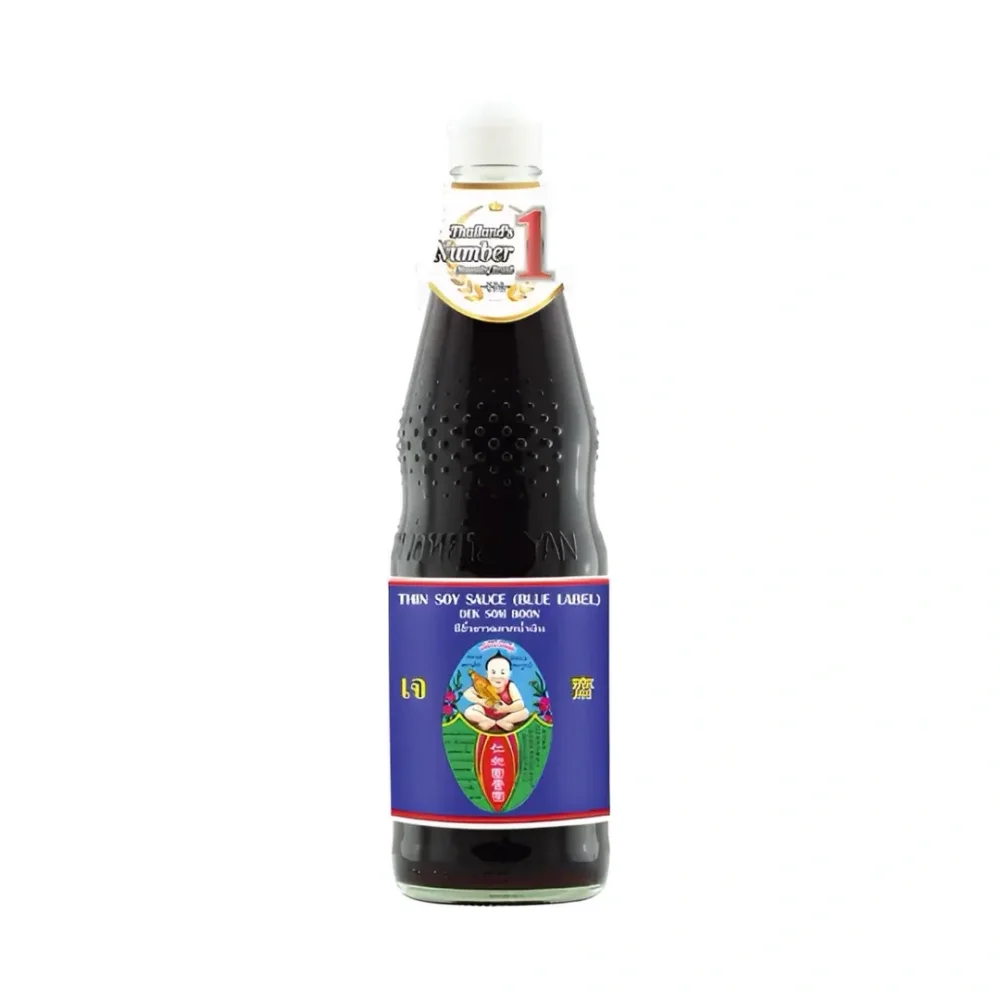
Dosing to start: with an unfamiliar sauce it's better to start in small steps (typically by teaspoons), because soy sauce adds not only salt to a dish but also aroma and a fermentation note. It's easy to “over-salt” without the dish tasting explicitly salty – it will just be flatter and overwhelmed.
2) If a recipe requires more than salt, add a targeted “second role”
- A darker style makes sense when you need more color and a rounder tone (typically in some Chinese preparations). Use it deliberately, not automatically instead of a light sauce.
- A sweet style (e.g. kecap manis) is its own discipline: it's thicker, glazing and sweet. Use it where sweetness makes sense – not as a universal substitute for “regular” soy sauce.
3) For pastes watch two things: concentration and even incorporation
Fermented pastes (miso, doenjang, gochujang and related mixes) are flavor-concentrated. In practice it often works to:
- add them in smaller amounts and taste,
- first mix them into a small portion of the liquid or sauce so there aren't pockets of intense flavor,
- expect that pastes often at the same time season with salt – and adjust other salty components accordingly.
4) For special tofu forms choose according to texture and what should absorb flavor
- Do you want the ingredient to absorb broth or sauce? Aburaage is typically a good candidate.
- Do you want a layered “leafy” texture for rolls or for delicate dishes? Yuba behaves differently from a block of tofu – take that into account when selecting and slicing.
- Do you want the soy component to be distinctive on its own? Reach for fermented tofu or tofu that already has its own flavor character (e.g., in brine, smoked).
5) How to read a soy sauce label (quick minimum)
- The product name is more important than the color – alongside pure soy sauces there are mushroom variants, seasoning sauces and various flavored blends.
- Ingredients – a simpler ingredient list often means a “cleaner” profile for versatile use; a longer list can indicate styling toward a specific effect.
- Allergens – most commonly soy and wheat. For styles like tamari, note: it is not correct to automatically assume gluten-free; you need to read the specific bottle.
- Salt – for soy sauce this is a key parameter. High saltiness by itself doesn’t mean “good/bad,” but it means you must dose the sauce as a strong seasoning, not as an everyday liquid.
Common mistakes and misunderstandings (and how to fix them quickly)
- Role confusion: expecting a paste to replace a sauce or vice versa. Fix: think of pastes as “building flavor,” and sauces as “seasoning and binding.”
- “Light” = less salty: for soy sauces this may not be true. Fix: treat “light/dark” primarily as information about style and use, not as a nutritional promise.
- Mechanical substitution of light and sweet soy sauce: sweet styles have a different logic (viscosity, sweetness, glazing). Fix: use the sweet style intentionally where you want a darker, rounder, sweet‑and‑salty result.
- “Tamari is always gluten-free”: it often contains less wheat than common shoyu, but the automatic conclusion is wrong. Fix: check the specific ingredients and allergens.
- Too large an initial dose: flavors of fermented products can quickly “flip.” Fix: dose in small steps and add gradually – especially with sauces and pastes.
- Disappointment with “special tofu” because it isn’t like tofu: yuba and aburaage are not substitutes for a block of tofu. Fix: choose them for a specific texture (layering/absorbency), not as “other tofu.”
What to take away from the article
- Choose fermented and specialty soy products according to their role in the dish: flavor base vs. main ingredient.
- Soy sauce is a family of styles, not a single universal bottle; “light” and “dark” do not mean the same everywhere.
- Fermented pastes (miso, doenjang, gochujang and related blends) are concentrated and require different handling than liquid sauce.
- Yuba and aburaage make sense when you want a specific texture (layering, absorbency) – not when you are simply looking for a “tofu variant.”
- The quickest route to a good result is to start with one working soy sauce and only then add specialized roles (color, sweet glaze, paste).

Read next
If you want to explore this topic further, continue with these related blog guides and articles:
