


 Česky (CZK)
 Slovensky (EUR)
 Deutsch (EUR)
 Austria
 Belgium
 Bulgaria
 Croatia
 Denmark
 Estonia
 Finland
 France
 Germany
 Greece
 Hungary
 Italy
Italy Latvia
 Lithuania
 Luxembourg
 Netherlands
 Poland
 Portugal
 Romania
 Slovenia
 Spain
Spain Sweden










How to start with Taiwanese cuisine: first dishes, flavor logic, and mistakes that unnecessarily hold you back
Taiwanese cuisine is not just bubble tea and night markets. It is an independent, vibrant, and surprisingly diverse world where several layers of influences meet – and that's exactly why you can enter it smartly and step by step. In this guide, you will clarify what is typical for Taiwanese food, what the "Taiwanese taste" looks like in practice, and which first steps make the most sense at home without having to "cook the whole Taiwan" right away.
What to imagine under Taiwanese cuisine (and why it’s not just a "Chinese offshoot")
Taiwanese cuisine was created on an island with its own historical development and an exceptionally strong blend of influences. Alongside local Taiwanese styles, various Chinese regional cuisines, a prominent Hakka layer, indigenous traditions, Japanese heritage, and modern urban food culture all come together here.
For a beginner, this leads to a simple and practical fact: it doesn’t make sense to try to simplify it to a single "correct" form. It works much better to select several typical principles (rice and bowls, broth, toppings, textures, small portions) and gradually "get a feel" for the cuisine through them.
🌶️ What is really typical for Taiwanese food: small portions, broth, and texture
Taiwanese cuisine stands on several firm principles. Once you understand them, you will navigate it faster than by a list of "famous dishes":
- Diversity of influences and styles – one cuisine, multiple layers.
- Strong role of snacks, small dishes, and night markets – "small" does not mean "unimportant."
- Interconnection of rice, noodles, soups, street food, and home cooking – the same principles recur in different forms.
- Light but distinct seasoning – it’s often not about extremes but precision.
- Importance of texture – contrast of soft and crispy, work with starchier coatings, "mouthfeel."
- Major role of pork, chicken, seafood, tofu, and broths – broth and toppings tend to be key, even when the dish looks simple.
Important context for starting: Taiwanese food doesn’t have to be very spicy or heavily seasoned. It often relies on a more subtle but very precise tuning of flavors – saltiness, light sweetness, broth depth, and final seasoning.
How to recognize the "Taiwanese taste": milder, broth-based, slightly sweet, and very textural
If you want to quickly check if you are on the right track, a simple orientation map can help. Taiwanese taste is often:
- milder but very clear (nothing "aggressive", rather precision),
- broth-based (depth and "roundness" of flavor),
- slightly sweet or sweet-sour (a subtle shift, not overpowering sugar),
- strongly textural (contrasts, coatings, toppings, starch elements),
- built on harmony between texture, broth/sauce, and final seasoning.
Practically, this means: if your home attempt seems "flat," it is often not about adding more of everything. More often it helps to fine-tune one specific thing: texture (something crispy or conversely juicy), broth depth, or final seasoning in a small amount.
Why Taiwanese cuisine is so diverse: five layers of influences worth seeing
It is diverse not because it "randomly mixes flavors," but because multiple culinary traditions actually meet on the island. For a beginner, this is mainly useful because they can choose an entry door based on what attracts them.
Local Taiwanese base
This layer holds together the everyday logic of food: bowls, simple rice or noodle dishes, soups, street food, and emphasis on even seemingly simple dishes having a clear flavor "drive."
Chinese regional influences
Taiwan carries more than one "Chinese" style – this diversity helps explain why noodle soups, dumplings, and various home dishes with sauce and rice naturally come together in one place.
Hakka cuisine
The Hakka layer traditionally associates with pragmatic cooking, more pronounced flavor, and preservation methods (salting, drying, and other forms of conservation). It’s a reminder that Taiwanese cuisine is not just about "urban hits" but also about richer and fuller dishes.
🕰️ Indigenous cuisine
Indigenous traditions bring a different relationship to nature and local ingredients, use of fresh catches or wild species, and cuisine reflecting the island’s biocultural diversity. This is also a reason why it makes sense to understand Taiwan as its own culinary world.
Japanese heritage and modern urban food culture
Japanese heritage and the modern urban world (night markets, tea shops) are part of how people eat today in Taiwan: small portions, snacks, focus on final seasoning, and making sure food "works" even in a fast city rhythm.
How to start with Taiwanese cuisine at home: not "everything," but a few key logics
Beginners often get stuck when trying to do too many new things at once. With Taiwanese cuisine, it pays to start the other way: pick a few logics that recur across dishes and build on them.
- Importance of rice and simple bowls – whether you are a "noodle" or "rice" person, bowls are a good start.
- Difference between a snack and a full meal – don’t expect every item to function as a main course; often it’s intentionally "small."
- Importance of texture – notice what is soft, what is crispy, what is juicy, and what is "coated."
- Light but precise seasoning – look for clarity instead of exaggerated intensity.
- Strong role of broth and toppings – toppings are not decoration but part of the flavor system.
- Night market and tea shop world – treat it as a natural part of the cuisine, not just a "tourist attraction."
Good first steps: which dishes to try as entry points
As first attempts, dishes that are representative in the Taiwanese context and teach you one of the key principles (broth, rice bowl, texture, dumplings, snack vs. meal) make sense:
- Beef noodles (beef noodle soup) – a good start if you want to understand the "broth" side and why depth of flavor is often more important than spiciness.
- Braised pork rice (rice bowl with braised pork) – teaches the logic of a simple bowl: rice + prominent ingredient + correct final seasoning.
- Oyster omelet (oyster omelet) – a typical example that texture is sometimes the main story of a dish.
- Danzai noodles – good for understanding noodles as "small portions" and the role of toppings.
- Xiao long bao or other stuffed dumplings – a great entry into the world of small dishes where dip and final seasoning largely decide.
- Basic form of bubble tea – a reminder that tea shop culture is part of how people eat and drink in Taiwan.
Tip for choosing your first dish: if you want quick success, choose one that has fewer steps and doesn’t "punish" small mistakes. If you want to understand technique, pick a dish that naturally leads you to one key thing (broth, rice work, balance of seasoning).
Final seasoning and small bowls: a detail that often decides
In Asian cuisines (and Taiwanese is no exception in how it works at the table), it’s useful to distinguish three things:
- sauce/paste for cooking (builds flavor during cooking),
- table dip (added at service, each person adjusts to their taste),
- final seasoning (small amount but big impact).
Beginners often benefit from a simple rule: when you feel the dish is "heavy" or "flat," try first small final seasoning (in small doses) instead of adding more salt, sugar, or spices to the whole pot from the start. The small bowl next to the main dish often decides if the result feels lively or monotonous.
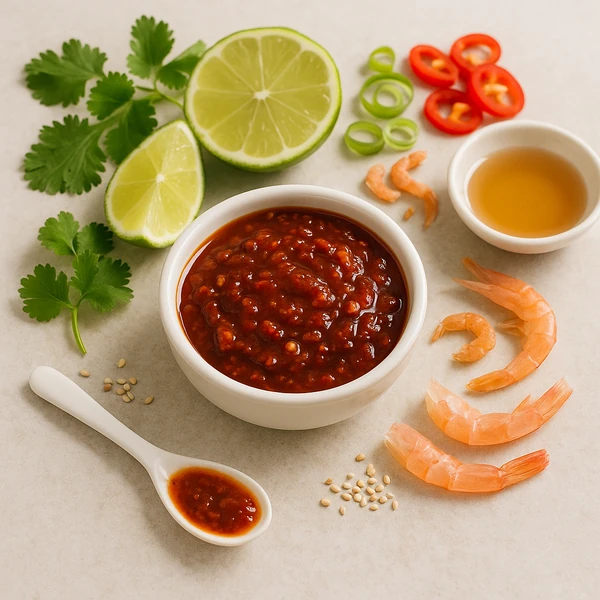
And if you want to quickly mix a dip at home without complicated cooking, stick to balancing four directions: salty base + acidity + sweetness + spiciness and aroma. Always add in small amounts (in drops, pinches) and taste to avoid just a "salty solution."
First purchase without overspending: start with a universal base and read labels
At the start, function matters more than impression. In practice, it’s worth following three simple rules:
- Always read the label: composition (especially the first items on the list), not the front name, is often decisive.
- Distinguish basic vs. seasoned product: some things are "building materials," others already seasoned for specific style use.
- Choose the right type, not just the right category: many disappointments come from buying something "similar in name" but different in purpose.
What works as a calm, universal start for home bowls and noodle dishes (without building huge stocks immediately):
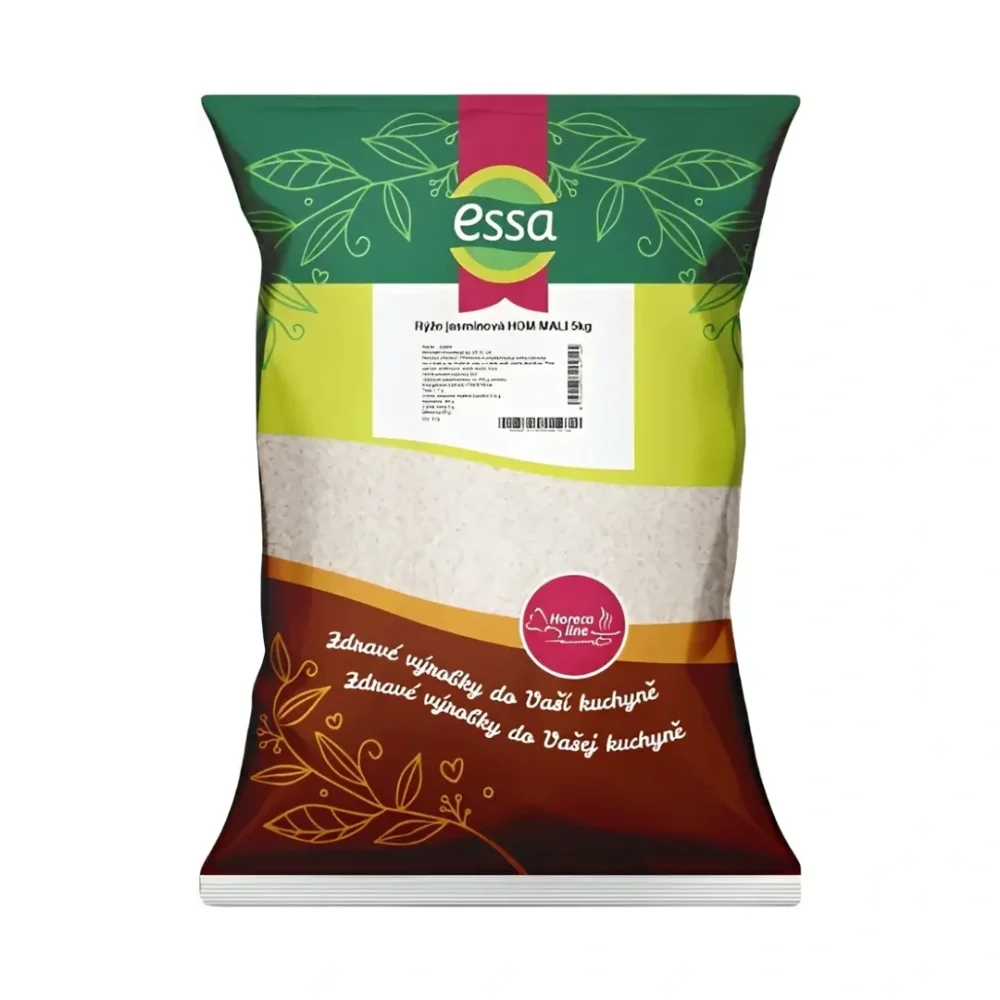
- Rice as a base for simple bowls. If you want to start with one large, reliable ingredient, aromatic rice like ESSA Hom Mali Jasmine Rice serves well (consider it a universal base for bowls, not the "definition" of Taiwanese rice).
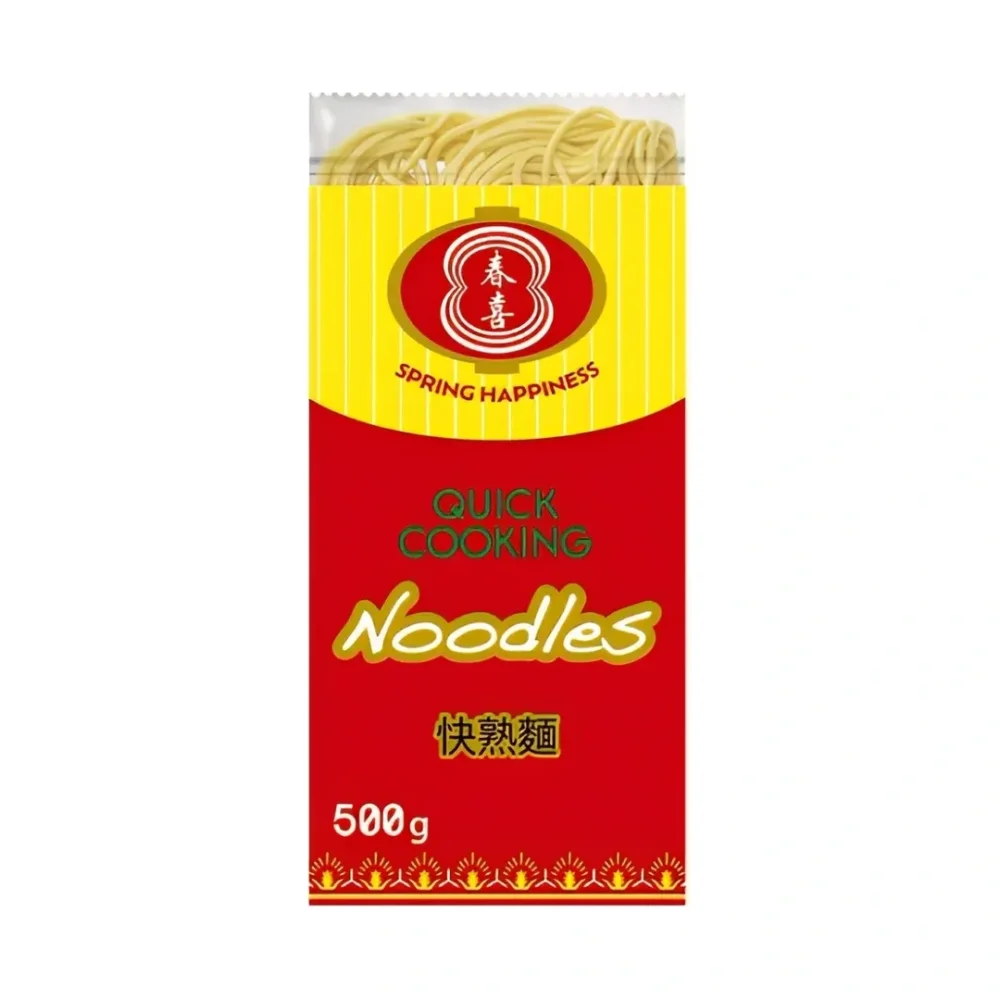
- Wheat noodles for soups and quick dishes where you want noodles to absorb broth or sauce well. A practical choice for first attempts might be Spring Happiness quick egg-free noodles.
What to avoid at the start: very narrowly specialized ingredients that have one use, require precise dosing, or you buy large packages just "to try." They’re not bad – just often not a good first step.
Most common mistakes at start (and how to fix them)
- Trying to "cook the whole Taiwan" at once → pick one logic (rice bowl / broth / dumplings / snack) and repeat it several times in different variants.
- Buying too wide a pantry without a plan → start with a few universal things and expand only when you know what you will really cook repeatedly.
- Choosing based on photo instead of technical demand → the first dish should teach one principle and tolerate small mistakes; the "wow" effect comes later.
- Confusing "fast" with "simple" → fast food can be technically demanding (timing, order of steps, preparation in advance).
- Underestimating preparation → for snacks, dumplings, and textural dishes, preparation and final seasoning often matter more than long cooking.
- Expecting Taiwanese food to be very spicy → instead of "more chili," seek harmony: broth/sauce + texture + toppings + small final tweak.
- Confusing table sauces with cooking basics → check whether the product is intended for cooking or serving; they work differently and do different jobs.
What to take away from the article
- Taiwanese cuisine is an independent and diverse system where multiple culinary layers meet – it is worth considering it as its own world.
- Typical are small portions and snacks, the combination of rice, noodles, and soups, distinct (but often milder) seasoning, and emphasis on texture.
- “Taiwanese flavor” is usually clear, broth-like, slightly sweet/sweet and sour, and textural; harmony is often more important than spiciness.
- Start at home through several logics: rice bowls, the difference between snacks and meals, textures, precise seasoning, broth and toppings, plus the context of night markets and tea shops.
- The first steps that make sense are beef noodles, braised pork rice, oyster omelet, danzai noodles, xiao long bao (or other dumplings), and bubble tea in its basic form.
- When shopping, read labels, distinguish between basic and seasoned products, and avoid overly specialized ingredients for the first try.

Read next
If you want to explore this topic further, continue with these related blog guides and articles:
