


 Česky (CZK)
 Slovensky (EUR)
 Deutsch (EUR)
 Austria
 Belgium
 Bulgaria
 Croatia
 Denmark
 Estonia
 Finland
 France
 Germany
 Greece
 Hungary
 Italy
Italy Latvia
 Lithuania
 Luxembourg
 Netherlands
 Poland
 Portugal
 Romania
 Slovenia
 Spain
Spain Sweden










Basic sauces of Asian cuisine: how to understand them and use them correctly
The basic sauces of Asian cuisine are not just “something for seasoning.” In many dishes they form the very flavor backbone: they determine whether the result will be merely salty and flat, or deep, layered and flavorfully “anchored” in a particular cuisine. This guide will help you understand the roles of individual sauces, choose a sensible basic set for the home kitchen, and avoid the most common mix-ups.
What belongs to “basic sauces” (and what less so)
In ordinary home practice, “Asian sauces” mixes several different types of seasonings. For orientation it’s useful to consider primarily those sauces and pastes that can take on a clear function in a dish: salting, carrying umami, rounding, thickening, glazing, or conversely “opening” the dish at the end.
Often lumped in the same drawer are sauces used mainly at serving (finishing), and alongside them various chili pastes that are not just about heat but also about fermentation, aroma and texture. In this article we therefore focus mainly on the logic of use and on why it’s not good to think in terms of “dark = same” or “spicy = one.”
How to think about Asian sauces correctly: role in the dish matters more than color
A sauce often determines not only whether a dish is salty or spicy. It decides, what type of saltiness the dish carries, where the umami comes from, whether it has fermentation depth, what the finish is like and whether the sauce functions as a “base” (cooked with) or as a “finishing” touch (added at the end).
Sauces that mainly salt and carry umami
Typically at the center here stand soy sauces and in many Southeast Asian cuisines also fish sauce. Both can provide saltiness and umami, but they do not behave the same: one is not automatically a substitute for the other and a small amount can have a big effect.
Sauces that bind and round the dish
This includes seasonings that often don’t come across as “sharp” or “weak,” but make the difference between a dish that holds together and one that tastes finished. In practice these are sauces used as part of the base or in finishing so that the flavor is rounder and longer.
Sauces that rely on sweet-salty thickness
In this family various thicker sauces with a pronounced sweet-salty line often recur. The important thing is that thickness usually implies a different role in the kitchen: rather glazing, “coating” the ingredient, stickiness and color than pure salting.
Sauces that elevate the dish at the end (finishing)
Finishing sauces are not used as a universal base in the pan. Their strength is that they lighten, highlight and give precision to a dish. A typical example is ponzu – a citrus-soy sauce that can “open” a finished dish.
Why Asian sauces are not automatically interchangeable
One of the most common mistakes is the idea that if two sauces are dark and salty, they will function similarly in the kitchen. That is a misconception. Dark color can mean completely different things: longer fermentation, higher proportion of sugar or caramelizing components, thicker texture, different soy-to-wheat ratio, presence of fish or oyster umami components, or simply a different regional style.
Likewise thickness does not guarantee a specific taste. A thick sauce can be sweet, fermented, starchy, glazing or meant for the table. Conversely a thin sauce can be extremely concentrated and “make the dish” with a few drops.
In home cooking it is therefore safer to think with questions:
- What is the main source of saltiness?
- What carries the umami?
- What adds color?
- What adds sweetness?
- Is it a cooking base, or a finishing at the end?
Soy sauces: the broadest and most versatile family (and also the biggest source of confusion)
Soy sauce is not a single ingredient with a fixed profile. Under the name “soy sauce” significantly different styles meet: Chinese light and dark sauces, Japanese shoyu in several traditional types, Korean ganjang, Thai soy sauces for wok and noodles, Filipino toyo and sweeter Southeast Asian variants. It’s no wonder there is confusion even about what “light” and “dark” mean – in different countries it may not be the same thing.
Why soy sauce tastes “more than just salty”
Taste does not arise just because a sauce is salty. During fermentation proteins and starches break down and create amino acids, organic acids, alcohols and many aromatic compounds. That is why a more fermented sauce in a dish can be rounder, longer and less flatly salty – a carrier of flavor, not just “salt in liquid form.”
🕰️ Brief history: where soy sauces came from
The roots of soy sauce lie in ancient China and connect to fermented salty seasonings from the jiang group. Originally it wasn’t just about soy; older forms also worked with meat, grains and salt. Gradually soybeans became the main raw material and liquid seasonings emerged, from which later soy sauces developed.
The idea of fermented salty sauces reached Japan from the Chinese cultural sphere; in Japan a path separated toward miso pastes and liquid shoyu. Korea developed its own soy fermentation line within the jang system (hence ganjang). Southeast Asia adapted soy sauces to local tastes – in some places the emphasis shifted more toward sweetness, elsewhere to pure saltiness or practical use in the wok.
Chinese logic: light and dark are not the same (and each has a different role)
In Chinese cooking people often work with the pair of light and dark soy sauces. Light is usually the “working” base for saltiness and flavor. Dark is used more where deeper color, rounder tone or a slightly sweet effect is desired.
Japanese logic: shoyu is its own world (koikuchi, usukuchi, tamari…)
The Japanese system is elaborate and practical. Basic types you commonly encounter:
- Koikuchi: the most common, balanced and versatile; often what is meant when a recipe says “shoyu.”
- Usukuchi: lighter in appearance but not necessarily less salty; suitable where the delicate color of broths and ingredients is important.
- Tamari: soy-forward, thicker and usually more pronounced; an important note: it is not correct to automatically assume gluten-free status.
🍳 Thai soy sauces: similar bottles, very different behavior in the kitchen
The Thai market is treacherous for a European cook because several types meet that look similar but are used differently:
- Thai light soy sauce: often a “working” salty sauce for woks, noodles, fried rice, vegetables and marinades.
- Thai dark soy sauce: used mainly for color and rounding, usually not as the sole source of saltiness.
- Thai sweet dark soy sauce: thicker, sweeter, closer to a glaze; a small amount can change color and the overall impression.
Fish sauce: saltiness, fermentation and very concentrated depth
Fish sauce is as fundamental to Southeast Asia as soy sauce is to much of East Asia. Beginners often underestimate it or reduce it to a “strongly fishy” component. More accurate is to understand it as a tool that in small amounts brings high flavor concentration, saltiness, umami and fermentation depth – and can “build” an entire dish.
Important is that fish sauce does not behave as a direct substitute for soy sauce. In some dishes it can take on a similar salting and umami role, but its profile tends to be sharper, more aromatic and very effective in small doses. It is typically key in Thai, Vietnamese, Filipino, Cambodian and other Southeast Asian cuisines.
How to read a fish sauce label: 4 things that tell you the most
- Ingredients: the simpler the better. The base usually consists mainly of fish/fish extract, salt and possibly water. A longer ingredient list, colorings and flavor enhancers often indicate a “stylized” product.
- Type of fish: you will often see anchovies or extract from them, which is common.
- Clarity and appearance: a good fish sauce is clear, from light amber to darker reddish-brown. Cloudiness and heavy sediment are not a plus; slight salt crystals are fine.
- N / total nitrogen labeling: higher nitrogen usually means higher concentration of broken-down proteins (i.e., “more flavor” in a small amount).
Practical: how to start using fish sauce at home
Start cautiously. In a hot dish it is often enough to add drop by drop or in 1/4–1/2 teaspoon increments, stir and taste. If you “overshoot” with fish sauce, the dish will not only be salty but may seem aromatically overloaded. In that case dilute (broth, water), round (a little sugar) or balance with acidity.
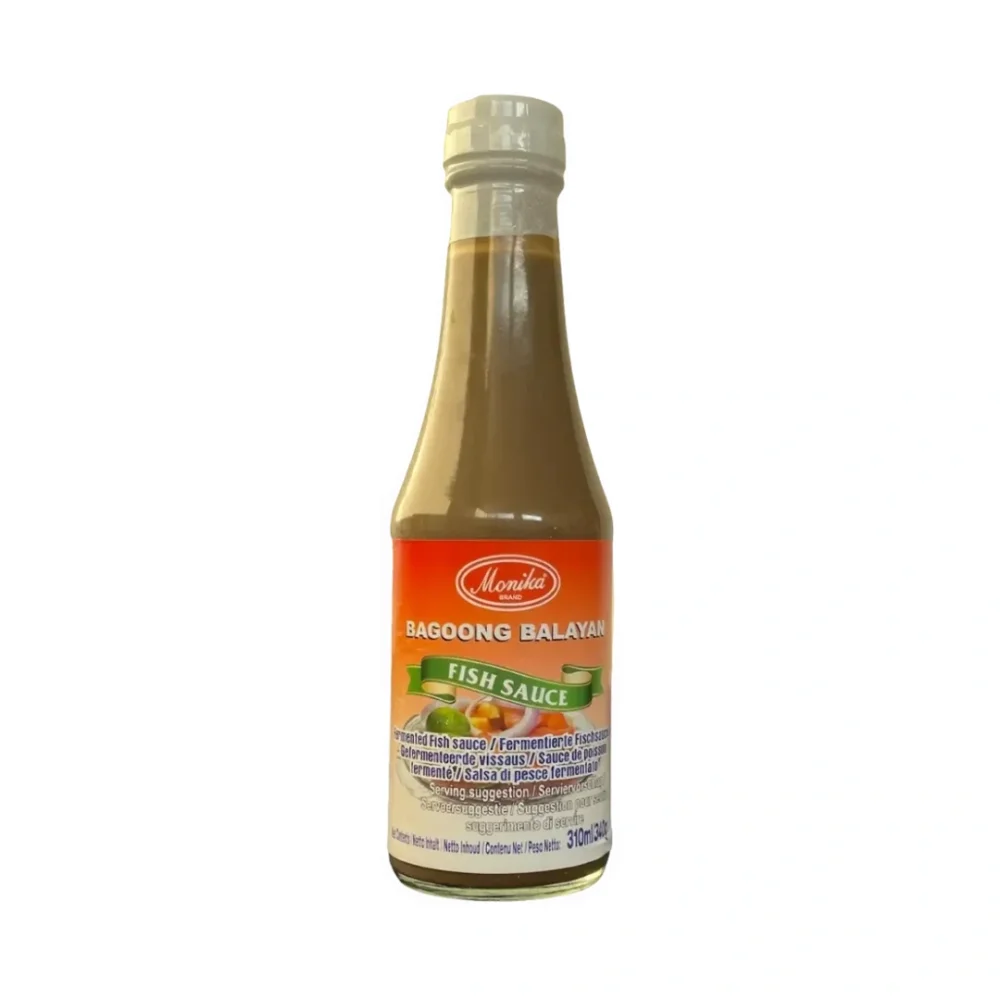
As a concrete example of a strongly umami style you can use Monika fermented fish sauce Balayan – a type of sauce where it makes sense to start really with very small doses.
Substitutes for fish sauce (when you can’t or don’t want to use it)
A substitute will not be exactly the same, because fish sauce combines saltiness, fermentation, umami and a specific aroma. Depending on the situation you can work with alternatives:
- When you mainly need saltiness and umami: soy sauce, tamari, a mix of soy sauce and a little miso, or soy sauce with a mushroom component.
- When you also need a fermented tone: miso dissolved in a small amount of water, a combination of soy sauce, miso and a drop of rice vinegar.
- For a dip: soy sauce + lime + sugar + a bit of miso (expect the resulting profile not to be identical to nước mắm/nam pla, but it can be flavorfully balanced).
Chili sauces and chili pastes: heat alone is not enough
Chili sauces and chili pastes are among the most distinctive seasonings, but under the single word “chili” very different things hide in practice: thin vinegar-and-sugar sauces, thick fermented pastes, cooked or fried chili mixtures with oil, chili oils and coarse relishes meant for direct serving. Someone who distinguishes only by heat often ends up with a dish that is sharp but flavor-wise flat.
Basic groups of chili seasonings (and how they are typically used)
- Thin chili sauces: often acidic and “table” sauces, suitable for dipping or quick seasoning.
- Thick fermented pastes: besides heat they bring fermented depth and umami; they often form the base of a sauce when cooking.
- Cooked/roasted/fried chili pastes: more complex, often with pronounced aromatics; suitable for bases and seasoning alike.
- Chili oils: more of an aromatic finishing – dosed drop by drop.
- Coarse relishes: more about texture and direct spoonable flavor alongside the dish.
Thailand: sriracha is not always the same, nam chim kai and nam prik pao have different functions
Thai cuisine does not work with one universal chili sauce. For example, sriracha (Si Racha style) was historically associated with the town of Si Racha; the original Thai style was thinner, more acidic, garlicky and suitable for simpler dishes (fish, seafood). Today the word sriracha is used widely and it’s not good to assume that all srirachas behave the same in the kitchen.
Nam chim kai (sweet chili sauce) is typically sweet, lightly spicy and slightly acidic – it works well with fried foods and snacks. Nam prik pao (roasted/fried chili paste) is usually more complex and often plays the role of a deeper base or pronounced seasoning.
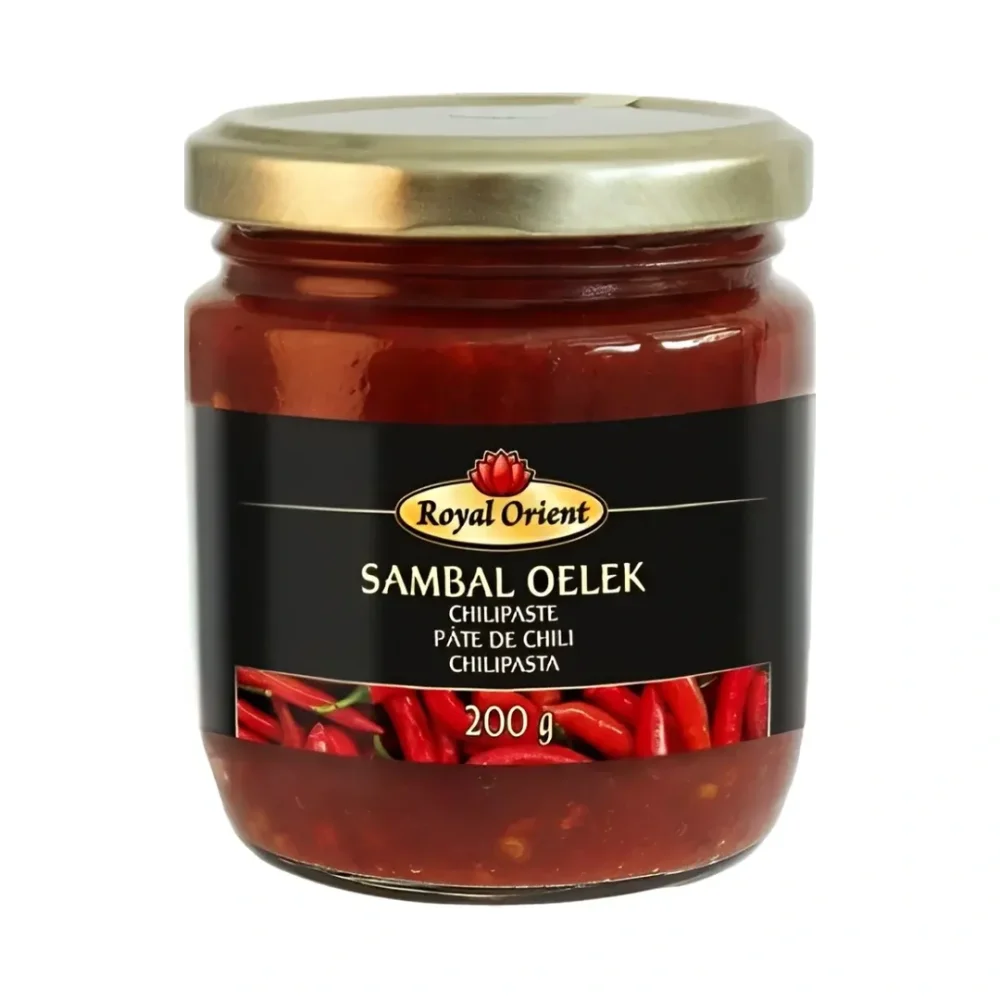
If you want “pure heat without side flavors” at home, a simple chili paste like Royal Orient Sambal Oelek (crushed chili with salt) is practical – it can be easily dosed and added gradually.
China: fermented pastes and chili oils (doubanjiang, “ma la” logic)
In the Chinese chili world you will often encounter two lines in home practice: fermented pastes and chili oils. An important concept is also the profile ma la (combination of chili and Sichuan pepper – spicy and numbing), which is different from “pure” heat.
Japan: chili more as a precise finishing (rayu)
Japanese cuisine generally does not build on “big chili aggression,” but chili has a clear role. A typical example is rayu (chili oil, often on sesame oil), which is used as an aromatic finishing for gyoza, ramen or simple dips.
Ponzu: citrus-soy finishing sauces for freshness and contrast
Ponzu represents a different logic than sauces built on thickness or glaze. Its strength is that it can make a dish open up, lighten, and enhance. It is most beneficial with tofu, fish and seafood, hot pot, more delicate meats and vegetables – basically where a fresher, sharper contrast is needed.
Key principle: ponzu is best understood as a finishing, not as a universal cooking base. When used in the wrong place, it can unnecessarily thin or break the result.
Practical onboarding: how to build a home “sauce kit”
The fastest route to more confident results isn’t buying ten bottles, but choosing a few sauces so each has a clear function. A practical home logic is to cover these roles: saltiness+umami, spiciness (ideally in two forms: for cooking and for finishing), sweet-and-sour element and finishing for freshness.
1) One “workhorse” soy sauce + (optionally) a second for color/rounding
If you cook across cuisines, it pays to start with one versatile soy sauce you can both cook with and use at the table. Only when you encounter recipes where color and the specific role of a darker sauce matter does it make sense to add a second type. Watching the light/dark detail is important mainly because it doesn’t mean the same thing in different countries.
2) Fish sauce for Southeast Asian cuisines (use sparingly)
If you cook Thai or Vietnamese food, fish sauce is often what makes the difference between “something salty” and a flavor with proper depth. Start with small amounts and taste as you go.
👃 3) Chili: separately a “clean spiciness for cooking” and separately an “aromatic finishing”
For everyday cooking it’s practical to have one chili paste/sauce you can add to soup, noodles, or sauce and control the heat gradually. An example of a simple profile is Sambal Oelek. And if you enjoy chili oils, treat them more as a finishing (at the end), not as the only source of heat for the whole dish.
4) Sweet-and-sour element: tamarind as a practical shortcut to a “pad thai” logic
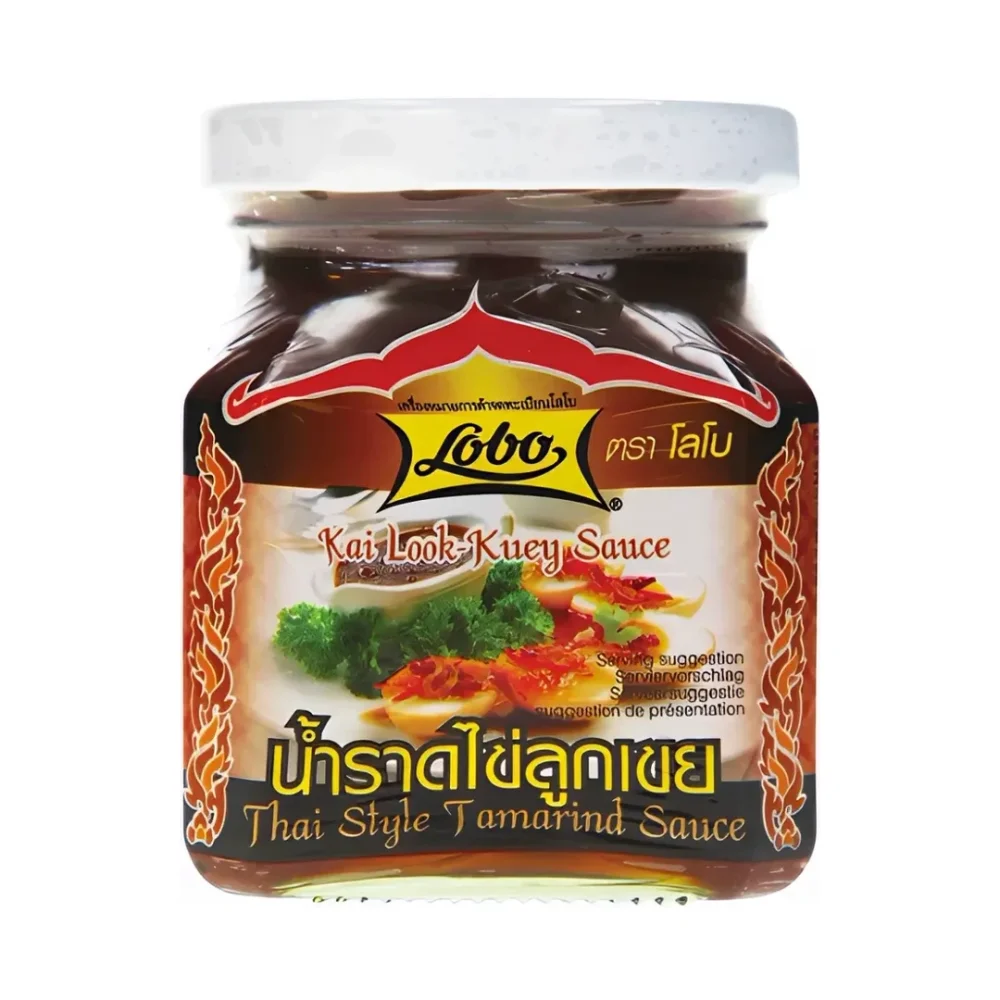
The sweet-and-sour plane is essential in some cuisines. If you want to quickly understand how acidity and sweetness can “lift” a sauce, tamarind is a good example. A practical demonstration is Lobo-style Thai tamarind sauce, which can be used in small amounts to fine-tune the sweet-and-sour balance (whether in noodles or for quick glazing).
5) Pastes as the flavor base: when the sauce isn’t “ready” but is being created
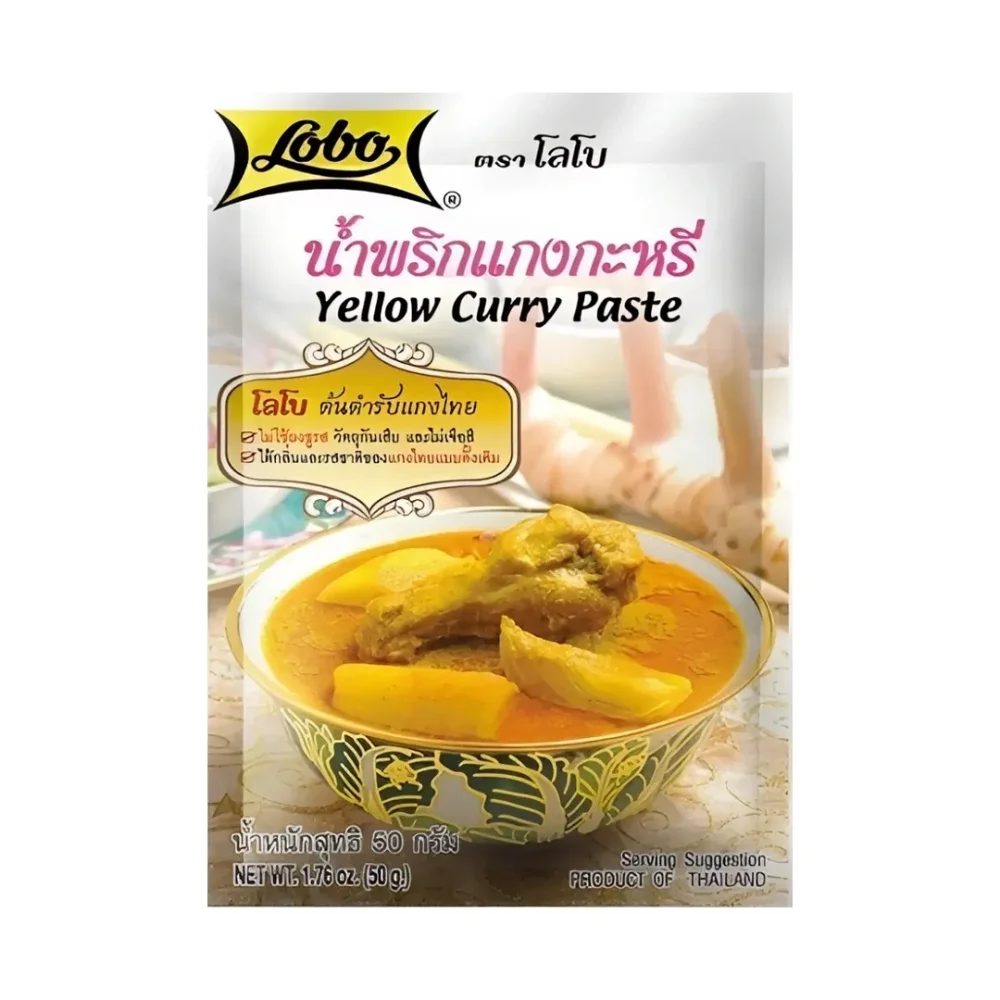
In some dishes the sauce is more the result of working with a paste than a finished bottle. Typically for curry: the paste is briefly fried in fat to release its aromas and then built up further (for example with coconut milk or stock). If you want to start simply, a representative “base from which the sauce is made” is Lobo yellow curry paste.
How to manage dosing at home (quick practice without laboratory precision)
- With concentrated sauces (fish sauce, some soy sauces) start with small amounts (drops to 1/2 teaspoon), always stir and taste.
- With chili it’s safer to add gradually than to “put out a fire” – heat is hard to take back.
- With finishing sauces (ponzu) prefer adding them at the end: you can easily tell whether they lift the dish or, conversely, break it.
- With sauces on the sweet-and-sour axis (tamarind) it’s good to taste in small steps, because a small difference in acidity can significantly change the impression.
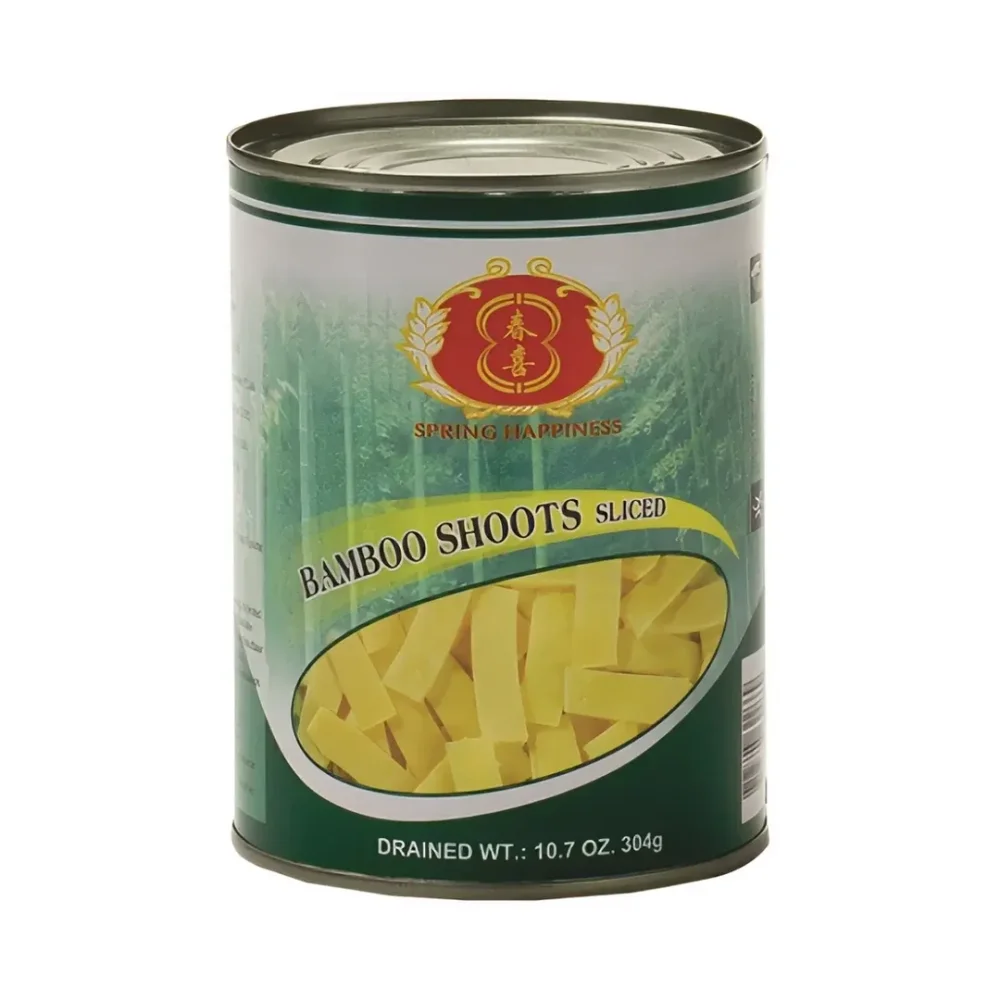
And a small practical thing that’s often overlooked: some ingredients work great precisely because they “carry the sauce.” For example Spring Happiness sliced bamboo shoots have a mild flavor and in wok or curry dishes absorb sauce well – so how you build the sauce will be even more readable in the result.
Most common mistakes and how to avoid them
1) “Dark and salty = interchangeable”
No. Dark color can come from fermentation, sugar, caramelization, a different texture, or a completely different regional style. When you swap a sauce, don’t ask “is it similarly dark?”, ask “what role did it play in that dish – salting, coloring, rounding, glazing?”
2) Confusing soy and fish sauce
In some situations they can play a similar role (saltiness + umami), but the profile and intensity are different. If fish sauce seems “too much” for you, add it drop by drop and make up the rest of the saltiness with soy sauce.
3) Distinguishing chili only by heat
A thin chili sauce with vinegar and sugar behaves differently than a fermented paste or chili oil. When you use chili as a cooking base, look for a type that can also carry umami/depth; when you use chili as a finishing, watch for aroma and dosing.
🍳 4) Using ponzu as a universal pan base
Ponzu is a finishing sauce. It should be a contrast, not the “main building material” of a sauce during cooking. If you add it too early or use it where thickness is needed, it can thin and break the dish.
5) Assuming “light” and “dark” mean the same everywhere
They don’t. In Chinese logic light and dark often play different roles. In Thai logic dark may serve mainly for color, and sweet dark is closer to a glaze. It’s always good to think about what role the sauce has in the specific dish.
6) Automatically assuming “tamari = gluten-free”
Tamari is often said to have less wheat than regular shoyu, but it’s not correct to automatically assume it’s gluten-free. If this is crucial for you, you need to check the specific product.
What to take away from the article
- Basic Asian sauces are not decoration: they are often the flavor backbone of a dish.
- Sauces are not automatically interchangeable based on color and saltiness; what matters is the role in the dish (saltiness, umami, color, sweetness, finishing).
- Soy sauce is an entire family of styles and “light/dark” doesn’t mean the same thing everywhere.
- Fish sauce is not just a “fishy taste” – it’s concentrated umami; dose it in small steps and the label (ingredients, clarity, N) tells you a lot.
- Chili is not one sauce: the difference between a thin sauce, a fermented paste, and chili oil is often more important than heat alone.
- Ponzu should be treated as a finishing: it can lighten and enhance a dish, but misused it can “thin” it.

Read next
If you want to explore this topic further, continue with these related blog guides and articles:
