


 Česky (CZK)
 Slovensky (EUR)
 Deutsch (EUR)
 Austria
 Belgium
 Bulgaria
 Croatia
 Denmark
 Estonia
 Finland
 France
 Germany
 Greece
 Hungary
 Italy
Italy Latvia
 Lithuania
 Luxembourg
 Netherlands
 Poland
 Portugal
 Romania
 Slovenia
 Spain
Spain Sweden










Typical Sri Lankan ingredients: what makes up the flavor of Sri Lanka and how to get started with it at home
Sri Lankan cuisine is not "Indian curry on an island." It is built on rice, coconut products, pronounced spices, chili and contrasts – alongside a gentle coconut component there is often acidity, heat and various sambols or pickled accompaniments. In this guide you will find typical Sri Lankan ingredients, their role in dishes, the main differences and practical tips on how to choose and use them.
If you want to cook convincingly Sri Lankan, it is not enough to "make a curry." It is important to understand which ingredients give Sri Lankan food its character: what forms the base, what creates the aroma, what adds acidity and why it is so important to have more accompaniments on the table, not just a single sauce.
🌶️ What is typical for Sri Lankan cuisine (and why not to be fooled by similarities with India)
Sri Lankan cuisine stands on several solid principles. At the center is rice, around it various curries (in the broad sense of the word) are arranged and accompanying them are sambols, pickles and other accompaniments, which add contrast and "kick" the flavor.
At first glance Sri Lanka may seem similar to some parts of southern India, but its flavor signature is often more built on coconut and often also on the combination of heat, saltiness, acidity and aromatic depth. It is also typical that the food does not always have to be extremely hot – rather it tends to be overall pronounced and full.
The diversity of Sri Lankan cuisine is also related to the fact that it is an island cuisine with various influences and communities. Common descriptions mention the Sinhala majority (everyday "rice + curry + accompaniments"), Tamil cuisine connected with the north and east of the island and the broader South Indian area, a Muslim and Malay layer (for example festive sweets like wattalappam) and also the Burgher heritage (for example lamprais). For home cooking this mainly means one thing: do not expect one universal "right" profile, but stick to the typical ingredients and their functions.
👃 The base of the plate: rice, coconut and simple aromatics
Rice as the center of the meal
Rice is the foundation of Sri Lankan meals, to which everything else is "added." This is important practically as well: when the rice is poorly chosen or poorly cooked, the whole meal loses rhythm and balance (because rice is supposed to balance the pronounced curries and accompaniments on the plate).
In traditional dishes one also addresses the correct type of rice or flour – this is emphasized for dishes like hoppers and pittu. Even if you don't cook them right away, it is good to know that "rice" in Sri Lankan cuisine is not just one universal item.
Coconut milk, fresh coconut and coconut sweeteners
Coconut is essential to Sri Lanka in several forms:
- coconut milk gives curries and other dishes body and a typical "gentle support",
- fresh coconut is also used in accompaniments and for texture,
- coconut sweeteners and the generally sweet component (including palm/kithul sweeteners – see below) help to complete certain contrasts and the sweeter parts of the cuisine.
A practical thing that often decides the outcome: for coconut bases the important factor is body. Too watery a coconut base can ruin curries and desserts – the food will then seem thin and flavorwise "washed out."
🍜 Garlic, onion and chili: simple ingredients that carry a large part of the flavor
Typical ingredients also include garlic, onion and chili. These are the basic building blocks that connect coconut, spices and other seasonings into one readable flavor. With chili it is also true that Sri Lankan food often is not just about heat but about overall punch – therefore it's good to work with chili so it doesn't "overpower" the rest.
👃 Aroma and depth: curry leaves and spices that make Sri Lankan cuisine Sri Lankan
👃 Curry leaves: the typical aroma that cannot be replaced by "curry powder"
On the list of typical ingredients appear curry leaves (curry leaves). It's good not to confuse them with what in Europe is often understood as "curry" (i.e. a prepared mix). Curry leaves are an aromatic component – their role is primarily in the aroma and character of the dish.
Cinnamon, cardamom, cloves and pepper
Sri Lankan cuisine works with spices boldly and often differently than someone used to a single universal "curry taste" might expect. Typical items mentioned include cinnamon, cardamom, cloves and pepper . (Including the fact that Sri Lanka is often associated with a more pronounced role for black pepper). In practice the main thing is that the spices have a lively aroma . Without it even the correct combinations will seem flat.
A simple rule from Sri Lankan quality cues applies when choosing: for spices watch for aroma, freshness and purity of composition. For Sri Lankan cuisine mixes and spices that smell "fresh" and not musty are key.
🍜 Acidity, the sea, dhal and sweeteners: ingredients that create contrast and the “Sri Lankan rhythm”
Tamarind and other sour components
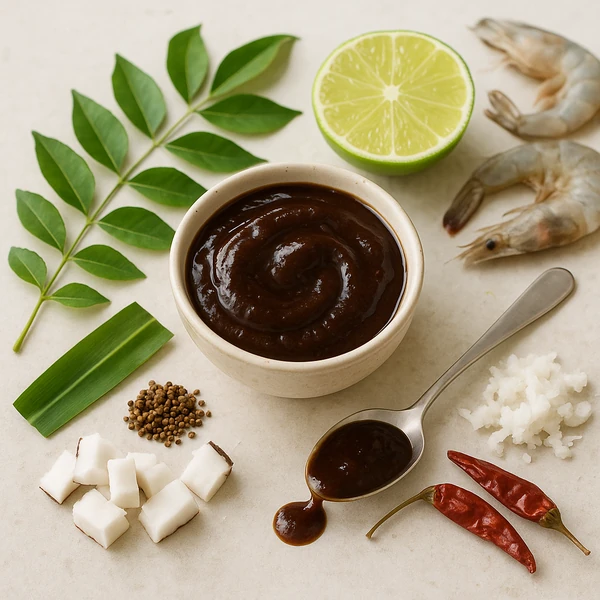
Working with the following is part of the Sri Lankan profile acidity – often combined with coconut richness and heat. Typical ingredients include tamarind (or other sour components depending on the specific dish). The sour element “opens” the dish and helps prevent the coconut and spices from feeling heavy.
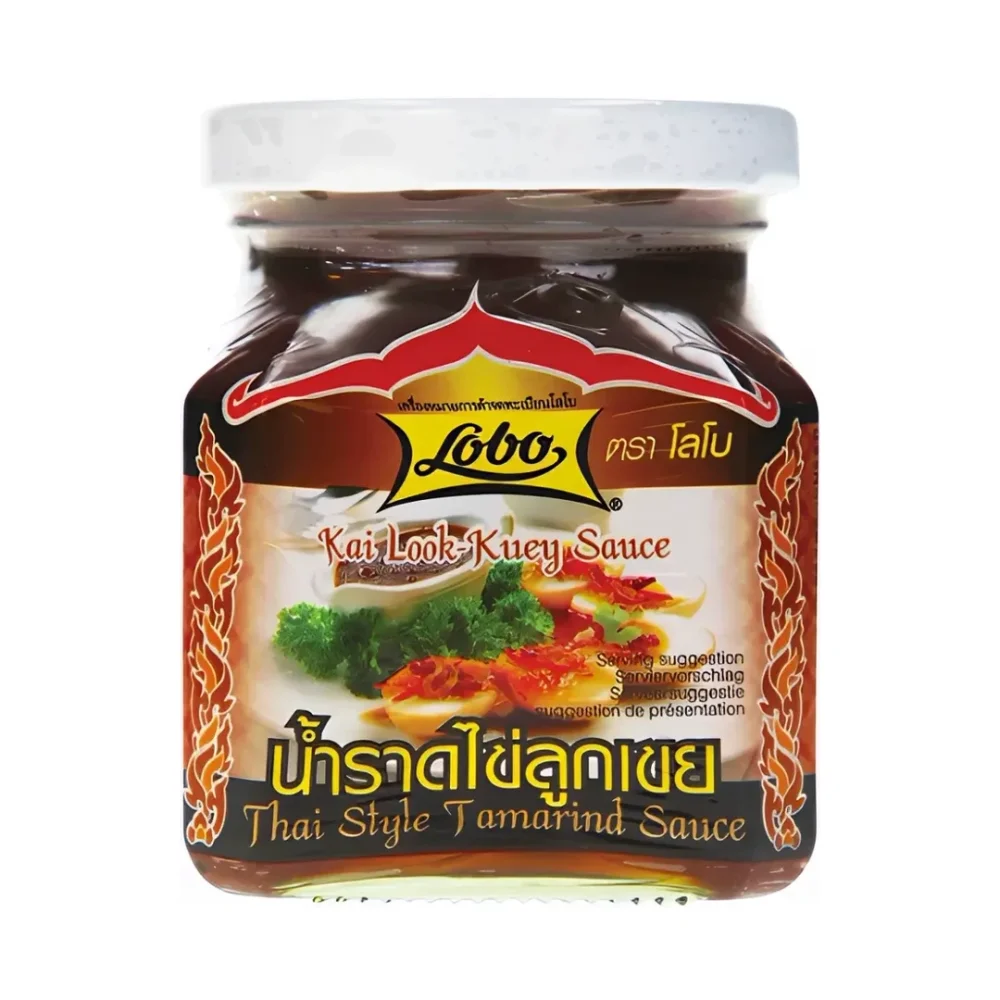
If you are starting at home and want to get comfortable with tamarind’s role, it can be practical to try a ready-made tamarind base and dose it gradually in small amounts. For example tamarind sauce (Thai style) can serve as an accessible taste of the tamarind sweet-and-sour line – just keep in mind that it is a product styled for a different cuisine, so its flavor may not exactly match what some Sri Lankan recipes expect.
Fish and seafood
Fish and seafood are also mentioned among typical ingredients fish and seafood. From a practical perspective this is an important signal that the “depth of flavor” in Sri Lankan cooking often doesn’t rely solely on spices and chili, but also on ingredients from the sea that support saltiness and overall intensity.
Dhal (legumes) as a calming base
Another typical ingredient is dhal. The legume component can create a thicker, calmer base in a dish that pairs well with coconut milk, spices and heat. For home cooking it’s also useful because dhal is “forgiving”: it tolerates strong seasoning and helps maintain the overall balance of the plate.
Palm and kithul sweetener
Typical ingredients also include palm or kithul sweetener. For orientation the main point is that the sweet component in Sri Lankan cuisine is not just “dessert sugar,” but part of a broader taste contrast – especially in a cuisine where heat, aroma and sourness often meet.
🍜 How to choose and use these ingredients in practice (onboarding for home cooking)
1) Don’t buy “everything Sri Lankan”: build a base according to function
A practical approach from the Asian pantry concept is simple: instead of buying random exotic items, ask yourself what function the ingredient has in the dish. For Sri Lankan-oriented cooking these functions will repeatedly come back:
- starchy base (typically rice),
- fat and aroma (coconut products + aromatics),
- heat (chili),
- acidity (tamarind or other sour components depending on the dish),
- sweetness (palm/kithul sweetener where it makes sense),
- aromatic depth (pepper, cinnamon, cardamom, clove, curry leaves).
This logic will help you shop so ingredients in the kitchen actually get used again and don’t remain “for a single attempt.”
2) Coconut milk is not a single standard: decide in advance what you want to cook
The packaging can easily be misleading with coconut milk – differences are usually in thickness, fat content, the ratio of coconut solids to water, stabilization and how the product behaves after opening and heating. In practice:
- for more pronounced curries and richer dishes a fuller, thicker type is usually appropriate,
- for lighter use a milder variant can make sense,
- for desserts, besides flavor, the consistencyis also crucial.
The most common home problem with Sri Lankan curries is a coconut base that is too watery – the dish then isn’t “gently coconutty,” but rather thin and bland.
3) Sambols and pickles: distinguish “table condiment” vs. “cooking base”
A Sri Lankan plate often relies on having, alongside rice and curry, additional condiments that you eat with the main dish. That’s why it’s important to distinguish whether a particular sambol/pickle serves as a table seasoning, part of the cooking, or whether it is a finished mix. A good mix should not only be hot – it should also have flavor character (acidity, saltiness, aroma).
🍜 4) Prepare ingredients before you turn on the stove (it prevents mistakes)
In Asian cooking preparation “on the board” often makes the difference. If you are still searching for and chopping aromatics and other components during cooking, it can easily happen that some parts burn before the rest is ready, or that the dish loses its rhythm. A simple home mise en place:
- have onion, garlic and chili chopped in advance,
- spices measured separately,
- the sour component (e.g., tamarind) prepared on the side so you can add it gradually.
It also makes sense to watch the surface moisture of some ingredients: beginners often throw wet ingredients straight into the pan, and instead of sautéing everything starts to steam. For dishes where you want pronounced flavor and control over aromatics, that is an unnecessary brake.
💡 Common mistakes and what to watch out for
- “Sri Lanka = always extremely spicy food” – Sri Lankan cuisine tends to be bold, but its strength often lies in contrasts (coconut creaminess beside a sour and spicy accent), not just maximum spiciness.
- Underestimating the quality of spices – in Sri Lankan cooking vibrant aroma is essential. If the spices don't smell, the food will be flat, even if “everything is there.”
- Treating coconut milk as a universal ingredient – differences in richness and composition are key for both curries and desserts. A watery coconut base is one of the most common causes of disappointment.
- Confusing a condiment with a base – with sambols and pickles, watch whether they are a table condiment, a cooking base, or a finished mix. Otherwise you can easily overshoot the heat or sourness (or conversely “lock” the dish into a single flavor).
- Mixing “strength” and “quality” – a strong flavor does not necessarily mean a high-quality ingredient. A general rule for good selection is to understand the ingredient's function, read the label, and distinguish whether you're buying a basic product or an already seasoned item.
- Shopping without a plan – the worst strategy is to take everything that seems “Asian.” It's better to build your pantry in layers: first the basics (rice, coconut, typical aromatics and spices), then specialization (curry leaves, tamarind, dhal, sweeteners).
What to take away from the article
- Sri Lankan cuisine is built on rice, coconut products, pronounced spices, chili, and contrasts including sourness and accompaniments like sambol/pickle.
- Typical ingredients are not just a “list”: it's important to know, what they do in the dish (coconut gives richness, acidity opens the flavor, spices carry aroma, accompaniments add contrast).
- The biggest difference in home results is often made by the quality and type of spices and the coconut base – watery coconut milk and non-aromatic spices will flatten even a good idea.
- For a confident start, shop “functionally”: a starchy base, coconut, aromatics, spices, acidity (tamarind) and one type of accompaniment – and only then expand the pantry.

Read next
If you want to explore this topic further, continue with these related blog guides and articles:
