


 Česky (CZK)
 Slovensky (EUR)
 Deutsch (EUR)
 Austria
 Belgium
 Bulgaria
 Croatia
 Denmark
 Estonia
 Finland
 France
 Germany
 Greece
 Hungary
 Italy
Italy Latvia
 Lithuania
 Luxembourg
 Netherlands
 Poland
 Portugal
 Romania
 Slovenia
 Spain
Spain Sweden










Sri Lankan curry and sambols: how they work together and why "rice & curry" doesn't make sense without them
Sri Lankan cuisine is not just "Indian curry on an island." It is built on rice, coconut, spices, chili, and mainly on a smart composition of the meal: alongside curry (in various forms) stand sambols, pickles, and other complements that precisely tune the heat, acidity, and contrast. Once you understand the role of sambol, Sri Lankan curries suddenly make much more sense.
Why in Sri Lanka "rice & curry" is always eaten as a whole
Sri Lankan dining often does not rely on a single "main plate" in the European sense. The core is rice surrounded by several smaller dishes and complements: curry (meat, fish, and vegetable), simple legume dishes, and then sambols, pickles, or other spicy and sour side dishes. Importantly, the individual parts correct and balance each other: one component adds creaminess from coconut, another heat, a third acidity, and a fourth the aromatic depth of spices.
This very "composition at the table" is the key to understanding why Sri Lankan curry is not evaluated just by how the sauce tastes alone, but by how it works together with rice and complements.
What is meant by the word "curry" in Sri Lanka (and why it’s good to be cautious)
In European contexts, the word curry often gets flattened into one thing (e.g., "curry sauce" or "curry paste"). But "curry" actually is a broad family of dishes and bases that differ by ingredients, technique, and final taste. That's why it's confusing to try to cover everything with a single product.
For domestic orientation, it helps to distinguish at least these three levels:
- Curry as a dish – a specific stewed/cooked dish that is eaten with rice and complements.
- Curry as seasoning – a spice mix that creates aromatic depth (in Sri Lanka, this also includes typical work with coconut, pepper, cinnamon, and sour components).
- Curry as a "base" – in some cuisines (and often in European shopping), this covers ready pastes, mixes, or other shortcuts. These can be practical but are not automatically representatives of the Sri Lankan style.
Sambol: a flavor corrector, not an "extra sauce"
Sri Lankan food would not be complete without sambols. Sambol is not just a spicy side on the corner of the plate – it is a very important element that gives the dish contrast and "spark." Practically, this means that even if the curry is milder or creamier (for instance, thanks to coconut), the sambol can cut through it and make the whole plate livelier.
Pol sambol: coconut, fresh, lightly sour
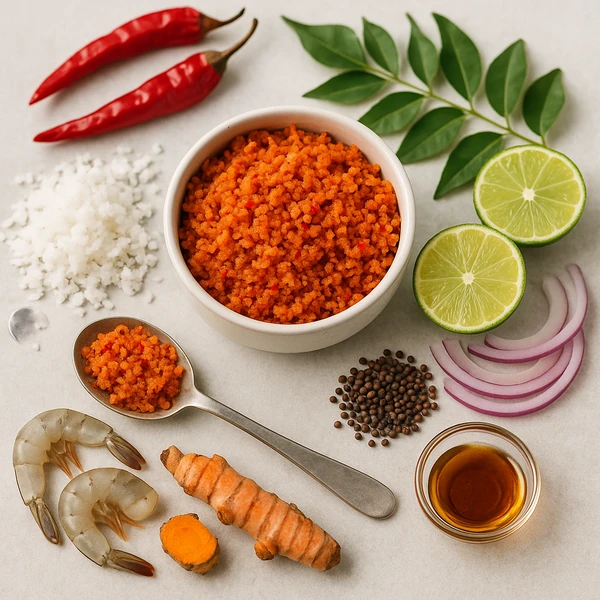
Pol sambol belongs to the most typical complements. It is based on grated coconut, chili, onion, and lime (and other possible ingredients depending on the household). The result is spicy, fresh, and lightly sour – exactly the type of contrast that can enliven rice, hoppers, and curry.
Lunu miris: intense chili-onion complement
Lunu miris is spicier and more straightforward. It is often served with kiribath (rice cooked in coconut milk) or with pittu (a traditional preparation with a coconut element). It’s a good example of sambol as a "heat controller": when you have more mild components on the plate, a small portion of lunu miris balances it out.
Pickles and achcharu: acidity and contrast
Besides sambols, pickles and achcharu – pickled and spicy complements that add acidity and flavor spark. They well demonstrate that Sri Lankan cuisine does not rely only on the "main dish" but on precisely placed accompaniments that together create a balanced plate.
👃 Coconut, spices, and acidity: the typical flavor logic of Sri Lanka
At first glance, Sri Lankan cuisine may resemble some parts of southern India, but it has its own flavor rhythm. In the data we have, the main pillars repeat: rice, a distinct role of coconut products, spices, frequent combination of heat, saltiness, acidity and aromatic depth, and also the importance of sambols and pickles.
For domestic understanding, it is useful to look at the taste of a Sri Lankan plate like this:
- Creaminess and “body” often come from coconut milk or fresh coconut.
- Aromatic depth rests on spices – including pepper, cinnamon, cardamom, and clove – and layering of aromas.
- Heat is common but not the only axis. It is important how the heat interacts with coconut and acidity so the dish isn’t just "spicy."
- Acidity often comes through tamarind or other acidic components depending on the specific dish and pickled complements.
Typical ingredients often appearing in Sri Lankan cuisine worth remembering: rice, coconut milk and coconut, garlic, onion, chili, curry leaves, cinnamon, cardamom, clove, pepper, tamarind (or other acidic components), fish and seafood products, dhal (legumes), and also palm or kithul sweeteners.
Regions and communities: why there are so many “Sri Lankan curries”
When you say "Sri Lankan cuisine," it's good to remember it is not one dominant tradition. Within the island, several communities and influences meet:
- Sinhalese majority – a large part of everyday cooking revolves around rice, curry, sambols, vegetable dishes, and coconut bases.
- Tamil cuisine – strongly connected with the north and east of the island and the broader South Indian area; may have different accents in spices and acidity.
- Muslim and Malay layer – brings specific festive elements and pronounced sweets.
- Burgher heritage – important, for example, for lamprais and other dishes connected with urban and colonial history.
In practice, this means that "Sri Lankan curry" is not one fixed recipe. It is often more about the shared logic of flavors and plate composition that differs by region, community, and household.
How to assemble a Sri Lankan plate at home (practically, without a full recipe)
If you want to start with the Sri Lankan style at home, it’s best not to aim right away at the perfect "one curry," but to try to build a simple composition: rice + one creamier curry + one spicy/sour complement. Only after that add more dishes.
🍽️ Starting combination: rice + one "curry" + sambol/pickle
- Rice as a neutral base.
- Curry as the main carrier of spices and (often) coconut creaminess.
- Sambol or pickle as contrast: heat, acidity, and "awakening" of flavor.
Even a simple plate starts working Sri Lankan-style the moment the complement is not decoration but a deliberately dosed element: one teaspoon adds sharpness, another teaspoon acidity, and suddenly the whole bite changes.
Acidity: a complement that is often missing
One of the most common issues with home "curry" is that although it is spicy and salty, the taste is flatter because it lacks acidic contrast. Sri Lankan cuisine, however, accounts for acidity (whether through tamarind, other acidic components, or pickled complements).
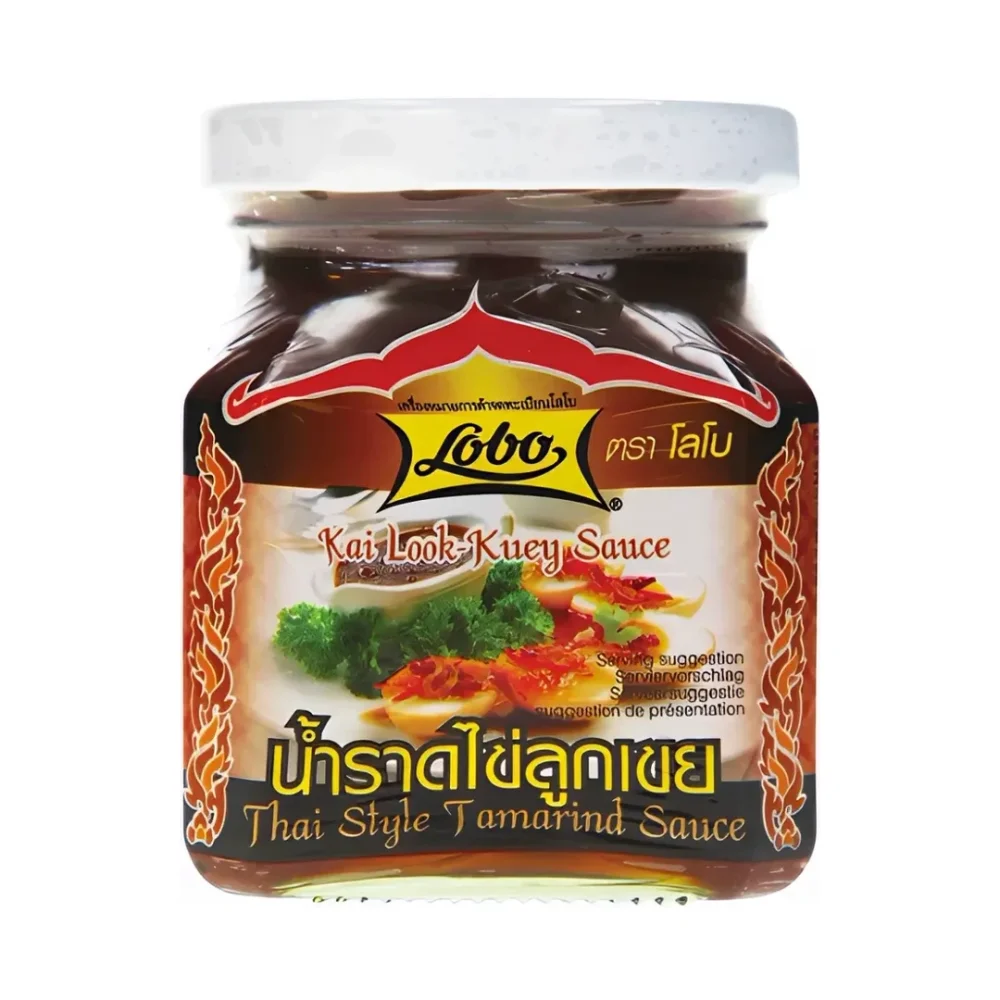
As a practical aid, a tamarind-style sauce can work, which you add bit by bit and taste, for example, Lobo tamarind sauce (Thai style). It’s important to treat it as a correction: start with a small amount (e.g., a tip of a teaspoon per portion) and add until the dish "lifts" – not until it only tastes like tamarind.
Chili: don’t measure heat only by “how spicy it is”
With hot components, it is useful to think that two equally spicy things can have a completely different culinary role. Sometimes you want chili as pure heat, other times as an aromatic base, and sometimes as a table condiment.
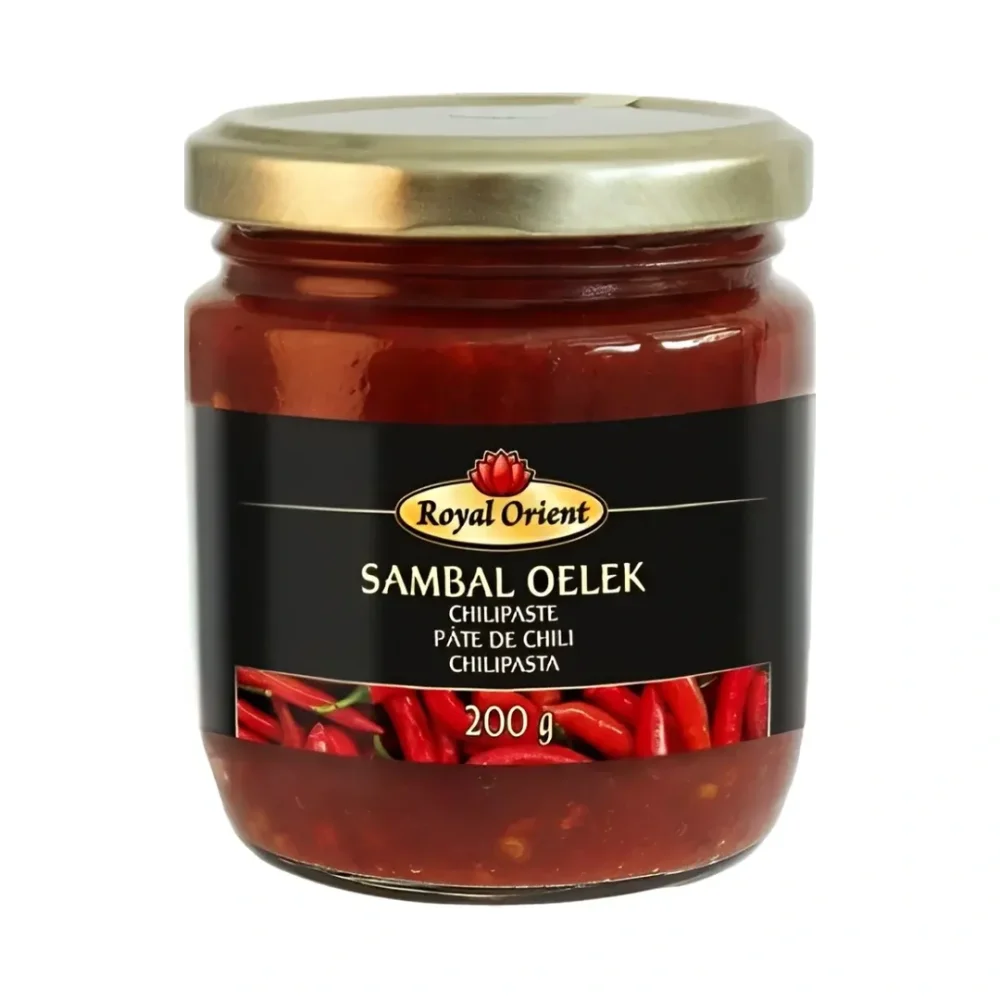
If you need to quickly add heat without additional flavors, a simple chili paste like Sambal Oelekcan serve. At the same time, it’s good to know that sambal (this chili paste) is not the same as Sri Lankan sambol: sambol is typically a "relish" with other ingredients (e.g., coconut, onion, lime), while sambal oelek is more direct chili seasoning. When you use sambal oelek instead of sambol, you’ll probably need to separately add acidity and “freshness.”
When you reach for a "curry paste": what you get (and what it is not)
For quick home cooking, people often use curry pastes. But it is important to realize that "curry paste" is not one universal thing: under the same word hide different styles (Thai pastes, Indian/British-Indian mixes and pastes, Japanese curry roux, etc.).
If you want to quickly build a coconut curry on an everyday day, a Thai yellow paste can be practical – for example, Cock Brand yellow curry paste. But treat it as a Thai base, not as "Sri Lankan curry in a cube." For a result that will look more like a Sri Lankan plate, it’s key to add the right context: rice and mainly sambol/pickle to add contrast.
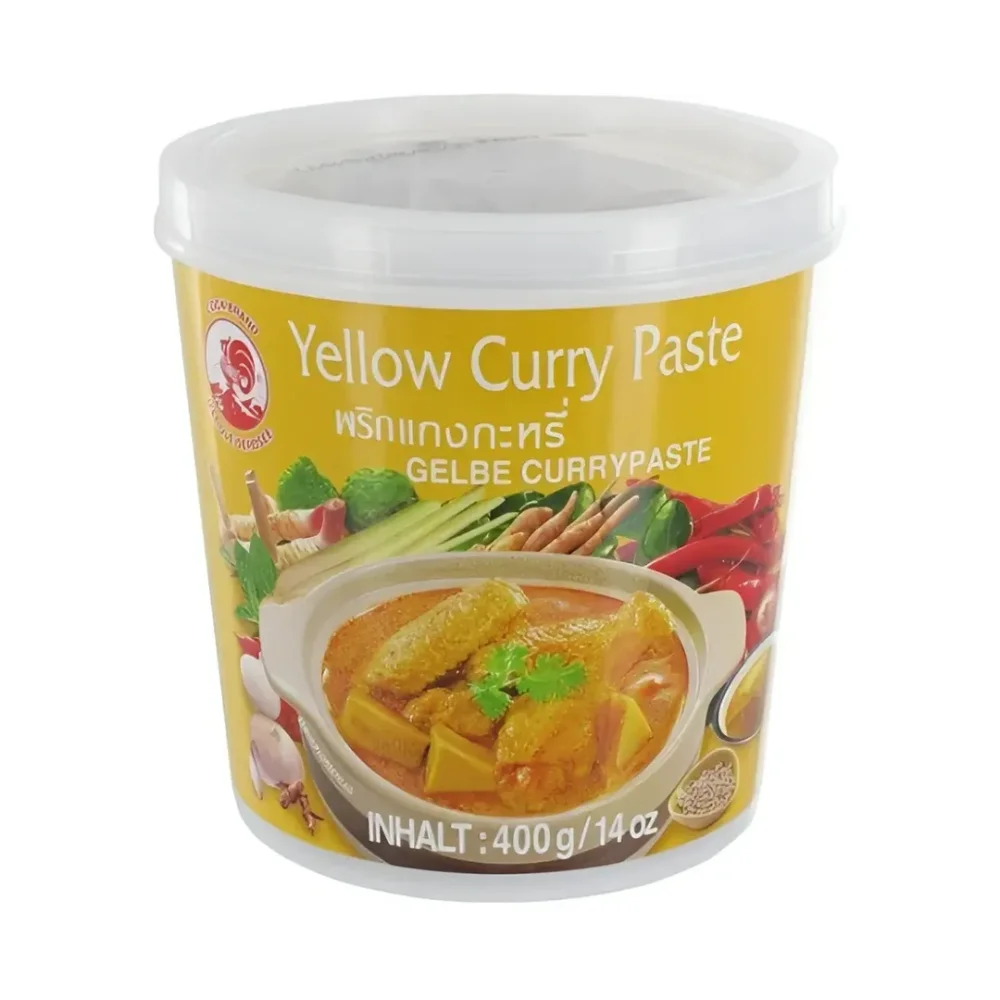
When choosing pastes, it helps more to look at how the paste is built (specific aromatic ingredients vs. vague “spice mix,” reasonable salt and sugar content, consistency that doesn't seem starchy only) than to look for the "spiciest" or "cheapest" option. Also think about allergens: some pastes may contain fish or shrimp components and sometimes gluten or allergen traces from production.
Most common mistakes about Sri Lankan curry and sambols
- "Sri Lankan cuisine is the same as South India." They share some roots and techniques but have their own flavor logic: a stronger role of coconut, different work with cinnamon, and a typical composition of food with sambols and pickles.
- "It's just very spicy curry." Spiciness is important, but Sri Lankan cuisine is not just about that. Equally important are complements, street food, ritual dishes, and the overall plate composition.
- "Sambol is just a chili side." Sambol is often the key to making the whole dish work: it adds contrast, acidity, and texture, not just heat.
- "Kottu is just leftover food." It is not – it is one of the iconic worlds of Sri Lankan street food (and it’s good not to see it as a random improvised dish without rules).
What to take from the article
- Sri Lankan "rice & curry" is mainly a composition – rice, curry, and precisely dosed complements.
- Sambol is not decoration or an "extra sauce," but a flavor corrector that often decides whether the plate will be lively or flat.
- The taste of Sri Lanka stands on coconut, spices, chili, and acidity; the key is how these elements work together.
- "Curry" is not one universal thing. Curry pastes can help as a shortcut, but it is important to know what style they represent and what they lack in the Sri Lankan context.

Read next
If you want to explore this topic further, continue with these related blog guides and articles:
