


 Česky (CZK)
 Slovensky (EUR)
 Deutsch (EUR)
 Austria
 Belgium
 Bulgaria
 Croatia
 Denmark
 Estonia
 Finland
 France
 Germany
 Greece
 Hungary
 Italy
Italy Latvia
 Lithuania
 Luxembourg
 Netherlands
 Poland
 Portugal
 Romania
 Slovenia
 Spain
Spain Sweden










The taste of Sri Lankan cuisine: coconut, spices, acidity and “rice and curry”
Sri Lankan cuisine is not just “Indian curry on an island.” It is a distinct flavor landscape built on rice, coconut products, bold spices, chili and important accompaniments like sambol and various pickled or sour components. You understand it best not through a single iconic dish, but through the way of dining: several different curries and accompaniments mixed together on the plate.
🌶️ What is truly typical for Sri Lankan cuisine
Sri Lankan flavor is often recognized by the fact that in one bite you get several contrasts at once: heat and saltiness, accompanied by acidity (or a pickled accent), and above that the aromatic depth of spices. At the same time, the role of coconut is very pronounced – not only as “creaminess,” but as part of the cuisine’s identity.
If you should remember a few reference points, they are:
- rice as the center of the meal (not a side dish, but the base to which everything relates),
- coconut products (coconut milk, fresh coconut and coconut sweeteners),
- spices (typically with an accent of black pepper, cinnamon and other aromatic components),
- chili and an emphasis on intensity of seasoning,
- sambols, pickles and accompaniments, which add freshness, acidity and texture,
- shared dining – several bowls on the table and free mixing of flavors.
It is also important that Sri Lankan cuisine may at first glance resemble parts of South India, but on closer tasting it is “arranged differently”: it works more intensively with coconut, with pepper and cinnamon and with sour or pickled elements.
Why Sri Lankan cuisine is so diverse
“Sri Lankan cuisine” is not just one style. It is a set of culinary layers that make sense together – and that is reflected in the taste on the plate.
Island geography
The island character practically translates into the fact that fish and seafood often play a role in the flavors, and that alongside heavier curries there are also fresher, tangier accompaniments. Geography alone does not explain everything, but it helps understand why alongside “saucy” dishes there is naturally a line of salty marine accents and quick accompaniments to rice.
Historical influences
Sri Lanka also has a layer of dishes that recall urban and colonial history. A typical example is lamprais – a dish with Dutch-Burgher heritage where rice and other components are wrapped in a leaf and baked. For the flavor profile it is important mainly as a reminder that alongside “home-style rice and curry” there are other traditions and different ways of constructing a meal.
Ethnic and religious diversity
When talking about Sri Lankan cuisine, it is useful not to perceive it as a single dominant tradition. Besides the Sinhalese majority, where everyday cooking is often built around rice, curry, sambols, vegetable dishes and coconut bases, there is also a prominent Tamil cuisine (closely connected with the north and east of the island and the wider South Indian sphere) and also the Muslim and Malay layer, which brings into Sri Lankan food, among other things, specific festive sweets and desserts, for example wattalappam.
Rice and curry: how the “rice and curry” model works
The most important model of Sri Lankan dining is often summed up as rice and curry. That does not mean “one curry with rice.” On the contrary: the typical experience arises from having several different curries beside the rice (vegetable, legume, fish or meat depending on the situation) and accompaniments that change the bite’s rhythm – spicy, sour, pickled, crunchy.
This is precisely why Sri Lankan flavor is surprising for many people: it is not a cuisine that can be understood with one plate or one sauce. Its character emerges from the combination of the main curry, side dishes, rice texture and intensity of accompaniments.
Typical dishes by which you recognize Sri Lankan taste
- Kiribath (milk rice) – rice cooked with coconut milk. It is strongly associated with celebrations, happy beginnings and important moments. It can be eaten savory or sweet.
- Kottu – a bold urban street food where chopped roti bread is quickly stir-fried with curry, vegetables, egg or meat. It is a “loud” and energetic dish in flavor: fast, intense, layered.
- Hoppers and egg hoppers – one of the most characteristic breakfast and evening lines.
- String hoppers – a typical dish for breakfast or a lighter main meal that well shows how often texture and accompaniments are worked with in Sri Lanka.
- Lamprais – a reminder of the Burgher (colonial and urban) layer of Sri Lankan gastronomy.
- Wattalappam – a dessert of Malay origin that belongs to the Muslim and Malay layer of the cuisine.
Coconut: why it is essential for Sri Lanka
Coconut in Sri Lankan cuisine is not just a “cream substitute.” It is a fundamental flavor axis that can do three important things at once:
- it rounds off heat (chili can be intense; coconut milk can mellow it without the dish losing character),
- it carries spice aroma (in a creamy base the fragrance of spices is often perceived “more fully”),
- it ties together multiple bowls and accompaniments – when several curries are mixed on the plate, coconut often acts as the “glue” of flavor.
Besides coconut milk, important is also fresh coconut and in the sweet line also coconut sweeteners (references also mention palm or kithul sweetener). The result is that Sri Lankan taste can feel both rich and fresh at the same time – depending on how much the sour and pickled component is engaged (typically via sambol, pickles or other acidic elements depending on the dish).
Spices and the Sri Lankan flavor profile: heat, acidity, pepper and cinnamon
Spices are essential in Sri Lankan cuisine, but it is important to perceive them as part of a whole. Typical ingredients and aromatic anchors that appear in the references include, among others, curry leaves, cinnamon, cardamom, cloves and pepper. Add to that garlic, onion and chili – and you are already close to why Sri Lankan curries can taste “darker and more roasted,” but other times fresher and tangier.
A distinctive identifying feature is also acidity – the references mention, for example, tamarind or other acidic components depending on the specific dish. In practice this means that the taste is not just “spicy and coconutty,” but often has a clear sour point that lightens the dish and makes you reach for another mouthful of rice.
For saltiness and depth of flavor important are also fish and seafood. It is not about them “overpowering” the spices, but about giving the dish support and umami, which in combination with coconut and acidity manifests beautifully.
How to assemble Sri Lankan flavor at home (without complicated cooking)
It pays to “learn” Sri Lankan cuisine the same way it is eaten: in combinations. Here is a practical approach to orient yourself in the flavors without immediately tackling a complete festive menu.
1) Start with the model: rice + 2 curries + 1 bold accompaniment
You don’t have to prepare five bowls. For the first tasting it is enough:
- rice as the base,
- one coconut curry (creamier, the “main”),
- one contrasting curry (for example a legume-based one – the references mention dhal),
- one sharp or sour accompaniment (sambol/pickle style).
The idea is that on the plate you will mix small amounts of each component with rice – and by that you will “tune” the heat, coconutiness and acidity to your liking.
2) Dose heat step by step, not in a single jump
Sri Lankan flavor tends to be spicier, but the most common mistake when trying it at home is to overdo the heat right away. If you need a quick and clear source of heat, a simple chili paste with salt can help – for example chili paste Sambal Oelek. Flavor-wise, however, keep in mind that “sambal” is not the same as Sri Lankan sambol: sambol is a typical category of accompaniments for Sri Lanka, while sambal is a different regional context. So treat it more as an emergency tool for heat, not as an authentic shortcut to the whole Sri Lankan flavor.
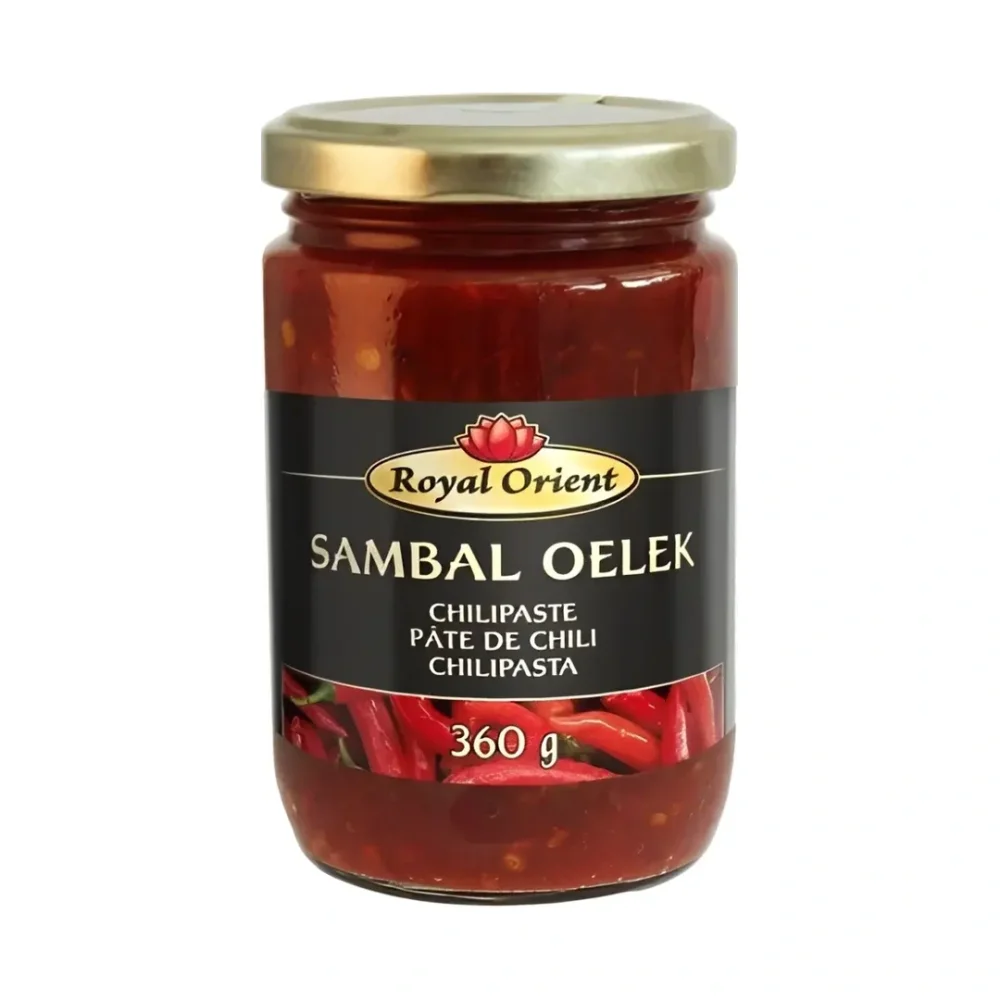
A practical tip: start with a really small amount (for example the tip of a teaspoon for one portion), mix with the rice and only then add more. With “table condiments” it is always easier to raise heat than to save an over-spiced dish.
3) Take acidity as a flavor compass
The references mention tamarind or other acidic components depending on the dish. The important principle is: when a curry is coconutty and spiced, a sour point (often via sambol/pickle style) will open the dish and prevent it from feeling heavy. If with early attempts you think “it’s good, but after a few bites I don’t want more,” often the missing element is precisely a sour contrast or a bold accompaniment.
4) Saltiness and umami: be careful with substitutes
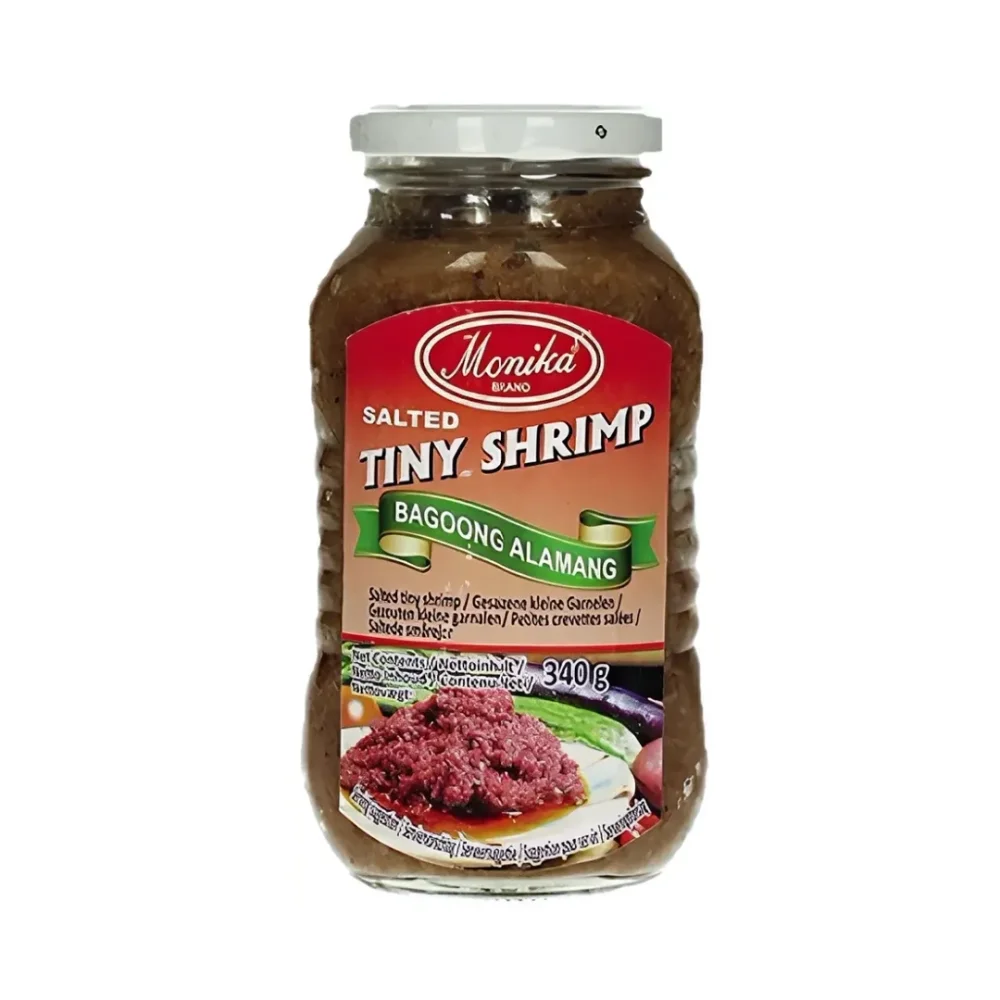
Sri Lankan cuisine can work with saltiness also through fish and seafood. If you want to try at home what a strongly salty marine component does with rice and curry, you can in principle use a very concentrated seasoning, such as salted shrimp (only a small amount is enough). It is not a typical Sri Lankan “mandatory” ingredient, but it can vividly show how a small salty marine accent deepens the flavor next to coconut and spices. Dose in small steps – with such salty things it’s easy to over-salt a dish.
5) Don’t look for “one correct” spice combination
In the Sri Lankan profile aromas like cinnamon, cardamom, cloves and pepper appear, plus curry leaves and chili. From a flavor perspective it is useful to watch two practical questions:
- Is the dish more dark and roasted, or fresher and tangier? Both can be “Sri Lankan,” just arranged differently.
- Does coconut stand out as the flavor carrier, or do the accompaniments dominate? In the rice and curry model this often changes bite by bite.
💡 Watch out: the most common mistakes and shortcuts that spoil the flavor
Mistake No. 1: “It’s simply Indian curry”
Sri Lankan cuisine can resemble some parts of South India, but it has its own rhythm: more pronounced coconut, a different emphasis on spices (including pepper and cinnamon) and a more important role for sour and pickled accompaniments. If you cook it “as one curry in a bowl,” you often lose what is most interesting.
Mistake No. 2: Imagining “rice and curry” as one sauce
Rice and curry is a dining system. If you don’t like it at home, sometimes it’s not the curry that is bad, but that a second bowl with contrast (for example a legume component) is missing and above all an accompaniment that gives acidity or a sharp accent.
Mistake No. 3: Confusing sambol with “any chili paste”
Sambol is an important Sri Lankan accompaniment that gives the dish freshness, acidity and a “spark.” Simple chili pastes (typically sambal, for example) can help with heat, but they will not replace the whole principle of sambol nor its role on the plate.
Mistake no. 4: Overdo the coconut and lose contrast
Coconut is essential, but when everything is just coconutty and also spicy, the flavor can "blend" into one dense line. The Sri Lankan experience typically also relies on something tangier, pickled, or sharply complementary alongside the coconut curry, which reopens each bite.
What to take away from the article
- Sri Lankan cuisine is distinctive: it is built on rice, coconut, pronounced spices, chili, and accompaniments like sambol and pickles.
- You best understand the flavor through the model rice and curry – multiple bowls that are mixed on the plate and create contrasts.
- Coconut is not just "creaminess": it rounds out heat, carries the spices, and ties flavors together.
- A typical Sri Lankan taste often combines heat, saltiness, acidity, and aromatic depth – and it is not a cuisine that can be summed up by a single dish.
- When trying it at home, start simply: rice + two curries + one pronounced accompaniment, increase heat in small steps and keep an eye on acidic contrast.

Read next
If you want to explore this topic further, continue with these related blog guides and articles:
