


 Česky (CZK)
 Slovensky (EUR)
 Deutsch (EUR)
 Austria
 Belgium
 Bulgaria
 Croatia
 Denmark
 Estonia
 Finland
 France
 Germany
 Greece
 Hungary
 Italy
Italy Latvia
 Lithuania
 Luxembourg
 Netherlands
 Poland
 Portugal
 Romania
 Slovenia
 Spain
Spain Sweden










Typical Thai ingredients: what they taste like, what they are for, and how to use them at home
Thai cuisine is based on balancing contrasts: saltiness and umami, acidity, sweetness, spiciness, and herbal freshness. To make food taste "Thai," one spicy component is not enough – it is more important to know the role of each ingredient and how to work with it in small amounts. This guide provides an overview of typical Thai ingredients, their function in the dish, the main differences between similar products, and practical tips on how to start using them at home without unnecessary mistakes.
🍜 1) Why typical Thai ingredients are more important than the "list of Thai dishes"
Pad thai, tom yum, or green curry are well-known names, but the dishes themselves don’t explain why Thai flavors seem so vivid. Thai cuisine is more of a "system": it consists of several flavor pillars that meet and balance each other in one dish. That’s why it makes a lot of sense to learn Thai cuisine through ingredients – when you understand what fish sauce, acidic components, sugar, chili, and aromatic herbs do, you can apply the same logic to various dishes.
Typical Thai flavor usually does not arise from food being only spicy or only sweet. It’s a combination of saltiness, acidity, sweetness, spiciness, herbal freshness, and deep umami so the result is striking but not chaotic.
🌶️ 2) Orientation: what is typical for Thai cuisine from the ingredient perspective
In Thai cooking, the same “building blocks” often repeat:
- Strong role of fresh herbs and aromatics (aroma and freshness added both at the beginning and the end).
- Working with pastes and seasoning sauces (concentrates that quickly create a flavor base).
- Balancing contrasts (salty/umami, sour, sweet, spicy).
- Quick preparation for many dishes (all the more important to have ingredients ready and to dose them precisely).
- Regional differences (the same ingredients may appear in different ratios, so it is better to follow flavor logic than one “universal” ratio).
A good practical principle is to think “functionally”: don’t have as many bottles as possible, but cover the basic functions – something for saltiness and umami, something for acidity, something for sweetness, something for spiciness, and something for fat and aroma. This works excellently in Thai cooking because these roles commonly meet in one dish.
🍜 3) Main variants and differences: which typical Thai ingredients you encounter most often
Saltiness and umami: fish sauce and soy sauce
Fish sauce is one of the key seasoning bases of Southeast Asia. In small amounts, it adds saltiness, depth, a long aftertaste, and pronounced umami to the dish. It doesn’t act as an “extra fish flavor” – rather as a concentrated tool that connects other ingredients into a more finished impression. As a practical example of the Thai style, you can use Tiparos fish sauce.
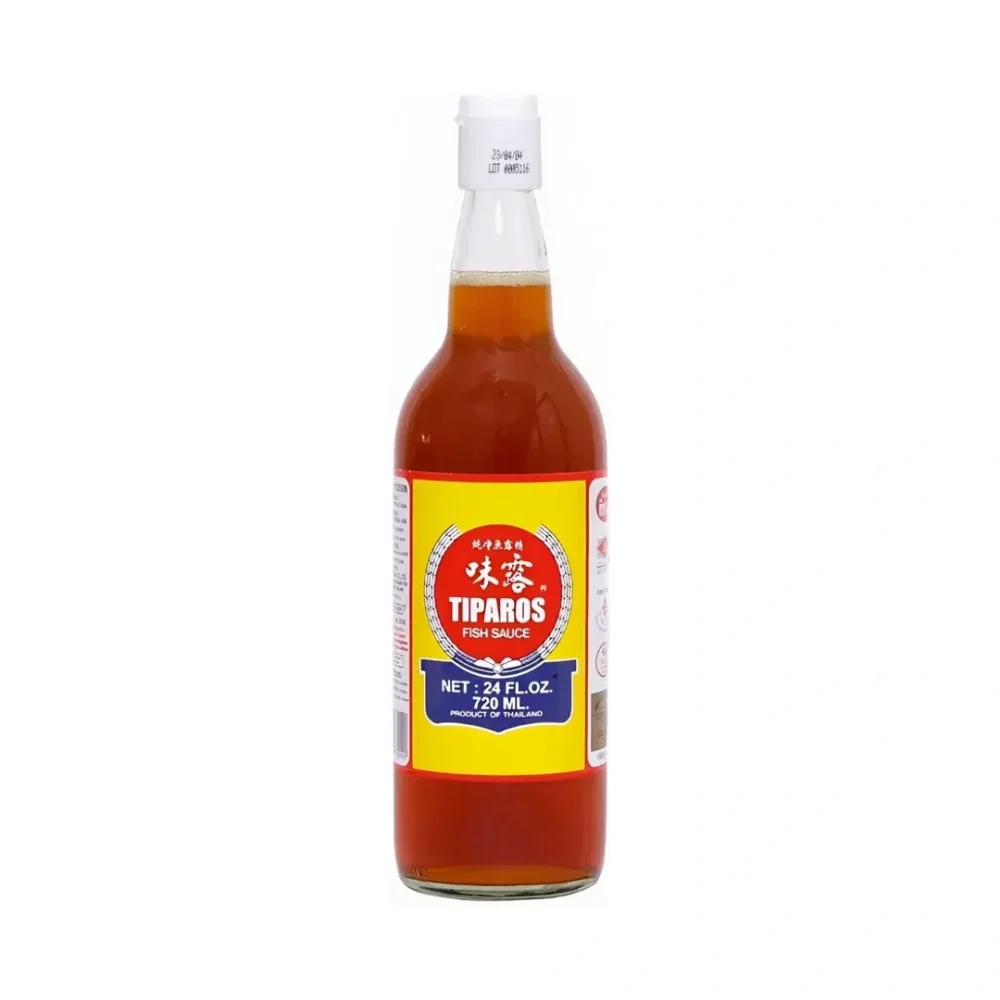
It pays off to perceive differences in fish sauce quality: longer fermentation usually leads to fuller and more complex flavor, “first extraction” is often considered milder, and cheaper bottles often work with dilution, sugar, coloring, or flavour enhancers. If you see the label N (total nitrogen), it usually relates to the concentration of broken-down proteins – simply put, to the “depth” and intensity of umami.
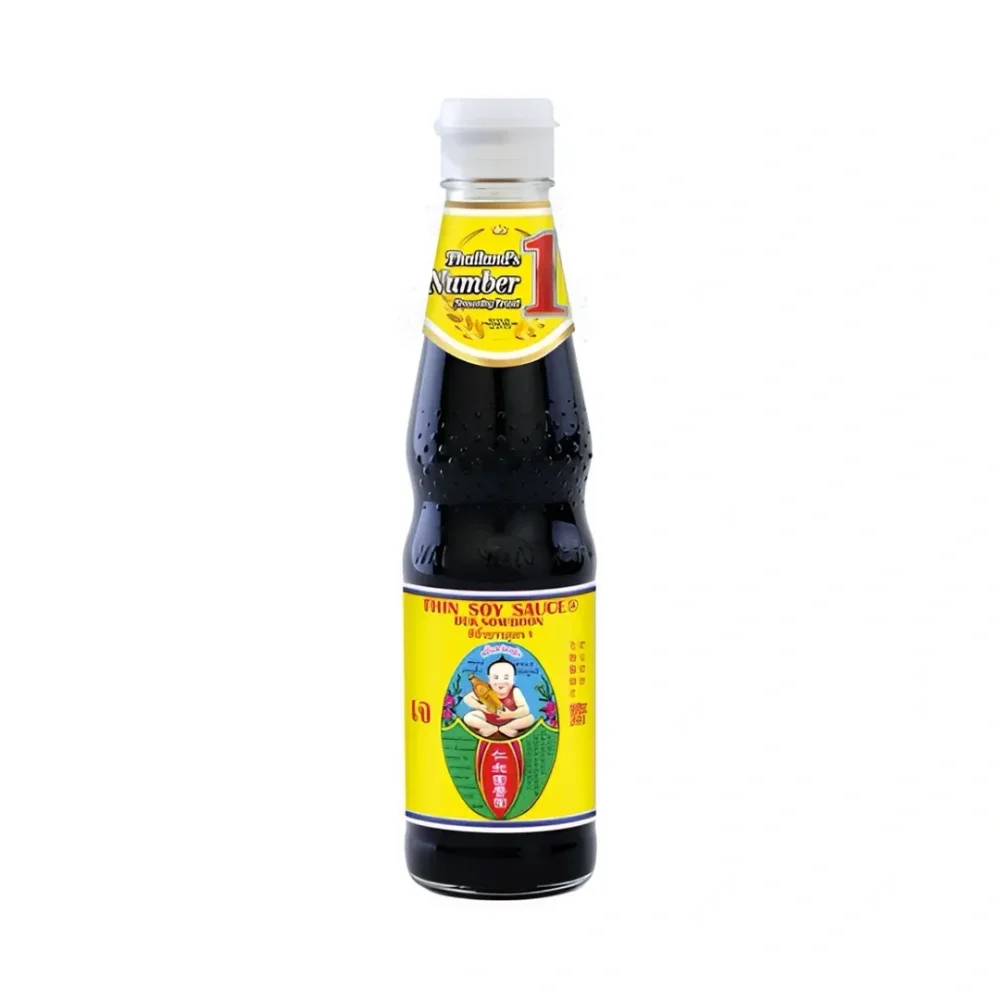
Soy sauce is also used in Thai cuisine, but usually in a different role than fish sauce (and often more as a complement than as the main carrier of umami). For a “light” sauce style example, you can use Dek Som Boon light soy sauce.
Acidity: lime and tamarind (and why it’s not just about “sour”)
Acidity in Thai cuisine isn’t just sharp sourness – often it is an element that “lifts” other flavors and makes the dish fresher. In practice, you mostly encounter lime (juice and zest) and tamarind (a tart fruity component that is different from citrus acidity). It’s important to perceive acidity as a counterbalance to fish sauce, sugar, and chili: without it the dish can feel heavy or flat.
Sweetness: a small dose, a big effect
Sweetness often appears in small amounts in Thai cuisine to balance spiciness and acidity and to “round” saltiness. The idea is not to make the dish sweet but to connect flavors. In home practice, it is useful to treat sweetness as a subtle tuning element added little by little at the end.
Spiciness: chili as a flavor pillar, not a contest
Spiciness is common in Thai cuisine, but its role is similar to acidity: it should give energy and contrast to the dish, not overpower everything else. Various forms of chili are used in the kitchen (fresh, dried, in pastes or ready sauces). It’s good to know what type of product you have: some things are basic (treated as an ingredient), others are already ready seasoned and function more as a final sauce.
A prime example of a ready sweet and spicy sauce (typically for dipping or quick seasoning) can be Encona Sweet Thai Chili Sauce. Consider it a “ready flavor,” not a universal substitute for chili or curry paste.

Pastes: quick flavor base (curry, tom yum, tom ka)
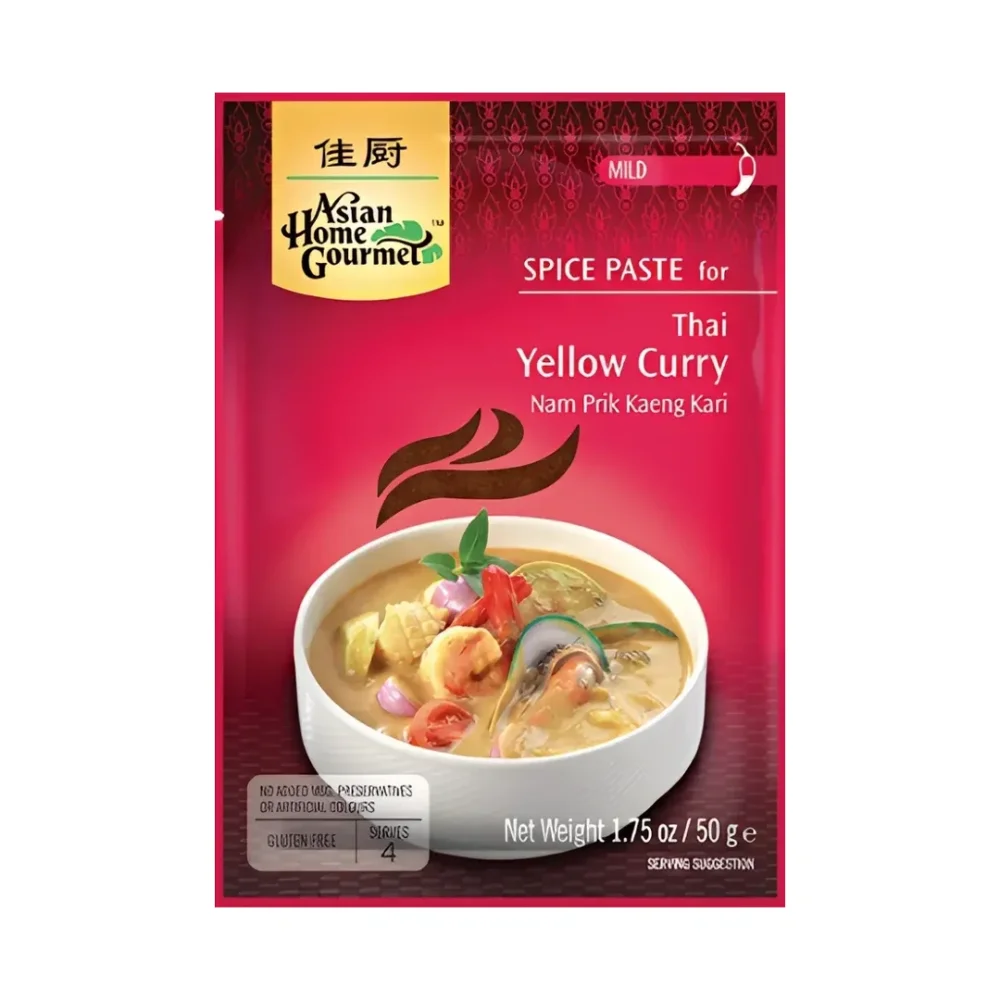
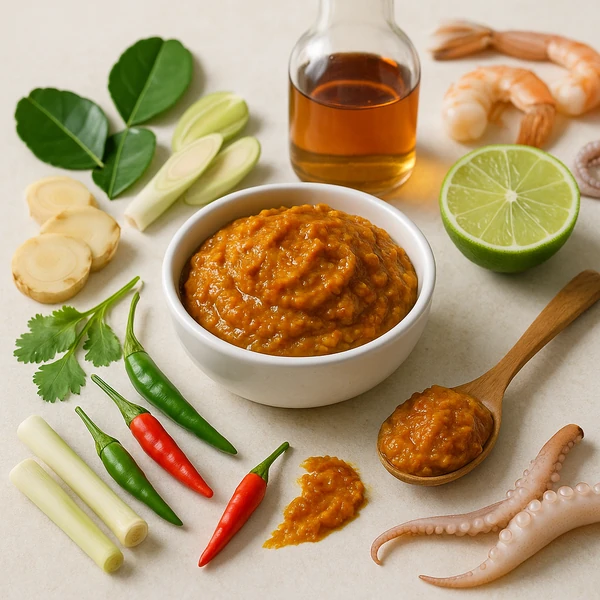
Thai pastes are practical in that they concentrate aroma and spices into one teaspoon. In home cooking, they can quickly create the base for a sauce or soup – that’s exactly why it’s worth handling them precisely and in doses. As an example of curry paste, you can use AHG paste for Thai yellow curry.
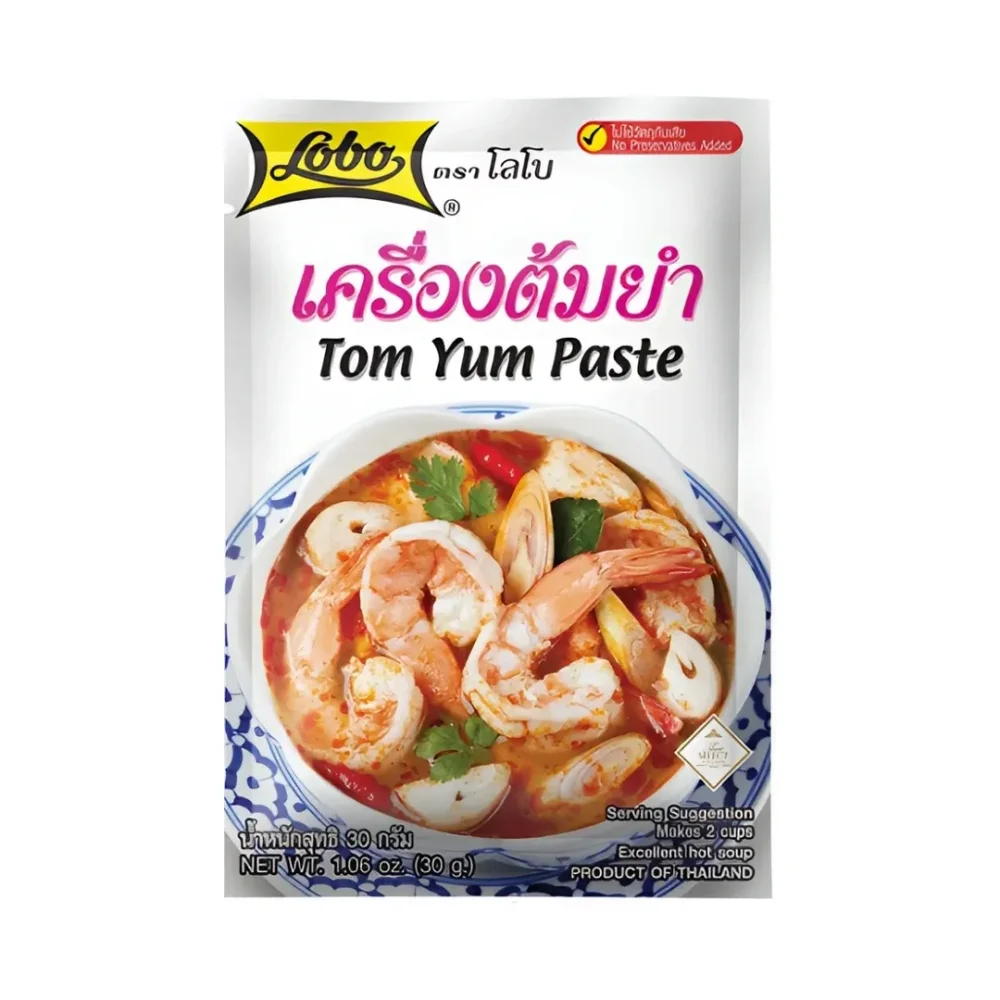
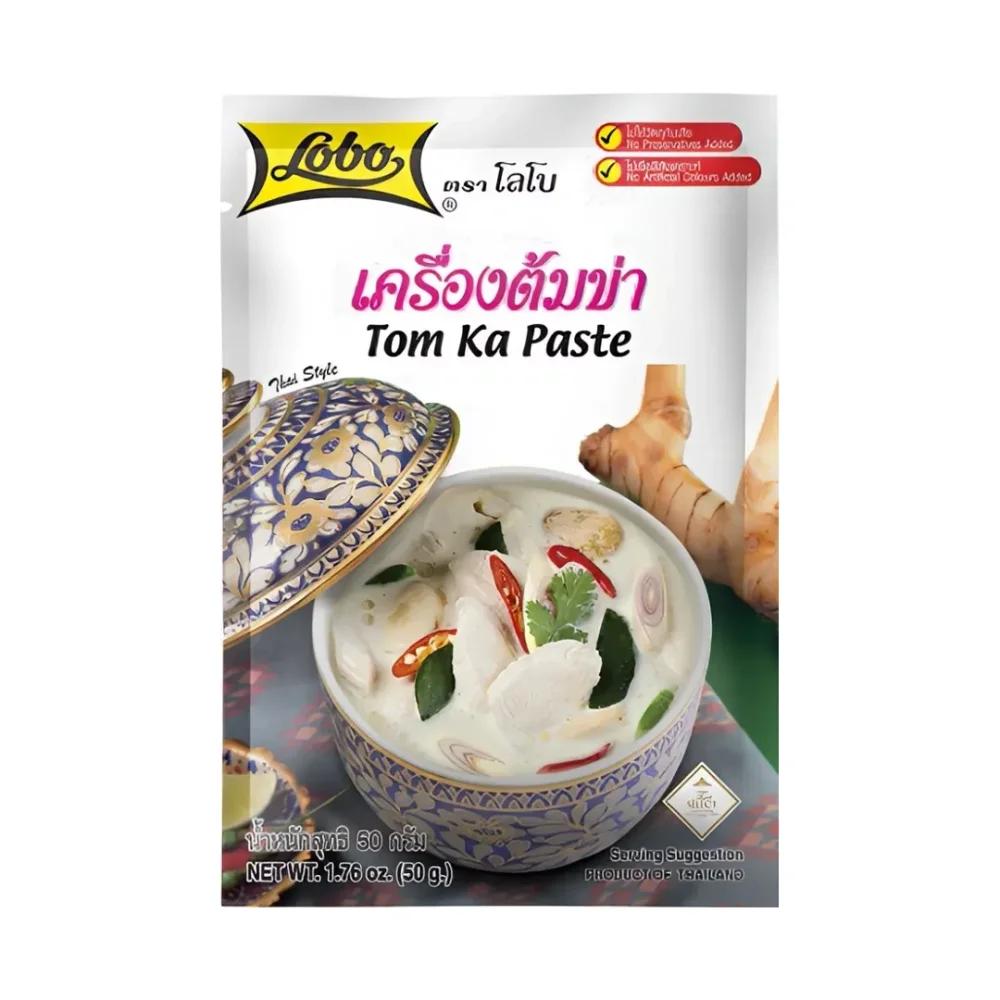
Similarly, there are pastes intended for typical soup bases. For the tom yum style (aromatic, often distinctly sour-spicy soup), an example is Lobo Tom Yum Soup Paste. For tom ka (creamier and “rounder” profile, often associated with coconut component), you can choose Lobo Tom Ka Soup Paste. For pastes, a general rule applies: there is a difference between a product intended as a baseand a product that is already refined as a ready flavor – accordingly dosing and expectations differ.
Coconut: fat, body, and softening contrasts
The coconut component (typically coconut milk) in Thai cuisine often acts as the “body” of the dish: it softens spiciness, unites aroma into a smoother whole, and gives sauce or soup a fuller texture. It is a typical counterpoint to acidity and chili – when the dish is sharp and sour, coconut can soften it but also “mute” the flavor if used too much.
👃 Aromatics and herbs: lemongrass, galangal, makrut lime, Thai basil
Part of the “Thai-ness” is not made by sauce but by scent. Aromatic ingredients appear often in Thai recipes, giving a citrus-herbal profile (like lemongrass), a spicy aromatic tone (galangal), or a very distinct leaf aroma (makrut lime). Thai basil then adds herbal freshness, often used at the end as a final layer.
Practical note: timing is important with aromatics. Some components are left in the dish just to “work” and then removed (if their role is more to perfume), others can be eaten normally. If unsure, treat aromatic ingredients first as a flavor tool, not a salad vegetable.
Texture and “fillers”: mushrooms, rice, and other carriers
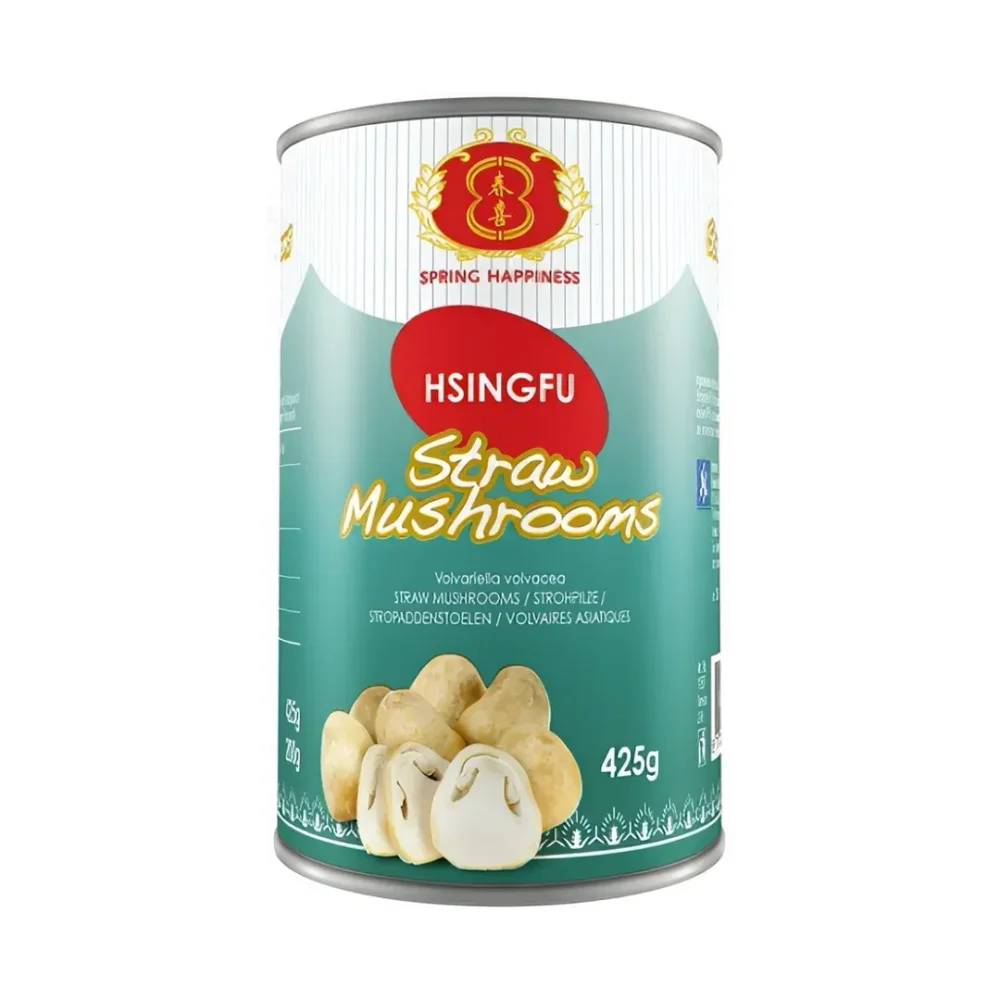
Aside from flavor, texture is important in Thai cuisine (crunchy vs. soft, juicy vs. dry). From practical ingredients that work well at home, interesting examples include straw mushrooms – for example you can use Spring Happiness whole straw mushrooms .They are not “seasoning”; they add volume and structure and often fit well into soups or quick dishes where you want something soft that still holds its shape.
🍳 4) Practical use at home: how to start and how to dose ingredients so the flavors stay together
Step 1: assemble your Thai “functional” pantry
Instead of buying dozens of items at once, make sure you cover roles. For Thai cuisine, it’s proven effective to have:
- Saltiness/umami: fish sauce (main), and possibly light soy sauce (complementary).
- Acidity: lime or tamarind (depending on the dish).
- Sweetness: sugar as a tuning element (little by little).
- Spiciness: chili depending on whether you want to control spiciness gradually or use a ready sauce.
- Fat and aroma: coconut component and aromatics (lemongrass, galangal, makrut, herbs).
- Flavor base: paste (curry or soup) – significantly simplifies the start.
Step 2: season in small doses and by “tuning”
The most common reason why home-cooked Thai dishes turn out flat or overshot is poor dosing. This approach helps:
- First the base: briefly scent the paste (or aromatics) and add liquid/fat according to the dish type.
- Then saltiness/umami: add fish sauce in small doses. For 1 serving, start with roughly 1/2 to 1 teaspoon, mix, and only then raise the amount. Fish sauce is concentrated and can easily perceptually “oversalt” the flavor even if you physically haven’t added that much salt.
- Balance with acidity: add the acidic component gradually so the dish “lives” but does not lose depth.
- Tune with sweetness: often a pinch to half a teaspoon per serving is enough – the goal is rounding, not a sweet sauce.
- Spiciness last according to the goal: when you want control, add chili gradually. Ready sweet-spicy sauces add flavor quickly, but simultaneously bring their own sweet-sour profile, which may no longer need extra sugar.
Tip for practice: if you feel that “something is missing,” often it’s not more salt but acidity or a small dose of sweetness. Conversely, if the dish is too hot, sometimes more sugar doesn’t help, but a fatty component (like coconut) or softening with liquid and rebalancing with fish sauce/acidity does.
Step 3: learn to read labels and distinguish basic vs. seasoned products
Choosing ingredients well doesn’t automatically mean taking the most expensive or boldest packaging. More important is to understand the function of the ingredient, its type, and what dish you really need it for. Practical rules to stick to:
- Always read the label (what is the main ingredient, what are added components).
- Watch if it is a base or seasoned product – dosing and how “finished” the flavor is will differ accordingly.
- Choose the right type, not just the right category (for example, different types of sauces/pastes work differently).
💡 5) Common mistakes and warnings
Confusing “authenticity” with spiciness
A common mistake is thinking the spicier the dish, the more "Thai" it is. Actually, it’s more typical to have balance – spiciness should be a pillar, not the only flavor information. If your dish is spicy but flat, try adjusting acidity and umami first.
Too much fish sauce at once
Fish sauce is a concentrated tool. When added in large doses right at the start, it can overwhelm aroma, and the dish begins to taste one-dimensionally salty. Solution: add in small doses, taste, and balance with acidity and sweetness.
Not reading the fish sauce label
Fish sauce varies in style and quality: longer fermentation often leads to fuller flavor, “first extraction” is considered milder, and cheaper bottles often contain dilution, sugar, coloring, or other modifications. If the value Nis available, it usually indicates protein breakdown concentration (thus umami intensity). It’s not the only indicator, but it’s a useful signal that bottles aren’t all the same.
Overdoing paste and then "chasing" to fix it
With pastes, it’s tempting to add “just a bit more to be sure.” But paste is a concentrate – if you overdo it, you’ll have to dilute, salt/season more, and the result can be heavy. Better approach: start with a smaller dose, develop it in fat/liquid, and add more after tasting.
Ready sweet chili sauce as a universal chili substitute and seasoning
Ready sauces have their own sweet-sour profile. Using them as the “main chili” in a dish may inadvertently add a lot of sweetness and change the balance. It helps to use them more as a final sauce (e.g., for dipping) or as a conscious choice for a specific style.
6) What to take away from the article
- Thai cuisine is based on balancing saltiness/umami, acidity, sweetness, and spiciness plus pronounced aromatics.
- The most important “flavors at hand” are often fish sauce (depth and umami) and paste (quick aromatic base).
- When seasoning, the best approach is small doses and continuous tasting – especially with fish sauce and paste.
- Learn to distinguish basic vs. seasoned products and read labels: it will save you many disappointments and “surprising” results.
- When the food feels flat, it often lacks not salt but acidity or a pinch of sweetness; on the other hand, if it is too sharp, softening and rebalancing help more than adding sugar.

Read next
If you want to explore this topic further, continue with these related blog guides and articles:
