


 Česky (CZK)
 Slovensky (EUR)
 Deutsch (EUR)
 Austria
 Belgium
 Bulgaria
 Croatia
 Denmark
 Estonia
 Finland
 France
 Germany
 Greece
 Hungary
 Italy
Italy Latvia
 Lithuania
 Luxembourg
 Netherlands
 Poland
 Portugal
 Romania
 Slovenia
 Spain
Spain Sweden










Basics of the Korean pantry: how to understand jang, kimchi, sesame, and soy sauce
The Korean "pantry" is not a list of exotic groceries, but a set of flavor foundations that make even simple dishes start to make sense. When you understand how fermented pastes and sauces (jang) work, the role of kimchi, why sesame is often used only at the very end, and how Korean soy sauces differ, Korean cuisine will come together for you into a clear system – not a random spicy mix.
How Korean dining (hansik) works: rice, soup, and banchan
It is typical for Korean cuisine that it is often not perceived as "one dish on a plate," but as a whole (in Korean hansik): a basic bowl of rice, accompanied by soup or broth-based dish, a more pronounced main component, and several banchan – side dishes.
This is also important for the pantry. Many Korean flavors are designed to work in contrast and combination: something mild (rice, broth), something fermented (jang), something sour and fresh (kimchi), something aromatic and nutty (sesame), sometimes even spiciness. Korean cuisine often stands on contrasts of fresh vs. fermented, mild vs. spicier, warm vs. cold, crunchy vs. soft – and rice is often the "neutral point" balancing more intense flavors.
Practically: if Korean food seems "too much" to you, often the problem is not one ingredient but the lack of counterbalance (rice, broth, simple banchan) that would soften and frame the flavor.
Kimchi: acidity, freshness, and fermented accompaniment
Kimchi is one of the most visible symbols of Korea, but in practice it is useful to understand it mainly as a family of fermented side dishes, not just one specific item. In a typical meal, it functions as an accompaniment: adding acidity and freshness, it can "cut through" fattier or denser dishes and at the same time brings a fermented character that holds the Korean flavor profile together.
In the logic of the pantry, kimchi is a "ready" intense component that often does not require complex cooking – but you need a simple base for it (rice, broth, noodles) and something to tune the flavor (jang, sesame oil, spring onions, etc.).
Jang: the heart of the Korean pantry (doenjang, ganjang, gochujang, ssamjang)
If kimchi is the most visible symbol, then jang are the flavor foundations. Jang refers to fermented pastes and sauces (often based on soy, salt, and other ingredients), which are at the core of Korean cooking. The four most important are: doenjang, ganjang, gochujang and often also ssamjang as a practical table mixture.
Doenjang (fermented soybean paste)
Doenjang is a Korean fermented soybean paste with a deeper, earthier, and more robust flavor (compared to miso, it feels "denser"). It is used in soups and thicker broth dishes, marinades, dips, and vegetable dishes – typically where you want pronounced fermented umami, not just saltiness.
Ganjang (Korean soy sauce)
Ganjang is Korean soy sauce, but it is not one universal liquid "for everything." There are different styles: some fit better into soups and broths, others for regular cooking, stir-frying, marinating, or even as a table seasoning. The differences make sense – and in practice, will save you a lot of disappointment (more below).
Gochujang (fermented chili paste)
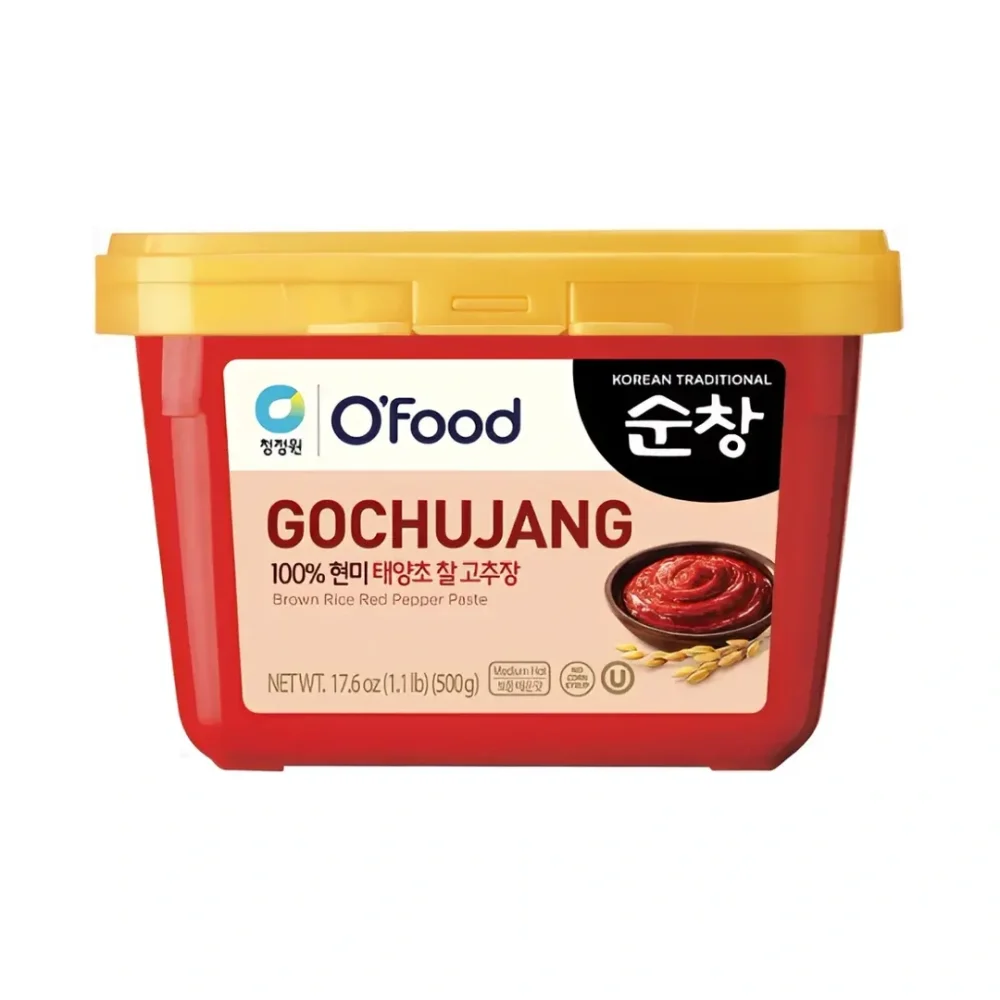
Gochujang is a fermented paste made from chili and other fermented components and grains. The important thing is that it is not just "spiciness": gochujang also has sweetness, depth, thickness, and a fermented character. That is why it works in sauces, marinades, richer dishes, and as a key flavor in dishes like bibimbap.
If you want to try gochujang in practice, a good choice is O'Food Brown Rice Gochujang Chili Paste 500 g – the main advantage of such a paste is that you can easily control the intensity at home by the amount used.
Ssamjang (practical table mixture)
Ssamjang is often taken as a "table shortcut": a mixture suitable for dining and dipping, typically for bites and side dishes. In the pantry context, it is especially practical when you want to quickly season a dish without building a whole sauce from scratch.
Ganjang in practice: how not to get lost in Korean soy sauces
Soy sauces vary greatly across Asia, and Korean ganjang follows different culinary priorities than Chinese or Japanese sauces. For Korean styles, it is useful to orient yourself by their function in the dish:
- Gukganjang (also Joseon ganjang): traditional "soup" soy sauce. It tends to be lighter and saltier and is used where the broth needs flavoring without significant darkening. Typical uses: soups, stews, namul (vegetable side dishes), gentle seasoning of broths.
- Jin ganjang: a darker, more universal sauce for everyday cooking. Suitable for stir-fried dishes, marinades, and braised preparations. Typical uses: bulgogi, japchae, braising, stir-fry, daily cooking.
- Yangjo ganjang: a sauce highlighted as brewed and fermented, perceived in practice as cleaner and suitable even for subtle seasoning. Typical uses: universal use, dips, marinades, when a more refined flavor is desired.
The most common home mistake is to take any soy sauce as a full replacement of "Korean." Sometimes it works, but other times the dish's logic breaks down: the soup suddenly is dark, or the marinade sauce tastes flat. If you want to learn Korean cooking, it's better to be clear on whether you are choosing a sauce for broth, or for general cooking and marinating.
Sesame as a final signature: oil and seeds
In Korean cuisine, the sesame flavor is extraordinarily important mainly in two forms: sesame oil and sesame seeds (or sesame salt). The important thing is that sesame oil often functions here as a final aroma: it is not used just for fat, but because even a small amount immediately gives the dish a "Korean" profile.
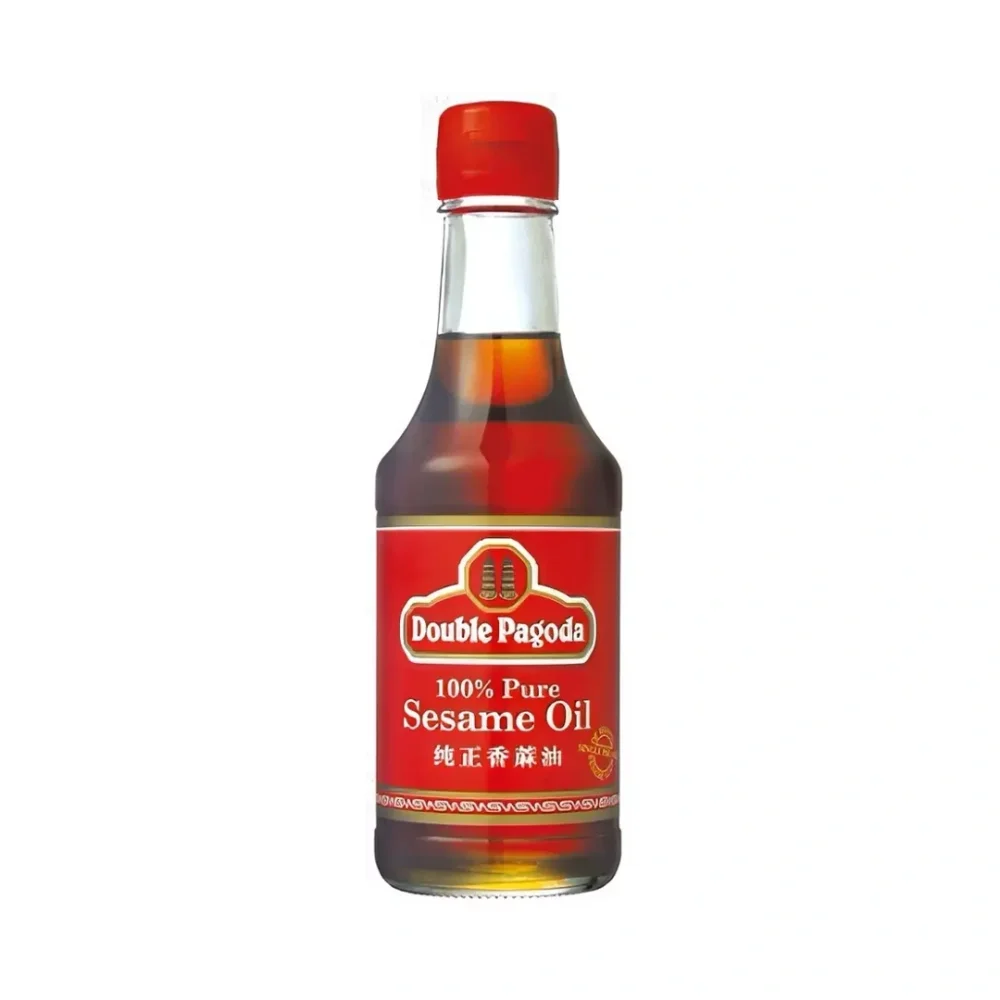
A practical tip that makes a big difference: with aromatic sesame oil it is often better to start drop by drop. It's not uncommon that the final flavor relies on a few drops of oil and about one tablespoon of toasted sesame – especially in vegetable side dishes (banchan) or noodle dishes.
As a specific example of aromatic oil for finishing seasoning, you can use Double Pagoda Sesame Oil 250 ml. Use it rather as the last step (in dressing, dip, finished sauce, or on noodles), not as the main oil for intensive frying.
🍜 Basic ingredients beyond sauces: rice, soy, vegetables, chili, marine elements
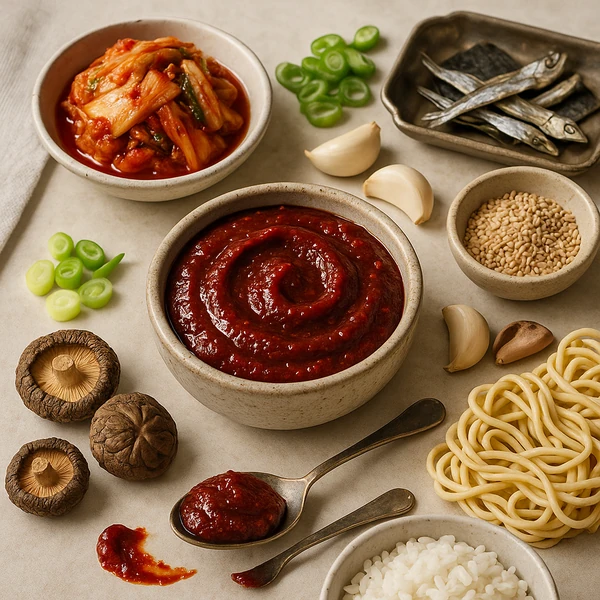
The Korean pantry is not just about sauces. For "jang" and kimchi to work naturally and not be excessive, you also need supporting and accompanying ingredients:
- Rice: the foundation and support. It is a neutral point that balances the more intense flavors of banchan, kimchi, and jang.
- Soy and soy products: besides jang, this includes tofu, soy sprouts, and other products. Soy is key in Korean cuisine both for flavor and texture.
- Vegetables: both leafy and root vegetables are important. Common are napa cabbage (Chinese cabbage), radish, spinach, mung bean sprouts, cucumber, spring onions, garlic, onion, perilla, and other seasonal vegetables.
- Chili: nowadays an inseparable part of Korean flavor for many people, but historically chili became a crucial part only in more recent centuries. Today, gochugaru and chili are common parts of many dishes.
- Fish and seafood: besides fresh seafood, fermented marine components also play a role, which can add umami and depth.
How to start at home without overwhelm: build a small base and repeat
Beginners often want to buy everything right away. But much better is gradual building: choose one main cuisine (here Korea), build a small base, repeat a few dishes a couple of times, and only then expand the pantry. 💡 Thanks to repetition, you will notice what your flavor lacks (acidity? more umami? more aroma?), and won't buy things blindly.
What is good to "master" at the start rather than having a full cupboard:
- Fermented foundations (jang): understand the difference between the deep paste (doenjang), soy sauce by use (ganjang) and fermented chili paste (gochujang).
- Sesame as a finish: a few drops at the end often make a bigger effect than more and more spoons of sauce during cooking.
- Gentle support: rice or broth-based dish that can "carry" more intense side dishes and seasonings.
Three simple scenarios to train Korean flavor (without a recipe)
- Quick soup bowl that you can adjust: as training for final seasoning and working with side dishes, simple Korean instant noodles are suitable – for example Otoki Instant Noodles Jin Ramen 120 g. It’s not a "traditional base for everything," but a practical way to learn two things: fine-tune spiciness and saltiness in small steps and add an aromatic layer at the end (e.g., sesame) so it does not overpower the broth.
- Rice + banchan logic: cook rice as a neutral base and build one or two more pronounced components next to it (e.g., kimchi and vegetable banchan). Notice that banchan are not decorations – they form the entire impression of dining. When something is too salty or too spicy, often more rice and a "cleaner" accompaniment help, not more sugar or sauce.
- One sauce you use repeatedly: pick one flavor axis (for example gochujang) and use it in multiple situations: in sauce, marinade, richer dish. If unsure about the dose, start with less and add gradually – with fermented pastes, it is easier to add than to rescue over-salting or "over-spicing."
Regions of Korea: why there isn’t one "correct" Korean flavor
Korean cuisine is not uniform and regional differences should not be reduced to a few clichés. They differ according to climate, access to the sea and ingredients, and historical experience. For orientation, these are often mentioned:
- Seoul and central area: perceived as a more balanced style and representative form of hansik.
- Jeolla: a region associated with rich dining and a large variety of banchan.
- Gyeongsang: often mentioned for stronger flavors and a greater role of seafood, sometimes spicier styles.
- Gangwon and mountainous areas: more role of buckwheat, mountain herbs, and heartier dishes for colder conditions.
- Coastal areas: stronger role of fish, seafood, and dried or fermented marine ingredients.
For you at home, a simple takeaway: if "something doesn’t feel right," it may not be the problem of cooking badly. You may just be encountering a different regional or stylistic emphasis – and it is okay to look for a Korean style that suits you.
Most common mistakes and errors when starting (and how to fix them)
- "Korean cuisine is just very spicy." It’s not. Many dishes are mild, soy-based, sesame-flavored, or broth-based. If spiciness is a barrier for you, build flavor first on broth, soy sauce by use, and sesame – add spicy components gradually.
- "Kimchi is one specific dish." It’s not. It is a broad family of fermented side dishes. When one kimchi doesn’t suit you, it doesn’t mean you "don’t like kimchi" – you may just not like a particular style.
- "Korean cuisine = barbecue." Grilling is famous, but it is only part of the whole. Korean flavor logic is learned mainly through rice, broth dishes, banchan, and fermented foundations.
- "Banchan are just small decorations on the table." They are not. They are a full part of the meal and often carry a large part of the flavor and texture (crunchy vs. soft, fresh vs. fermented).
- "Gochujang is just chili paste." It’s not. It is fermented, sweeter, and thicker – and that’s what makes it a building block for sauces and marinades, not just a source of spiciness.
What to take away from the article
- The Korean pantry only makes sense in relation to hansik: rice and soup soften and frame intense side dishes and fermented bases.
- Kimchi is a family of fermented side dishes and in the meal mainly brings acidity, freshness, and a fermented character.
- Jang are flavor foundations: doenjang (depth), ganjang (soy sauce by function), gochujang (fermented chili paste with depth and sweetness), ssamjang (practical table mixture).
- With ganjang, it's worth distinguishing sauce for broth (gukganjang) and for regular cooking (jin/yangjo), otherwise the color and flavor of the dish can easily be "broken."
- Sesame oil and sesame seeds often work best as a final, moderate aroma: a few drops and a spoonful of sesame can make a big difference.
- Don’t start by buying everything. Build a small base, repeat a few dishes, and expand the pantry only according to what your flavor actually lacks.

Read next
If you want to explore this topic further, continue with these related blog guides and articles:
