


 Česky (CZK)
 Slovensky (EUR)
 Deutsch (EUR)
 Austria
 Belgium
 Bulgaria
 Croatia
 Denmark
 Estonia
 Finland
 France
 Germany
 Greece
 Hungary
 Italy
Italy Latvia
 Lithuania
 Luxembourg
 Netherlands
 Poland
 Portugal
 Romania
 Slovenia
 Spain
Spain Sweden










Regions of Thai cuisine: why Bangkok, the north, and Isan don’t taste the same
Thai cuisine is often described through famous dishes like tom yum, green curry, or pad thai. However, this easily creates the impression that "Thai tastes like this" – and that’s it. In reality, Thailand is regionally distinctive: the same principle of balancing flavors (saltiness and umami, sourness, sweetness, spiciness, herbal freshness) is composed differently in various parts of the country. If you want to cook Thai food at home or just better understand dishes on a menu, regions are one of the shortest ways for the flavors to start making sense to you.
👃 How to "read" Thai cuisine: balancing flavors, aromatics, and the role of rice
Before diving into the regions, one orientation map is useful. Thai cuisine is based on balancing contrasts: a typical taste doesn’t come from food being just spicy or just sweet. On the contrary, it often connects saltiness and umami, sourness, sweetness, spiciness, herbal freshness, and a deeper "meaty" flavor (umami) into a result that feels lively but not chaotic.
What repeats in Thai cooking across regions:
- Strong role of fresh herbs and aromatics – typically lemongrass, galangal, and makrut lime leaves (often appear together and form a recognizable base, for example, for tom yum).
- Working with pastes and seasoning sauces – curry pastes are not finished sauces but concentrated bases from which the dish is built.
- Rice as more than a side dish – the choice of rice (for example, jasmine vs. sticky) is not a detail but part of regional and dish identity.
- Quick preparation for many dishes – typically a short aroma release of paste or aromatics and quick cooking in liquid.
- Regional distinction – the same "Thai" principles are composed differently according to ingredients, environment, and tradition.
In practice, regional thinking will help you mainly in two situations: when you want to understand why two Thai dishes feel completely different (even if both are "curry"), and when choosing ingredients – because some (rice, coconut, aromatics, sauces) are used differently in various styles.
Main regions and their flavor logic: central Thailand, north, and Isan
Central Thailand: the "classic Thai cuisine" around Bangkok
The central area is often the closest to many people’s idea of classic Thai cuisine. It’s the area of Bangkok and central lowlands, where fertile agriculture, river fish, and historic court and urban cooking meet. For home orientation, it’s important that here you often find cuisine that feels "most balanced" – working with all flavor components so that none feels random.
Typical features to notice on the plate:
- Balanced work with all flavors (not just spiciness).
- Well-known dishes such as green curry or tom yum.
- Frequent use of coconut milk and fish bases/fish seasoning.
- Great diversity thanks to the influence of the urban environment.
If you are a beginner with Thai cuisine, the central style is often the clearest: easy to learn the logic "build an aromatic base – balance salty, sour, sweet, and spicy – connect with fat (often coconut)".
Northern Thailand (Lanna): sticky rice, chili dips, and shared dining
Northern Thailand is associated with the heritage of Lanna and has a different character than Bangkok. In European imagination, it’s sometimes hidden behind "curries and soups," but its cuisine is actually distinctly unique.
Typical features of the north:
- Sticky rice as a more frequent choice than jasmine.
- Chili dips (nam prik) and simpler but deep flavors.
- Khan toke dining style (emphasis on sharing several smaller dishes).
- Specific dishes associated with the north: khao soi, nam prik ong, nam prik noom.
- Softer coconut line than in southern styles (so not always as "coconut creamy" as people sometimes simplistically imagine Thai curries).
- Connections to Myanmar and mountainous areas (manifest in the character of the cuisine and how dishes are composed).
For home cooking, the north is a good reminder that Thai identity doesn’t rest only on coconut curry. Rice and shared dining can play the same "carrier" role, and expression can also be built through dips and aromatic components.
Isan (northeast): one of the most distinctive regions
Isan (northeastern Thailand) is commonly cited in Thai cuisine as one of the most distinctive regions. For many European readers, it’s important as a correction to the mistake "everything Thai tastes similar": if you enjoy Thai cuisine, Isan is one of the reasons why addressing regions is worthwhile.
In this article, Isan remains mostly an orientation point (so the regional picture is complete) because we do not have enough verified details for a detailed description of specific typical dishes and ingredients.
🍜 How to bring regions into your home kitchen: ingredients and simple "building blocks"
Regional differences aren’t just a geographical curiosity. In home cooking, they mainly appear in the choice of rice, coconut component, aromatics, and seasoning style. Below is a practical framework you can use without knowing dozens of dish names.
1) Start with rice: jasmine vs. sticky
For the central style, the important is jasmine rice. For the north, more common is sticky rice. This is not cosmetic: rice determines how you perceive the dish (fineness, "stickiness," way of picking up and sharing). If you want to try a more northern style of dining at home, sticky rice is a good first step – often more important than searching for the "right" brand of a single sauce.
2) Coconut as a flavor stabilizer: when it is key and when just a complement
Coconut in Thai cuisine is not just about sweetness. It is a way to soften sharp, salty, and sour components and connect them into a rounder whole. This is most visible in curries and soups (for example, tom kha). If you want a creamier curry, it pays to choose full-fat coconut milk and perceive it as one of the main structures of the dish, not just "liquid for the sauce."
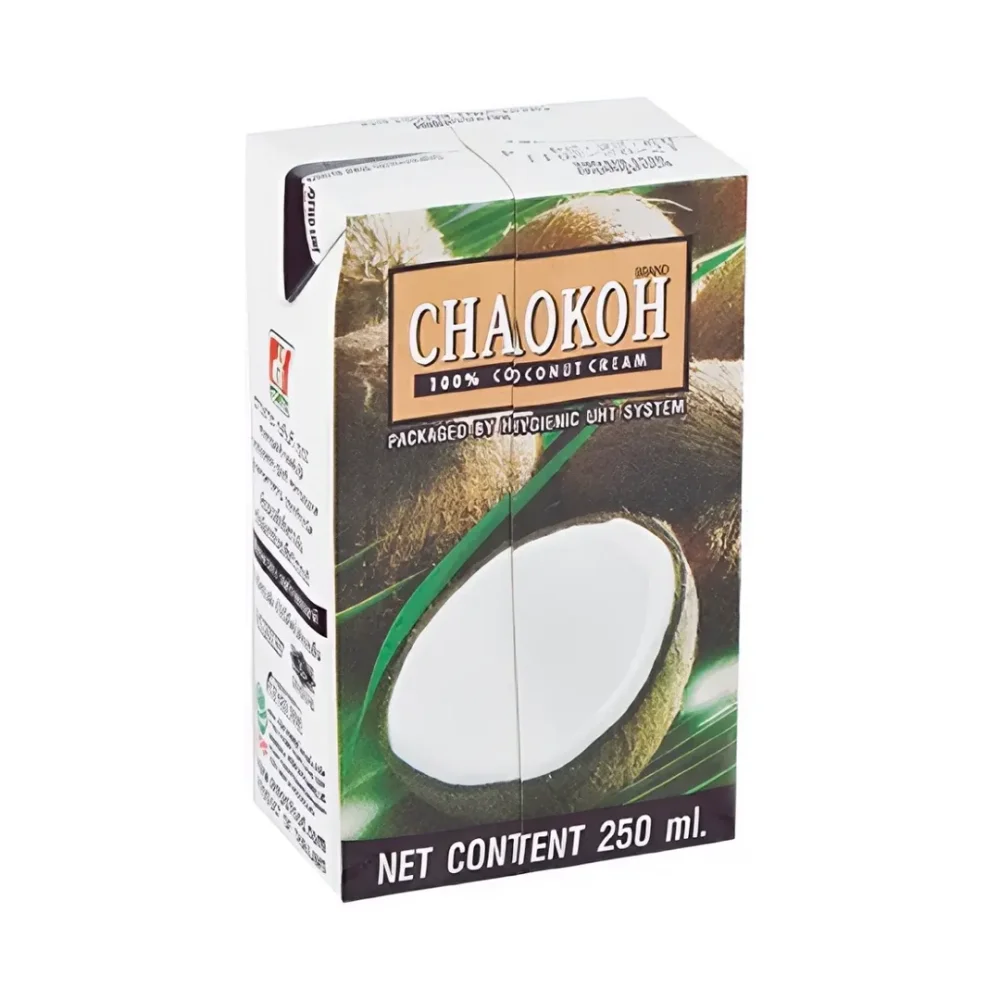
As a practical starting point for curries and soups, you can use for example Chaokoh coconut milk 18% (250 ml). And if you want to first orient yourself in types and usability across brands, the guide Coconut milkhelps.
3) Curry paste is not a finished sauce: short aroma release and only then "building"
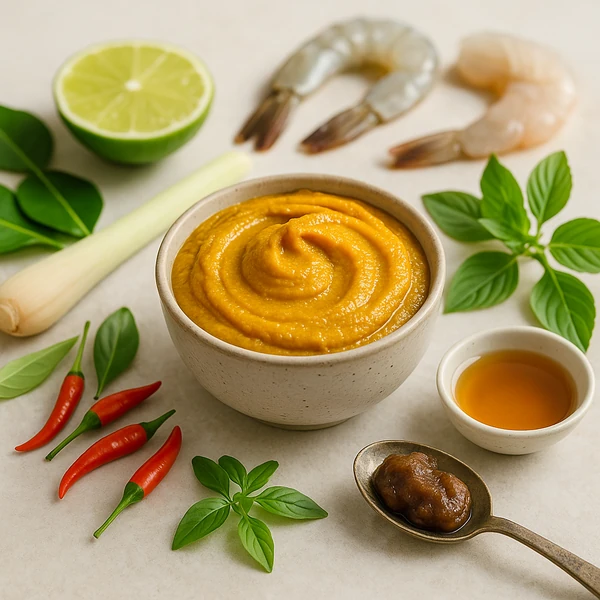
One of the most common home shortcuts is expecting curry paste to just be stirred in water and done. In Thai logic, curry paste is a concentrated aromatic base, which you typically briefly release aroma into fat – and only then dilute with coconut milk or other liquid and build the dish around it (vegetables, meat/tofu, herbs).
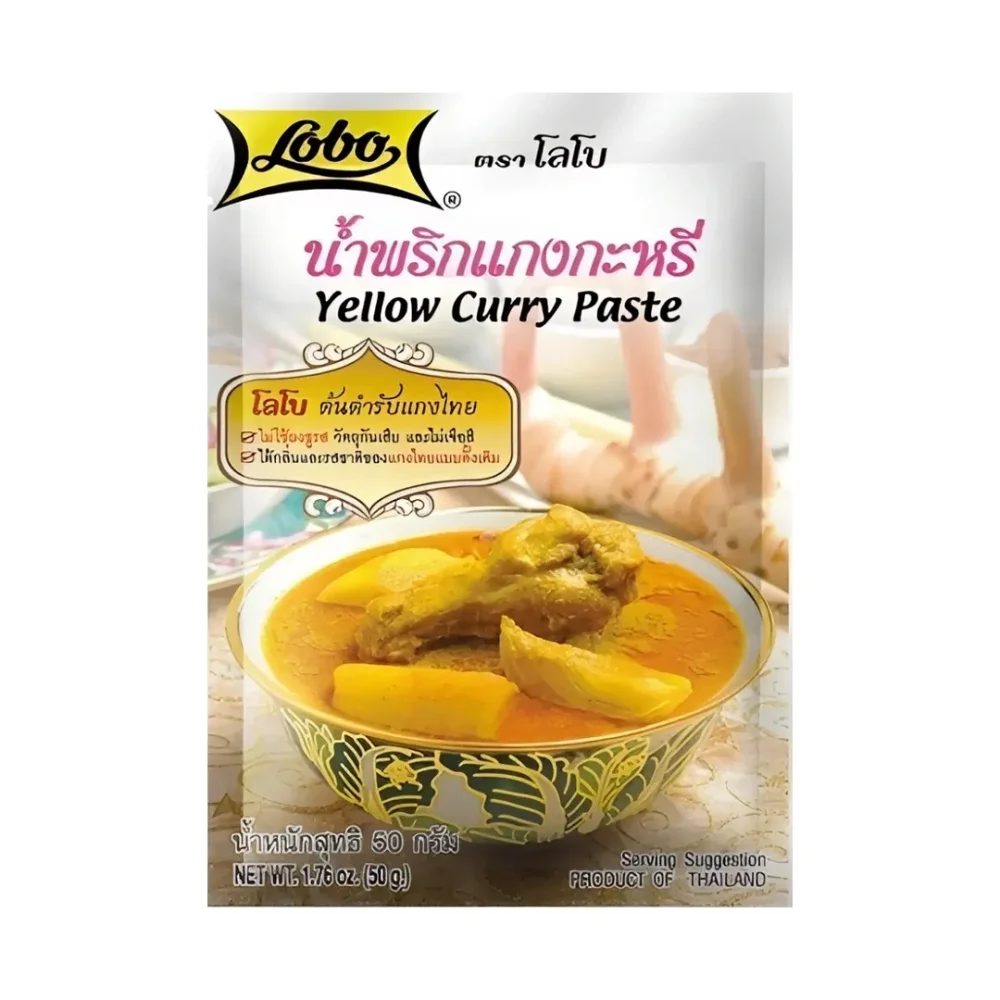
For first home tries, it’s practical to reach for a smaller pack to easily "taste the style" and adjust dosing. As a specific example of a yellow profile, you can use Lobo yellow curry paste (50 g). For Thai curry pastes it also holds that they really differ from each other: some predominate chilli, others herbs, others dried spices. That’s why it makes sense to see them as a family of different bases, not as one universal ingredient "curry."
4) Saltiness and umami: fish sauce as a "small lever" with a big effect
Thai flavor is often lifted by a small amount of a distinctly salty, umami-rich seasoning. A typical example is fish sauce: if a dish feels "flat," often the solution isn’t to add more chili or more sugar but to add depth.
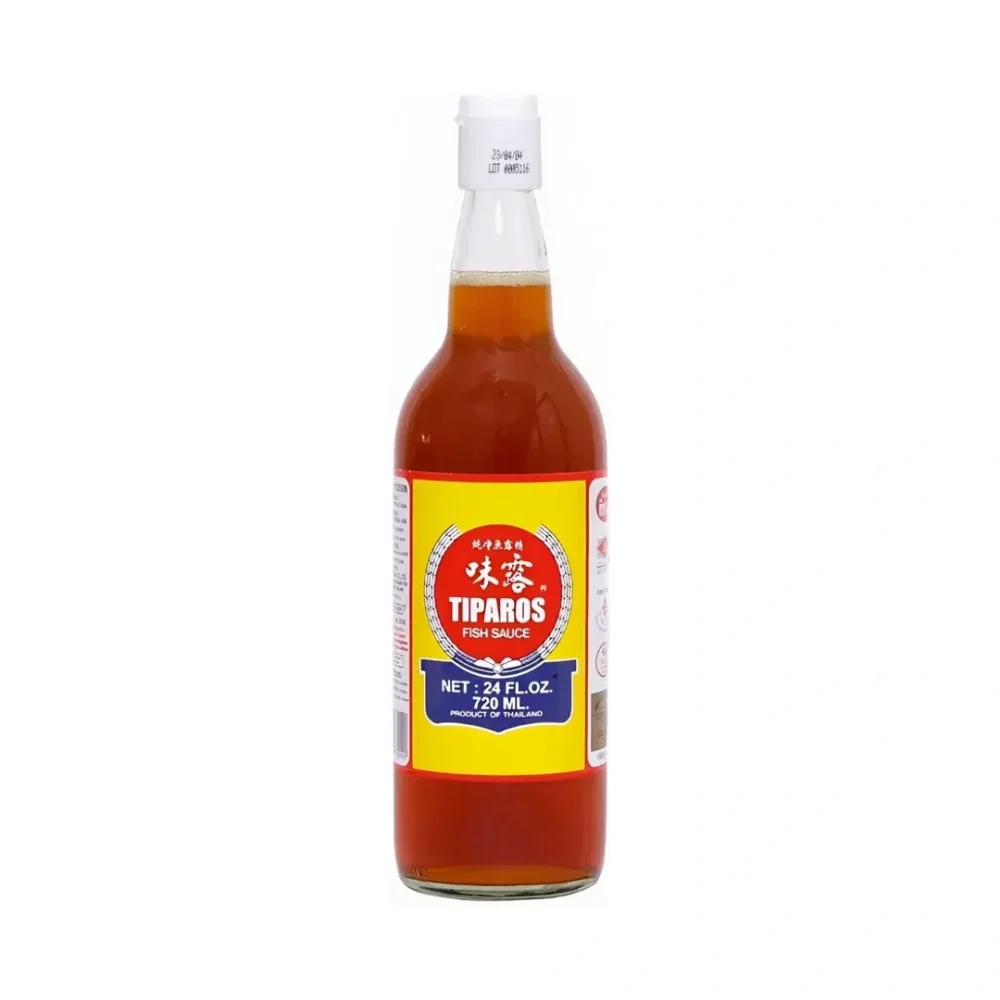
For home cooking, it’s practical to have fish sauce at hand, dosing it drop by drop and tasting continuously – for example, Tiparos fish sauce (720 ml). The point is that the dish should be more pronounced, not "oversalted": fish sauce should add depth, not overpower all other components.
5) Sourness that tastes "Thai": tamarind and lime
Sourness in Thai food is not usually just "vinegary." It often builds on lime and tamarind. Tamarind (tamarind pulp) can add a sweet-sour tone that fits well with saltiness and spiciness and helps achieve balance without the dish feeling just sharply sour.
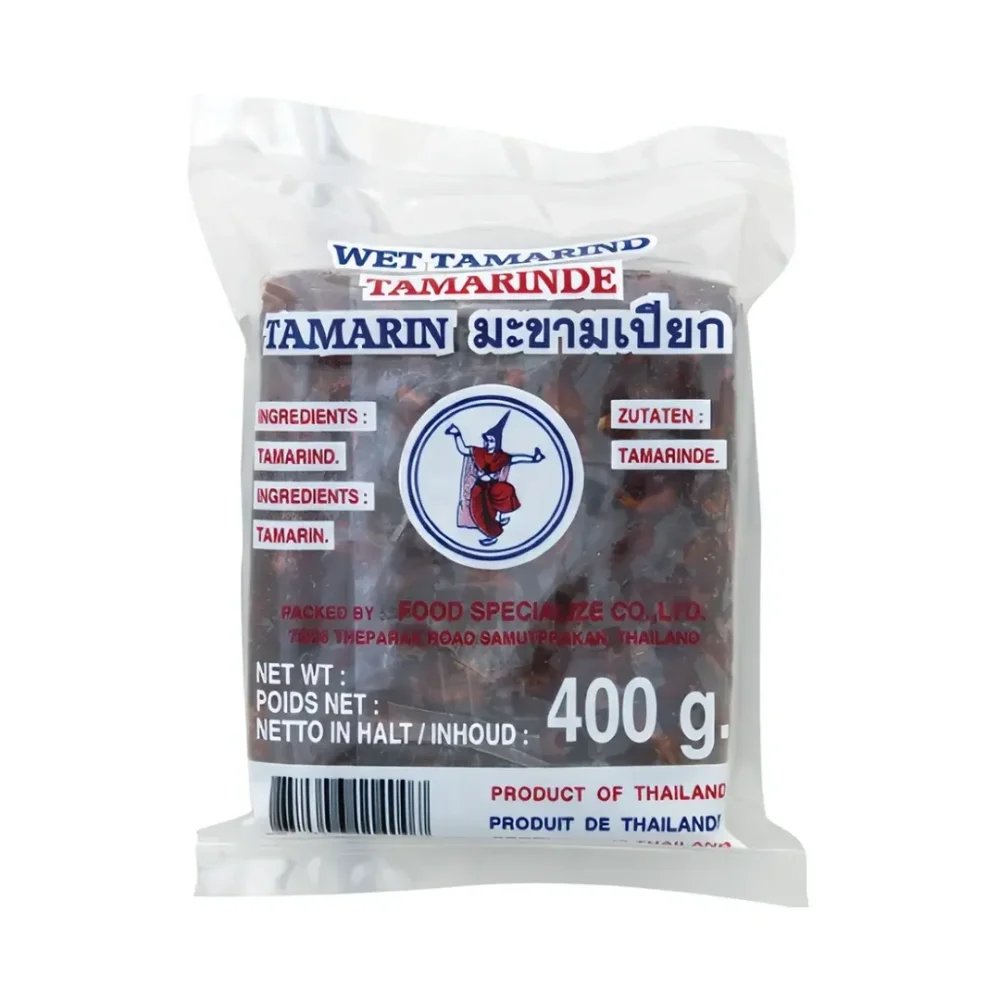
If you want to use tamarind at home and try it in sauces, soups, or marinades, a specific ingredient for the pantry is for example Thai Dancer tamarind (400 g). It’s important to dose gradually: tamarind should be a balancing element, not the only main flavor.
👃 6) Aromatics (lemongrass, galangal, makrut): when freezing helps and what to watch
Lemongrass, galangal, and makrut lime leaves are typical ingredients that make the Thai flavor recognizable, for example, in tom yum. In a European household, it’s important to know that these aromatics often do not "spoil" – but they lose scent. Therefore, it makes sense to protect them from drying out and work with storage practically: galangal and lemongrass tolerate freezing and makrut lime leaves are often a reasonable frozen choice if the goal is to preserve aroma.
Common mistakes and misconceptions: why Thai cuisine sometimes "falls apart" at home
"Thai cuisine is mainly spicy"
It’s not. Spiciness is important, but alone it does not explain Thai food. If home Thai tastes just "sharp" to you, often it lacks balance of sourness, saltiness/umami, and gentle sweetness, or aromatics.
"Everything Thai tastes similar"
No. Regional differences are large. When you perceive the difference between the central style around Bangkok and the north (Lanna) – and also the distinct orientation point of Isan – it starts to make sense why one Thai dish is based on creamy coconut and another on rice, dips, and sharing several smaller components.
"Curry paste = finished sauce"
No. Paste is a base from which the dish is built. The practical fix for this mistake is simple: briefly release the paste aroma in fat first, only then dilute with coconut milk or other liquid and taste gradually.
"Pad thai is the most typical representation of Thailand"
Pad thai is famous, but it’s just one face of a much broader culinary world. If you want to understand Thai cuisine as a whole, regional thinking usually gives you more than looking for one "most typical" dish.
"Sweetness in Thai food means the dish is sweet"
Not necessarily. Sweetness often works as a balancing element that connects sourness, saltiness, and spiciness. When your dish seems "too sharp" or "too sour," sometimes adding more salt or chili won’t help but gently rounding the flavor (while watching that the dish doesn’t become dessert-sweet).
🍜 How to recognize quality basic Thai ingredients (briefly and practically)
- Curry pastes: should have distinct aroma and readable character; they shouldn’t taste just aggressively salty or flatly spicy.
- Coconut milk: important is the proportion of coconut component and how it behaves during cooking; a good base does not feel watery and "hollow."
- Fish sauce: should have depth, not just sharp saltiness; a few drops should lift the dish, not "kill" it.
- Aromatics and herbs: lemongrass, galangal, lime/makrut and other herbs give the dish its identity; without them the procedure may be technically correct, but the result is flavor-dead.
What to take away from the article
- Thai cuisine is best understood as a system of balancing flavors, aromatics, and techniques – not as a list of a few famous dishes.
- Central Thailand (Bangkok and lowlands) often corresponds to what people think of as "classic" Thai: balance, coconut, well-known dishes like green curry and tom yum.
- The north (Lanna) is different: sticky rice more common, nam prik chili dips, shared dining (khan toke), and dishes like khao soi.
- Isan (northeast) is cited as one of the most distinctive regions and serves as a good reminder that "all Thai" really cannot be put into one flavor.
- For home cooking, the most practical is to start with rice, coconut component, curry paste as a base (not finished sauce), fish sauce for umami, and tamarind/lime for sourness – and season gradually.

Read next
If you want to explore this topic further, continue with these related blog guides and articles:
