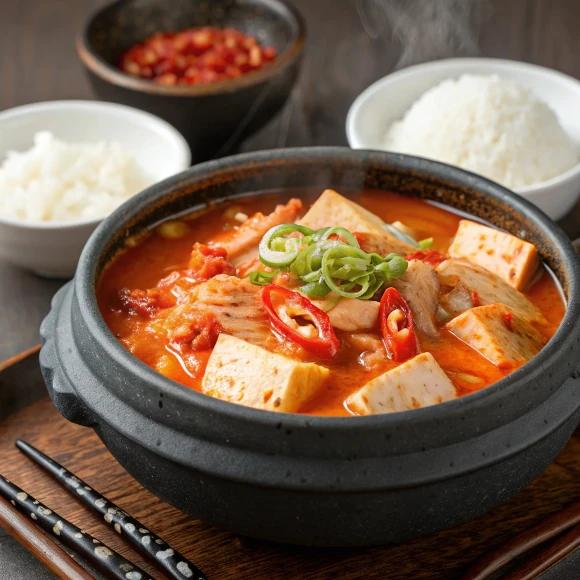
Kimchi soup (often called kimchi jjigae) balances three key flavors: the acidity of fermented kimchi, chili heat, and a rich, savory broth. In many Korean homes it’s also a practical dish—an ideal way to use kimchi that has aged long enough to become extra sour and flavorful.
Pork adds depth and body, while tofu softens the heat and turns the stew into a filling, complete meal.
⏱️ Quick overview
Servings: 3–4
Prep time: 10 minutes
Cook time: 25–30 minutes
Difficulty: Easy
🧄 Ingredients
2 cups well-fermented kimchi, chopped (include a few tablespoons of kimchi juice if you have it)
200 g pork belly or pork shoulder, thinly sliced
200 g firm tofu, cut into cubes
1 small onion, sliced
2 garlic cloves, finely chopped
1 tbsp sesame oil
1 tbsp soy sauce
1 tbsp gochujang (Korean chili paste), or to taste
4 cups chicken stock (or water)
1 tsp sugar (optional, helps round out sharp acidity)
2 spring onions, sliced
Salt and black pepper, to taste
Optional: Korean chili flakes (gochugaru) for extra heat
🔥 Method
Sauté the pork. Heat sesame oil in a pot over medium heat. Add pork and cook until lightly browned.
Add aromatics. Stir in onion and garlic. Cook for about 2 minutes, until the onion starts to soften.
Bloom the kimchi. Add chopped kimchi (and a splash of kimchi juice if available). Cook for 3–5 minutes, stirring, to deepen the flavor.
Build the broth. Pour in stock. Add soy sauce, gochujang, and sugar (if using). Bring to a boil.
Simmer. Lower the heat and simmer gently for 20–25 minutes, until the pork is tender and the broth tastes rounded and rich.
Add tofu. Slide in tofu cubes and simmer for 4–5 minutes to warm through.
Finish. Add spring onions. Taste and adjust with salt, pepper, and (optionally) gochugaru.
🥢 Serving tips & easy upgrades
Serve with rice: A bowl of steamed rice is the classic pairing and helps balance the heat and acidity.
Make it lighter: Swap pork for mushrooms, or use extra tofu.
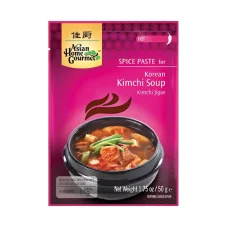
Make it quicker: Use a kimchi base sauce for a fast flavor boost, especially if your kimchi is mild.
More depth: If you have it, a small splash of kimchi brine and a bit more simmer time usually makes the biggest difference.
🧊 Storage & reheating
Fridge: Store in a sealed container for up to 3 days. The flavor often intensifies overnight.
Reheat: Warm gently on the stove until steaming hot. Add a splash of water/stock if it thickens.
Freezing: Possible, but tofu can change texture (becoming more porous). If you plan to freeze, consider adding tofu after reheating.
❓ FAQ
Do I need “old” kimchi?
It helps. More fermented kimchi gives the soup its signature tang and depth. If your kimchi is fresh and crunchy, simmer a little longer and consider adding a touch more gochujang or chili flakes.
Is kimchi soup very spicy?
You control it. Start with less gochujang, then increase after simmering. Serving with rice also reduces perceived heat.
Can I make it without meat?
Yes—use mushrooms or extra tofu, and consider a richer stock (vegetable stock works well). Keep the simmer time so the kimchi flavor fully develops.
This site uses cookies to provide services, customize ads, and analyze traffic. Your consent to the use of cookies will significantly help us to improve our services. More information



 Česky (CZK)
 Slovensky (EUR)
 Deutsch (EUR)
 Austria
 Belgium
 Bulgaria
 Croatia
 Denmark
 Estonia
 Finland
 France
 Germany
 Greece
 Hungary
 Italy
Italy Latvia
 Lithuania
 Luxembourg
 Netherlands
 Poland
 Portugal
 Romania
 Slovenia
 Spain
Spain Sweden