Česky (CZK)
 Slovensky (EUR)
 Deutsch (EUR)
 Austria
 Belgium
 Bulgaria
 Croatia
 Denmark
 Estonia
 Finland
 France
 Germany
 Greece
 Hungary
 Italy
Italy Latvia
 Lithuania
 Luxembourg
 Netherlands
 Poland
 Portugal
 Romania
 Slovenia
 Spain
Spain Sweden










In Asian cuisine, it often matters not only what you cook but mainly how. The same ingredient can taste completely different depending on whether you quickly stir-fry it at a high temperature, slowly simmer it in broth, steam it, or briefly sear it and then braise it. In this guide, you will align key techniques, learn to recognize their differences, and get practical tips on how to avoid typical home cooking mistakes.
🌶️ What is truly typical for Asian cooking techniques
Asian cuisines are defined not only by ingredients or sauces but mainly by the way heat, steam, fat, broth, and texture are handled. In practice, this means that technique is not a "detail" – it often decides whether the food will feel precise, lively, and "right" or just vague.
- Precise temperature control: from extremely fast methods to gentle simmering.
- Short and intense techniques alongside slow and deep ones: fast pan/wok cooking versus long broths and braising.
- Emphasis on pre-cutting: the size, shape, and uniformity of the cut determine how the ingredient heats through and how it will "bite".
- Connection between technique and dining: alongside the food, there are often dips and small "final touches" that make the flavor more vibrant.
- Efficiency: methods that save time and energy yet can deliver bold flavors even from simple bases.
Good news: once you understand a few principles (temperature, preparation, sequence of steps), many dishes will start to make sense across different countries and styles.
Five basic types of heat preparation (and when to choose each)
For home orientation, it’s useful to think about several "main families" of heat preparation. These are not academic categories – rather, they help you decide for each dish: do I want speed and juiciness, or depth and gentleness?
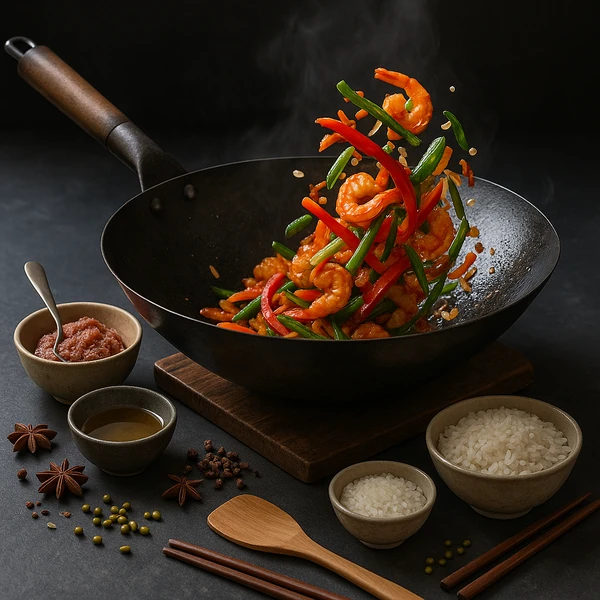
🍳 1) High temperature and speed: wok/pan (stir-fry and related methods)
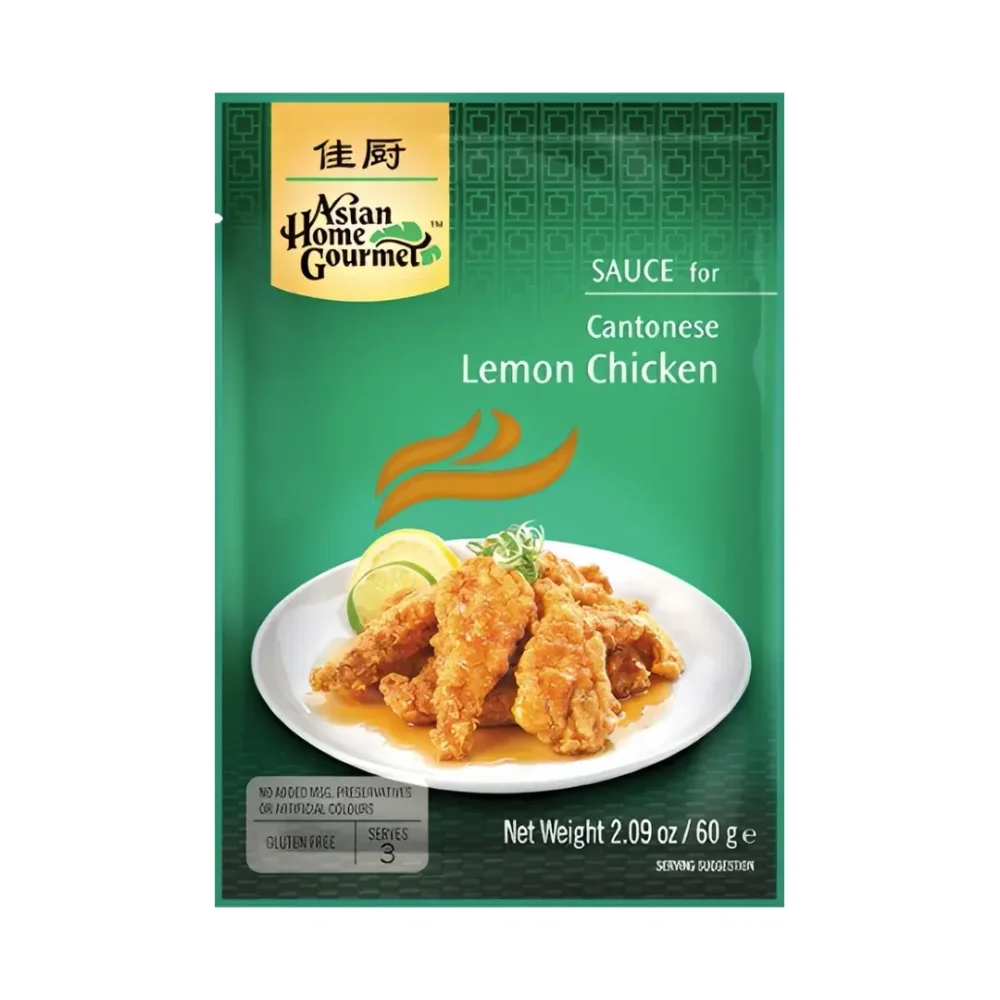
Quick tossing at high heat builds flavor on contrast: some parts stay crisp, others just "set", the sauce clings to the surface, and the dish feels light even when bold. This also includes cases where you want a "quick sauce" without long cooking – a typical example might be a mixture for sweet and sour style, like Cantonese lemon chicken sauce, which you then adjust according to the chosen meat/vegetables.
2) Searing and then braising: braising vs. stewing
This family of techniques is about depth. It starts with searing (for flavor), followed by a slower phase in liquid. It’s important to distinguish:
- Braising: after searing, work with a smaller amount of liquid.
- Stewing: ingredients are more submerged in liquid, resulting in a "more pot-like" dish.
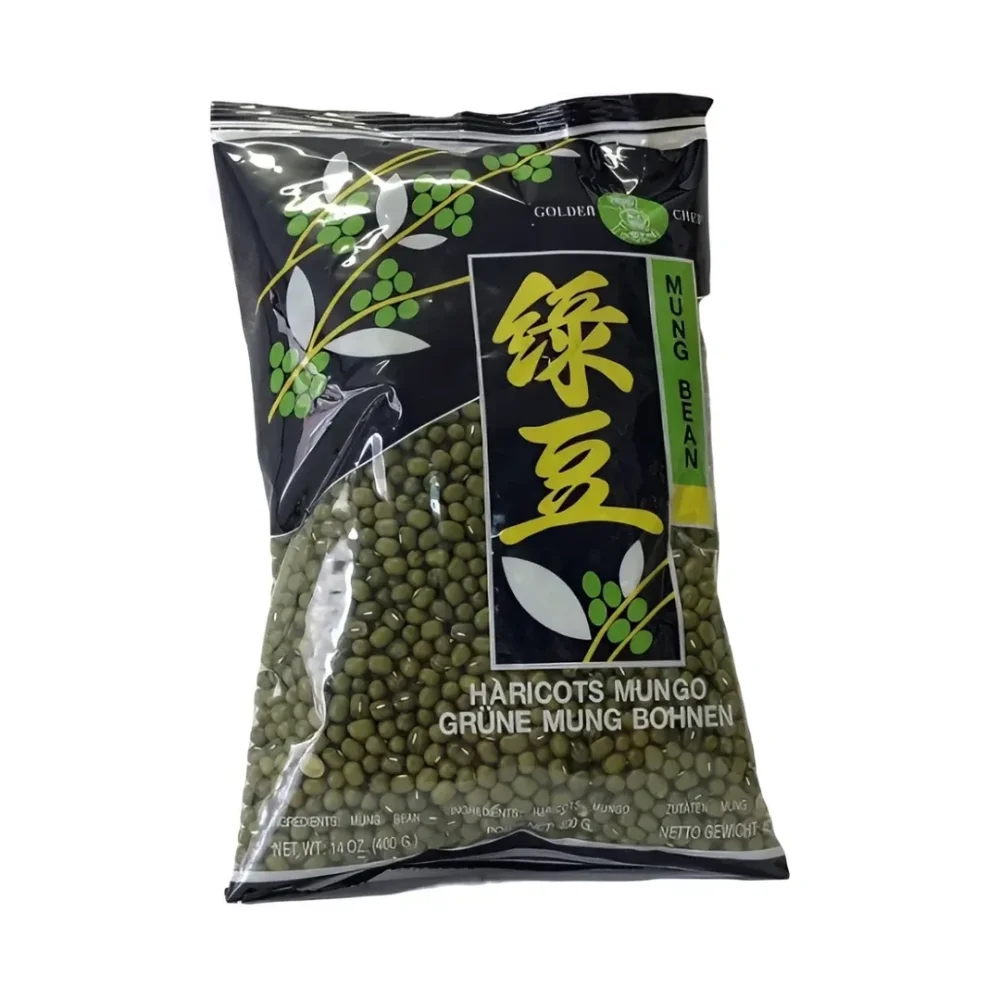
Home advantage: these techniques allow for a forgiving pace and often work great with legumes – for example, mung beans can be used in slower spiced bases where they absorb aromas well.
3) Gentle cooking and simmering: simmering and long broths
Asian cuisine isn’t only fast wok cooking. A big part is made up of broths, soup bases, and slow simmering. The key is to distinguish a rolling boil vs. simmering (gentle, quiet bubbling). For many Asian soups and sauces, simmering is important because it helps to:
- pull out flavor,
- keep broth clarity,
- soften ingredients without breaking their structure,
- create a deeper but not cloudy base.
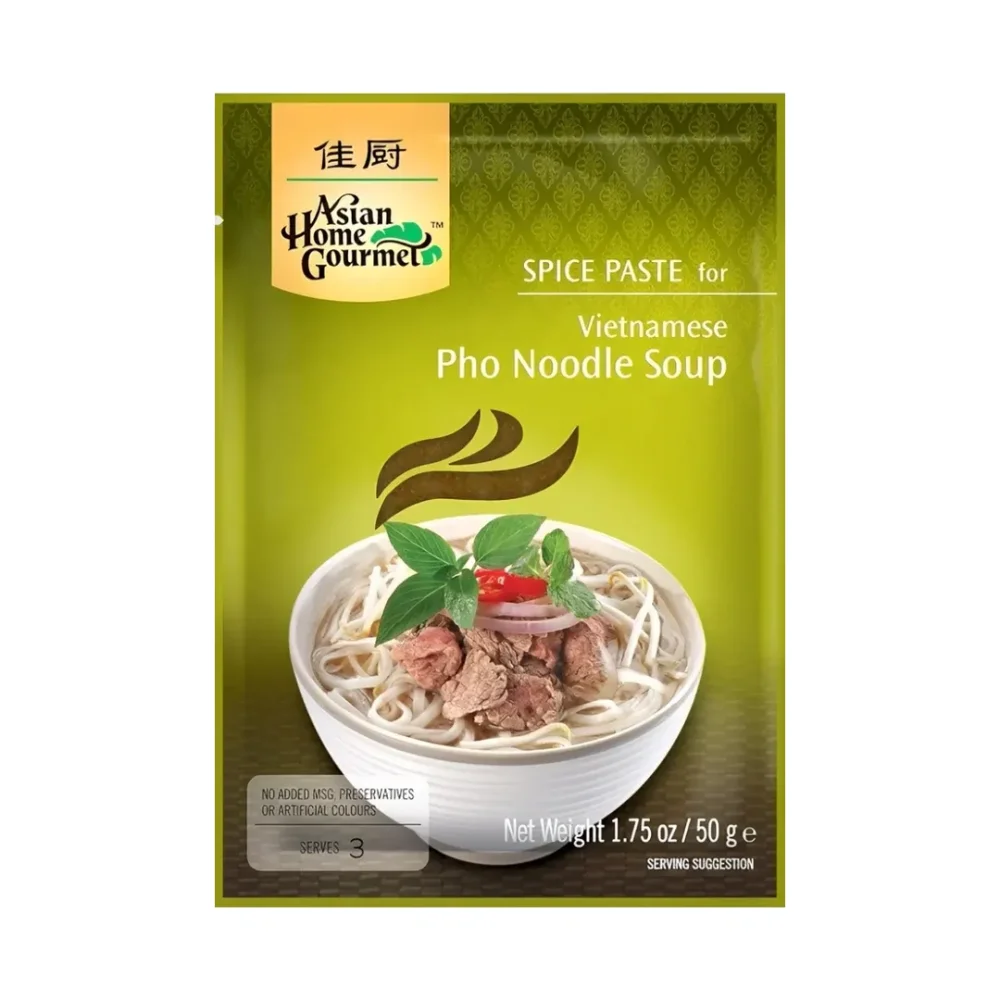
This typically underpins dashi and Japanese soups, phở and other Vietnamese broths, ramen bases, Korean tang and jjigae, Indian and Sri Lankan legume/spiced bases as well as Chinese broth soups and braised dishes. If you want a quick entry to Vietnamese "broth logic" at home, a flavor base like phở soup paste can help – but it still holds true that the best results come from gentle simmering and gradual seasoning.
4) Steam: steaming
Steaming keeps a different texture than boiling in water – the ingredient doesn’t get soggy from direct contact with water and often tastes cleaner. It’s a technique that shines with items where you want to preserve shape and delicacy.
5) Dry heat: roasting and grilling
Roasting is usually more even and ‘closed’, grilling works with more direct heat and a stronger surface reaction. In practice, you notice it mainly on the surface: the grill leaves a sharper mark of heat, roasting is steadier and easier to control with larger pieces.
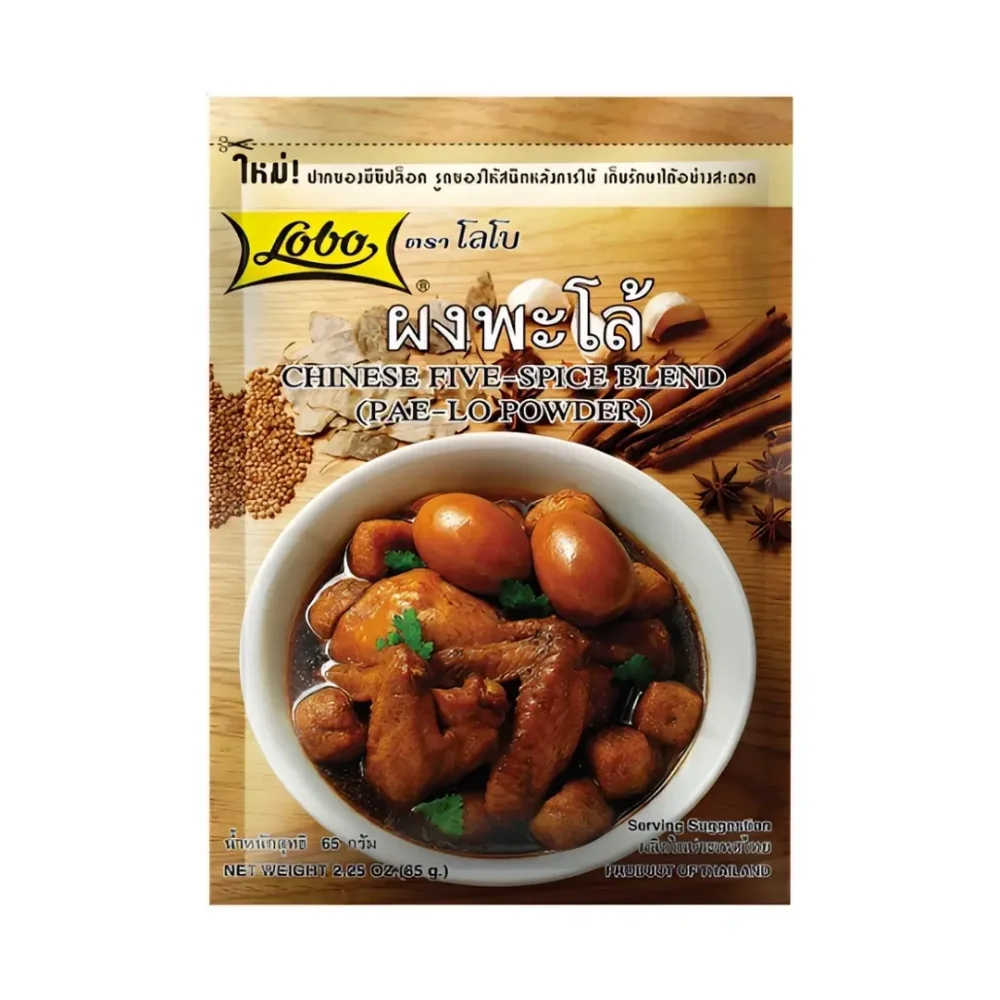
Dry heat methods often go well with spices you want to "bloom" and stick to the surface – for example, five-spice powder can be used where you want a sweet-spiced profile in a marinade or during heat treatment.
Wok and why it’s so important
The wok in Asian cooking is more than just a shape of the pan. It's a way of working: high heat, fast order of steps, and minimal hesitation. Even if you often cook on a regular stove at home, the principles of wok cooking can transfer to any pan – you just need to adjust quantities and pace.
What makes the wok different
- Concentrated heat and quick reaction: wok cooking involves short intervals and immediate changes.
- Control over texture: some ingredients should stay crisp, others just "wilt" slightly.
- The technique is often faster than the sauce: the sauce tends to "cling" rather than cook for long periods.
What the wok is used for
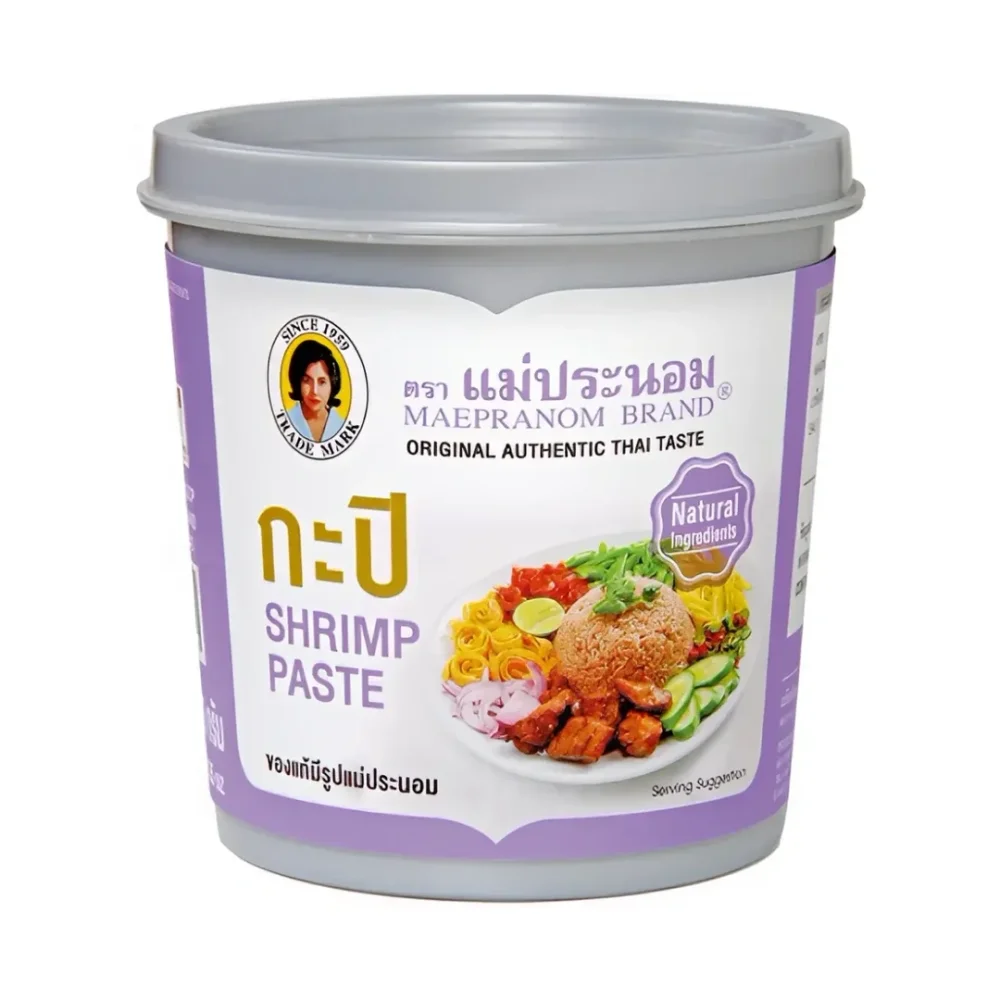
It’s not just about stir-frying. The wok is used wherever you need to work quickly with aromatics, fat, and subsequent seasoning. A typical home example: add a small amount of aromatic base (e.g., a paste) to the pan, briefly toast it, then add other ingredients. A concentrated "umami" element can be something like shrimp paste – here it’s true that a small amount makes a big difference and it’s better to add it carefully and gradually.
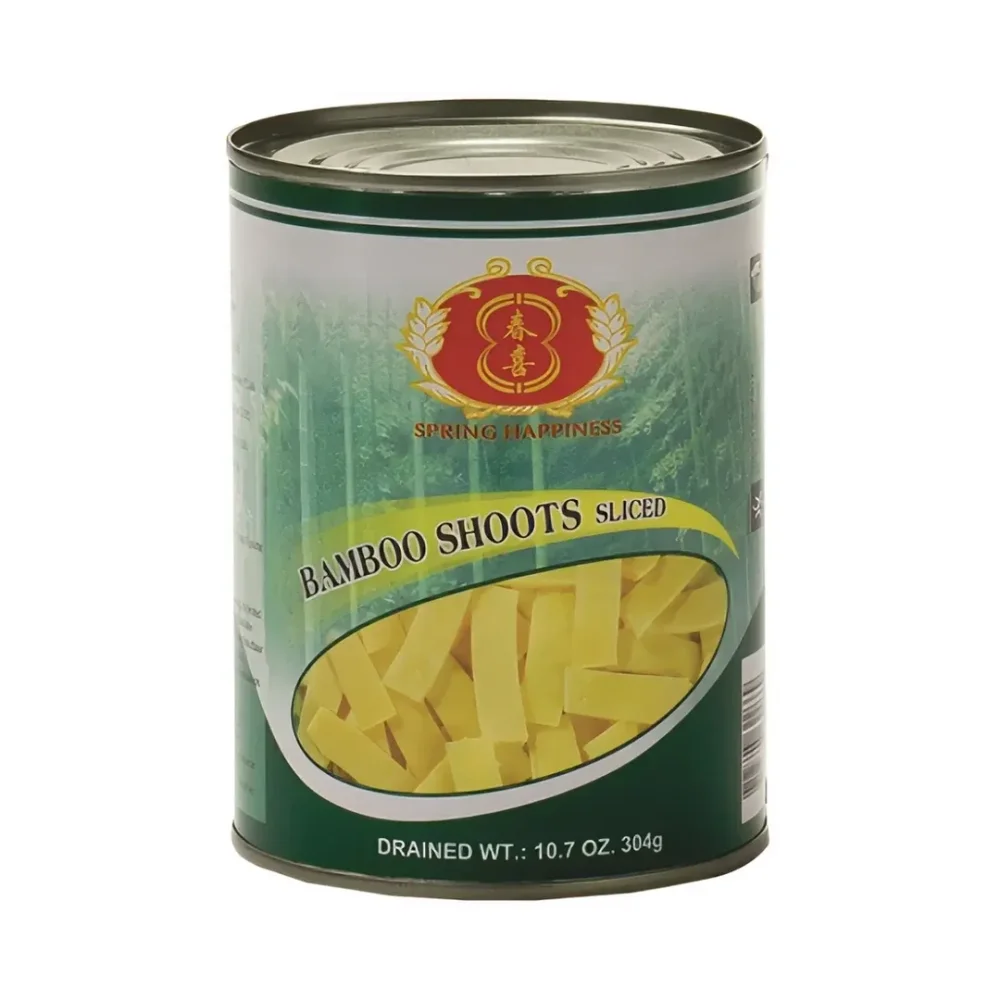
For the texture of wok dishes, ingredients that stay firm and hold sauce well are suitable – for example, bamboo shoots (slices) typically add a crunchy contrast and help "lighten" a dish that would otherwise be just soft.
Stir-fry: a quick technique that requires discipline
Stir-fry is not the same as European "quick sautéing." Usually, it works with higher heat, faster handling, and a different food volume. When done well, you get bold flavor and distinct textures within minutes. When not, the result is watery, stewed, and lacking energy.
🌶️ What is key for stir-fry
- Mise en place (everything prepped in advance): stir-fry doesn’t allow time to cut "on the fly."
- Don’t overcrowd the pan: too much volume lowers the temperature, causing steaming in its own juice instead of searing.
- Order: first aromatics and base, then ingredients according to how quickly they cook through.
- Sauce as the final step: often just a brief coating suffices, not long cooking.
💡 Practical home tip: if you want to learn just one thing, learn to make smaller batches. It’s the fastest way to make "fast pan" taste like fast pan – not like vegetables stewed in sauce.
Why cutting is so important
In Asian cooking, cutting often decides the result more than the sauce itself. The reason is simple: the same ingredients must heat through in the same time. When pieces are uneven, some overcook and soften, others stay raw – and you then tend to "fix" this by longer cooking, which ruins the texture.
Simple rule to start: cut into similarly sized pieces and consider what you want to keep crisp. For leafy greens, timing of addition is more important; for firmer vegetables, size of the cut.
Cooking, simmering, and long broths: when depth is the goal
For broths and soups, the technique of "not overdoing it" is often more important than the ingredient list. Gentle simmering helps maintain flavor clarity and appearance, while a rolling boil may cloud the broth and break down ingredient structures.
In practice, you’ll notice that in dishes like phở, ramen, or Korean soups, it’s not just about "cooking" something, but about allowing the flavor to gradually open up and the result not be harsh or heavy. From the home cooking perspective, this is also a good technique for days when you don’t want to stand by the stove: the pot cooks at its own pace and you just keep an eye on it simmering gently.
Raw and minimally processed techniques: mindful "not cooking"
Asian cooking isn’t just about heat. The world of raw fish, lightly marinated ingredients, salads, herbs, pickles, and acid-treated dishes is important too. The point is not to "be flashy", but to keep clarity, texture, seasonality and contrast to heavier techniques.
For home practice, it’s useful to view this as a technique: not everything needs to go through the pan. Sometimes it’s enough to put a contrast next to the warm dish – for example, a fresher component or something wrapped "without cooking."
A simple example of an ingredient used precisely in minimal heat treatments is rice paper: it allows creating a fresh style of serving where texture, herbs, and final dip matter.
Cooking sauce vs. table dip: a small detail that makes a big difference
One of the most common beginner pitfalls is confusing "a sauce that cooks" with "a sauce added at the table" (or vice versa). In the Asian context, this is a crucial difference.
Cooking sauce
is used during preparation and builds the character of the dish: the base of wok dishes, curries, glazes, soups, or marinades. Typically, curry pastes belong here, which are first briefly toasted in fat – for example, yellow curry paste works by first releasing aroma and only then being diluted with liquid (broth or coconut milk according to style).
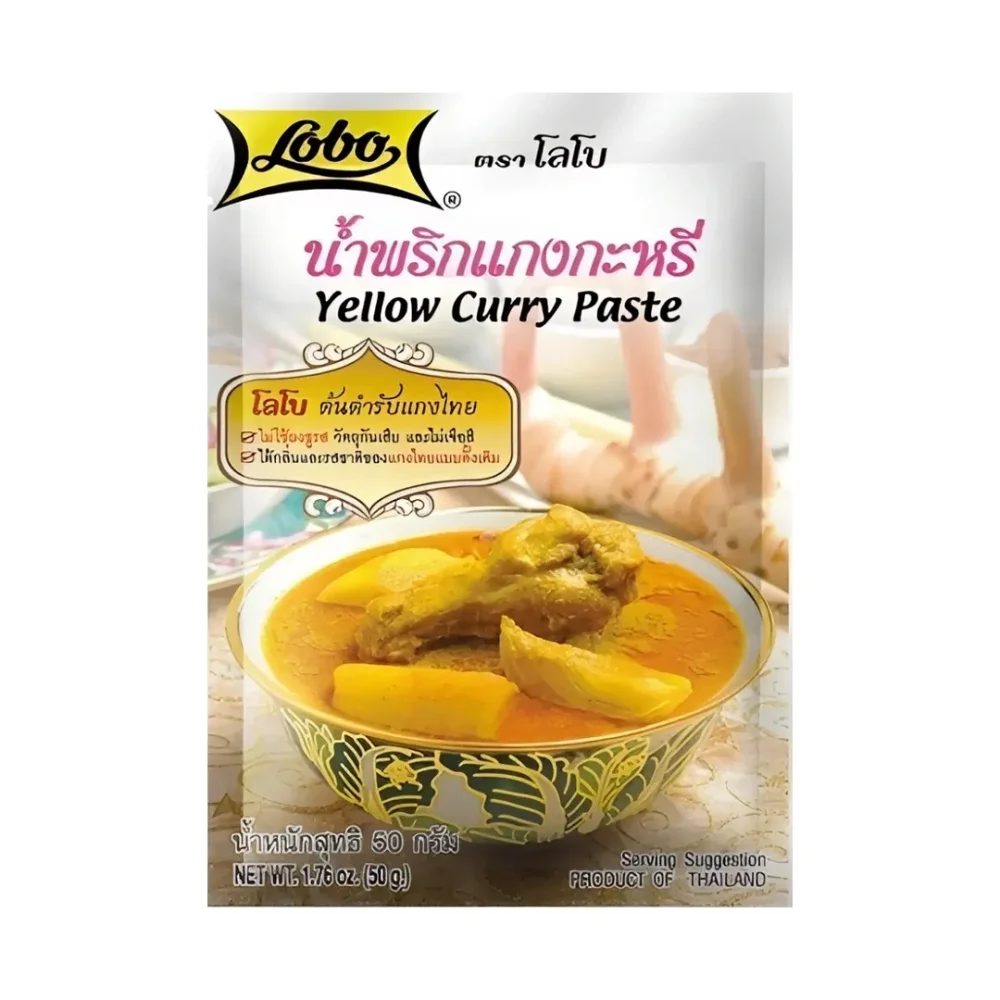
Table dip
Served alongside the food and added in small doses. Its role can be: to increase spiciness, add acidity, lighten fat, highlight umami, add freshness – or allow everyone to adjust each bite to their preference.
Final seasoning
This can be a few drops of sauce, a teaspoon of a spicy component, a citrus dip, sesame dressing, chili oil, or a small amount of pickles. The important thing is that it is a small, concentrated intervention.
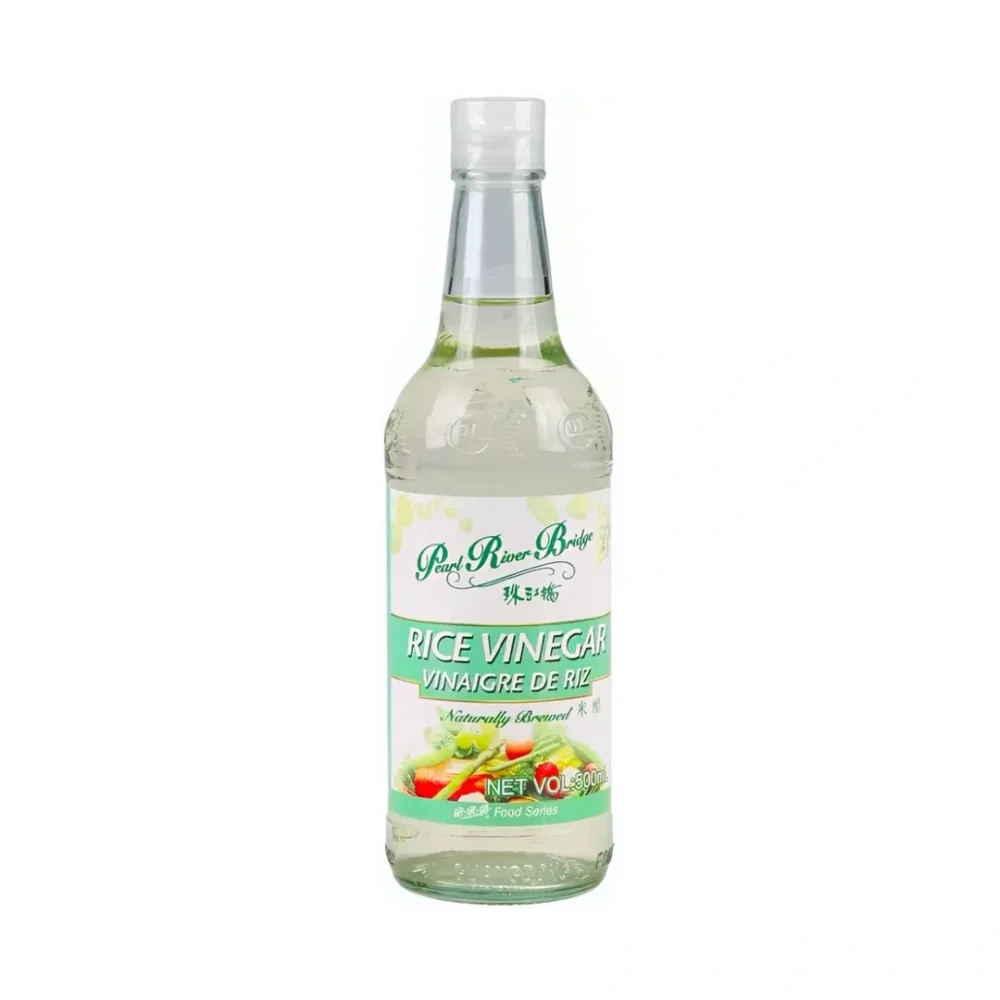
For a homemade "quick acidity," milder vinegars are suitable – for example rice vinegar is usable in dressings and marinades and often does exactly what you need in Asian flavor: it opens the dish and stops it from tasting flat.
And if you want to simplify the dip into one memorable scheme, a good balance works well: salty base + acidity + light sweetness + spiciness and aroma. This is often the difference between a "salty liquid" and a dip that gives the dish its final shape.
Which techniques are most often confused (and why it matters)
Some terms look similar but lead to different results. When confused, typical home mistakes arise – the food is either overcooked or undercooked.
- Stir-fry vs. sauté: stir-fry usually means higher heat, faster work, and a different quantity of food. When done like sauté, you often end up with a "braised pan."
- Braising vs. stewing: braising starts with searing and uses less liquid; stew is more submerged.
- Steaming vs. boiling: steam preserves texture differently, direct contact with water more easily breaks down the surface.
- Grilling vs. baking: grill is more direct heat and more pronounced surface, baking is more even.
Into this often comes a practical problem: when you don’t have enough heat at home in the wok/pan, it’s necessary to compensate with smaller portions and better preparation (not longer cooking). It often also helps that you add “watery” ingredients later or process them in parts.
What to take away from the article
- In Asian cuisine, technique often forms the identity of the dish. The same ingredient tastes different in a wok, in broth, in steam, or after braising.
- Fast techniques require discipline. Stir-fry relies on preparation in advance, high heat, small portions, and the correct order.
- Depth of flavor is often born at a calm pace. Simmering is essential for broths and soup bases.
- Steaming and minimal preparation are not "shortcuts," but full-fledged techniques. They work with texture and purity.
- Learn to differentiate cooking sauces and table dips. A small bowl alongside the food often saves balance and gives flavor liveliness.