


 Česky (CZK)
 Slovensky (EUR)
 Deutsch (EUR)
 Austria
 Belgium
 Bulgaria
 Croatia
 Denmark
 Estonia
 Finland
 France
 Germany
 Greece
 Hungary
 Italy
Italy Latvia
 Lithuania
 Luxembourg
 Netherlands
 Poland
 Portugal
 Romania
 Slovenia
 Spain
Spain Sweden










How to start with Chinese cuisine: first orientation, first purchase, and first meals that make sense
Chinese cuisine is a great gateway to Asian cooking – but only if you don't approach it as one "universal" cuisine and don't try to cook everything right away. In this guide, you'll create a simple map (north vs. south, basic regional framework), choose the first types of dishes to make at home, and understand how to start with sauces and seasonings without typical shopping mistakes.
Why Chinese cuisine is a good start (and why you shouldn't imagine it as one thing)
Beginners often want to start with "Asian cuisine" as one package. In practice, it doesn't work – Chinese, Japanese, Korean, or Vietnamese cuisines differ in flavor, technique, and the pantry you build gradually. Chinese cuisine is suitable as an entry door mainly when you want quick meals, pan or wok cooking, and a good ratio of result to time.
At the same time, it is important to know one thing right at the start: "Chinese cuisine" is not one style. It is a family of regional cuisines that developed under different conditions – and therefore differ in ingredients, flavors, and customs. For home starting, though, you don't need an encyclopedia. You need a few orientation points that will help you choose first dishes and first ingredients so they fit together.
🌶️ What is typical for Chinese cooking: regionality, technique, texture, and balance
When home cooking is supposed to "start smart," it is useful to have several principles in mind that repeat in Chinese kitchens:
- Regionality: it makes more sense to ask "how Chinese?" rather in the sense which style than "if it is authentic." The northern logic with wheat and dough is different from the southern one with rice and lighter techniques.
- Emphasis on technique: with the same ingredients, it depends on cut, piece size, order in the pan, temperature, and time. A beginner often finds that "why it doesn't taste like in a restaurant" is not about a secret sauce but about preparation and temperature.
- Balance of flavors: salty, sweet, sour, spicy, aromatic, and umami are composed so the whole makes sense. It does not mean every dish has to have all components at once.
- Practicality: many techniques are built to make the food quickly and efficiently.
- Texture and sharing: texture is not a "detail" but part of the result. And many dishes are naturally designed to be shared at the table (more small dishes in the center, combining during the meal).
For you as a beginner, a simple advice follows: don't look for the "best universal recipe." Look for one principle, which you learn to repeat (typically stir-fry), and a few ingredients that appear in several dishes.
The simplest map to start with: north vs. south
China is too large to fit into one axis, but the division north vs. south is surprisingly a good orientation point for beginners. It will help you decide whether you want to build first successes more on noodles and dough or on rice and lighter preparations.
North: wheat, noodles, dumplings, and heartier dishes
Northern China is historically associated with wheat, millet, and grains. Typical are noodles, filled dumplings and buns, various pancakes, and other dough items. In cooler and drier areas, pickling often has a bigger role, as does pickling and aromatics like garlic, onion – and overall a heartier food logic.
South: rice, rice noodles, lighter techniques, and emphasis on freshness
Southern China is more "rice-based." More frequent are rice side dishes, rice noodles, seafood, shorter cooking times, and greater emphasis on delicacy and purity of flavor. For home cooking, it often means it pays off to work with a thinner layer of sauces and watch the exact time in the pan more carefully.
This division is not absolute, but it works as a first compass: when you know whether you are more attracted to the "noodle north" or the "rice south," it's easier to choose first dishes and first seasonings.
Four traditions and eight major cuisines: a framework for orientation, not a list to memorize
Historically, Chinese cuisine was often divided into four major traditions:
- Lu (north),
- Yue (south),
- Chuan (west),
- Huaiyang (east).
Later, the division expanded to eight major cuisines:
- Shandong,
- Sichuan,
- Cantonese/Guangdong,
- Jiangsu,
- Fujian,
- Zhejiang,
- Hunan,
- Anhui.
For a home start, it is important to understand that this is not the only "correct" system – but it is a useful framework. It can help you practically mainly so you don’t get tangled up in expectations:
- When you reach for the gentler Cantonese (Cantonese/Guangdong) logic, you typically want a cleaner flavor, shorter cooking time, and more careful work with sauces.
- When you try the stronger Sichuan (Sichuan) logic, expect the dish to build more on distinct flavor lines and character of seasoning.
You don't need to know the details of all regions now. It's enough to know that "Chinese" means more variants – and it's okay to start with one and gradually taste the rest.
Practical home start: 5 steps that will give you quick progress
A beginner shouldn't start with an effort to "cook all Chinese." It's better to understand a few basic logics: north vs. south, soy and fermented flavor lines, work with high heat, importance of texture, and role of aromatics and broths. Here is a procedure that can really be followed at home.
1) Learn one simple stir-fry (and treat it as technique training)
Stir-fry isn't just "quick frying." It's about preparation and order. The biggest difference is that you prepare everything in advance (mise en place) and cut into similar-sized pieces so everything cooks evenly.
- Cut: smaller and similarly sized pieces = faster and more controllable result.
- Order: first ingredients that need more time, then the delicate ones. Aromatics (e.g., ginger, spring onion) are sensitive to burning, so it is better to handle them carefully and briefly.
- Sauce after releasing aroma and thickening: a beginner's mistake is to "drown" the pan in sauce and rather stew than stir-fry.
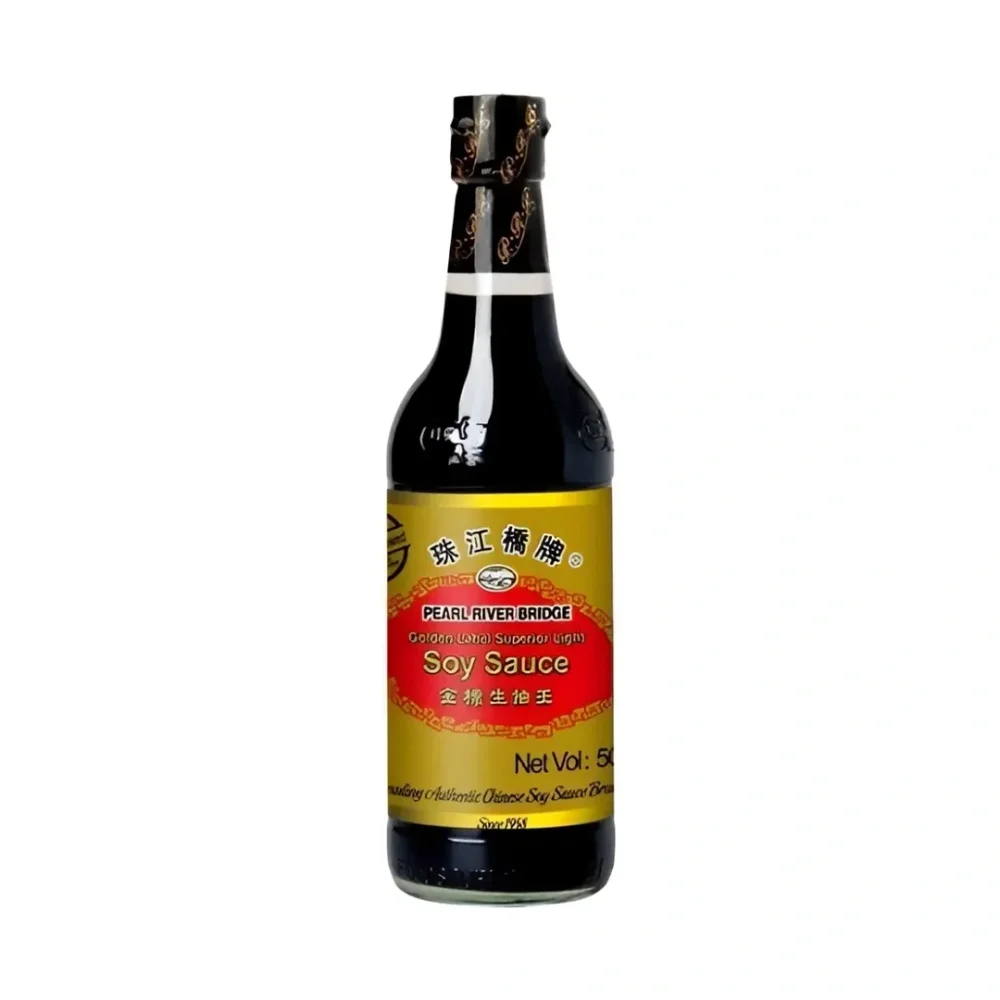
As a universal seasoning base (not just for "color"), light soy sauce works. A specific example to start carefully and gradually add to taste: light soy sauce P.R.B. (Superior Golden Label). For first attempts, set a simple rule: better less, mix, taste, adjust.
👃 2) Build your "flavor line": salty + aromatic + sour (and only then sweet-savory sauces)
For a home start, it is useful not to make complicated combinations right away but understand what each component does in the dish:
- Salty/umami: often soy sauce (fermented flavor line).
- Aromatic: typically ginger, spring onion (work as the "engine" of flavor even without much sauce).
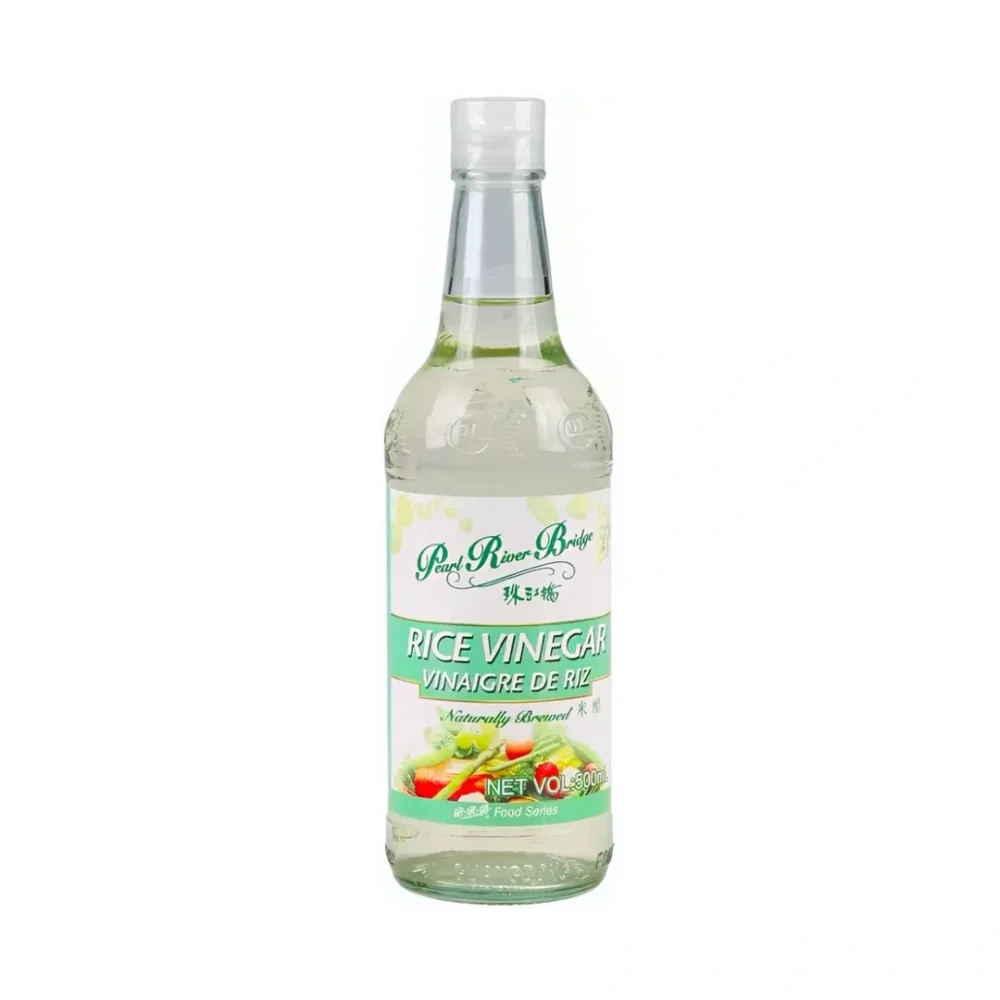
- Sourness: can lift and purify the dish. Milder sourness can be built on rice vinegar, for example, P.R.B. rice vinegar.
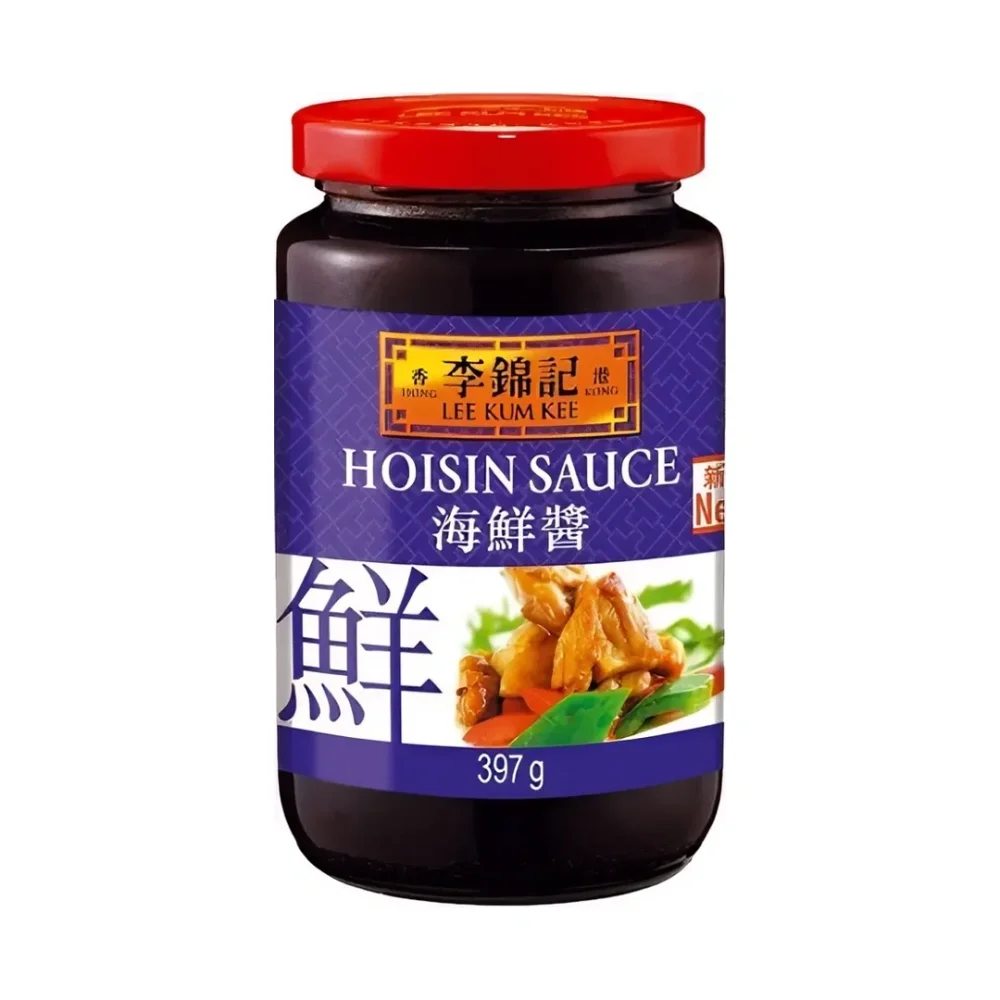
Sweet-savory sauces (e.g., hoisin) are then used as a distinct tool, not as a substitute for all other basics. If you want to try how it behaves in a quick pan dish or as a dip, you can start with Lee Kum Kee hoisin sauce. Only then does it make sense to compare different styles within the hoisin saucescatalog.
Similarly, oyster sauce (depth, umami, "rounding") is often used in Chinese home cooking, but for the start, it's reasonable to stay with a small set of ingredients and add gradually. If you already know you like this direction, the next step may be to explore the oyster saucescatalog.
3) Cook one noodle and one rice dish (and observe the difference in logic)
One practical piece of advice for home start is to try two "frameworks": one dish based on noodles and one on rice. Not to collect recipes but because it will teach you to dose sauce differently, work with texture differently, and plan preparation differently.
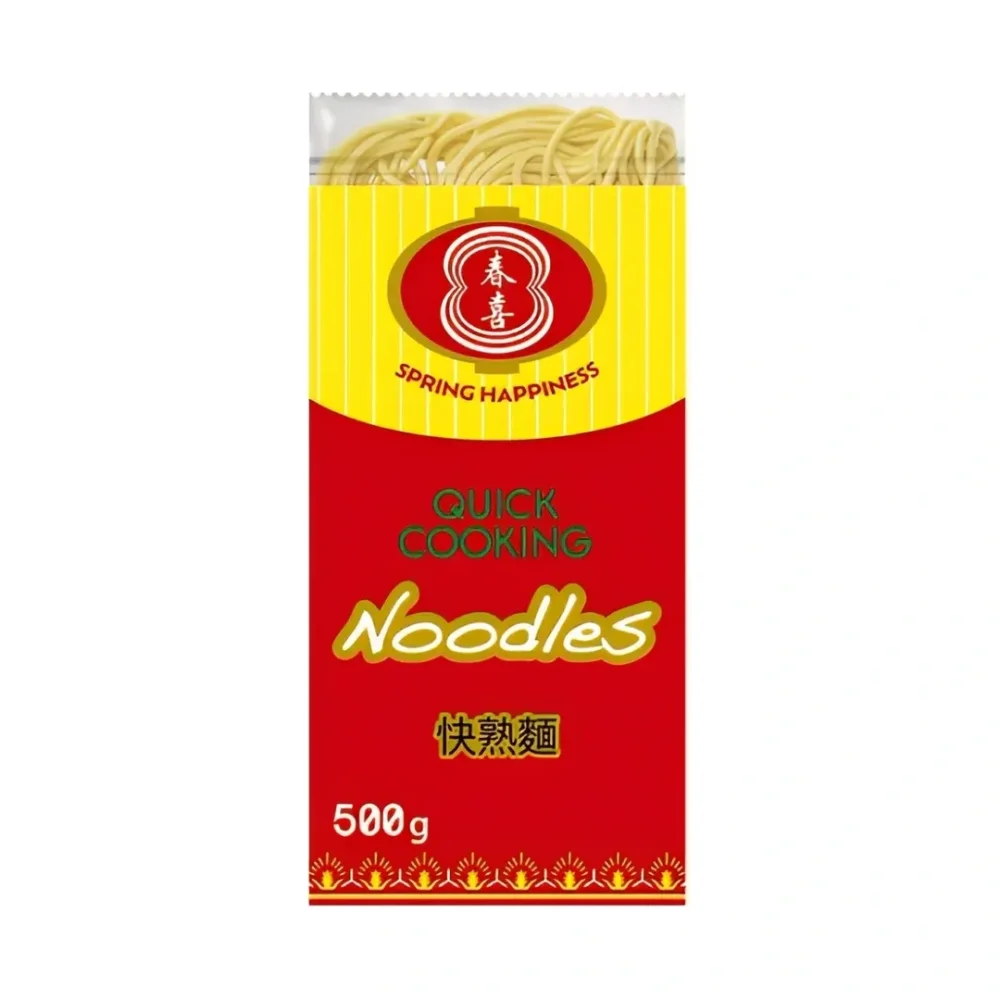
For a quick noodle start, universal wheat noodles that soften quickly and carry sauce and broth well are suitable – for example, Spring Happiness quick egg-free noodles. As training, mainly watch that the noodles are not just "a side dish": a quick tossing in the pan with seasoning and aromatics often makes the difference between a bland result and a dish that holds together.
4) Try the opposite technique: steamed or very quickly stir-fried dish
When starting with Chinese cooking, it is tempting to do everything "in one pan." But part of orientation is also to taste how a dish tastes differently when it is:
- steamed (more delicate, cleaner expression of the ingredient), or
- quickly stir-fried (more pronounced surface, different texture).
You don't need to buy new things right away. The point is to notice how the result changes with changes in temperature and time – which is exactly one of the key "Chinese" skills.
5) Take dumplings or wontons as a weekend project (not as the first dinner attempt)
Stuffed dumplings, buns, or wontons are typical for northern logic and can be managed at home – but it is reasonable to include them only when you already have basic seasoning and work with texture under control. Then they become a useful "project" where you also learn filling dosing, dough work, and bite structure awareness.
How to start shopping smart: choose by function, not impression
With Asian ingredients, many disappointments arise not because they are "bad," but because they are poorly chosen for specific use. For a Chinese start, it’s worth following these rules:
- Always read the label: the ingredient list is in descending order. The first items usually determine the character of the product. It is a quick filter when you try to understand whether you are buying a base or mainly a flavored product.
- Distinguish base vs. flavored product: some sauces are great but work more as "finished flavor," not as a building block. If you confuse this, the dish will behave differently than you expect.
- Start with a smaller set of more universal items: with very distinct and narrowly used ingredients, it's easy to buy large packages and then not know what to do with them.
- Don't buy just based on the picture of the finished dish: the picture is not instructions nor a guarantee that the product fits your recipe or style.
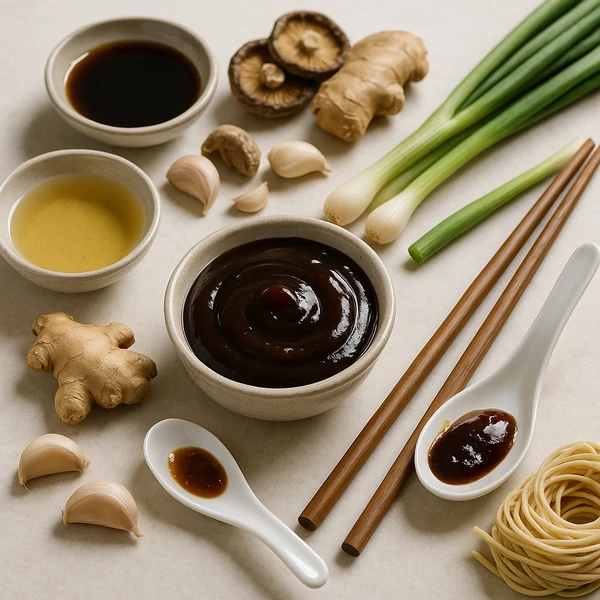
A simple home "starter set" for Chinese-inspired quick cooking usually suffices to understand the role of a few flavors (salty/umami, sourness, aromatic) and only then add other sauces depending on the style that suits you.
Common mistakes and confusions (and how to fix them quickly)
- Mistake: trying to cook "all Chinese". Fix: choose one branch (like noodle stir-fry) and repeat it until you improve cutting, temperature, and seasoning.
- Mistake: underestimating preparation. Fix: prepare everything in advance. Chinese quick cooking "punishes" improvisation during frying.
- Mistake: confusing stir-frying and braising. Fix: if you want to stir-fry, keep the pan hot and add sauce sparingly; a large amount of liquid immediately lowers the temperature and changes the technique.
- Mistake: confusing table sauces with cooking bases. Fix: treat ready sauces as tools for specific effects (dip, glaze, quick seasoning), not as a universal substitute for fermented bases.
- Mistake: "rice wine" = anything from rice. Fix: it's good to at least distinguish these things:
- sake (Japanese fermented alcohol, has its role in cooking),
- mirin (sweeter Japanese seasoning, adds gloss and rounding),
- Chinese rice wines / cooking wine (e.g., Shaoxing; typically more aromatic role for wok, marinades, and braising),
- rice vinegar (sourness – completely different category).
- Mistake: assigning too much weight to words like "premium," "authentic," "traditional". Fix: return to function and composition. It’s not about the label but about what the ingredient does in your dish.
What to take away from the article
- Chinese cuisine is a family of regional styles – for a start, a simple map and a chosen "entry branch" suffice.
- The most practical first compass is north vs. south (wheat and dough vs. rice and lighter preparations).
- Quick progress is made through technique: cutting, order in the pan, high heat, sauce quantity control, and work with texture.
- Start with one stir-fry, one noodle dish, and one rice dish – and repeat them until you can perfect them.
- Shop by function and read labels: you will avoid unnecessarily specialized items and common confusions (e.g., "rice wine" vs. rice vinegar).

Read next
If you want to explore this topic further, continue with these related blog guides and articles:
