

 Česky (CZK)
 Slovensky (EUR)
 Deutsch (EUR)
 Austria
 Belgium
 Bulgaria
 Croatia
 Denmark
 Estonia
 Finland
 France
 Germany
 Greece
 Hungary
 Italy
Italy Latvia
 Lithuania
 Luxembourg
 Netherlands
 Poland
 Portugal
 Romania
 Slovenia
 Spain
Spain Sweden










Salad Seasoning Blend
Why salads so often taste flat 🥗
Most salad “disappointments” don’t come from the vegetables. They come from the gap between freshness and seasoning. Lettuce, cucumber, cabbage, and many other raw vegetables are watery and mild by nature—great for crunch, but they need help to become satisfying.
A good salad doesn’t require a long ingredient list. It needs a few well-chosen signals: herbiness, warmth from spices, a little bite, and a balanced level of salt. That’s exactly what a salad seasoning blend is designed to deliver—fast and consistently.
What “salad seasoning” actually is 🌿
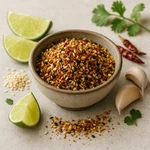
“Salad seasoning” is a general name for a dry mix of herbs, spices, and sometimes dried vegetables intended for salads, dressings, and cold or warm vegetable dishes. There isn’t one universal recipe—different blends lean in different directions—but they usually aim for:
- Fresh green aroma (herb-forward notes)
- Gentle spice warmth (to give depth, not heat)
- Roundness (so the salad tastes “finished” even with a simple oil-and-acid dressing)
In many kitchens, seasoning blends became popular for one simple reason: they make it easy to hit a familiar flavor profile every time, without measuring five separate jars.
Flavor profile: what to expect 👃
Most blends fall somewhere on a spectrum between “garden herbs” and “savory spice.” When you taste one, you’ll usually notice three layers:
- Top notes: bright, herbal, slightly grassy or citrusy
- Middle notes: savory, onion/garlic-like, gently peppery
- Finish: lingering warmth and a fuller, more rounded impression
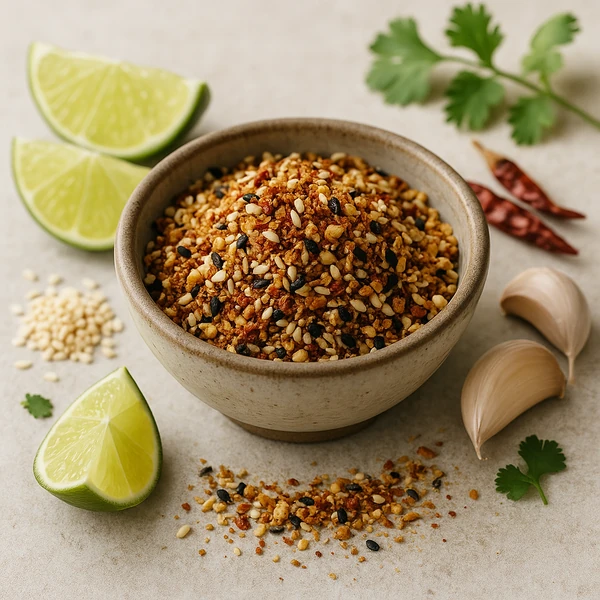
If you like Asian-style salads, think of a seasoning blend as the base aroma—then you add one signature element (sesame, chili, citrus, soy, etc.) to steer it toward the flavors you want.
How to use a salad seasoning blend (so it actually works) ⏱️
1) Directly on vegetables (fastest)
For best coverage, don’t sprinkle onto dry leaves and hope for the best. Instead:
- Toss the vegetables with a small amount of oil (or a prepared dressing).
- Sprinkle in the seasoning.
- Toss again briefly.
The oil helps the herbs and spices cling to the salad instead of collecting at the bottom of the bowl.
2) In a dressing (most control)
Mix the seasoning into the liquid part of your dressing first (oil, vinegar/citrus, soy-based sauce, yogurt, etc.). Then wait 2–5 minutes before tossing. This short rest lets dried herbs “bloom,” making the aroma noticeably more vivid.
3) For warm salads and roasted veg
Salad seasoning isn’t just for cold greens. Try it on:
- roasted pumpkin or sweet potato served over greens
- sautéed mushrooms with spinach
- quick stir-fried vegetables cooled slightly, then finished with fresh herbs
Warmth amplifies spice aromas, so start with a smaller amount than you would use on a cold salad.
Asian-leaning upgrades: one bowl, different directions 🌶️
To give a basic salad an Asian-inspired twist, keep your seasoning blend as the foundation and add one strong “steering” ingredient. A few easy options:
- Sesame & nuttiness: toasted sesame oil or toasted sesame seeds (great with cucumber, cabbage, or carrot)
- Chili heat: chili oil, chili crisp, or a spoon of chili-garlic paste (add gradually)
- Bright acidity: lime juice, rice vinegar, or a citrusy dressing for crunch-heavy salads
- Savory depth: a small splash of soy sauce or tamari in the dressing (then taste before adding extra salt)
These additions are powerful—use them to shape the salad, not overpower it.
Quick “1-minute” dressing formulas
Use these as templates, then adjust to taste. Start small with seasoning blends, especially if they contain salt.
- Bright & light: oil + lemon/lime + pinch of sugar/honey + salad seasoning
- Spicy & tangy: oil + vinegar/citrus + chili element + salad seasoning
- Creamy: yogurt (or mayo) + lemon/vinegar + salad seasoning + a little water to thin
- Umami-forward: oil + rice vinegar + a little soy sauce + salad seasoning
Choosing a blend: what to look for 🔎
Because “salad seasoning” can mean many things, check the label and decide what fits your style:
- Salt level: some blends are essentially “seasoning salts.” If salt is high, use less and avoid salting your salad until the end.
- Herb-to-spice balance: herb-heavy blends suit delicate greens; spice-forward blends shine on cabbage, beans, roasted veg, and grain salads.
- Texture: very fine blends dissolve easily in dressings; coarser blends give pleasant specks and a more rustic feel.
- Allergens and sensitivities: blends may include sesame, mustard, or other common allergens—always check if you’re cooking for others.
Common mistakes (and easy fixes) ✅
- Over-seasoning: dried herbs intensify as they hydrate. Fix: add in two rounds—half first, then taste after a minute.
- Seasoning dry leaves: it falls off and tastes dusty. Fix: add oil/dressing first.
- Too “spiky” or harsh: some spice notes can feel sharp without balance. Fix: add a touch of sweetness (honey/sugar) and more acidity.
- Watery salad: salt draws out moisture from cucumbers and tomatoes. Fix: season right before serving, or drain excess liquid before final toss.
Storage: keep the aroma alive 🫙
Seasoning blends lose their charm when aroma fades. Store them tightly closed, away from heat and moisture, and use a dry spoon (especially if you’re seasoning near the sink or steaming pots). If you want maximum fragrance, rub a pinch between your fingers just before adding—it helps release volatile aromas quickly.
Our picks (a practical pantry mini-list)
- A salad seasoning blend you like enough to use weekly (herby for greens, spicier for cabbage and grains)
- One “direction setter”: toasted sesame oil, chili oil, or rice vinegar
- A reliable neutral oil for everyday dressings
FAQ
Is salad seasoning the same as dried herbs?
Not quite. Dried herbs are single-note; a blend is designed to taste balanced on its own, often combining herbs, spices, and sometimes salt or dried vegetables.
Can I use it for meal-prep salads?
Yes, but add the seasoning and dressing close to serving time for the best crunch. If you must dress ahead, keep watery vegetables (like cucumber) separate until the end.
How much should I use?
Start with a small pinch per serving, toss, and taste. It’s easier to add more than to fix an over-seasoned bowl.

Recommended products1
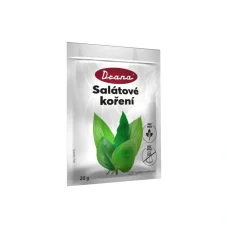
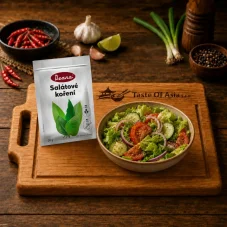
Drana Salad Seasoning 20 g
Read next
If you want to continue with the same topic, here are more related articles to explore: