Česky (CZK)
 Slovensky (EUR)
 Deutsch (EUR)
 Austria
 Belgium
 Bulgaria
 Croatia
 Denmark
 Estonia
 Finland
 France
 Germany
 Greece
 Hungary
 Italy
Italy Latvia
 Lithuania
 Luxembourg
 Netherlands
 Poland
 Portugal
 Romania
 Slovenia
 Spain
Spain Sweden










Seasoning Roast Pork Neck (Pork Collar)
Why pork neck roast loves spice (and why it stays juicy) 🔥
Pork neck (pork collar) has a higher fat content and visible marbling compared with leaner cuts like loin. That intramuscular fat slowly renders during roasting, keeping slices moist and giving you a richer, “meatier” taste.
Seasoning matters here for two reasons: it balances the richness (fat needs salt, aromatics, and often a little acidity) and it builds aroma—the smell you get when you open the oven door is largely the story of your spices.
Pick your flavor direction: crusty roast vs. saucy roast 🎯
Before you mix anything, decide what you want the finished meat to be like:
- Crust-forward roast: a dry rub applied early, roasted uncovered for a good surface bark.
- Slice-forward roast: slightly gentler seasoning, steady heat, and a proper rest so juices stay inside.
- Glazed roast: a rub or light marinade first, then a sweet/savory glaze brushed on near the end for shine and punch.
You can keep it classic (garlic, pepper, herbs) or nudge it toward Asia with ginger, five-spice-like warmth, chili, or a sticky glaze. The technique stays the same.
The “flavor toolkit” for pork neck 🧂
Think in layers. A well-seasoned roast usually covers these roles:
- Salt: improves flavor and helps the meat hold onto moisture.
- Aromatics: garlic, onion, ginger, citrus zest—what you smell first.
- Warm spice: pepper, paprika, coriander, cumin, or similar.
- Sweetness (optional): sugar, honey, or sweet sauces for color and caramel notes (best added late to avoid burning).
- Acid/freshness (optional but helpful): vinegar, lime/lemon, pickled sides—especially good with fatty pork.
Dry rub: simplest path to a great crust 🌶️
A dry rub is ideal when you want a robust surface and straightforward roasting. Use it on a whole roast or thick steaks.
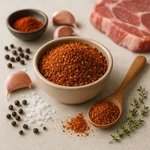
Practical rub formula (per 1 kg / 2.2 lb pork neck)
| Component | How much | Why it works |
|---|---|---|
| Salt | 12–18 g (about 2–3 tsp fine salt) | Seasoning + juicier texture |
| Black pepper | 1–2 tsp | Depth and gentle heat |
| Garlic (powder/granules) | 1–2 tsp | Roasty aroma that suits pork fat |
| Paprika (sweet or smoked) | 1–2 tsp | Color + rounded sweetness |
| Herbs or warm spice | 1–2 tsp | Your signature note |
How to apply: Pat the meat dry. Lightly oil it (a thin film helps spices stick). Rub evenly, including the sides. For a larger roast, press the rub in firmly.
Timing: If you can, season and refrigerate uncovered for 4–24 hours. This “dry brine” style approach seasons deeper and improves browning. If you’re short on time, even 30–60 minutes at room temperature helps.
Marinade: when you want aroma to carry through the slices 🥣
Marinades shine when you’re aiming for a more integrated flavor and a softer spice profile. For pork neck, keep marinades balanced and not overly sweet—sugars can scorch during a long roast.
A reliable marinade structure
- Salty base: salt or a salty seasoning (use carefully so you don’t oversalt).
- Fat: oil (helps carry fat-soluble aromas like garlic and spices).
- Aromatics: garlic, ginger, onion, citrus zest.
- Optional acid: a small amount of vinegar or citrus to lift richness (too much can make the surface mushy over long times).
Timing guideline: For a whole roast, 6–12 hours is usually enough. For thick steaks, 1–4 hours works well.
Glaze: add shine and punch—without burning 🍯
Glazes are the easiest way to “upgrade” a classic roast into something more modern (and yes, more Asian-leaning) because they bring sweet-salty contrast and a glossy finish.
Rule of thumb: Apply glaze only in the last 10–20 minutes of roasting, then watch closely. If it contains sugar or honey, it can go from golden to bitter fast.
Easy glaze ideas that suit pork neck:
- Sweet-sour style: sweet + vinegar/citrus + a pinch of salt. Great with sliced pork and rice.
- Chili-garlic style: chili sauce + garlic + a splash of citrus for brightness.
- Curry-leaning finish: a small spoon of curry paste stirred into oil and brushed on late for aroma (go light—pastes are concentrated).
When to season: the timing that protects juiciness ⏱️
- Best all-round: rub with salt and spices the day before and let it rest uncovered in the fridge. You get better seasoning and better browning.
- Same-day: season at least 30–60 minutes before roasting.
- Glaze timing: last 10–20 minutes only.
Important: If your spice mix already contains salt, reduce added salt until you’ve tasted your mix. This is the easiest way to avoid an otherwise perfect roast turning too salty.
Roasting notes that keep pork neck tender 🍖
Even perfect seasoning can’t save meat that’s rushed or sliced too early. A few practical habits make a big difference:
- Dry surface = better crust: pat dry before seasoning; avoid a wet exterior unless you’re going for a saucy finish.
- Moderate heat for big roasts: steady roasting cooks fat gently and keeps slices succulent.
- Rest before slicing: let it rest 10–20 minutes after roasting (longer for bigger pieces). This helps juices redistribute.
If you use a sugary glaze, you can finish under a hotter setting briefly—but stay nearby and watch the color.
Three Asian-leaning flavor directions that still feel “roast-friendly” 🌏
1) Ginger-garlic pepper roast (subtle, aromatic)
Add grated ginger (or ginger powder) to a classic garlic-pepper rub. Finish with a squeeze of lime at the table and serve with crisp vegetables for contrast.
2) Sweet-sour glaze roast (great for rice bowls)
Keep the rub simple (salt, pepper, garlic), roast until nearly done, then glaze late with a sweet-sour sauce. Slice and spoon extra sauce over the meat to avoid overglazing in the oven.
3) Chili finish (heat as a topping, not a risk in the oven)
Instead of baking chili sauces onto the meat (where sugars can burn), serve them as a table sauce. You control heat per portion and keep the roast’s crust clean.
Common seasoning mistakes (and quick fixes) ✅
- Too much salt: mixes and sauces often already contain salt. Fix by keeping the rub less salty and adding sauce only at the table.
- Burnt aromatics: garlic and sugar can darken quickly. Fix by roasting more gently and glazing at the end.
- Flat, heavy flavor: fatty pork needs contrast. Fix with acid (lime, vinegar), crunchy veg, or a bright dipping sauce.
- Slicing immediately: juices run out onto the board. Fix by resting, then slicing across the grain.
Quick serving idea (no full recipe): roast slices as an “Asian-style plate” 🍚
Slice the roast thinly, serve over rice or noodles, and add a fast vegetable side (stir-fried greens, pickled cucumber, or a quick pan of mixed vegetables). Finish with a small drizzle of a chili or sweet-sour sauce rather than baking it all onto the meat.
Our picks
- Royal Orient Baby Corn 425 g – a simple, crunchy side for stir-fries or quick sweet-sour style vegetables alongside rich pork.
Related categories
- Vegetable pantry staples for fast stir-fries (to add freshness and crunch next to fatty pork).
- Sweet-sour and chili-style sauces (better as finishing touches than long-roast marinades).
FAQ
Is a dry rub or marinade better for pork neck?
For a strong crust and classic roast character, choose a dry rub. For more integrated aroma through the slices, choose a marinade. If you want bold flavor with minimal risk, use a dry rub and add a glaze at the end.
How far ahead should I season?
Ideally 4–24 hours (refrigerated). You’ll get deeper seasoning and better browning. In a pinch, 30–60 minutes still helps.
Why did my glaze turn bitter?
Most often from sugar scorching. Brush glaze on only near the end, and keep an eye on color—golden is great, very dark can taste burnt.

Recommended products1
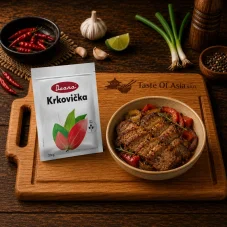
Drana Pork neck 30 g
Read next
If you want to continue with the same topic, here are more related articles to explore: