


 Česky (CZK)
 Slovensky (EUR)
 Deutsch (EUR)
 Austria
 Belgium
 Bulgaria
 Croatia
 Denmark
 Estonia
 Finland
 France
 Germany
 Greece
 Hungary
 Italy
Italy Latvia
 Lithuania
 Luxembourg
 Netherlands
 Poland
 Portugal
 Romania
 Slovenia
 Spain
Spain Sweden










Indian curry: basics and main styles (and how not to get lost in them)
"Indian curry" is not one recipe nor one universal sauce. It is a broad family of saucy dishes and techniques that vary from region to region and household to household. In this guide, you'll clarify terms (curry vs. curry powder vs. masala), understand the main Indian directions, and most importantly: you will learn how to practically choose the right base and set your expectations so that the result tastes exactly how you want.
Curry in India: a useful label but not an exact "type of sauce"
Curry is neither one dish nor one sauce – it is a broad culinary term that means different things in different parts of Asia. In Western usage, the word curry is often understood as a dish with a sauce (sauce/gravy) flavored with a mixture of ground spices and the origin of the term is usually linked to the Tamil word kari. At the same time, a key fact holds: in traditional Indian cuisine there is no one universal "curry sauce" model.
In practice, this means that when you say at home "I'll make Indian curry," it's good to clarify immediately: Which style? What regional impression? What type of base (spices, tomatoes, yogurt, coconut)? Otherwise, frequent disappointment is likely: you buy "curry" and expect one specific taste, which may not at all match what you have in your mind.
"Curry spice" vs. masala: two different shortcuts often confused
One of the biggest confusions around Indian curry arises because one label groups together dry spice mixes, regional masalas and ready-made pastes. Yet these are different tools and results.
Curry powder (spice mix): a simple shortcut – but it’s not "Indian cuisine in a nutshell"
Curry powder is typically a dry mixture of ground spices. It can quickly give a dish a warming "curry" character without complicated work but by itself it does not guarantee a specific Indian style. In practice, it can work as a shortcut for sauces, soups, or marinades – but it’s good to understand it’s a general flavor direction, not a regional map.
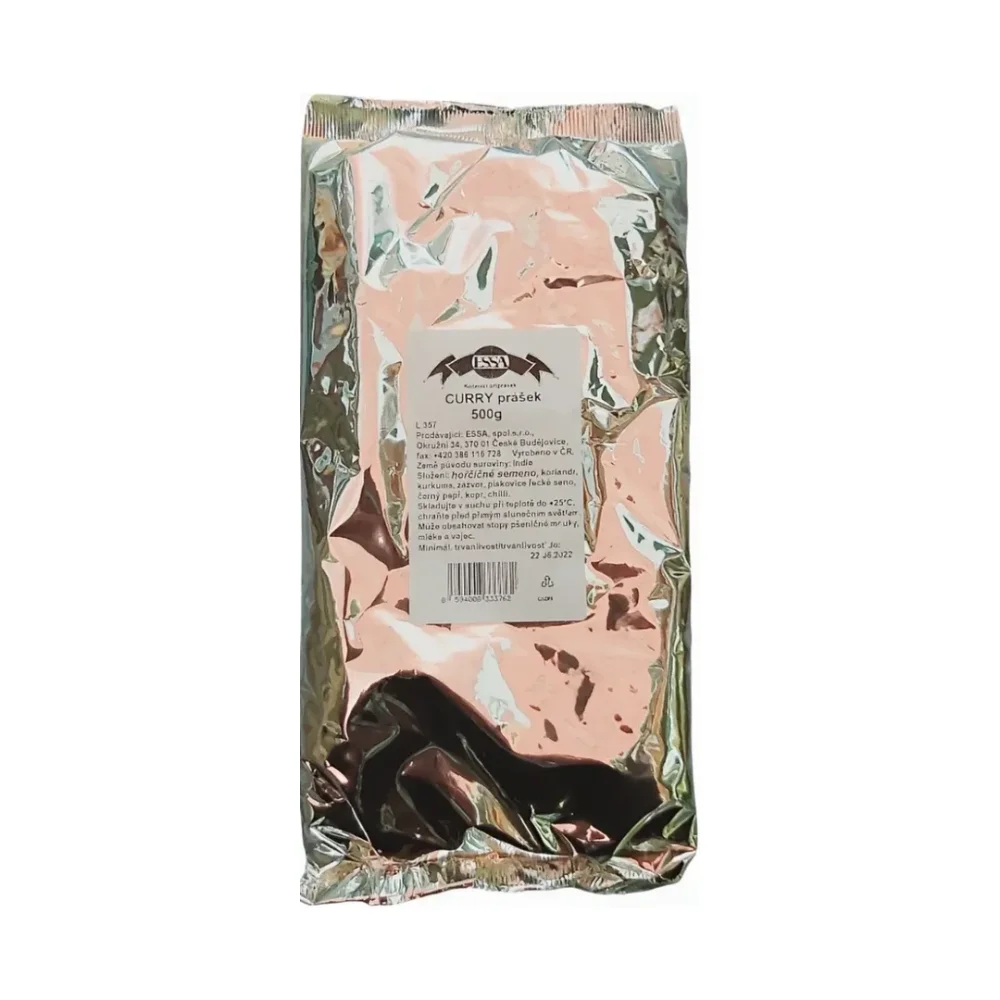
If you want to use this type of shortcut, choose a dry mix, for example ESSA Curry ground 500 g. It is important not to think of it as the "only correct Indian taste" but as one of the ways to quickly add a spiced line to your dish.
Masala: a way of layering flavor (and often a working technique)
In the South Asian world, a key concept for understanding curry is masala. In practice, masala involves working with whole and ground spices and the fact that flavor is often built gradually: it is not just "dumping a mix" but layering aromatics so that the sauce is deep and clear.
This is one of the reasons why it’s worth stopping the search for one universal definition and instead adopting the “logic”: what base is used, how spices develop, and what gives the sauce body.
How South Asian (Indian) curry is typically built: base, spices, and slower sauce development
For India and the broader South Asian area (including Sri Lanka), it’s typical to work with several recurring pillars:
- onion, garlic, and ginger base as the start of the sauce,
- whole and ground spices (different intensity, different handling),
- depending on region and style tomatoes, yogurt or coconut milk,
- slower building of the sauce (time as an ingredient),
- masala as a tool for layering flavor.
This logic is also a good anchor even when you don’t start "from scratch" but use a ready-made base. You will at least know what to look for in the dish and what to possibly add (for example, more body in the sauce or more aromatics and spices).
Main styles of Indian curry: north, south, and why they taste so different
Indian cuisine is not uniform – it is a broad family of regional cuisines that arise from different climates, agriculture, historical influences, and customs. This quickly shows in curry: what many people imagine as "typical Indian curry" is often just a slice (often northern and more known for export).
North India: wheat, dairy products, and richer sauces
The northern cuisine is often the most familiar to Europeans. It is often linked with wheat breads, dairy products, and a richer "gravy" style where the sauce is built with onion, tomatoes, (often) yogurt, and spices. Typical dishes and styles often appearing in the north include various saucy styles, paneer in sauces, dals, or more festive meat dishes.
Rice and breads (e.g., naan, roti, paratha) are often served as a side. If you want to choose breads with Indian curry, a guide Breadwill help you orient.
South India: rice, coconut, tamarind, curry leaves, and fermentation
South India is distinctly rice-based and much more often uses coconut, tamarind, and curry leaves. Fermentation and rice-legume batters are also important. In the southern context, it is common that the "curry world" is not one universal pot but a broader system of dishes around rice (sambar, rasam, various chutneys, and other accompaniments).
Practically: when you expect "creamy saucy curry" and cook something in the style of the southern table, it can feel like a completely different cuisine – yet it is still India, just a different regional language.
"Curry paste": why caution is needed with India (and how to understand it at home)
The word curry paste often covers very different things in the European context: Thai fresh pastes, Indian and British-Indian mixes and pastes, Japanese curry roux, and regional Southeast Asian styles. So it is good to have a simple rule: first clarify which cuisine the "curry base" comes from.
In the Indian context, it is often more accurate to distinguish:
- dry masalas,
- wet masalas and pastes,
- an onion-ginger-garlic base with spices,
- and ready regional or export pastes and sauces.
Many products sold as "curry paste" are simplified bases for quick cooking. This is not necessarily bad – you just need to interpret it correctly: it is not automatically a representative of all Indian cuisine.
Madras as an export term: can mean powder, paste, or sauce base
Madras is a good example of how commercial and export names differ from the idea of "one Indian original." In stores it can appear as a powder, paste, or ready base. In common European understanding, it often points to a warm-spiced, rather piquant style – but it is not a universal key to all Indian curries.
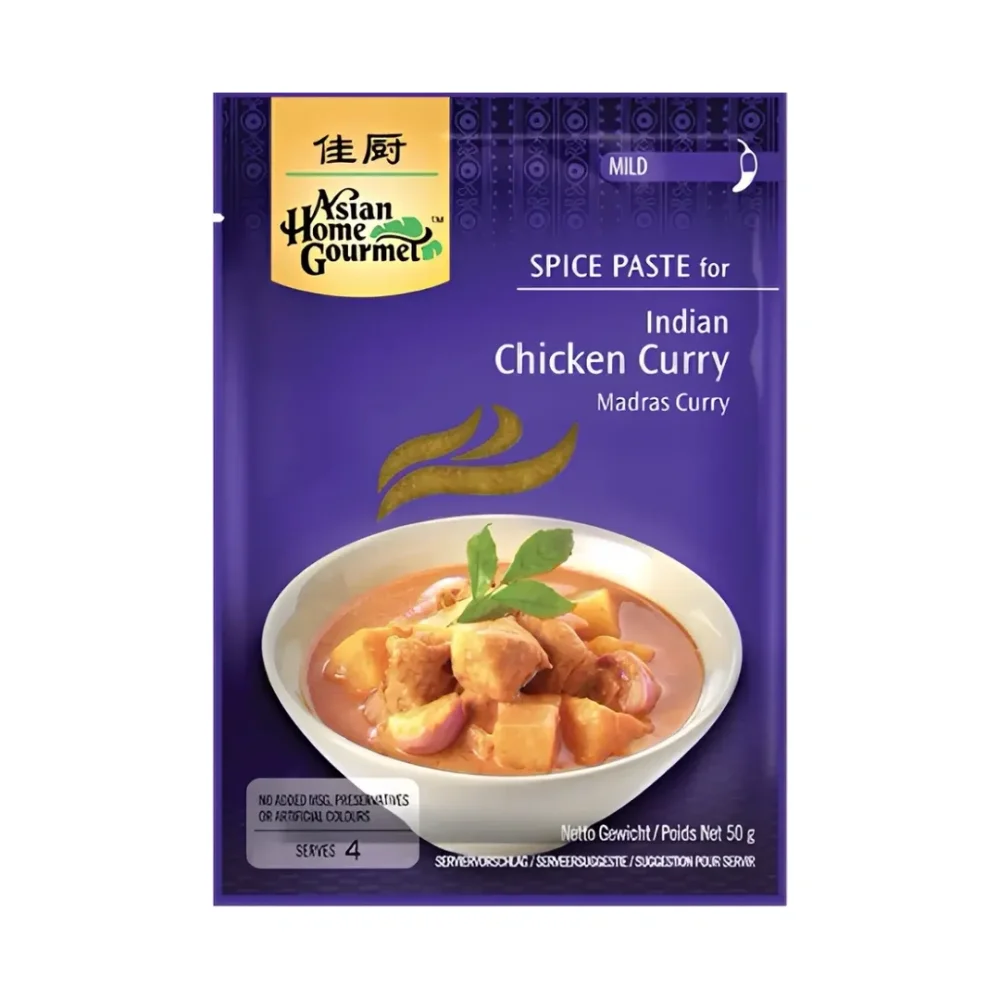
As a practical example of a "quick base," you can take, for instance, AHG Paste Madras curry 50 g. Take it as a shortcut for a specific flavor impression, not as a definition of Indian curry in general.
How to choose curry by taste (a quick compass that saves disappointment)
When deciding what "curry" you want, it helps not to think only by country but by your goal on the plate:
- I want deep spiciness and lasting warmth – often fits Indian curry and some Sri Lankan curries (and outside India also some styles like massaman, gulai, etc.).
- I want freshness and coconut – typically Thai green and red curries, or some coconut Southeast Asian styles.
- I want something homey and clear – often Japanese curry built on roux works well (a base that already contains spices, fat, and thickening).
- I want less sauce and more reduced intensity – there are more reduced styles (e.g., rendang and similar).
This compass is especially useful when you face the word "curry" without context. It helps quickly recognize if you're not looking for Indian curry but actually Thai coconut or the opposite.
Practical onboarding: how to start with Indian curry at home without stress (and without a "full recipe")
Below are three practical paths – choose based on how much time you want to invest and how much control over flavor you need.
👃 1) I want control and learning: start from aromatics and spices
- Don’t rush the base: South Asian curry often relies on gradually building flavor (onion/garlic/ginger + spices + "body" of the sauce).
- Dose the spices carefully: as a rough start, use a small amount (e.g., half to 1 teaspoon of dry mix per portion) and gradually adjust – mixes vary in intensity.
- Decide on the sauce character: depending on style and region, tomatoes, yogurt, or coconut milk can play a role. It’s not about "right/wrong" but a concrete direction.
2) I want quick everyday cooking: use a named base (paste/base)
Ready-made paste can be a good helper when you want a “tikka masala / korma / vindaloo” style quickly and without stacking spices. In this case, it's good to follow two rules:
- Start with a smaller dose and add more: pastes are often concentrated and also saltier; as a safe start try a small amount (e.g., 1 teaspoon for 2 portions), briefly sauté to release aroma, then continue building the sauce. Add more depending on the result.
- Perceive it as a shortcut, not as "all of India": even though paste is useful, Indian cuisine is much broader.
Concrete examples of quick bases for various named styles:
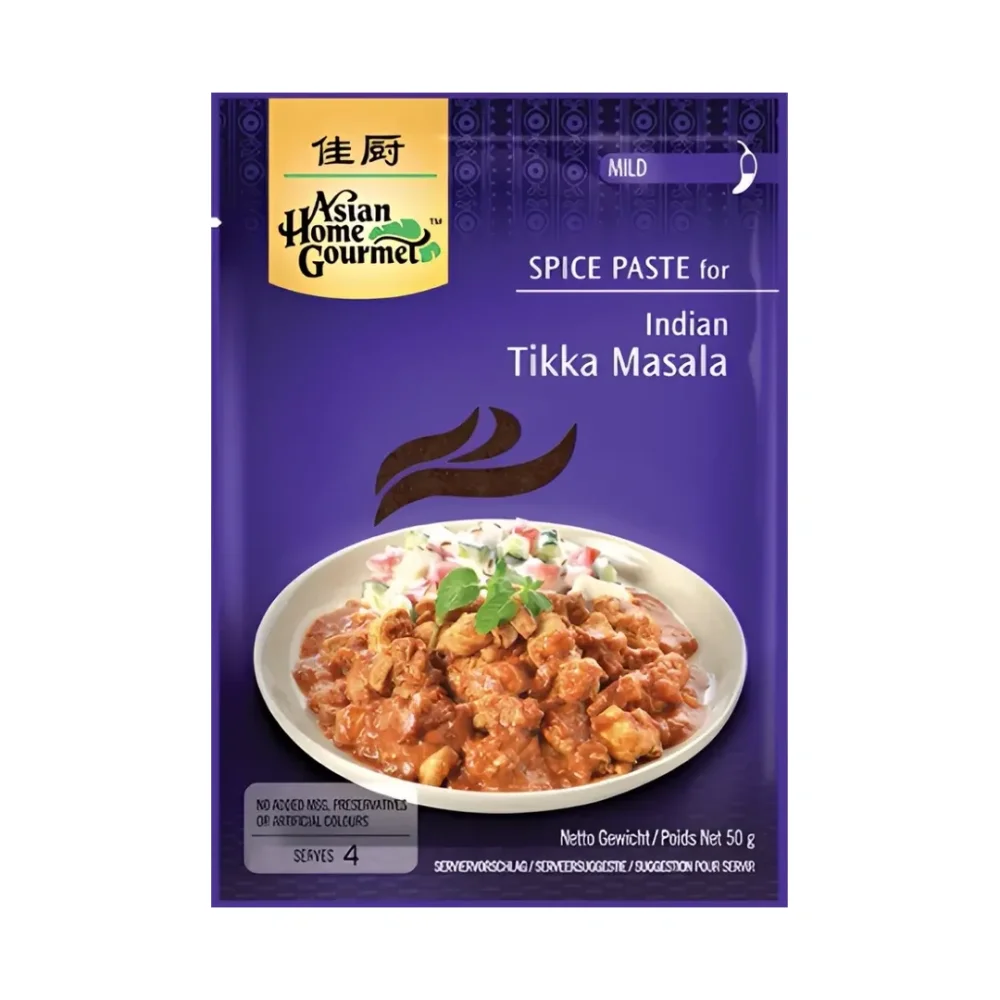
- AHG Paste Tikka Masala 50 g
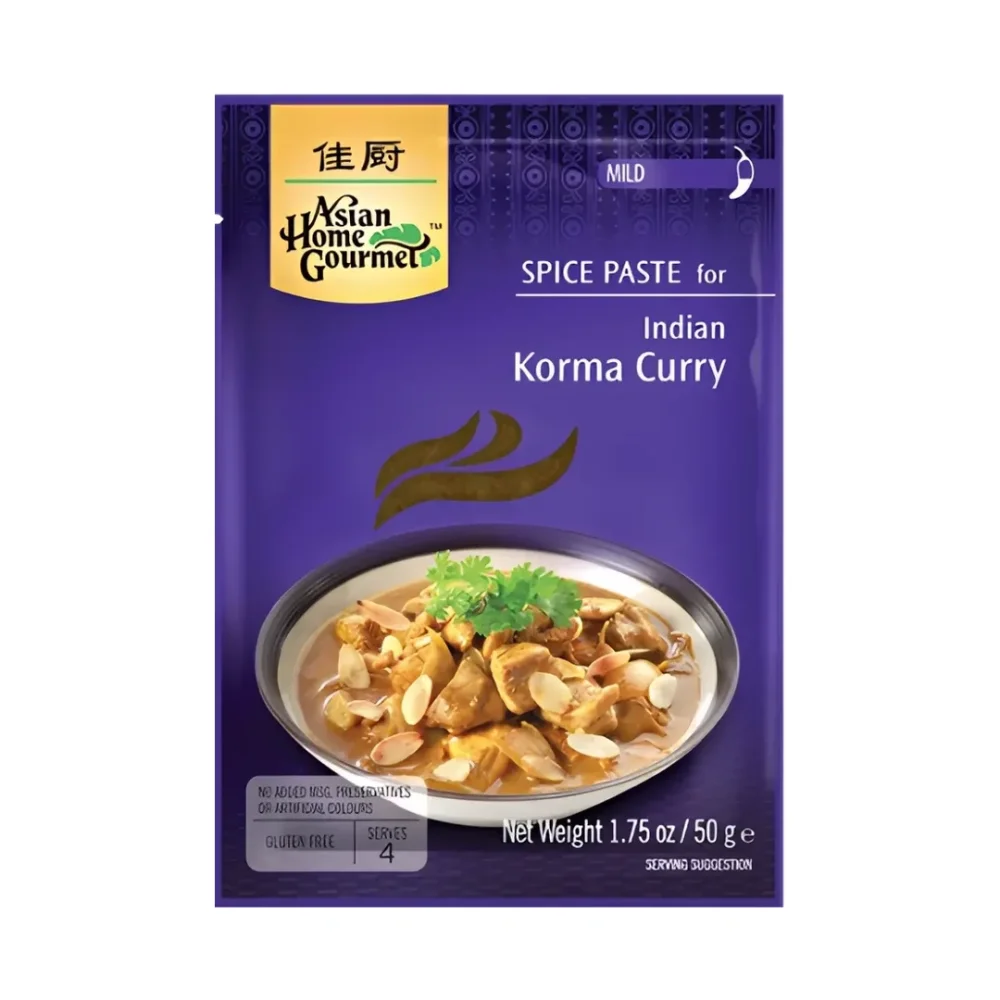
- AHG Paste Korma curry 50 g
- AHG Paste Vindaloo Curry 50 g
3) I just want to taste the style without cooking: reach for ready meals
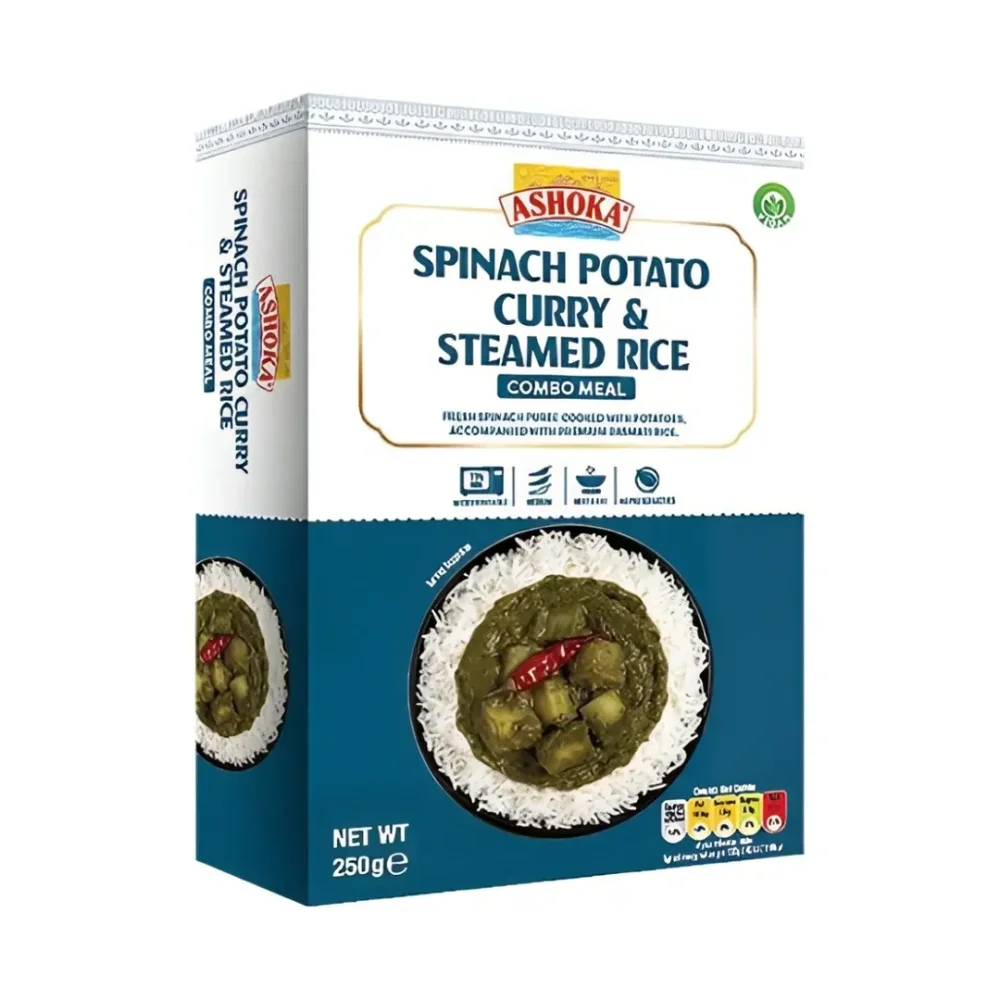
For initial taste orientation, it can make sense to start with a ready meal and only later decide which direction you want to cook toward. An example might be Ashoka Spinach curry with potatoes and steamed rice 250g – you get a reference point of how "Indian curry" can appear in one specific form.
What to serve with curry to make sense
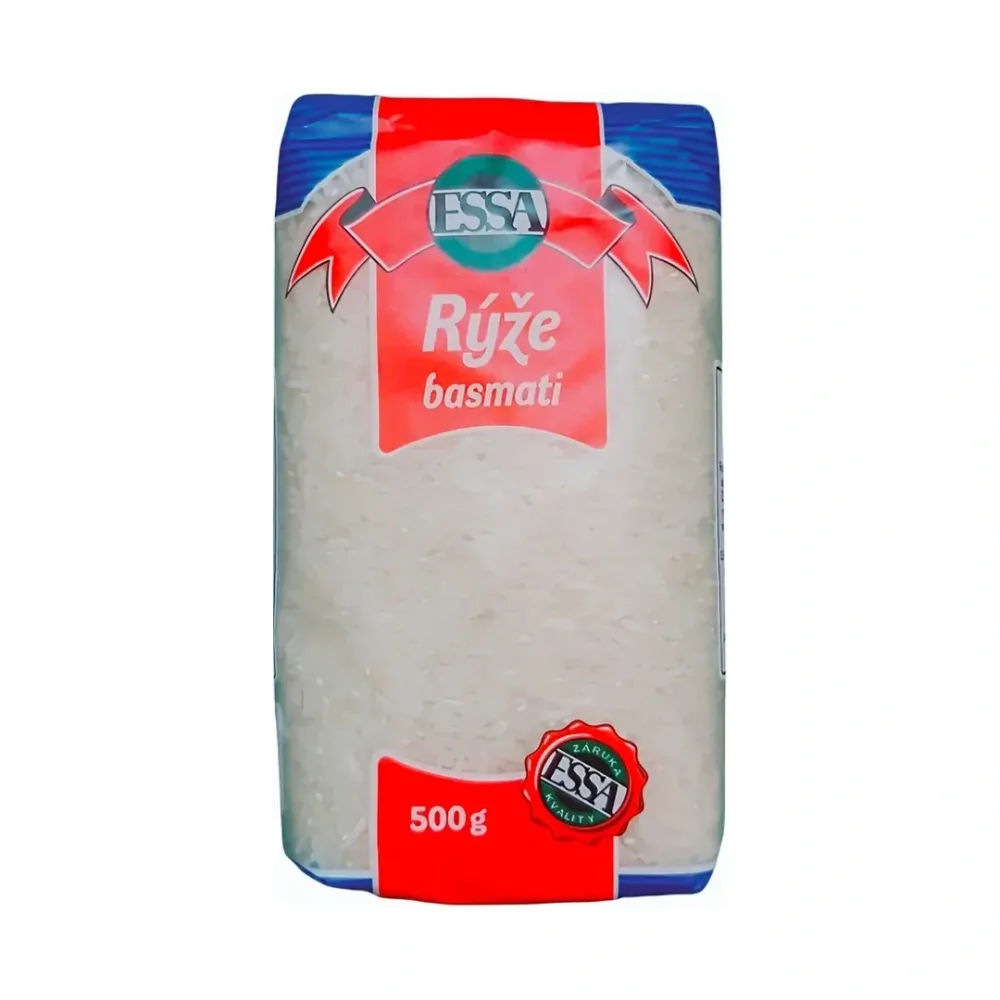
Indian sauce styles often rely on a side dish that can "carry" the sauce: rice or flatbreads. Basmati can work well as a typical choice for sauces, for example ESSA Basmati rice 500 g.
Common mistakes and misunderstandings (and how to avoid them)
- "Curry = one flavor" – not true. There is no unified model of "curry sauce" in India. Clarify whether you want a northern richer gravy or a southern rice/coconut/tamarind impression.
- Confusing curry powder with Indian cooking – curry powder is a dry mix; it can help, but does not by itself solve regional logic or style.
- "Curry paste" without origin – under one name, there can be Thai pastes, Indian/British-Indian bases, and Japanese roux. If you are looking for Indian curry, don't choose just based on the word "curry," but according to the style.
- Confusing sauces "because they are dark and salty" – generally, Asian sauces are not automatically interchangeable. Dark color can mean different things (fermentation, sugar, texture, different style). The same applies to curry bases: similar appearance does not mean similar results.
- Ignoring composition of pastes – for curry pastes it is useful to check if they clearly list aromatic ingredients (not just an indefinite "spice mix"), if they are not mainly based on sugar/starch/thickeners, and consider that some may contain fish ingredients or gluten or traces of allergens from production.
What to take away from the article
- Indian curry is not one sauce: "curry" is an indicative term that by itself guarantees nothing precise.
- Learn the basic terms: curry powder (dry mix) is not the same as masala (a way of layering flavors) and definitely not the same as curry paste.
- North and South India taste different: the north is often wheatier and richer in dairy products and gravy style, the south is distinctly rice-based, more often coconut/tamarind, and works with curry leaves and fermentation.
- Quick pastes are a shortcut, not a definition: they can help excellently on an ordinary day but do not cover the full range of Indian styles.
- Choose your curry according to purpose: deep spiciness vs. coconut freshness vs. "comfort food" – depending on that it makes sense to choose a different curry family.

Read next
If you want to explore this topic further, continue with these related blog guides and articles:
