


 Česky (CZK)
 Slovensky (EUR)
 Deutsch (EUR)
 Austria
 Belgium
 Bulgaria
 Croatia
 Denmark
 Estonia
 Finland
 France
 Germany
 Greece
 Hungary
 Italy
Italy Latvia
 Lithuania
 Luxembourg
 Netherlands
 Poland
 Portugal
 Romania
 Slovenia
 Spain
Spain Sweden










Taste of Singaporean cuisine: hawker energy, layers of umami, and final seasoning at the table
Singaporean cuisine is hard to summarize in one sentence – and that is exactly what makes it typical. It is a port, urban, and multicultural cuisine: Chinese, Malay, Indian, and Peranakan influences coexist side by side, but in practice, you recognize it best by how it works with sauces, broths, chili, coconut, and the “final touch” at the table. In the article, we will break down its flavor layers based on specific dishes (chicken rice, laksa, chili crab) and show how to bring this logic home without complicated recipes.
Singapore is not "one national cuisine": the taste arises in the port, city, and mix of cultures
Singaporean cuisine is not a unified, long-established system. It grows from the meeting of multiple traditions (Chinese, Malay, Indian, Peranakan, Eurasian, and others) and many things only make sense when you realize two rules:
- Dishes usually have a clear identity and purpose – sometimes the center is a pure broth flavor, other times a coconut sauce, or sambal spiciness.
- The final flavor is often “finished” only while eating – dips, chili elements, soy saltiness, or lime are not decorations but part of the construction.
That is why Singaporean cuisine is often best explained through the environment in which it operates: fast, accessible, and specialized food outside the home.
Hawker culture: why Singaporean food is "finished at the table"
The so-called hawker culture is essential for Singapore – a world of stalls and smaller kitchens where people eat quickly, often repeatedly, and where every stall usually perfects one thing “to signature level.” From a flavor perspective, this leads to several typical phenomena:
- Specialization: one dish, one style, emphasis on precision (noodle texture, properly fragrant rice, specific dip).
- Table seasoning: chili, soy elements, lime, or sambal are not “extras” but tools for personalization.
- Textural contrast: in many dishes, it is as important that something crunches or springs as that it is salty or spicy.
If you expect “one balanced flavor,” you may be disappointed. Singaporean food often stands on the fact that one flavor line is deliberately dominant (broth, coconut, chili), and you adjust it to your taste.
Flavor layers you most commonly recognize in Singaporean cuisine
Singaporean flavor is not uniform but often consists of clearly readable layers. It's best to read them in specific dishes – and at the same time know how they behave in home cooking.
1) Saltiness and umami: the “bone” of flavor
In Singaporean logic, the base flavor is built on saltiness and umami – typically through soy and fish seasonings, broths, and overall “depth.” In practice, you recognize this for example in Hainanese chicken rice, where it’s not just chicken with rice: the key is fragrant rice cooked in chicken broth and fat and a properly set accompanying dip.
2) Chili or sambal: spiciness that is dosed
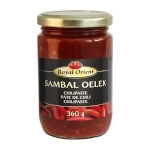
Spiciness in Singaporean dishes often isn’t “mixed blindly” but served as an optional layer: chili dip, sambal, or spicy element on the table. This is important even at home – rather than over-spicy food in the pot, it’s often better to have spiciness on the side and add it gradually.
As a starting guide, it is useful to have on hand the category sambal and chili pastes – these products help achieve “hawker” intensity without complicated sourcing of multiple ingredients.
3) Coconut softness: creaminess and calming
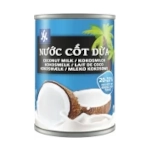
In selected dishes, typical is coconut softness – a creamy, smooth line that carries spices and at the same time softens sharp edges. This is clearly seen in laksa, which in the Singaporean concept is a soup noodle dish with coconut milk, aromatic paste, and rice noodles, often with seafood or fish elements.
For home cooking, it is practical to have a quality coconut base – see the category coconut milk.
4) Light sweetness and sometimes acidity: small corrections, big effect
In Singaporean cuisine there can be light sweetness and sometimes even acidity – often as a “fine-tuning” tool, not a main theme. The important thing is that these elements have a function in the dish: to support the sauce, lift aroma, or cleanse the finish after fat and broth.
5) Broth depth and texture: why “mouthfeel” is also valued
Broth depth is more important in many dishes than a long list of spices. And equally texture: elastic noodles, loose and fragrant rice, juicy meat, crunchy complement. Singaporean flavor is often recognized precisely by the fact that the texture “fits” and the sauce or dip is adjusted to support it, not overpower it.
Dishes through which you understand Singapore’s flavor fastest
If you want to get to know Singaporean cuisine “properly,” the fastest way is not through general theories but through several representative dishes that bear different flavor logics.
Hainanese chicken rice: purity of broth, fragrant rice, and chili dip
Chicken rice is considered one of Singapore’s national dishes. The sense is in the details: rice cooked in chicken broth and fat, correct chicken texture, and chili dip, which “locks” the dish into the final profile. If chicken rice seems “boring” at home, the problem is often not in the salt but in the absence of that rice aroma and properly set accompaniment.
👃 Laksa: coconut creaminess, aromatic paste, and noodles
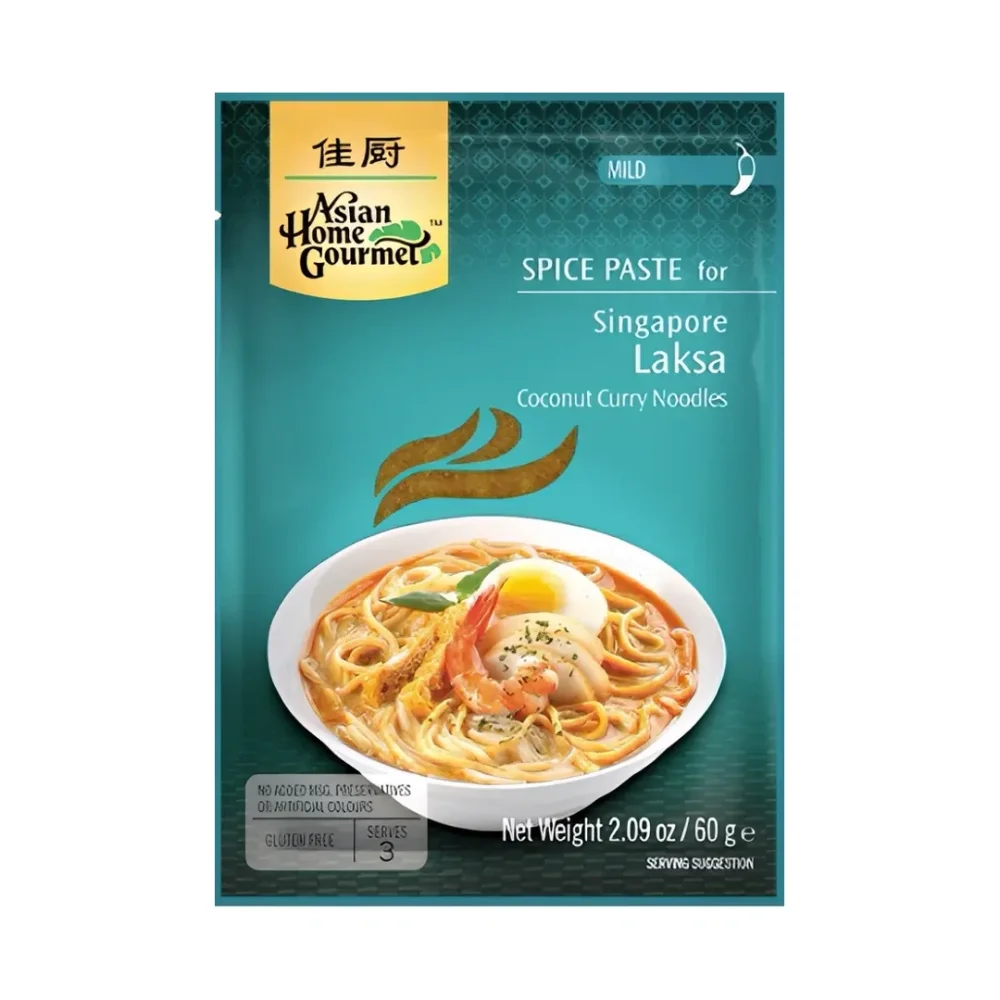
Laksa is an excellent example of Singaporean multiculturalism: a soup noodle dish with coconut milk, aromatic paste, and rice noodles, connected to Peranakan tradition and a combination of Chinese and Malay influences. For a home start, a ready base holding the profile together may make sense, such as AHG paste for coconut curry noodles Laksa.
Chili crab: an icon defined by its sauce
Chili crab is an iconic Singaporean dish often called a national seafood specialty. The important thing is that it is not defined just by the crab – the crucial part is the sauce profile and the way the dish is eaten (and seasoned) as an experience, not just a “portion of meat.”
Nasi lemak and kaya toast: when coconut or sweet breakfast notes are center stage
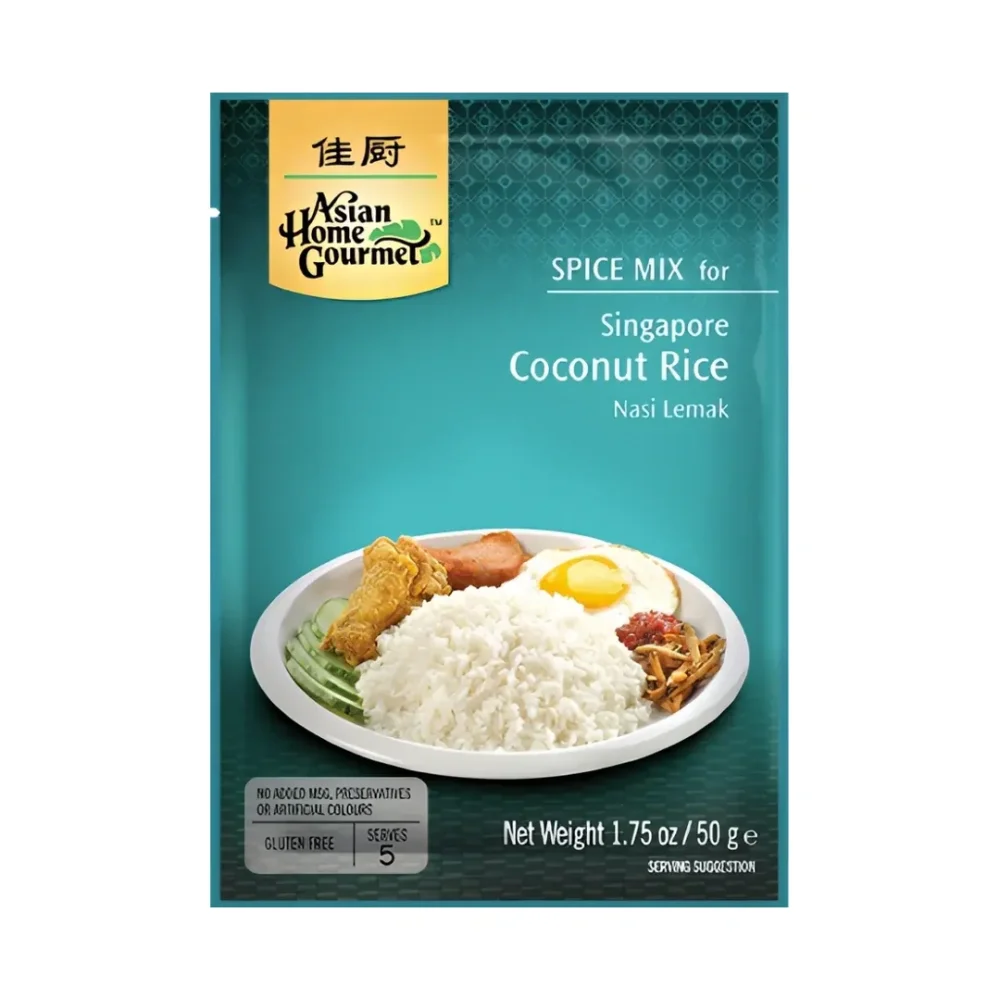
Singaporean flavor is not just about spiciness. Sometimes the center is coconut (for example in coconut rice like nasi lemak), and sometimes by contrast toast with kaya – the breakfast profile showing that the “Singaporean identity” can be just as much broth-based, coconut-based, or sweeter.
If you want to start with coconut rice, a spice base like AHG paste for coconut rice Nasi Lemakcan help.
Island flavor axis: Singapore in the context of Malaysia, Indonesia, and the Philippines
Singapore also makes sense as part of the “island and port” Southeast Asia – here the sea, migration, and urban dining meet. A rough (and simplified) map of flavor logics can help:
- Malaysia and Singapore: shared or related lines like nasi lemak, laksa, sambal, and the overall “hawker mix” of influences.
- Indonesia: frequent use of sambal, sweeter soy line (kecap manis), coconut, and other distinct bases.
- Philippines: typical use of acidity (vinegar), pronounced seasoning, and dishes like adobo; acidic components can be key to the profile.
Important warning: these cuisines are geographically close but not interchangeable. When you accidentally bring in another country's logic into the Singaporean profile, the dish might be “good,” but it stops tasting Singaporean.
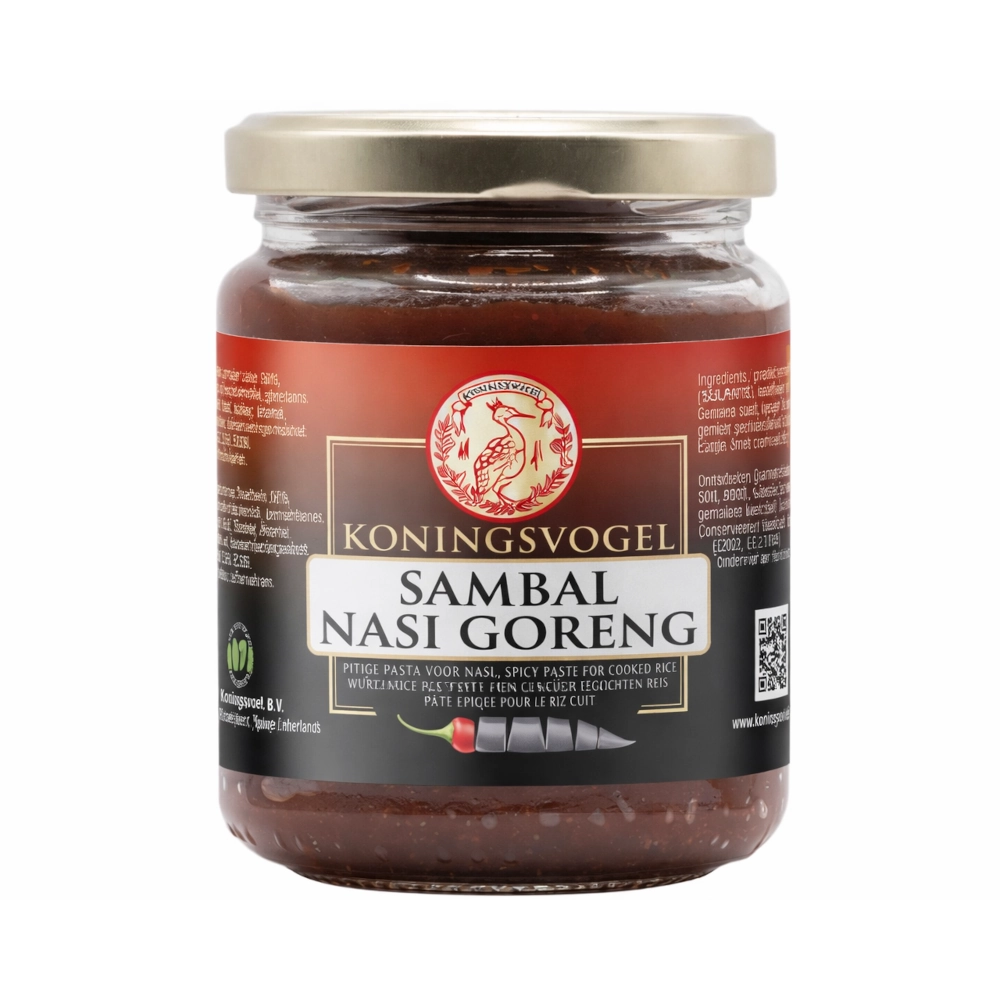
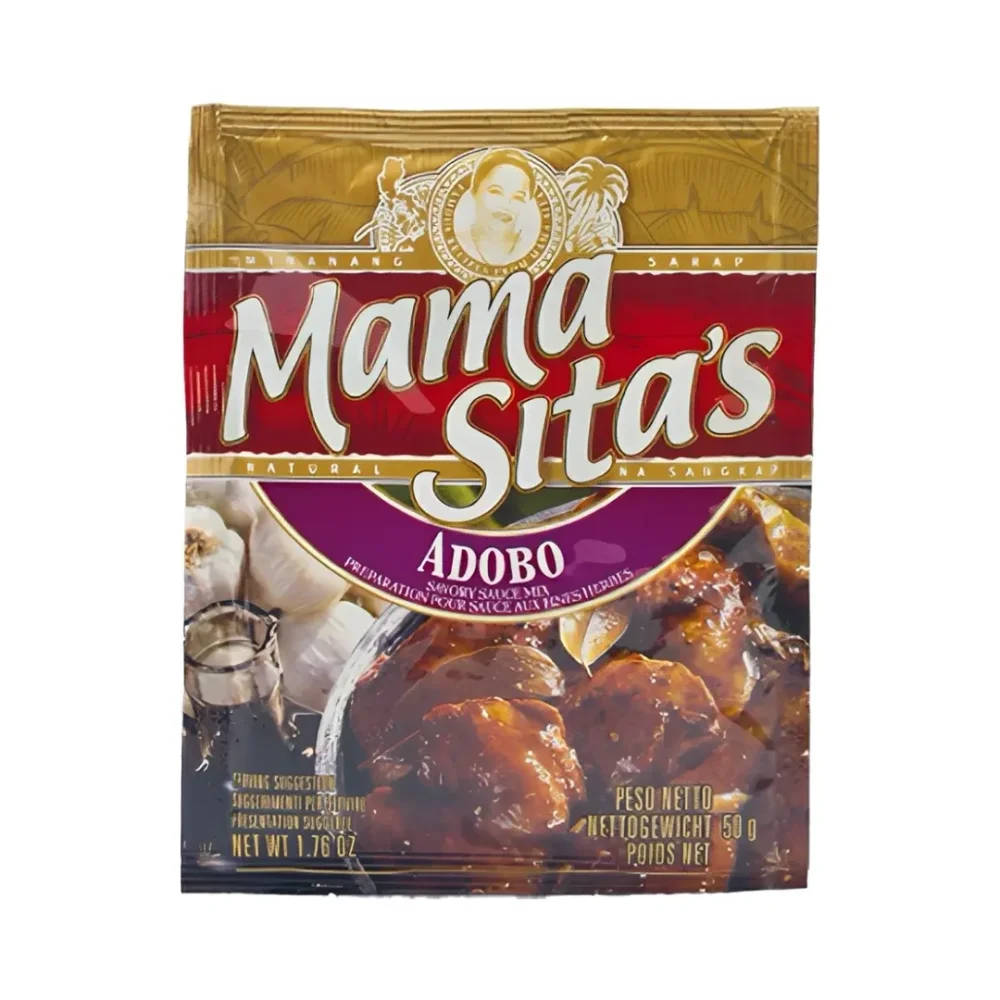
A practical example of the difference: Indonesian quick fried rice aims for a different profile than Singaporean broth dishes – this is reflected by a product like Koningsvogel chili paste Nasi Goreng. Similarly, Filipino flavor logic (strong seasoning and acidity) is well illustrated by a mix like Mama Sita's mix for Adobo sauce – a different direction than coconut laksa or chicken rice.
How to assemble the “Singaporean taste” at home: simple onboarding without a full recipe
The easiest way is to stop worrying about “authenticity of everything” and instead watch 3 things: one strong base, one distinct seasoning layer and the option of final adjustment at the table.
Step 1: Choose what type of Singaporean flavor you want today (broth vs. coconut vs. chili)
- Broth-clear and gentle (chicken rice logic): watch the aroma and depth, not the spiciness. The final “wow” comes from the dip.
- Coconut creamy (laksa logic): coconut milk softens and connects the aromatic paste; spiciness is better controlled step by step.
- Chili-sauce based (chili crab logic): the key is the sauce and the way it’s eaten (and seasoned), not just “it’s spicy.”
Step 2: Work with the paste as a concentrate – and season in small doses
A simple rule works for pastes and sambals: start little and add more. As a general guideline, it is safe to start with half a teaspoon to teaspoons per serving (depending on the spiciness and saltiness of the specific paste) and always simmer/stir for a moment to allow the flavor to “open up.”
For coconut dishes, the opposite risk applies: if you add too much coconut milk, the profile softens but can flatten out. In that moment, it helps to bring back the “bone” of flavor: salty/umami element and spiciness (ideally again gradually).
Step 3: Make seasoning part of the dining experience (a small trick with a big effect)
To approach the Singaporean experience, prepare two small bowls on the table:
- a spicy element (chili/sambal),
- a salty/umami element (soy seasoning line).
Then it just applies: everyone fine-tunes their own “ideal bowl” – exactly in the spirit of how flavor is often finalized in the Singaporean environment.
Common mistakes and misunderstandings: why it sometimes “doesn't taste Singaporean”
- Misleading simplification “Singapore = spicy”: spiciness is important, but often as an optional layer. Singaporean can also be mild, clear broth-based food.
- Loss of the dish's identity: when you try to mix everything into one pot (coconut, chili, sweetness, sourness, soy), you get an undefined flavor. Singaporean dishes usually stand on one dominant flavor and precise accompaniment.
- Missing the “final touch”: chicken rice without the right dip or laksa without the final seasoning feels flat, even if the ingredients are good.
- Confusing island cuisines: Indonesia, the Philippines, Malaysia, and Singapore are close, but their flavor logics are not automatically interchangeable. If you transfer a different seasoning style, you change the character of the dish.
- Underestimating texture: Singaporean flavor is often recognized by the fact that the rice should be fragrant and fluffy, the noodles properly springy, and the sauce should support the texture, not drown it.
What to take away from the article
- Singaporean cuisine is port and multicultural: the flavor often arises from a combination of influences, but the dishes have a clear identity.
- Typical layers are saltiness and umami, chili/sambal spiciness, coconut softness, occasionally light sweetness or sourness, broth depth, and emphasis on texture.
- You understand it fastest with chicken rice (rice in broth + dip), laksa (coconut + aromatic paste + noodles), and chilli crab (sauce as the definition).
- At home the principle works: one strong base + seasoning in small doses + final adjustment at the table.

Read next
If you want to explore this topic further, continue with these related blog guides and articles:
