


 Česky (CZK)
 Slovensky (EUR)
 Deutsch (EUR)
 Austria
 Belgium
 Bulgaria
 Croatia
 Denmark
 Estonia
 Finland
 France
 Germany
 Greece
 Hungary
 Italy
Italy Latvia
 Lithuania
 Luxembourg
 Netherlands
 Poland
 Portugal
 Romania
 Slovenia
 Spain
Spain Sweden










How to read the ingredients in Asian sauces: a short guide that will save you from bad purchases
In Asian sauces, the small print on the label often matters more than the big name on the front. When you learn to read the ingredients practically (not academically), you’ll quickly recognize whether you’re buying a fermented "base" for cooking or a ready-made flavoring full of sugar, starches, and aromas. The result: sauces that make sense for your dishes and less disappointment at home.
Why the ingredients are more important than the packaging in Asian sauces
A "good ingredient" in Asian cuisine is not automatically the one with the most striking packaging, the most well-known brand, or the highest price. Often, it's good mainly when it corresponds to the function you need from it in the dish: you look for different flavoring in a cold dressing, another in stir-fry, another in a marinade, and another as the final touch.
Furthermore, with sauces it's easy to expect one thing (for example, fermented depth, "marine" umami, mushroominess) but buy a different type of product – because the first ingredients in the list reveal what the sauce is truly based on.
How to read the label practically: what exactly the ingredient list tells you
The most important simple rule: ingredients are listed in descending order by weight. So the first ingredients shape the taste, strength, and behavior of the sauce in the dish the most. In practice, it pays to watch mainly four things:
- What is in the first positions – whether the "backbone" of the sauce is made of fermented ingredient or mainly water and seasoning.
- Is it more of a fermented base or a flavored product – you can recognize by the simplicity versus "filled" composition.
- Whether key ingredients are not overshadowed by sugar, starches, and additives (typically in sauces that promise strong taste but rely on sweetness and thickening).
- Allergens – not only for safety but also for quick orientation in what the flavor is built from.
Practical meaning: if a sauce promises, for example, a strong mushroom or fish taste, but water, sugar, and thickeners dominate the ingredients, it's a signal that you are buying a different type of product than you expect.
Basic vs. flavored product: a difference that changes cooking
One of the most important guidelines when choosing sauces is to recognize whether you are holding a basic ingredient, or already a finished flavoring. It's not "better vs. worse" – it's a different use.
Basic product: when you want to build flavor
Basic sauces and fermented flavor components often work as building blocks: you add them to increase saltiness, umami, and character, but you balance the rest of the sauce and flavors yourself according to the dish.
A typical example of "small amount, big effect" is fish sauce: even a small dose significantly changes the dish. That's why it makes sense to distinguish between a sauce that acts as a fermented product and one that is more of a "seasoned salty liquid."
Flavored product: when you want a quick "ready" flavor
Flavored sauces are usually designed to work immediately: they are often already sweetened, thickened and flavor-wise "rounded off". This is useful if you want to quickly make a simple dish without further adjustment.
For this group, it’s even more important to read the first ingredients: if the sauce is mainly based on water, sugar, and starches, it will behave differently than a sauce built on a strong basic ingredient.
"Choose the right type": why two sauces from the same shelf might not do the same job
A common mistake when buying is to take the category as a guarantee of function: "I’ll take oyster sauce," "I’ll take mushroom sauce," "I’ll take something marine" – and expect all products in that category to behave similarly.
It’s more practical to think like this:
- Should the sauce be the backbone of flavor (I will taste it significantly), or just supportive (it will lift the dish in the background)?
- Will I use it for cooking, or also for cold dips and dressings where it is more "on the spot"?
- Do I need rather umami and saltiness, or a sweet-salty flavoring and shiny texture?
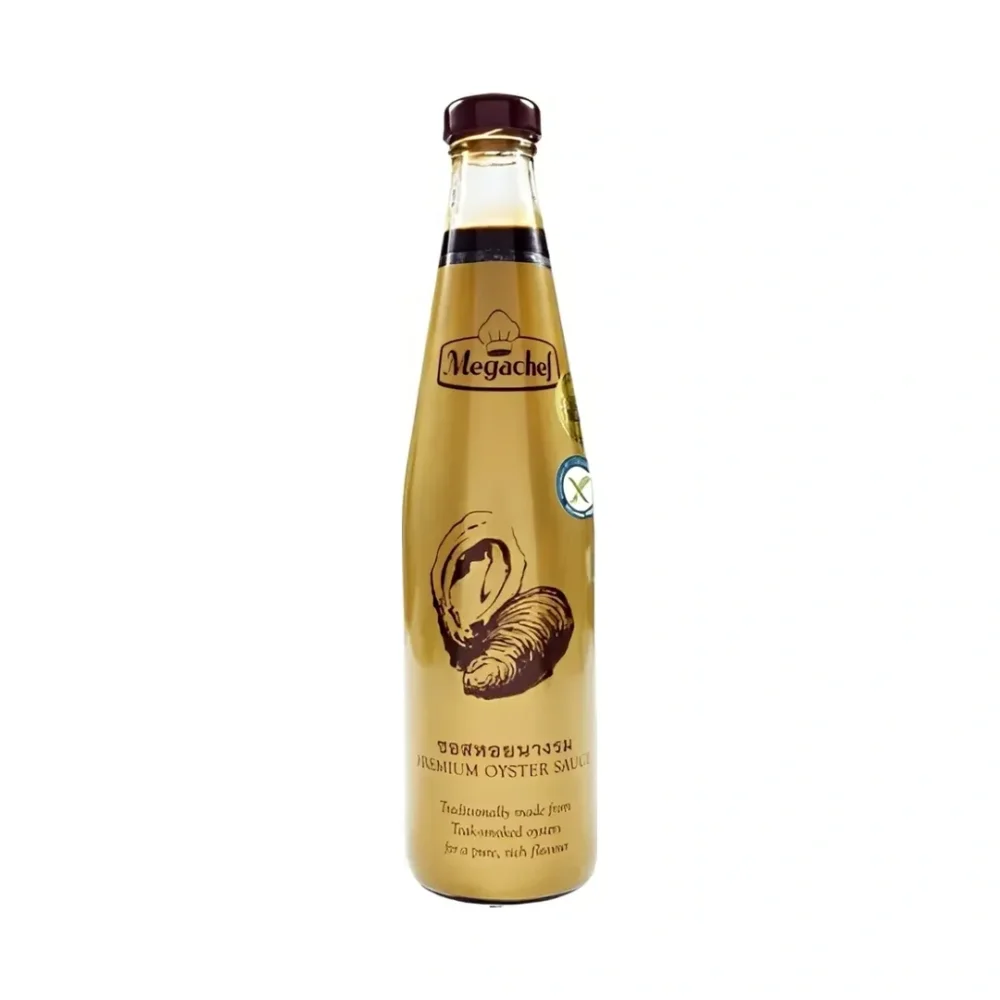
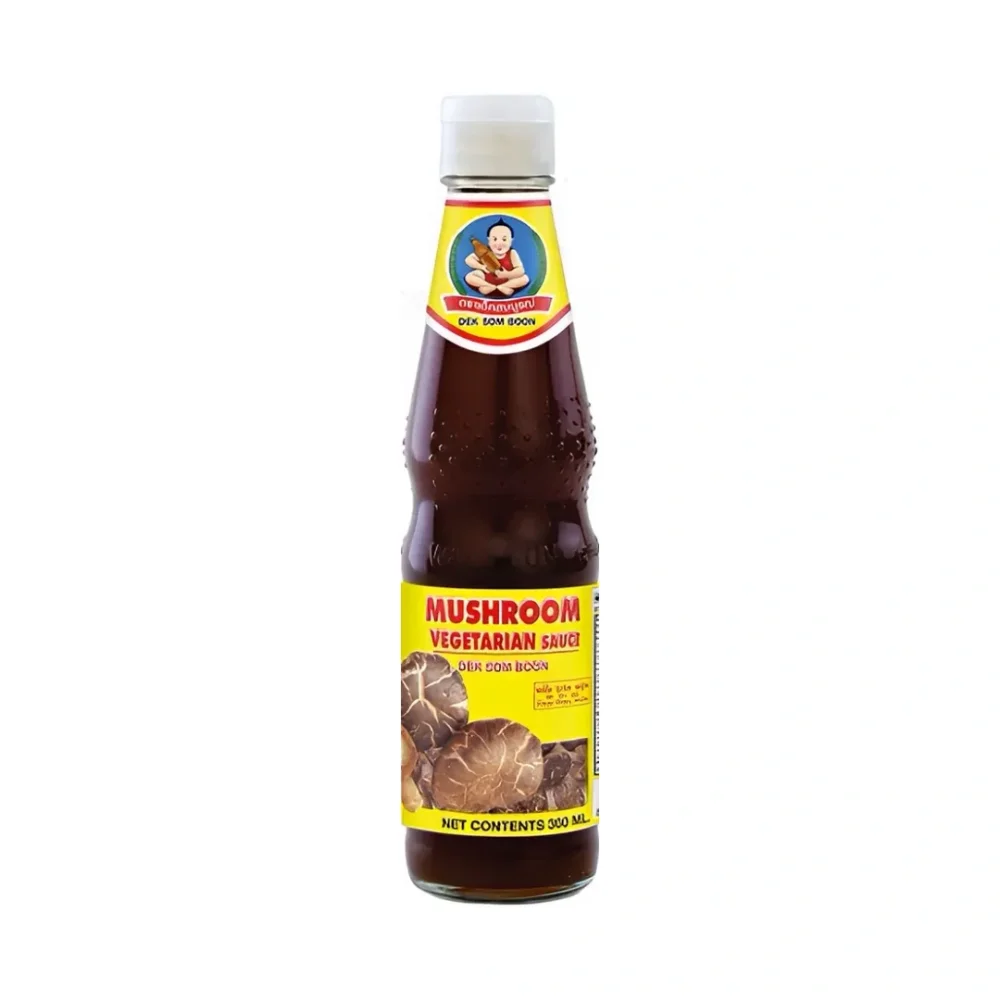
As a specific example of an "umami sauce" for wok dishes, you can use Megachef oyster sauce. And as an example of a milder "vegetarian umami," you can use Dek Som Boon mushroom vegetarian sauce. The meaning of these examples is not to claim they are interchangeable – on the contrary: even the naming implies they target a different flavor character. The label will then help verify the role they will actually play in your dish.
🍳 Quick procedure when shopping: 60 seconds with the ingredients (and what to do with it at home)
- Read the first 3–5 ingredients. This is the fastest filter of whether you're buying a fermented base or mainly water and flavoring.
- Compare the name with reality. If the name promises a distinct component (mushrooms, marine taste), you want to see it among the first items, not just as "seasoning" at the end.
- Notice what the flavor "pushes" forward. A lot of sugar and starch often means a sweeter, rounder, thicker sauce – great for quick dishes, but sometimes less suitable when you want a pure ingredient flavor.
- Check for allergens. For Asian sauces, this is practical information: it helps you quickly recognize the product family and whether it’s suitable for you.
- Decide where the sauce stands in the dish. If it should be the "main signature" (e.g., dip, dressing, simple noodles), it pays to be stricter. If it’s just part of a broader sauce, you can tolerate a more universal style.
And now the most important "what to do with it at home" – two practical rules based on how strong fermented and marine flavor components tend to be:
- Start with a small amount of strong sauces. For ingredients with a strong aromatic impact (typically fish sauce or shrimp pastes), it’s safer to add less at first and adjust later on the pan or in the bowl.
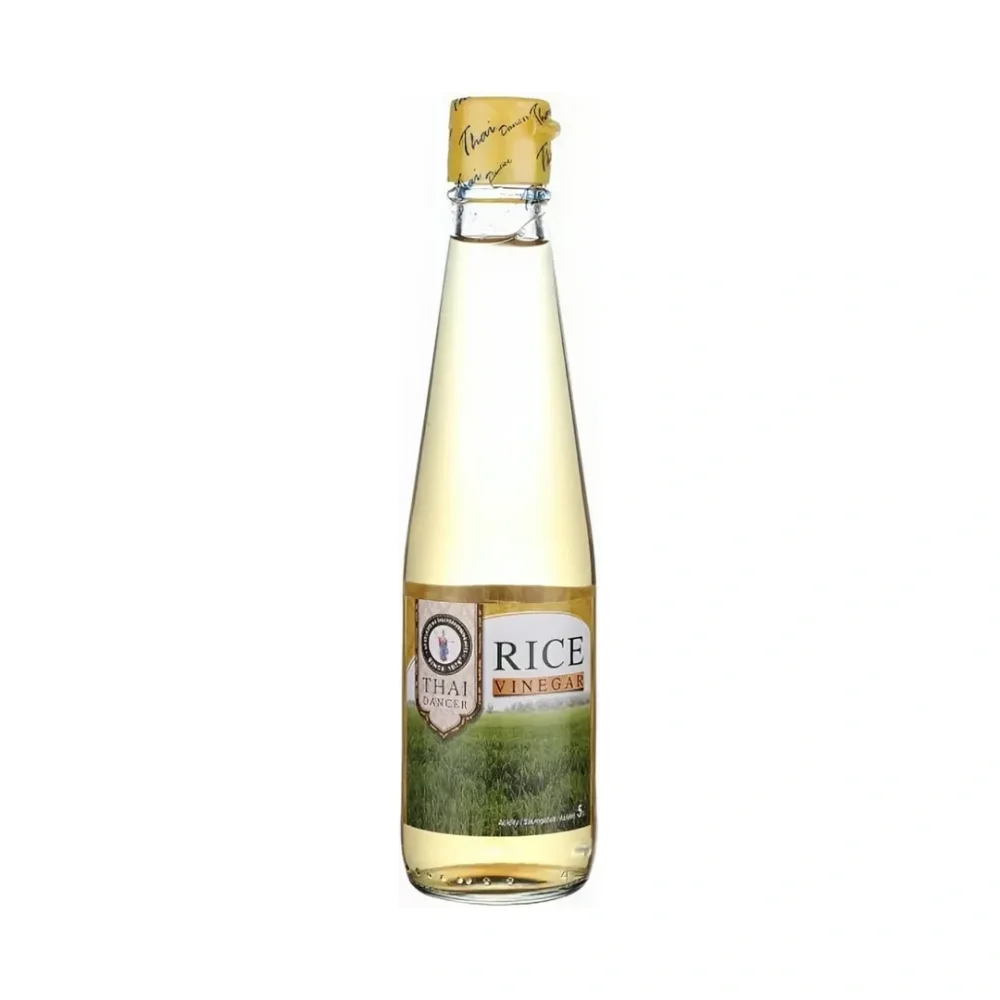
- When the flavor is too "aggressively salty," it’s often not a matter of "more sauce." Balancing helps more: acidity (vinegar), sweetness, fat, or volume (broth, coconut milk, vegetables). For mild acidity in dressings, marinades, and quick pickling, you can use for example Thai Dancer rice vinegar.
💡 What to watch out for: authenticity, strength, and quality are not the same
One of the most common mistakes is mixing three things into one: "authentic" = "strong" = "quality". In practice, this often does not hold true.
- Strong flavor can be due to the sauce being very salty or very sweet. But that alone does not mean depth.
- Authentic style relates to the type of sauce that a particular cuisine uses and in what role (cooking vs. dips). Not every "traditionally" styled sauce is automatically the best universal first choice.
- Quality often shows mainly in purity of aroma and whether the flavor feels complex or just "pushes" saltiness.
That’s why it makes sense to think according to use: you look for something different for occasional stir-fry seasoning and something else for a dip or dressing where the sauce will be more noticeable.
The "I'll replace it with something" mistake: substitutions only work when you understand the function
With sauces, it’s tempting to say "it’s basically the same" – but this often leads to half-truths. A more sensible rule is: don't replace the name, replace the function.
The role in a specific dish also matters:
- When the ingredient is the backbone of flavor (for example, fish sauce in Vietnamese nuoc cham dip or tamarind tam where it carries the main acidity), substitutions are difficult and it’s better not to pretend the result will be the same.
- When the ingredient is supportive (a small amount in a broader sauce), there's usually more room to improvise.
An important detail: one substitution often isn’t enough because sauces are rarely one-dimensional. Typically, they consist of multiple functions (saltiness, umami, aroma, sometimes sweetness and texture). Therefore, it’s more fair to think of a "composite" substitution rather than one magic equivalent.
An extreme example is fish sauce: by this principle, it belongs among the ingredients that are some of the hardest to replace. You can replace part of its function (saltiness and umami), but you can’t honestly claim that the flavor will be the same.
Ingredients and storage: when the sauce is "safe" but no longer in its best form
The label doesn't end with the ingredients. For Asian sauces and pastes, it often applies that there are different states: the product may still be safe for health, but already lose quality (aroma, freshness, flavor purity) or its texture. This is especially important for fermented and aromatic things.
The four biggest enemies of quality are:
- Heat (accelerates aging, oxidation, darkening, and aroma loss – typically for miso pastes, sesame oil, chili oils, and open sauces).
- Light (especially harms oils and sauces sensitive to color and scent).
- Air (oxygen gradually changes flavor – often not a problem "immediately," but quality declines).
- Moisture (critical for dry ingredients but also for products where moisture damages texture and opens the door to problems).
This does not only apply to sauces: for dry ingredients like rice or rice paper, moisture is often key. moistureIf you work at home with ingredients that easily attract moisture, it helps to think with the same logic "keep dry things away from moisture" – and also choose packaging that makes sense for common home storage.
A brief cultural note in conclusion: a large part of Asian ingredients historically originated as a response to the need for preservation (fermentation, drying, salting, pickling). Therefore, storage is not just a technical side detail – it is part of the logic why there are so many pastes, sauces, and concentrated flavorings in Asian cuisine.
What to take away from the article
- The first ingredients matter. The ingredient list is in descending order by weight – and the start determines the character of the sauce the most.
- Distinguish basic vs. flavored product. It's not about "better/worse," but about whether you want to build flavor or have it ready quickly.
- Don’t fall for the shortcut "authentic = strong = quality." It makes more sense to choose according to the role in the dish (cooking vs. dips, backbone of flavor vs. detail).
- Substitutions only work through function. When the sauce is the backbone of flavor, substitution is problematic; when supportive, improvisation is easier.
- Quality changes even without spoilage. Heat, light, air, and moisture often "consume" aroma sooner than the product becomes unsafe.

Read next
If you want to explore this topic further, continue with these related blog guides and articles:
