


 Česky (CZK)
 Slovensky (EUR)
 Deutsch (EUR)
 Austria
 Belgium
 Bulgaria
 Croatia
 Denmark
 Estonia
 Finland
 France
 Germany
 Greece
 Hungary
 Italy
Italy Latvia
 Lithuania
 Luxembourg
 Netherlands
 Poland
 Portugal
 Romania
 Slovenia
 Spain
Spain Sweden










Typical Filipino ingredients: what makes the taste of the Philippines and how to start with them at home
Filipino cuisine is not just adobo. It is island "home" cooking based on rice, pronounced acidity (often from vinegar), salty seasonings with a touch of fermentation, and an aromatic base of garlic, onion, and pepper. In this guide, you will clarify which ingredients are truly typical for the Philippines, their role in dishes, how to recognize the right type, and what to avoid with your first purchases.
🍜 Why consider "typical ingredients" before a specific recipe
In Filipino cooking, it often doesn't matter whether you stick to an exact list of ingredients, but whether you understand several recurring building blocks: rice as the centerpiece of the meal, acidity as a key contrast, saltiness and umami from soy and fish seasonings, and a homemade aromatic base (garlic, onion, pepper). Once you recognize these elements, you will begin to "read" the flavors in Filipino dishes and more easily choose ingredients to use repeatedly (not just once).
At the same time, island Southeast Asia flavors are not uniform: the Philippines typically relies on vinegar and acidity, while Indonesia is often associated with sambal and sweeter sauces, and Malaysia with Singapore with coconut rice and coconut noodle soups. This axis helps to understand why "similarly looking" ingredients are not automatically interchangeable.
🌶️ What is really typical for Filipino cuisine (and how it reflects in the ingredients)
Filipino cuisine is based on several clearly recognizable principles:
- Rice as the center of the meal – many dishes are designed to make sense specifically with rice.
- Prominent role of acidity – often a "guiding element" in flavor that holds together salty and aromatic components.
- Common use of vinegar – vinegar is not just a slight seasoning but a tool that determines the cooking style and the final character of the dish.
- Importance of fish sauce and fermented products – patis (fish sauce) and bagoong (fermented products in various forms) add depth and a specific character.
- Big role of garlic, onion, and pepper – the aromatic base is usually "homemade" and distinctly garlicky.
- Frequent presence of dips, sauces, and table seasonings – flavor is often finalized at the table, not just in the pot.
Important context: Filipino food is not automatically "spicy" or "heavily seasoned" in the way people sometimes imagine Asia. More often it is distinctly sour, salty, garlicky, and peppery, sometimes lightly sweet – and very dependent on how well it pairs with rice.
Basic groups of typical Filipino ingredients and their roles
1) Rice and rice products: the foundation to which everything relates
Rice is the absolute foundation of everyday Filipino dining. Practically, this means many dishes can be more "concentrated" in flavor (saltier, more sour, more aromatic) because rice acts as a neutral counterbalance and carrier.
Besides rice itself, typical lists also include rice noodles and other noodle productsIn these, it's good not to assume that "noodle is noodle": different types behave differently when soaked, cooked, or used in soups or stir-fry dishes.
2) Acidity: vinegar, tamarind, and calamansi
Acidity is one of the most pronounced signatures of the Philippines. It's not just "a few drops at the end," but a flavor axis that can lift the entire dish, cut heaviness, and make food cleaner and more readable.
- Vinegar is one of the most important tools of Filipino flavor and cooking style.
- Tamarind and calamansi (a small citrus typical for the region) expand the sour repertoire: acidity is then not just "vinegary," but can have a fruitier, fresher character.
What is practical to remember: acidity in the Filipino style often doesn’t serve as decoration, but as a main contrastthat holds together saltiness and aromatics.
3) Saltiness and umami: soy sauce, patis, and bagoong
Here Filipino cuisine is often mistakenly equated with the East Asian "soy" profile. Soy sauce does belong to the Philippines, but according to available data, it does not work exactly the same way as in Chinese or Japanese cuisine: it is often one component of a whole, not always the dominant feature.
- Soy sauce is common especially in dishes like adobo or marinades.
- Patis (fish sauce) adds saltiness and depth; it is a typical seasoning.
- Bagoong is a fermented product in various forms – it can serve as a table condiment, fermented paste, or cooking base. It’s always good to know which type you have, because its use changes significantly.
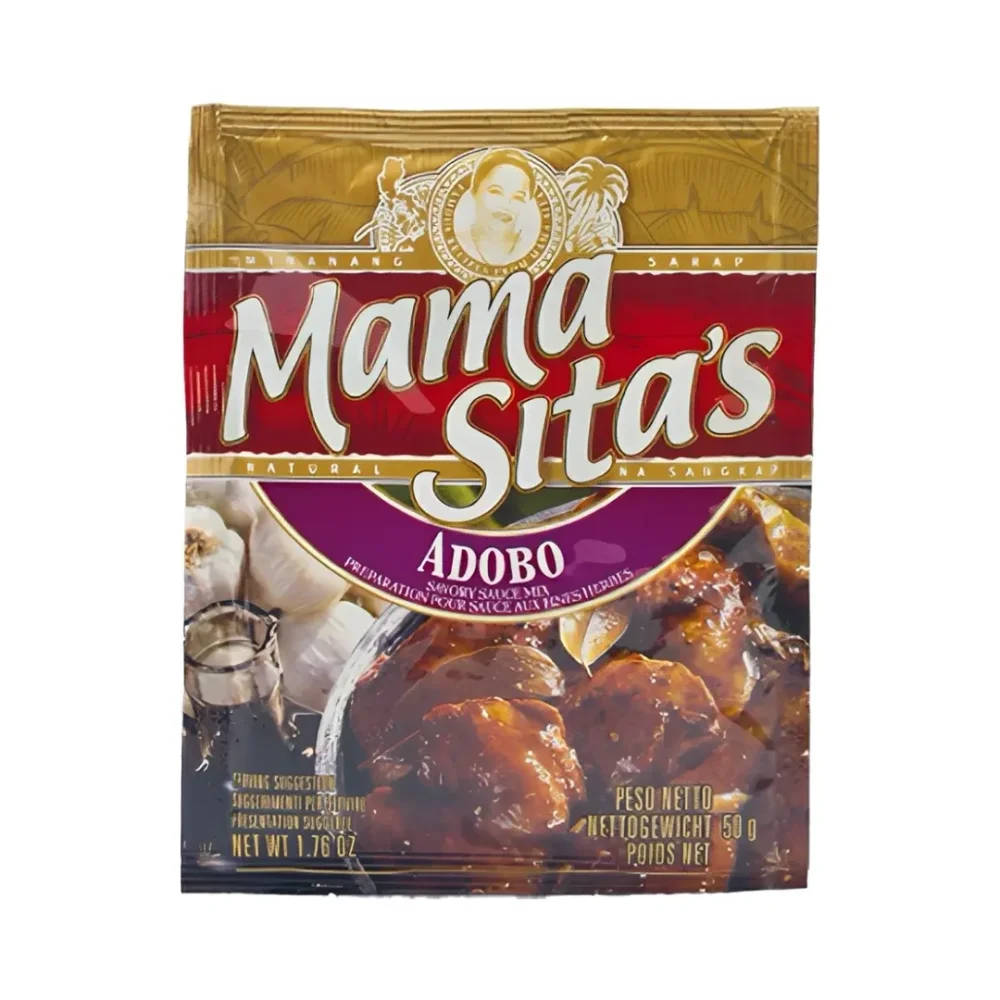
If you want a very easy "start" precisely in the iconic adobo direction, a ready-made base can help you achieve the typical flavor without complicated ratio adjustments – for example Mama Sita's Adobo Sauce mix (can also be used as a marinade).
4) Coconut and coconut milk: regional strength, not a universal background
Coconut milk and other coconut products are important in Filipino cuisine in several regions – according to sources especially in southern and coastal styles and in the Bicol area. Coconut adds not only "creaminess" but also fullness and a certain sweeter roundness often balanced by acidity and saltiness.
If you choose coconut milk for cooking, it is practical to clarify right away whether you want a fuller type or a lighter variant, and to observe how the product behaves when heated (thickness, fat separation). A good guide for selection and comparison of different types of coconut milk is the category coconut milk.
👃 5) Aromatic base: garlic, onion, ginger, pepper
Garlic, onion, ginger, and pepper belong to the aromatic bases of many dishes. For the Philippines, a "homemade garlicky" line is typical: pronounced, clear, without the need for complicated spice blends. The practical effect is simple: even if you are just starting, it pays off to build flavor on good aromatics and only then adjust acidity and saltiness.
6) Proteins: pork, chicken, fish, and seafood
Filipino cuisine is very diverse also in protein use. Pork and chicken are common, but fish and seafood play just as important a role. For home cooking, this means you often create the "Filipino profile" more by the choice of seasonings (vinegar, patis, bagoong, aromatics) than by the specific type of meat.
7) Tropical fruits and sweet components: bananas, mango, jackfruit, sugar, and preserves
Typical Filipino ingredients also include bananas, mango, and jackfruit – and alongside them sugar and sweet preserves used in desserts. Texture work is also important: Filipino desserts often rely not only on flavor but on the "chewiness" and elasticity of various ingredients.
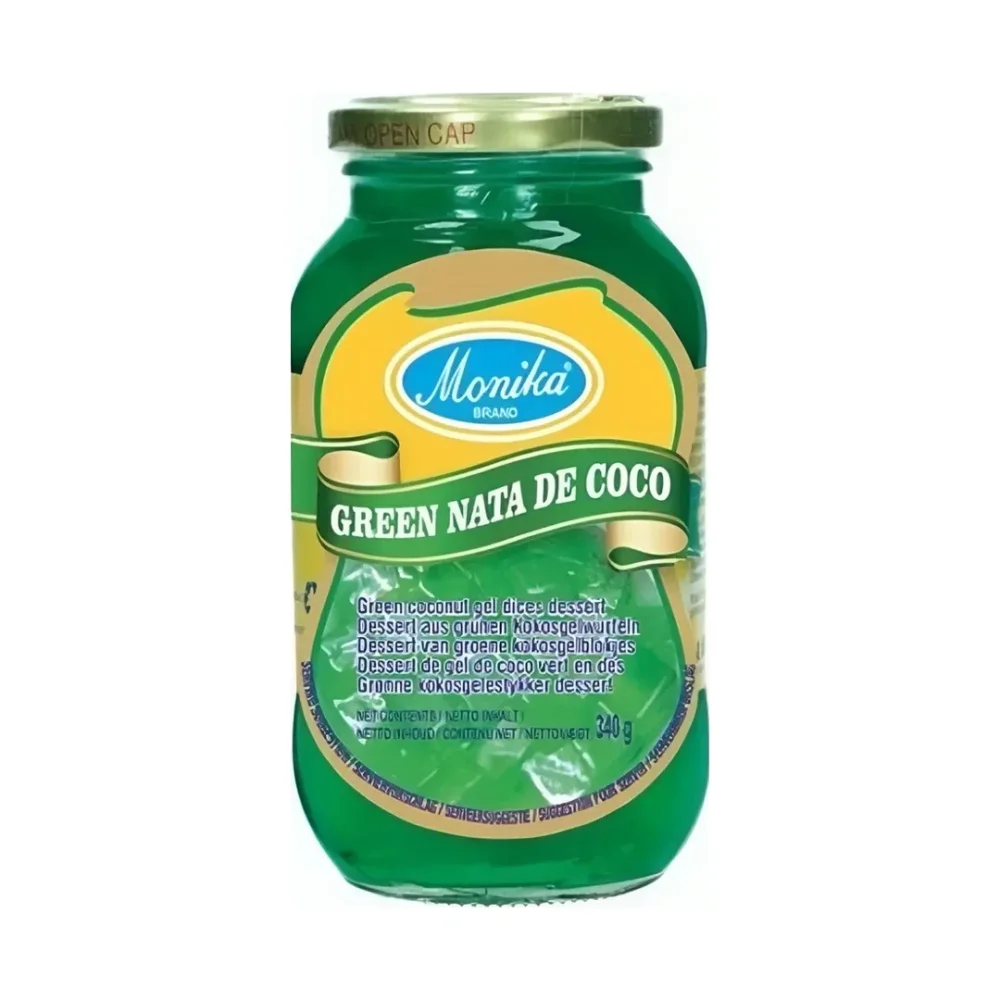
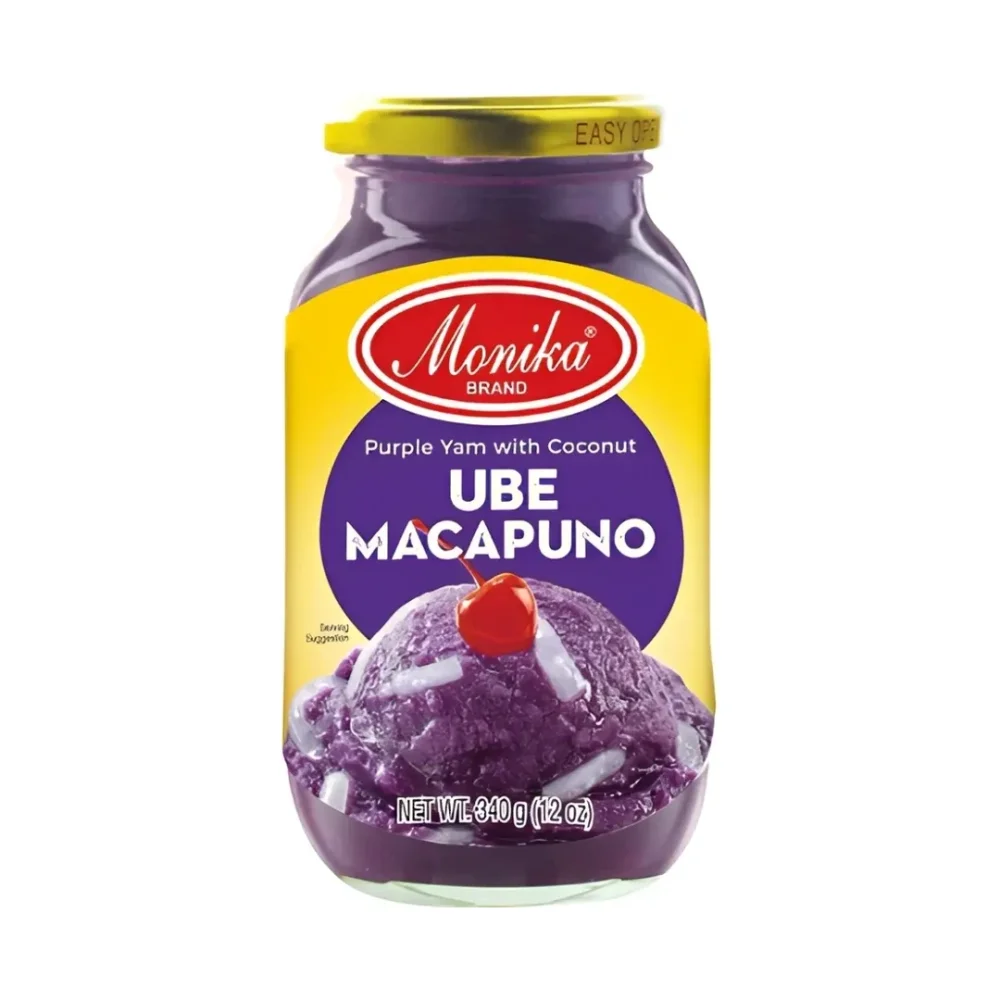
As an example of a dessert ingredient that is typical specifically for texture, you can cite Nata de Coco coconut gel (adds elastic pieces to fruit salads and desserts). And if you're interested in sweet "pantry" bases that quickly transform an ordinary snack into a Filipino-style dessert, that's exactly the kind of role that ube jam with coconutcan play.
The Philippines in the island axis: why neighboring cuisines use similar things but differently
For orientation, it is useful to perceive the Philippines in a wider island and coastal Southeast Asian axis (Indonesia, Philippines, Malaysia, Singapore):
- Philippines – typically a stronger role of acidity and vinegar, frequent presence of fish seasonings and fermented products (patis, bagoong).
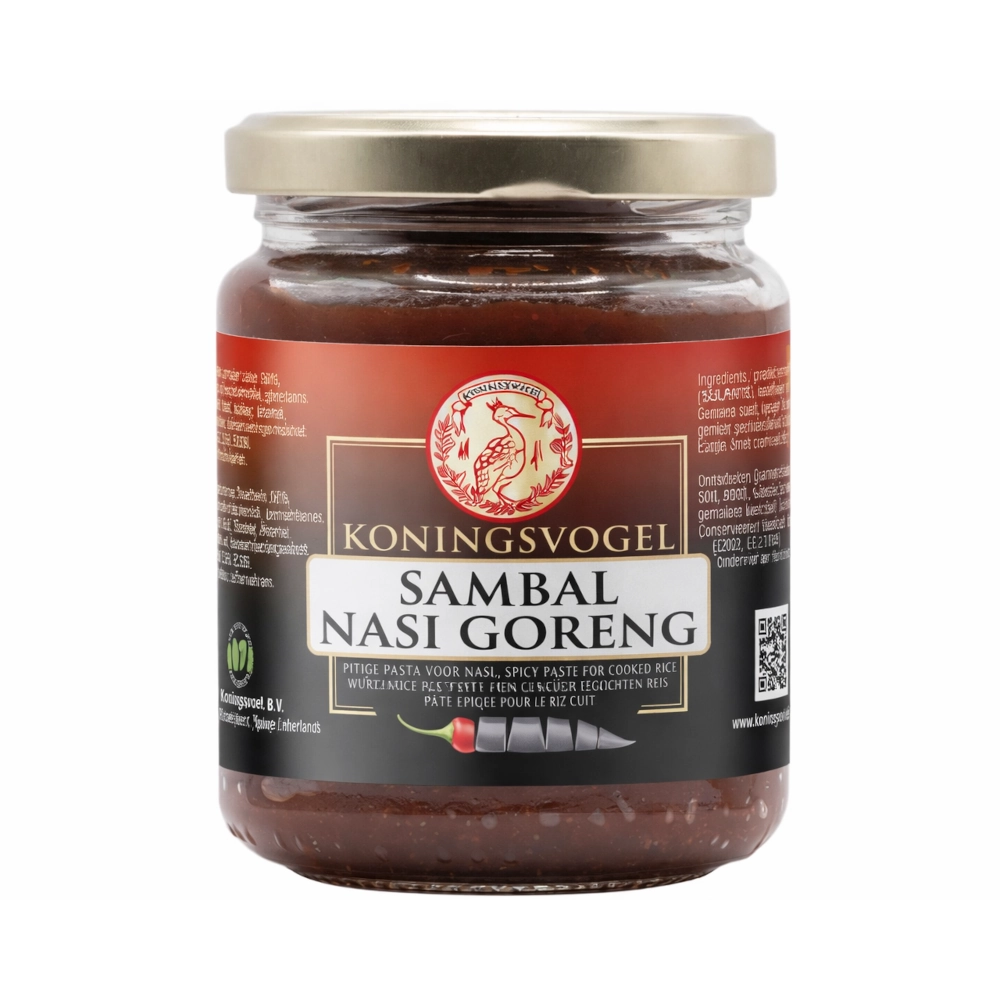
- Indonesia – often known for sambal (chili pastes), sweeter sauces, and coconut. If you want to get a flavor idea of the "sambal" side of the axis, an illustration can be the chili paste for nasi goreng, e.g. Koningsvogel chili paste for Nasi Goreng.
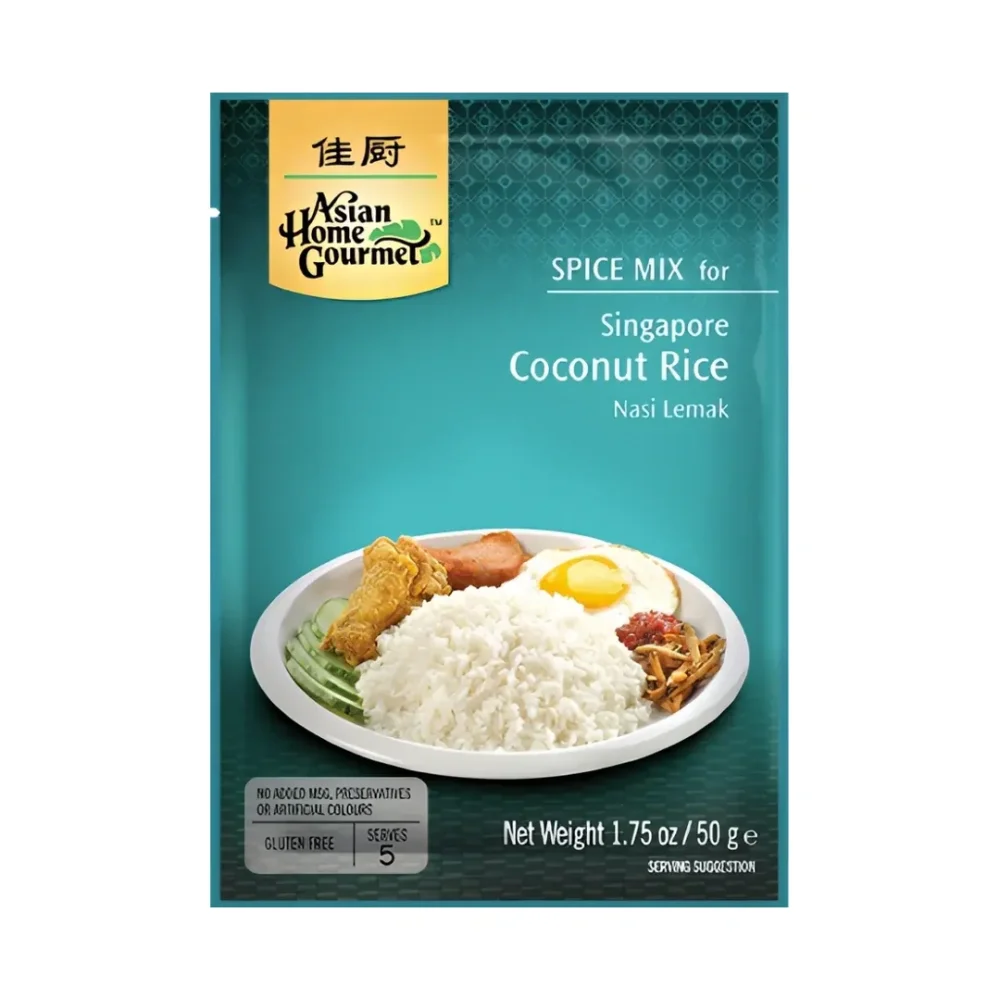
- Malaysia and Singapore – typically a pronounced role of coconut rice (nasi lemak) and coconut noodle dishes (e.g., laksa), often in an urban "mix of influences." To get an idea of a finished flavor base, you can compare the paste for coconut rice Nasi Lemak or the paste for coconut curry noodles Laksa.
The point of this comparison is not to look for "substitutes" but to understand expectations: if you want a Filipino impression, it will often be more important to work with acidity (vinegar, citrus, tamarind) and the right kind of salty umami (patis/bagoong) than just adding coconut or chili paste.
How to start with Filipino ingredients at home: what to buy first and how to use it
It pays off to build a Filipino "pantry" functionally: something for the starchy base, something for acidity, something for saltiness and umami, something for aromatics, and possibly something for coconut fullness. You don't have to buy everything at once – it's more important to understand the role of each ingredient in the dish.
First small purchase (universal base for the Filipino direction)
- Rice (as the center of the meal).
- Vinegar (key contrast and cooking style).
- Soy sauce (more as part of the whole than the single "main" seasoning).
- Patis (fish sauce) or another fish base for depth.
- Garlic and onion (aromatic base).
How to practically dose so you don't get lost: with strong salty seasonings (patis, fermented products like bagoong) start with really small amounts and add gradually. A safe procedure in home cooking is to taste little by little (e.g., half a teaspoon in the pot for two servings) and adjust saltiness only at the end when flavors have blended.
Second purchase (acidic variations and coconut fullness)
- Tamarind or calamansi for a different kind of acidity than just vinegar.
- Coconut milk for regional coconut dishes and richer sauces.
What to watch for with coconut: don’t expect "coconut milk" to be one standard. Differences in fullness and cooking behavior are significant – and affect whether the result is creamy and stable, or watery and flat.
Third purchase (fermented products and textures)
- Bagoong (only when you know whether you want a table condiment, paste, or cooking base).
- Rice noodles (but only if you already know what type of dish you want them for).
- Dessert components for texture (e.g., nata de coco) or sweet preserves.
Here it helps to remember one practical rule: some ingredients are not "bad," they are just too specialized for a first purchase. A warning sign is very narrow use and a need for precise dosing.
💡 What to watch for: common mistakes with Filipino ingredients (and how to fix them)
Misguided expectation: "Filipino = mainly spicy"
Filipino cuisine often relies more on acidity, saltiness, garlic, and pepper. If food seems "not Asian enough," adding chili often doesn’t help, but setting contrasts better: brighter acidity (vinegar/citrus/tamarind) and cleaner salty depth (patis or fermented products).
Role confusion: soy sauce as the only main source of flavor
In the Filipino context, soy sauce is often only one of the components. If you overpower it, the flavor can slide to "generally soy" and lose the Filipino character. The fix is usually simple: bring back acidity and aromatics into play, or shift some saltiness to fish seasoning.
"Vinegar is vinegar": the most common path to harsh acidity
In the Filipino style, vinegar is crucial, so its quality is easily noticeable. Good Filipino vinegar should have clear, clean acidity and a character matching the ingredient; it should not taste flat or aggressively "flavorless." If food seems just sharply sour, the problem is often either the type of vinegar or that it lacks counterplay (saltiness/umami, coconut fullness, rice).
Uncertainty around patis vs. bagoong
Patis and bagoong are not the same. It is important to know what you are buying when it comes to fish sauce and bagoong table seasoning, fermented paste, or cooking base. A quality product should have depth and character, not just a raw saltiness. If you start with the wrong type, you get the impression that "it doesn't taste like in a restaurant" – in reality, you are simply using a different function than the recipe or style assumes.
Mistake with coconut milk: expecting the same result from every brand
With coconut products, fullness and behavior during cooking are important. If your sauce breaks, is watery, or the fat separates more than you want, it often isn’t "your fault," but a property of a specific type of coconut milk. It helps to choose according to the planned use (rich sauce vs. lighter dish vs. dessert).
Noodles without context: "I'll take any rice ones"
For noodles and rice products, it is necessary to know what they are intended for. Not every noodle suits every dish – differences in thickness and texture do more than you think. If your noodles tear, stick, or are rubbery, often the problem lies in the mismatch of noodle type and cooking technique.
What to take away from the article
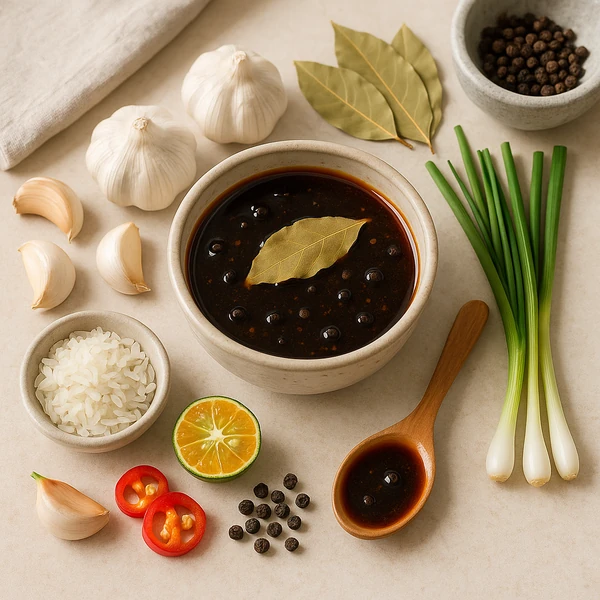
- You best understand Filipino cuisine through ingredients and their functions: rice, acidity (mainly vinegar), salty umami (patis/bagoong), aromatics.
- Vinegar is a key tool in Filipino cooking – it pays to choose one that has a clean, non-aggressive acidity and character.
- Soy sauce in many Filipino dishes is not the "whole answer" but just one part of the equation; the final taste is often held together by acidity.
- Patis and bagoong add depth, but it is necessary to distinguish the product type (table seasoning vs. paste vs. cooking base) and dose carefully.
- Coconut milk is important especially in some regions; its quality and behavior during cooking significantly affect the result.
- The fastest way to a good homemade result is to build a "Filipino pantry" gradually and functionally, not to buy exotic items randomly.

Read next
If you want to explore this topic further, continue with these related blog guides and articles:
