


 Česky (CZK)
 Slovensky (EUR)
 Deutsch (EUR)
 Austria
 Belgium
 Bulgaria
 Croatia
 Denmark
 Estonia
 Finland
 France
 Germany
 Greece
 Hungary
 Italy
Italy Latvia
 Lithuania
 Luxembourg
 Netherlands
 Poland
 Portugal
 Romania
 Slovenia
 Spain
Spain Sweden










The taste of Filipino cuisine: acidity, vinegar, rice, and umami that hold the food together
Filipino cuisine is often simplified to "adobo," but its typical flavor is much broader and above all very practical: rice as the center of the meal, pronounced acidity (often from vinegar), saltiness and umami from soy and fish seasonings, garlic-onion aroma, and a sense for texture as well as complementary sauces. In the article, we will show you how to recognize these flavors in typical dishes and how to safely start with them at home without unnecessary mistakes.
🌶️ What is really typical for Filipino cuisine (and why it’s not just "adobo")
Filipino cuisine is a broad island cuisine: alongside home daily cooking, it features regional specializations, urban street food, and festive dishes. Unlike cuisines based on one dominant paste or one "universal" sauce, Filipino flavor works more like a comprehensible seasoning logic.
- Rice is central – the dish is often 'read' as sauce/stew/soup + rice, not as a separate plate without a base.
- Acidity and saltiness hold the flavor together – acidity is not a supplement but a main organizing principle.
- Vinegar is key – not only in flavor but also as part of the traditional logic of the cuisine.
- Umami and saltiness come from soy sauce, fish sauce, and fermented bases (including bagoong).
- Aromatics: garlic, onion, and black pepper appear very often and form the "signature" of many dishes.
- Texture and complementary sauces: Filipino dishes often assume that you will adjust the taste at the table.
Acidity as the main organizing principle: vinegar, tamarind, calamansi, and green mango
Acidity is one of the main flavor lines in Filipino cuisine. It comes from various sources: vinegar, tamarind, calamansi (small citrus fruits), green mango or other sour ingredients. The important thing is that acidity is not just a "refreshing" element – it often determines the entire structure of the dish.
This is clearly visible in three typical examples:
- Adobo – it’s not just one recipe but also a method: braising in a sour and salty base. Historically associated with vinegar, salt, and preservation.
- Sinigang – a sour soup/broth-based dish that shows how central acidity can be. It often relies on tamarind (or other sour ingredients) and can be made with pork, fish, shrimp, or beef.
- Kinilaw – preparation of raw fish (or other ingredients) using sour components. It’s a distinct Filipino world, not just “Filipino ceviche.”
Practical note: if you’re used to Southeast Asian cuisines that lean more on herbal freshness or coconut creaminess, Filipino cuisine will often surprise you by how direct and unambiguous its acidity can be.
Saltiness and umami: soy sauce, fish sauce, and fermented bases
The second major pillar of Filipino flavor is saltiness and umami. In practice, this means food is seasoned "directly" and deeply – not just with salt but also with liquid and fermented seasonings. Typical building blocks include:
- soy sauce (saltiness and color),
- fish sauce (saltiness and umami),
- bagoong (fermented base with strong umami),
- garlic, onion, and pepper as basic aromatics.
Combined with acidity, this creates a flavor that is often homely, understandable, yet clearly recognizable. A common detail: a lighter sweetness can be added to this salty-umami axis – it’s not necessarily dessert-like sweetness, but a gentle rounding of the flavor.
Rice as the center of Filipino food: why the “side dish” often decides the experience
Filipino food is often composed to make sense with rice: rice absorbs the sour-salty base, softens intensity, and helps balance the flavor. This is one reason why some Filipino dishes may taste "too sharp" without rice – not because they are poorly cooked, but because the other half of the equation is missing.
Alongside rice, you’ll also find rice noodles and other noodle products in the cuisine, but the "core of the plate" is very often still rice.
The Philippines in the island axis of Southeast Asia: how it differs from Indonesia, Malaysia, and Singapore
Asian cuisine is not one cuisine – and even within Southeast Asia, the island world of flavors differs. It’s useful to compare the Philippines with nearby island styles because contrasts highlight what is specific about Filipino flavor:
- Philippines: prominent role of vinegar and acidity, direct salty seasoning, adobo as a method, citrus and fruity sour components (calamansi, green mango).
- Indonesia: you’ll more often encounter the logic of "chili + paste" (sambal), sweeter tones (e.g., kecap manis), and distinct complementary sauces.
- Malaysia and Singapore: strong role of coconut and "hawker" (urban) influences – typically dishes like nasi lemak, laksa, sambal, and blends of influences on one plate.
If you want to taste this island axis side by side at home, working with ready pastes helps as an example of different flavor logic (not as a universal substitute):
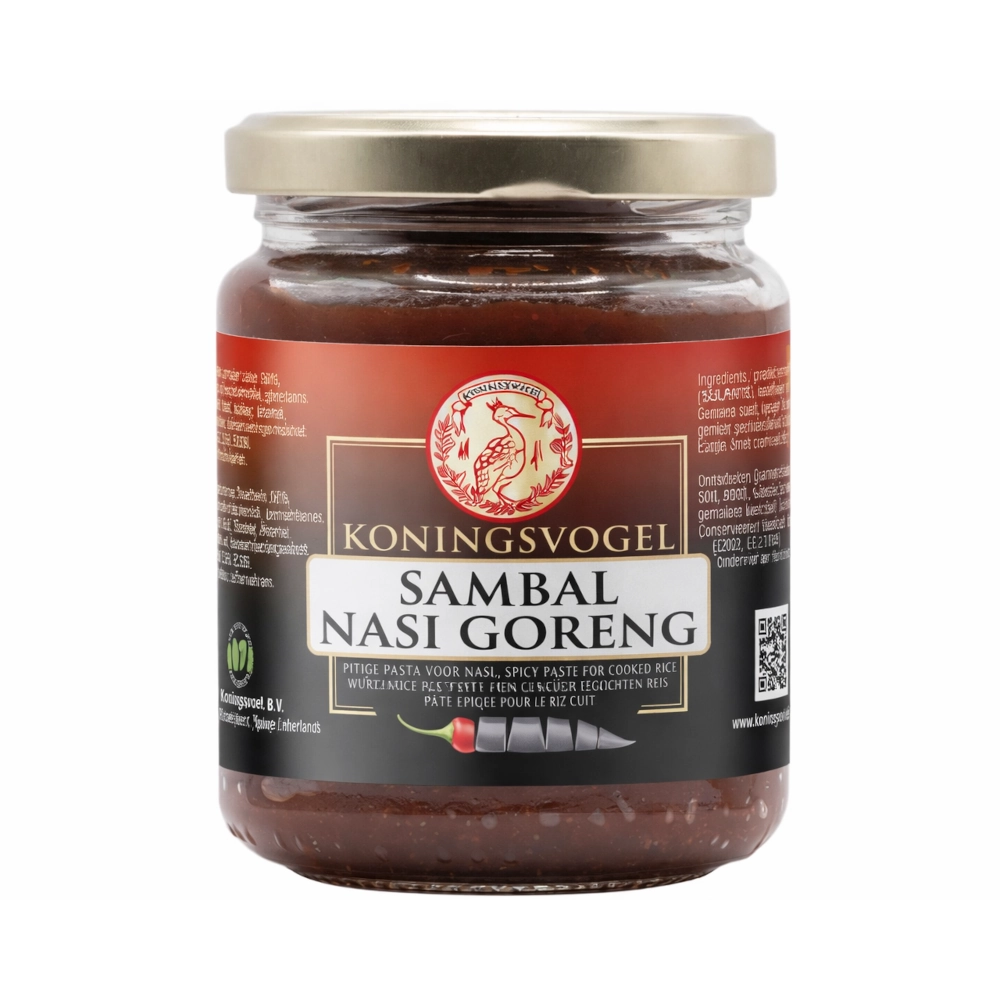
- Indonesian fried rice nasi goreng is based on chili paste – an example is Koningsvogel Chilli pasta Nasi Goreng. That’s a different direction than Filipino sour-salty braising.
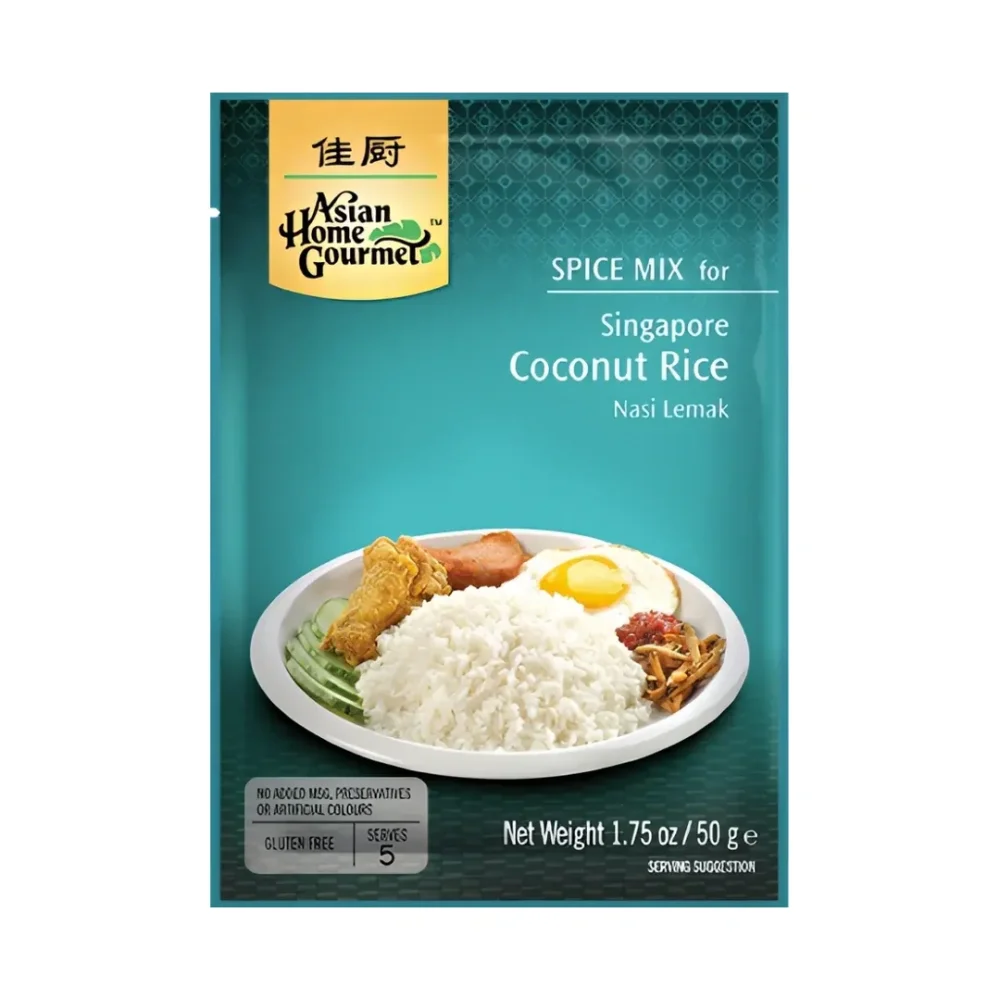
- Nasi lemak is coconut rice (Malaysia/Singapore) – a product that clearly shows its character is AHG Pasta na kokosovou rýži Nasi Lemak.
- Laksa (Singapore) goes into a creamy-coconut noodle base – typically represented by AHG Pasta na kokosové kari nudle Laksa.
For spicy flavors, a good guide is the category Sambal and chili pastes – just be careful with confusion: the sambal "chili world" is typically closer to Indonesia/Malaysia, while the Philippines often rely more on acidity and vinegar (spiciness may appear but is not automatic).
How to start with Filipino flavor at home: 3 simple starts without a full recipe
It’s worth starting to cook Filipino cuisine in a way that helps you understand its logic: acidity + saltiness + garlic/onion/pepper + rice. Below are three starts that work as a "taste of the principle" (not as the only correct approach).
1) Adobo as a method: learn the sour-salty base
Consider adobo as a technique of braising in a sour and salty base. A practical home start:
- Take chicken or pork, add garlic, pepper, and a base of vinegar and salty seasoning (typically soy sauce / other salty seasoning).
- As a guideline ratio for a first try you can start with about 2–4 tablespoons of vinegar and 1–3 tablespoons of salty seasoning for 500 g of meat and then adjust according to taste and how much rice you’ll eat it with. (Take this as a starting point, not a dogma.)
- Key test: when you taste the sauce alone, it may be sharper; with rice it usually "rounds out."
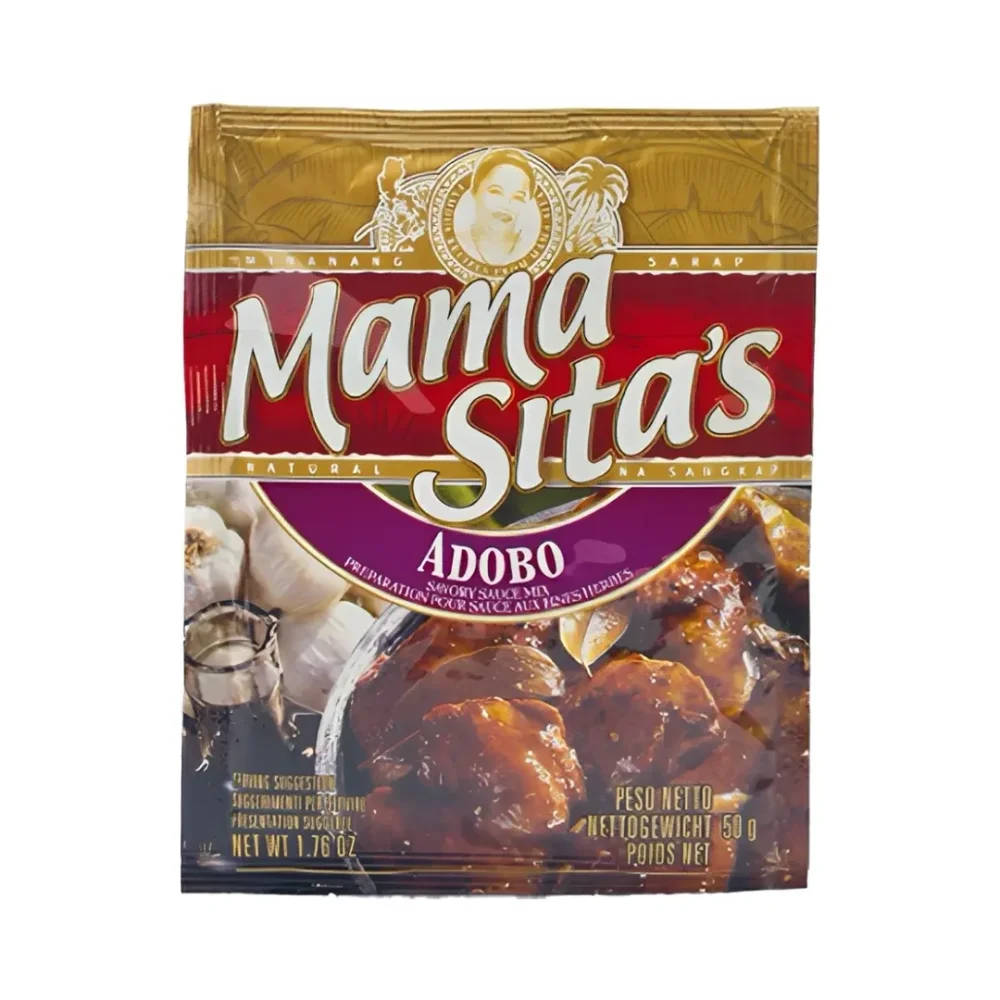
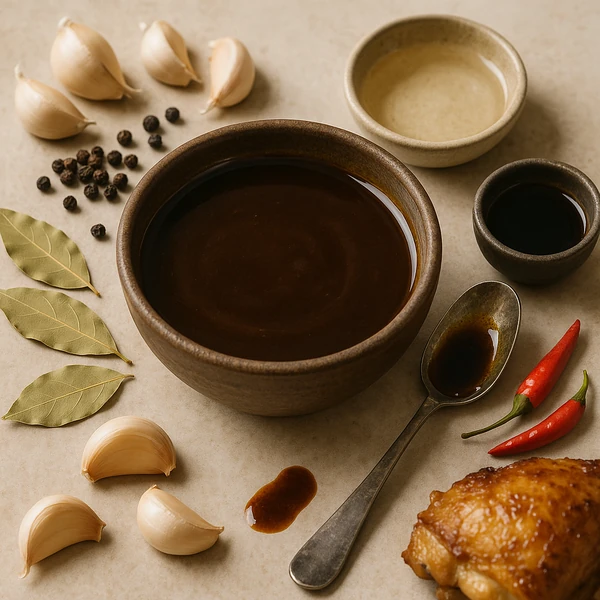
If you want a quick way to get to the adobo profile without long tuning, a ready base can help like Mama Sita's Adobo Sauce Mix. The purpose is that it makes it easier to hit the typical flavor direction so you can focus on technique and working with acidity.
2) Sinigang as a lesson in acidity in broth
Sinigang is a good "training" to understand that acidity can be the main flavor of the dish, not just a supplement. For initial attempts, it’s practical to:
- add the sour ingredient gradually (while tasting regularly),
- make sure the soup is not only sour but also sufficiently salty/umami – otherwise it tastes flat,
- eat with rice, which stabilizes the flavor.
3) Kinilaw: understand “sour cooking” without heat (but with respect)
Kinilaw shows how Filipino cuisine works with acidity even in raw ingredients. It’s not about "over-souring" but about structuring the dish with sour components. Important warning: since it involves working with raw fish, it makes sense to follow safe procedures and use ingredients suitable for raw consumption.
Coconut softness and sweet texture: where the “softer” side of Filipino flavor appears
Filipino flavor is not just sharp acidity. The cuisine also features coconut softness (for example in some creamier dishes and desserts) and emphasis on texture. For home orientation, it’s useful to have coconut ingredients on hand that are also useful in the broader island space – a guide is the category Coconut milk.
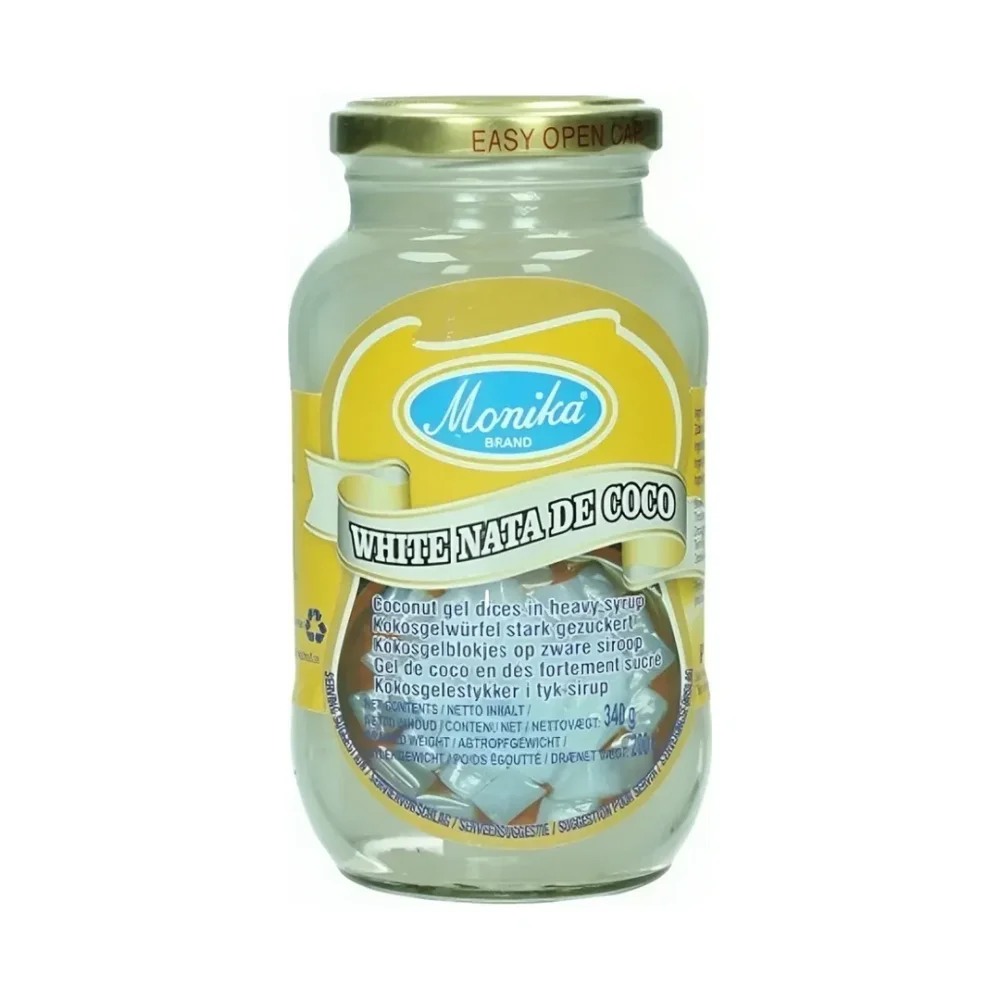
A typical "texture" element in desserts and sweets is nata de coco – coconut gel with elastic pieces that is added to fruit salads, parfaits, or desserts in a glass. A concrete example is Monika Coconut gel white Nata de Coco.
Common mistakes: why Filipino food might "not suit you" (and how to fix it)
- "Filipino cuisine = adobo." Adobo is fundamental, but it is also a method and there are many variants. If you didn’t like one adobo, it doesn’t mean you won’t like the whole style.
- Excessive acidity without support. Acidity should be prominent but needs saltiness/umami and often also rice. When a dish tastes "just sour," it often lacks the other half (saltiness, umami, or rice as a stabilizer).
- An attempt to replace Filipino logic with sambal. Spicy pastes (sambal) are great, but flavor-wise they represent more of the Indo-Malay direction. Filipino dishes more often feature vinegar/acidity and direct salt seasoning as the main role – spiciness can come later as a complement.
- The expectation that it will always be spicy. In Filipino flavor, spiciness appears "sometimes, but not always." If you want to start milder, focus first on the sour-salty axis and the aroma of garlic/onion/pepper.
- Ignoring texture. Filipino cuisine is sensitive to how the food is eaten: sauce with rice, soup as a whole, supplementary sauces. If you take only one component of this, the result may seem unbalanced.
What to take away from the article
- You best understand Filipino flavor as a combination of rice + acidity + saltiness/umami + garlic/onion/pepper.
- Acidity is an organizing principle in this cuisine (vinegar, tamarind, calamansi, green mango), not just "a drop on top."
- Adobo is more than a recipe: it's a method of sour-salty braising that you can gradually "get a feel for" at home.
- Sinigang and kinilaw are two different but very illustrative lessons on how the Philippines works with acidity.
- In the island Southeast Asia, the Philippines are recognized, among other things, by their more frequent use of vinegar and direct seasoning, while Indonesia/Malaysia/Singapore more often work with sambal and coconut-based directions.

Read next
If you want to explore this topic further, continue with these related blog guides and articles:
