


 Česky (CZK)
 Slovensky (EUR)
 Deutsch (EUR)
 Austria
 Belgium
 Bulgaria
 Croatia
 Denmark
 Estonia
 Finland
 France
 Germany
 Greece
 Hungary
 Italy
Italy Latvia
 Lithuania
 Luxembourg
 Netherlands
 Poland
 Portugal
 Romania
 Slovenia
 Spain
Spain Sweden










satay lobo
Products
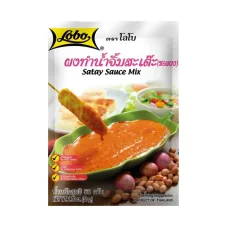


Lobo Paste Satay 50 g
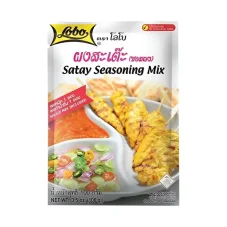
Lobo Marinade Satay 100 g
Articles
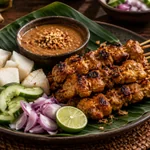
Satay Skewers (Marinated Meat) with Quick Peanut Sauce
Satay is Southeast Asia’s iconic grilled skewer: small pieces of meat soaked in a fragrant marinade, cooked fast over high heat, and served with a creamy peanut sauce. This version is easy to make at home on a grill, grill pan, or in the oven—ideal for weeknights and great for sharing.
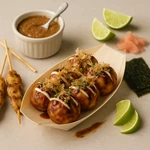
Takoyaki, satay and other handheld foods: how to navigate Asian street food
Asian street food is often simplified to “something to eat with your hands.” But its strength lies elsewhere: in speed, in a single stall’s specialization in a few dishes, in a clear local identity and in a flavor you “read” from the first bite. In this guide we’ll show where takoyaki, satay and other street classics belong — and how to choose a style that will taste good at home too.
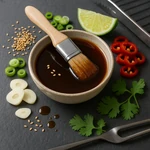
Asian-style grilling: yakitori, satay, tandoor and what makes the difference in flavor
“Asian-style grilling” is not one specific recipe or a single universal marinade. In different parts of Asia, grilling is done over fire, on a grate, on a plate, on skewers, and even in a clay oven – and each time the result is somewhat different. In this guide, you will find clear orientation in the main styles (Japan, Southeast Asia, India) and especially practical tips on how to work at home with temperature, timing, and marinade so that the grilled food has a distinct seared surface, juicy interior, and "Asian" character.
How to choose oil for frying and grilling: technique matters, not the name on the bottle
In Asian cooking, oil is often not just "something for the pan." Sometimes it is purely a working medium for high temperature, other times a carrier of aroma added only at the very end. This is the most common source of errors: people buy oil of the right category but the wrong type for the specific technique. In this guide, you will clarify how to think about oil when frying, deep-frying, and grilling – practically and without unnecessary myths.
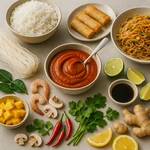
How to compose a menu for a visit and a larger table
Are you planning a feast or a larger family visit and want the food to work smoothly for more people? This practical guide will show how to arrange the menu according to Asian sharing principles: the roles of rice, soup, and side dishes, how to combine flavors, and what to prepare in advance.
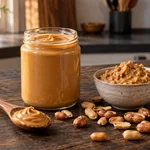
Peanut butter
Immerse yourself in the world of this delicious ingredient, which not only tastes great but also offers a host of health benefits. Discover how it is made and what advantages it brings to your health and everyday diet!
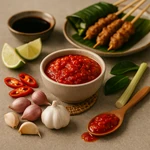
Typical Indonesian dishes: what to taste and how to quickly get your bearings
Indonesian cuisine is not a single uniform style, but a large world of regional traditions spread across a vast archipelago. Yet it has clearly recognizable common features: rice as the center of the meal, pronounced chili (often in the form of sambal), aromatic bases and frequent use of coconut. The article provides an overview of the most typical Indonesian dishes (nasi goreng, rendang, satay and gado-gado), an explanation of what makes them typical, and practical tips on how to start cooking them at home.
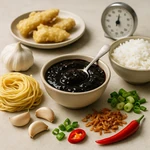
Fast Asian meals in 30 minutes: how to choose and assemble noodles, rice, and cold bowls
Fast Asian meals are not a "simplified restaurant," but a distinct world built on quick finishing, bold flavors, sauces, and texture. Once you understand the main formats (noodles, rice bowls, soups, cold dishes), you can make smart choices at home – and realistically fit into 30 minutes without compromising on taste.
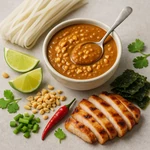
Street food style at home without complicated preparation: how to achieve bold flavor and proper texture
“Street food style at home” is not about copying stalls to the last detail. It’s about understanding why Asian street food works: speed, clear flavor, sauces and final seasoning, contrast of textures, and serving immediately without unnecessary complexity. The article contains a practical guide on how to transfer this logic to the home kitchen – even if you don’t cook from scratch.
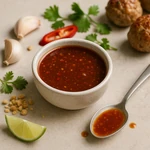
Sauce for Meatballs: How to Get the Flavor (and Texture) Right — with an Asian Twist
Meatballs are reliably good. The sauce is what makes them memorable: it adds aroma, keeps them juicy, and turns “just meatballs” into a dish you want to eat again tomorrow. Here’s a practical way to build a sauce that balances sweet–salty–sour–spicy, clings to the meatballs, and can lean Asian without feeling complicated.
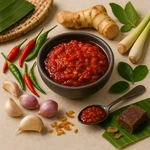
Taste of Indonesian cuisine: sambal, kecap manis, coconut, and rice as the center of the meal
Indonesian cuisine is not a single "national taste," but a broad family of regional styles spread across a vast archipelago. Yet, it repeatedly returns to several fixed points: rice as the center of the meal, chili and sambal, sweet-salty depth thanks to kecap manis, aromatic pastes, and coconut, which can both soften and intensely concentrate the flavor. In this article, we will put these pillars together so that when cooking at home for the first time, you know what you are actually looking for and why it tastes "Indonesian."
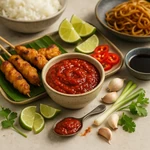
Asian Street Food: Basic Overview
Asian street food is not just "food from the street" for tourists. In many cities, it is an everyday way of eating: fast, affordable, often incredibly specialized, and closely connected to a specific place and distinctive taste. This overview will clarify what is typical for Asian street food, where you can encounter it, and how to quickly navigate it—even if you want to explore it mainly at home.
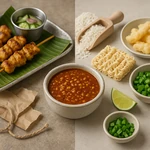
Street food from the market vs. street food at home: what cannot be copied (and what makes sense)
Asian street food is not just "food from the street." In many parts of Asia, it is an everyday way of eating, where speed, specialization, local identity, and especially taste "readable from the first bite" matter. That's why it is useful to distinguish market street food and home-style street food: at home, you usually won't replicate the same heat and rhythm of the stall, but you can very well imitate the flavor profile, the work with sauces, contrasts, and "right now" service.
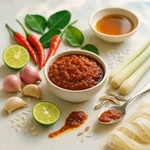
Typical Malaysian dishes: from nasi lemak to laksa (and how to understand them)
Malaysian cuisine is hard to fit into one "typical flavor" – and that is exactly its strength. It is a practical mix of Malay, Chinese, Indian, Peranakan, and local Bornean influences, best understood through specific dishes: coconut rice nasi lemak, satay skewers, various worlds of laksa, festive rendang, and simple chicken rice. The article provides orientation, differences, and tips on how to recreate Malaysian flavors at home without unnecessary mistakes.
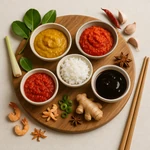
Regional Styles of Asia: How to Quickly Orient Yourself by Taste, Ingredients, and Dishes
"Asian cuisine" is not one universal flavor but a map of regional styles that arose under different climatic, agricultural, religious, and commercial conditions. In practice, this means that to understand (and cook well at home), knowing the base a region uses helps more than just the country names: rice vs. wheat, fermentation vs. coconut, spices vs. broths, herbs vs. umami. This guide will give you an orientation "compass" and concrete methods to choose the right direction even at home.
Custard
Discover the delicious world of custard—a creamy dessert that has won the hearts of gourmets around the world! What is the history of this silky temptation, where did it come from, and how did it become part of our favorite desserts? Read more about how custard is used in cooking and get inspired to make it at home!
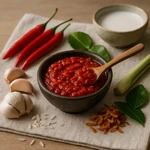
How to start with Indonesian cuisine: rice, sambal, kecap manis, and a few dishes that will teach you the most
Indonesian cuisine is not one "uniform" flavor, but a huge world of regional styles across the islands. The good news is that starting at home is surprisingly easy if you don't try to cook everything at once. In the article, we will show what is typical for Indonesia, how to recognize its flavor, what the most important differences are (including a brief orientation in island Southeast Asia), and how to choose your first ingredients and first dishes without unnecessary mistakes.
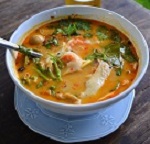
Thai soup Tom Yum
Tom yum is characterised by its distinct hot and sour flavours, with fragrant spices and herbs generously used in the broth.
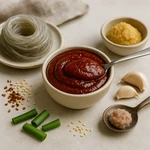
Types of Meals and Occasions
How do fast street foods, festive menus, noodle bowls, or dishes based on seaweed and mushrooms differ in Asian cuisine? This guide explains the main types of meals according to the occasion, presents representative examples, and offers practical advice: what to buy at the start, how to combine ingredients, and how to avoid the most common mistakes.
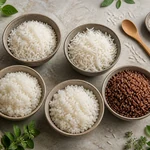
All about rice
We all love rice. In this article, we look at premium varieties like Jasmine and Basmati rice.
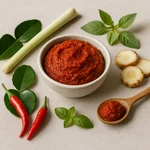
The Taste of Thai Cuisine: How to Understand It and Build It at Home (Without Common Mistakes)
Thai food can taste “very bold”, but its strength is rarely one dominant flavour. What’s typical is layering: first you build an aromatic base (often with pastes), then you season gradually (for example with soy sauce), and only at the end you fine-tune heat and top aromas. When these steps get swapped or pushed too hard, the result is often just spicy, over-salty, or oddly flat. This guide gives you a practical framework for building Thai flavour at home step by step—and for fixing the most common problems.
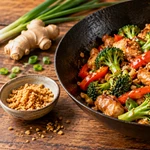
Granulated garlic – an inconspicuous ingredient that can save dinner in seconds
Granulated garlic gives you a clean, savory garlic hit without peeling, chopping, or worrying about burning fresh cloves in a hot pan. It’s especially handy for quick stir-fries, marinades, soups, and Asian-style sauces—easy to measure, easy to repeat, and ready whenever you are.
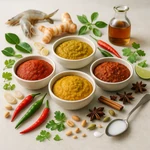
Red, green, yellow, panang, and massaman: what to expect
A practical guide to the five most common Thai curry pastes — red, green, yellow, panang, and massaman. I will explain the basic flavor profiles, when to choose each paste, how to use it at home, and what to watch out for when selecting and storing.
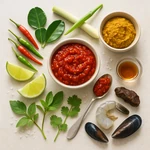
Chilli, sambal and curry pastes for beginners: how to understand heat and not overpower flavor
Chilli in Asian cuisine is not just a “test of courage.” In a balanced dish, spiciness is one layer of flavor – it can add energy, contrast, and depth, but only when you know what type of heat you are adding and what role a specific product plays. For a beginner, the key difference is between plain chilli, sambal, and curry paste.
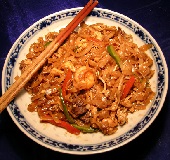
Fried Pad Thai noodles
Pad thai, phat thai nebo phad thai jsou smažené rýžové nudle, v Thajsku běžně prodávané na ulici, které si určitě zamilujete pro svou jednoduchou přípravu a skvělou chuť.
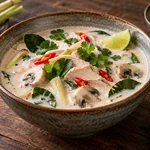
Tom Kha Soup (Thai Coconut Chicken Soup) — Easy Home Recipe
Tom Kha is a classic Thai soup built on coconut milk, fragrant herbs, and a bright lime finish. This home-friendly version delivers the signature creamy–tangy balance with chicken and mushrooms, plus practical tips so the coconut stays silky and the flavours stay clear.
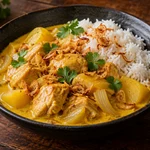
Thai Yellow Curry with Nam Prik Kaeng (Creamy Coconut Chicken Curry)
This Thai-style yellow curry is comforting, fragrant, and weeknight-friendly: rich coconut milk, tender chicken, and just enough heat from Nam Prik Kaeng curry paste. Serve it soupy over rice or simmer it down into a thicker curry—either way, it’s a bowl of pure warmth.
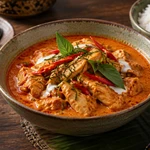
Panang Curry (Thai-Style) – Creamy Coconut Curry with a Peanut Note
Panang curry is a Thai classic: rich coconut sauce, aromatic curry paste, and a gentle nutty depth that makes it feel luxurious without being complicated. This home-friendly version works with chicken, tofu, or seafood and comes together fast enough for a weeknight dinner.
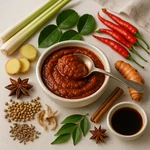
Influences in Malaysian cuisine: how the Malay base, Chinese wok, and Indian spices meet
Malaysian cuisine is hard to describe in one sentence because it is not "one" – it is a practical mix of several cuisines that historically met in one territory. These influences (Malay, Chinese, Indian, Peranakan, and Bornean) explain why coconut rice plates, broth noodle soups, and richly spiced dishes coexist – and why it makes sense to learn to read them as different culinary branches.
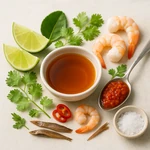
Basic sauces of Asian cuisine: how to understand them and use them correctly
The basic sauces of Asian cuisine are not just “something for seasoning.” In many dishes they form the very flavor backbone: they determine whether the result will be merely salty and flat, or deep, layered and flavorfully “anchored” in a particular cuisine. This guide will help you understand the roles of individual sauces, choose a sensible basic set for the home kitchen, and avoid the most common mix-ups.
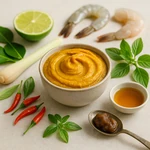
Regions of Thai cuisine: why Bangkok, the north, and Isan don’t taste the same
Thai cuisine is often described through famous dishes like tom yum, green curry, or pad thai. However, this easily creates the impression that "Thai tastes like this" – and that’s it. In reality, Thailand is regionally distinctive: the same principle of balancing flavors (saltiness and umami, sourness, sweetness, spiciness, herbal freshness) is composed differently in various parts of the country. If you want to cook Thai food at home or just better understand dishes on a menu, regions are one of the shortest ways for the flavors to start making sense to you.
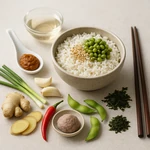
Health and dietary trends in Asian cuisine: warm breakfast, aromatics and smart seasoning
When people talk about a “healthier” Asian-style diet, it often becomes a vague mix of ideas about rice, soups and “light” cuisine. In practice, however, it's much more useful to look at specific eating habits: what a typical breakfast looks like, why warm and savory foods are eaten so much, how spices and herbs function as the backbone of flavor, and why a small bowl of dip often decides whether a dish feels fresh or heavy. This article is not nutritional advice – it is a practical guide for orienting yourself in these principles and using them safely at home.
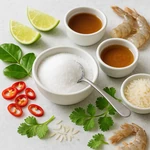
MSG, preservatives and allergens: what to really watch for on labels of Asian ingredients
Asian sauces and pastes often have bold packaging, but the small print is what matters. If you want clarity in your purchase, it's worth stopping to worry about one “scary” abbreviation and instead adopting a few simple checks: the order of ingredients, the difference between a base and a seasoned product, and careful reading of allergens. This article shows what to watch for so the ingredient works in your cooking – and so it doesn't surprise you at home with its flavor, saltiness, or composition.
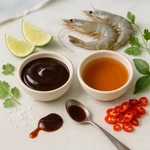
Oyster vs. fish sauce: what is the difference and when to use each
Oyster and fish sauces can be easily confused at first glance: both are among the “basic” Asian seasonings and both can add distinct umami. However, they have different roles in the kitchen. Once you understand the difference between their roles (salting vs. rounding and connecting flavors), you will cook more confidently – and you will stop unintentionally shifting dishes into a completely different flavor logic.
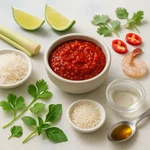
First purchase for the Asian pantry: what to buy to make cooking easy (and without unnecessary mistakes)
The Asian pantry is not a list of “exotic” items you have to buy all at once. It’s a thoughtful foundation that lets you repeatedly cook dishes with a clear character at home – even when you don’t have a full fridge. In this guide, you’ll clarify what is good to buy first, what to add later according to your favorite cuisine, and how to avoid typical shopping mistakes.
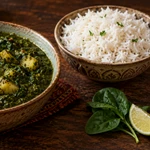
Spinach & Potato Curry with Steamed Rice (Easy One-Pot Curry Paste Method)
This spinach and potato curry is a comforting, meat-free dinner built around a simple curry paste base. Potatoes make it hearty, spinach brings color and freshness, and steamed rice soaks up the creamy sauce—perfect for an easy weeknight meal you can adjust from mild to spicy.
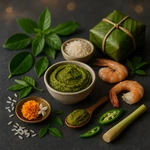
Holidays and festive meals in Asia: why they are not just "better dinners" and how to understand them
Festive meals in Asia often act as a cultural code: they have symbolism, a fixed time of year, a specific form of service, and a strong connection to family, community, and ritual. In the article, you will get oriented on what festive dishes across Asia have in common, why the New Year is so culinarily important, and what types of festive meals represent Japan, Korea, and Muslim Southeast Asia. At the end, you will find practical tips on how to assemble a "festive Asian table" at home with respect to the context, even if you don't cook the traditional recipe down to the last detail.
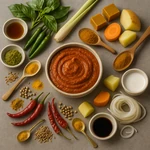
Curry in Asia: how it differs by country
Curry is not a specific sauce or a single “typical” dish. In different parts of Asia, it means different ingredients, different techniques, and a different final flavor profile – from slowly built South Asian sauces through Thai curries based on pastes to Japanese curry thickened with roux. This guide will help you understand the main differences and choose your curry style based on what you expect from it.
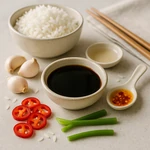
Where to start in Asian cuisine based on what you like (and how much time you want to cook)
The most common dead end for beginners is trying to start "Asian cuisine" as one package. In practice, however, individual cuisines (Japanese, Chinese, Korean, Vietnamese, Thai, Indian, etc.) work differently: they have different flavors, different cooking pace, and different pantry requirements. It is much better to choose your first entry door – according to the style of dishes you like – and only then deal with the details.
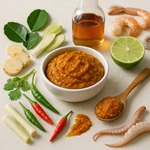
Typical Thai ingredients: what they taste like, what they are for, and how to use them at home
Thai cuisine is based on balancing contrasts: saltiness and umami, acidity, sweetness, spiciness, and herbal freshness. To make food taste "Thai," one spicy component is not enough – it is more important to know the role of each ingredient and how to work with it in small amounts. This guide provides an overview of typical Thai ingredients, their function in the dish, the main differences between similar products, and practical tips on how to start using them at home without unnecessary mistakes.
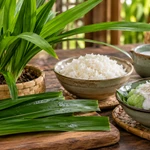
Pandan plant
Discover the secrets of this exotic plant that will give your dishes a unique aroma and flavor. Immerse yourself in the fascinating history, uses, and recipes featuring pandan, which will open up new gastronomic horizons!
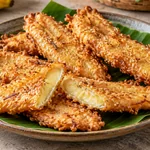
Recipe for Fried Bananas Kloay Kaak
Kloay Kaak fried bananas are a delicious sweet dessert with a crispy coating and a soft banana filling. This Thai dish is ideal for a quick and tasty treat. Perfect for any occasion!

Kimchi
Want to know what kimchi is and how it's made? Read about this traditional Korean delicacy, its origins, different types, and methods of preparation. Discover why kimchi has become popular around the world!
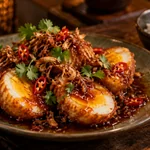
Kai Look Kuey (Thai Chicken Rice Dumplings) with Tamarind Dipping Sauce
Soft steamed rice dumplings filled with savory chicken and served with a bright sweet-sour tamarind sauce—this Thai-style snack is surprisingly simple to make at home and perfect for sharing.
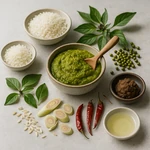
Culture and Contexts of Asian Cuisine: How Climate, Ingredients, and Dining Change the Taste on the Plate
“Asian cuisine” sounds like one category, but in practice it encompasses a large cultural space where food evolved according to climate, available crops, religion, social rules, trade, migration, and daily rhythms of life. When you understand these contexts, it becomes easier to choose a style you will enjoy, and you’ll stop making typical mistakes (like reducing everything simply to spiciness).
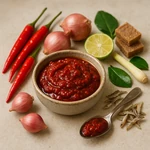
The taste of Malaysian cuisine: how to recognize it, why it is so diverse and how to build it at home
Malaysian cuisine cannot be reduced to one “typical” flavor. It is a living mix of Malay, Chinese, Indian, Peranakan and local Bornean influences – and you will often find them all on one plate. In this guide we will show you how to reliably recognize Malaysian taste, how it differs across dishes and regions, and how to practically construct its most important flavor pillars at home.
How to build a menu that makes an impression
Impression is often not made by the number of courses, but by the menu appearing well thought out: it has a clear "story," is pleasant to eat at the table, and the parts follow each other. Inspiration from festive meals in Asia shows that a truly festive meal is not just about taste – it's also about context, symbolism, sharing, and a well-chosen composition.
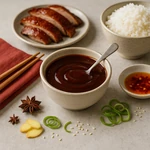
How to work with festive meals in the home menu
Festive meals in Asian cultures are not just "better versions" of regular dinners. They often function as a cultural code: they have symbolism, a fixed place in the calendar, a family dimension, and sometimes even service rules. In this article, you will find a practical guide on how to transfer these principles to a home menu in a way that makes sense even without perfect "authenticity" – and at the same time, you don't spoil the taste with a failed improvisation.
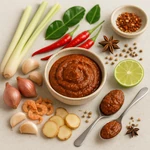
How to start with Malaysian cuisine: 5 logics to quickly get oriented at home
Malaysian cuisine is not one "typical taste," but a practical mix of several traditions meeting in one country – Malay, Chinese, Indian, Peranakan, and local Bornean. When you want to start with it at home, it doesn’t make sense to learn everything at once. In this guide, you will set simple orientation points (rice vs. noodles, coconut vs. broth, the role of sambal, accompanying sauces and dips) and pick a few first dishes to learn the Malaysian "system" fastest.
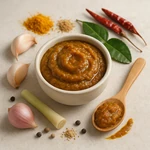
Seasoning for Chicken: How to Choose the Right Flavor (and When to Use a Paste or Sauce)
Chicken is one of the easiest proteins to flavor: it cooks quickly, absorbs aromatics well, and works in a pan, oven, or on the grill. The real question isn’t “which seasoning is best”, but which format and flavor style fits your dish—dry spice mix, curry paste, a ready-made sauce, or a quick marinade.
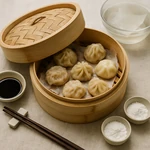
The most common mistakes when steaming in Asian cuisine – and how to avoid them
Steaming is one of the techniques in Asian cuisine that can be incredibly delicate and precise – and that's why mistakes are easily made. They most often appear with dumplings and dim sum: dumplings fall apart, the wrapper loses its texture, or the wrong method is chosen for the wrong type. This article provides practical guidance: what steaming actually means in an Asian context, which types of dishes are typically steamed, and how to recognize when the process (or chosen technique) is not appropriate.
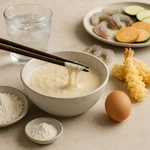
How tempura and its coating work: what makes it crispy (and why both flour and starch matter)
Tempura seems simple: coat and fry. But in reality, it relies on texture – on how the coating behaves after cooking. The difference between "lightly crispy" and "heavy and dense" often arises not just from technique, but also from choosing the right mix, flour, and starch.
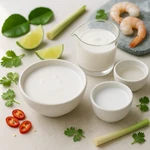
How to choose coconut milk by fat content and usage (and why it matters)
Coconut milk looks like a simple ingredient, but in practice it is one of the categories where people get confused most often: they buy "coconut milk," cook curry, and the result is watery and lacking depth. In most cases, it's not a recipe error but a wrongly chosen type – mainly depending on fat content, the ratio of coconut component to water, and how the product behaves when heated. This guide will help you pick the right variant for curry, soups like tom kha, desserts, and drinks and avoid the most common mistakes.
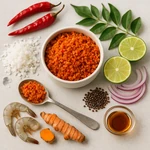
Sri Lankan curry and sambols: how they work together and why "rice & curry" doesn't make sense without them
Sri Lankan cuisine is not just "Indian curry on an island." It is built on rice, coconut, spices, chili, and mainly on a smart composition of the meal: alongside curry (in various forms) stand sambols, pickles, and other complements that precisely tune the heat, acidity, and contrast. Once you understand the role of sambol, Sri Lankan curries suddenly make much more sense.
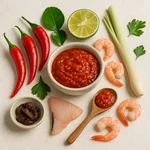
Typical Malaysian ingredients: how to recognize the "Malaysian" taste and how to recreate it at home
Malaysian cuisine is not a single uniform "national taste," but a practical mix of several traditions that meet and often blend in one territory and often even in one dish. This makes it all the more important to recognize the ingredients that keep reappearing in Malaysian cooking: rice and noodles, coconut, chili and sambal, aromatic herbs, tamarind and lime, and pronounced fermented marine components. In this article, we will arrange them according to their function, explain the differences, and add specific tips on how to start with them without unnecessary mistakes.
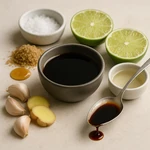
How to work with the salty, sweet, and sour components of a marinade
A good marinade is not a "universal sauce for everything," but a targeted tool: it prepares the surface of the raw material for a specific heat treatment and sets the flavor direction even before you start cooking. In this article, you will practically clarify what the salty (and umami), sweet, and sour components do in a marinade, when a dry vs. wet marinade is suitable, and what mistakes to watch out for.
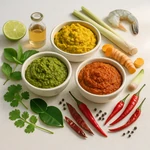
Thai curries and their colors: why it's not just about "different shades" and how to choose the right one
Green, red, yellow, panang, massaman... In Europe, Thai curries are often described mainly by color, as if it were one sauce in several variations. In reality, these are different flavor systems based on different pastes, different aromatics, different "coconutiness" and suitability for both quick cooking and slow simmering. This guide will help you understand the differences and especially choose a curry that makes sense for your dish and taste.
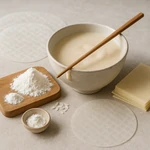
How to choose the right coating or dough: crispiness, elasticity, and translucency according to the type of flour and starch
In Asian cuisine, it is often not just the taste that matters, but mainly the texture: should the coating be crispy and light, the dough elastic and pliable, the sauce delicate and shiny, or the dumpling almost translucent after steaming? This is exactly where the choice of flour, starch, and type of coating makes the biggest difference. This guide will help you choose the right “coating or dough” depending on exactly what you want to cook – and avoid typical label mix-ups.
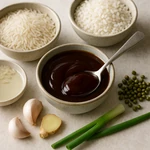
Gluten-free Asian cooking: how to recognize safe ingredients, avoid pastes, and cook at home stress-free
Gluten-free Asian cooking is not about a "special diet cuisine," but about good orientation in ingredients, labels, and preparation methods. In this guide, you'll clarify what is naturally gluten-free in Asia, where gluten typically lurks (often in sauces and noodles), and how to set up a simple system at home to ensure results are both tasty and safe.

Typical Korean dishes: how to understand them by rice, noodles, soups, and street food
Korean cuisine is often presented as a list of “iconic” names. For practical orientation, however, it works much better to understand in what format the food comes to the table: a bowl of rice, a noodle bowl, soup as a main dish, or a quick/street food approach. In this guide, we will show the main groups of typical Korean dishes, how to recognize them, what to expect from them, and how to start making them at home without unnecessary mistakes.
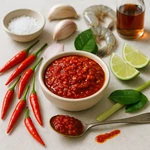
Sambal and fermented chili pastes: how to understand them and use them without mistakes
Chili paste can not only make food "spicy," but also give it a complete flavor, depth, and often umami. The key difference is whether the paste is fermented (and behaves like a concentrated base), or if it is more of a chili blend or chili paste in oil meant for quick seasoning. In this article, we compare the main types of fermented chili pastes in Asia, how to recognize them by their role in the kitchen, how to start using them at home, and how to avoid the most common mistakes.
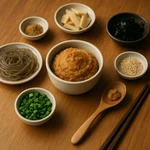
Shared tables and Asian-style feasts: how they work and how to understand them in practice
Shared food "Asian style" is not just a style of serving, but a way people communicate at the table. Often it is a board composed of several bowls and side dishes, where the order, placement, and how it is taken from the common dishes matter. In the article, we will show why food-sharing is so common in many parts of Asia, how the everyday shared table differs from a festive feast, and how to create a similar experience at home without stress.
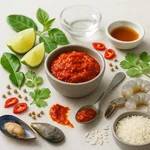
What to buy for the first thousand crowns for Asian cuisine: the basics you can really cook with
The first purchase "for Asian cuisine" does not have to be a bunch of random sauces. When you divide your budget (for example around a thousand crowns) according to functions – saltiness and umami, acidity, sweetness, spiciness, fat and aroma, plus rice or noodles – you get a base from which you can cook repeatedly without unnecessary improvisation. The article provides a practical plan: how to choose the entry style of dishes, what makes sense to buy immediately, what to wait for, how to read labels and how to avoid typical beginner mistakes.

Why the same ingredients are used differently in various countries: climate, grains, sea, and the history of tastes
You might be surprised that the “same” ingredient behaves completely differently in various Asian countries: in some places it is the main dish, elsewhere just a flavoring; sometimes fermentation is emphasized, other times herbs or spices. It's neither a coincidence nor a matter of “right vs. wrong,” but a logic of the environment, available crops, trade influences, and the daily rhythm of life. In the article, we will show how to read these relationships and how to practically use them in home cooking.
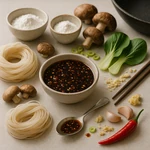
Asian fast dinner after work: how to cook at home in the 'street food' style
After work, you often want only one thing: a dinner that is ready quickly, has a clear flavor, and doesn't feel like an emergency solution. This is exactly where the logic of Asian street food works well – a simple but strong base, bold seasoning, important texture, and a final sauce or dip. In the article, we will show you how to navigate quick Asian dinners, which formats are the most practical, and how to assemble them at home without unnecessary complexity.
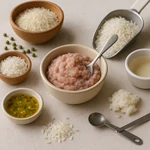
Most common beginner mistakes in Asian cooking (and how to fix them quickly)
Starting with “Asian cuisine” sounds tempting, but beginners often run into the same obstacles: they choose too many directions at once, buy ingredients without a plan, and then are disappointed by the result and the cooking pace. In this article you’ll find the most common mistakes, why they happen and, most importantly, concrete ways to fix them – from choosing your first cuisine to working with a wok and controlling heat so it’s managed, not a “tongue attack.”
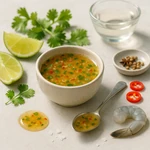
Why food doesn't taste like in a restaurant: the most common causes (and what to do about them at home)
You cook noodles or "something like" an Asian stir-fry, but the result is flatter, heavier, or flavor-wise indefinite – while in a restaurant it tastes clear and "lively." Often it is not one secret trick, but several repeated beginner mistakes: a poorly chosen style of cuisine, missing final seasoning, uncontrolled spiciness, and unfinished preparation of ingredients. In the article, we break it down into specific steps that can be done right at the next cooking.
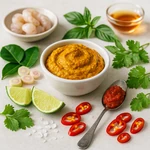
How to choose curry paste according to the dish: from quick coconut curry to slow braising
"Curry paste" is not one universal ingredient. Different types of bases can be hidden under the same name – from Thai aromatic pastes (which are briefly sautéed in fat) to Indian curry bases or Japanese curry roux. In this guide, you will orient yourself mainly by the type of dish you want to cook and avoid the most common mistakes that lead to bland or "strangely" tasting curry.
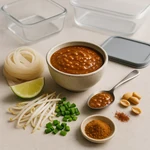
Meals that work for multiple people and an ordinary week: the Asian logic of bowls, noodles and sides
Cooking for more people on a workweek is less about “perfect recipes” and more about how to smartly build a meal: so it’s satisfying without feeling heavy, and can be easily adjusted to the tastes at the table. In many Asian cuisines this practicality is natural – based on a bowl or plate where there is a place for a base, a protein, vegetables, freshness, acidity, texture and precise seasoning.
