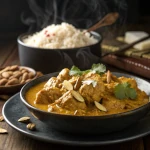
Panang Curry (Thai-Style) – Creamy Coconut Curry with a Peanut Note
What to expect 🍛
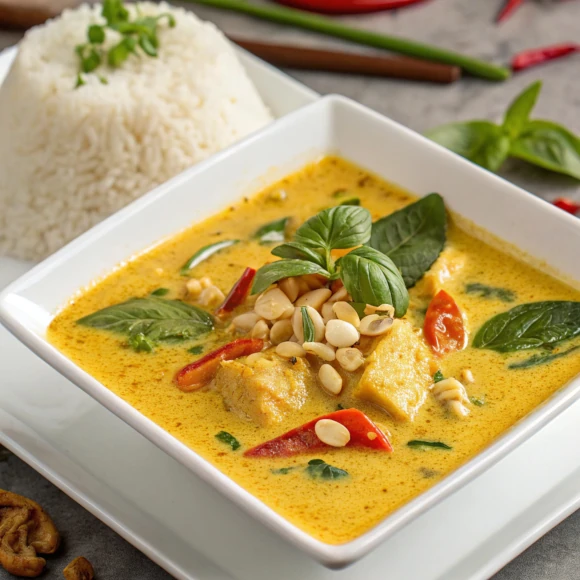
Panang (also spelled Phanaeng) is known for a thicker, creamier curry sauce than many other Thai curries. It leans fragrant rather than aggressively spicy, with a rounded flavor from coconut milk and a subtle peanut-like character (often boosted with crushed peanuts). Serve it with jasmine rice to soak up every spoonful.
Quick overview ⏱️
Time: 25–35 minutes
Servings: 3–4
Difficulty: Easy
Best with: jasmine rice, rice noodles, or roti
Ingredients 🧾
Protein: 500 g chicken thigh or breast, thinly sliced (or pork, prawns, firm tofu)
Coconut milk: 400 ml (full-fat gives the best texture)
Panang curry paste: 2–3 tbsp (adjust to heat preference)
Neutral oil: 1 tbsp
Onion: 1 small, sliced (optional but nice)
Fish sauce: 1–2 tbsp (or use light soy sauce for a vegetarian-friendly option)
Sugar: 1 tsp (palm sugar if you have it; brown sugar works too)
Kaffir lime leaves: 2–3, torn (optional but very aromatic)
Roasted peanuts: 40–60 g, roughly crushed (plus extra to serve)
Red chili: 1, sliced (optional)
To finish: Thai basil or regular basil, and lime wedges (optional)
Method 🔥
Prepare the protein. Slice chicken thinly so it cooks quickly and stays tender. If using tofu, press and cube it; if using prawns, keep them whole and add near the end.
“Crack” the coconut (optional, but great). Spoon 3–4 tbsp of the thick coconut cream from the top of the can into a pan over medium heat. Cook for 1–2 minutes until glossy and lightly bubbling.
Fry the curry paste. Add oil and the Panang paste. Stir-fry 60–90 seconds until intensely fragrant (don’t let it burn—lower heat if needed).
Add chicken (or onion first). If using onion, stir it in for 2 minutes. Add chicken and toss to coat in the paste; cook until the outside turns opaque.
Simmer. Pour in remaining coconut milk, then add kaffir lime leaves (if using). Simmer gently 8–12 minutes, stirring occasionally, until chicken is cooked and the sauce thickens.
Season and balance. Stir in fish sauce (or soy sauce) and sugar. Taste: you’re aiming for savory, slightly sweet, and aromatic. Add sliced chili if you want extra heat.
Add peanuts. Mix in crushed peanuts for body and nuttiness. Simmer 1–2 minutes more.
Serve. Top with basil and extra peanuts. Add a squeeze of lime at the table if you like a brighter finish.
Tips & variations ✅
For a thicker sauce: simmer uncovered a few minutes longer, or add an extra spoon of crushed peanuts.
For tofu: pan-fry cubes until golden, then add at the end to keep edges crisp.
For seafood: add prawns or scallops in the last 3–4 minutes to avoid overcooking.
Heat control: the paste sets the baseline. Start with 2 tbsp, then add more after you taste the simmering sauce.
Common mistakes (and how to avoid them)
Boiling hard: coconut milk can split if boiled aggressively. Keep it at a gentle simmer.
Under-frying the paste: a quick fry wakes up the aromatics and makes the curry taste deeper.
Over-seasoning early: reduce first, then fine-tune fish sauce/soy and sugar at the end.
Leftovers & storage 🥡
Fridge: 2–3 days in a sealed container.
Reheat: gently on the stove with a splash of water or coconut milk; avoid rapid boiling.
Freezing: possible, but coconut-based sauces may change texture slightly after thawing—stir well while reheating.
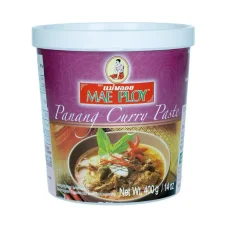
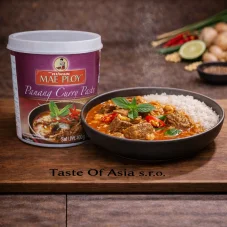
Our picks (Panang curry pastes)
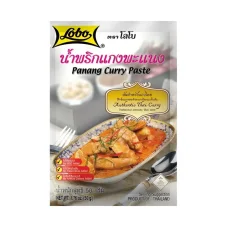
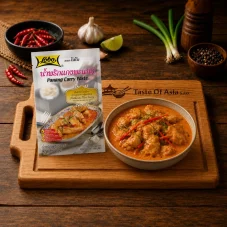
Lobo Panang curry paste 50 g – handy size for trying the dish or a couple of meals.
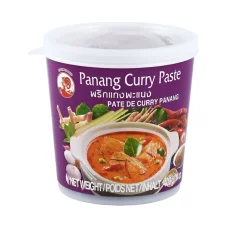
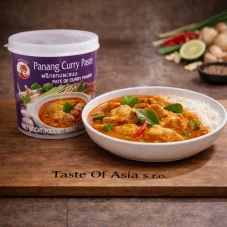
Cock Brand Paste Kari Panang 400 g – a larger tub for frequent curry nights.
FAQ
Is Panang curry very spicy?
It’s often medium rather than fiery, but spice varies by brand of curry paste. Start small and adjust.
Can I make it vegetarian?
Yes—use tofu or vegetables and replace fish sauce with soy sauce. Crushed peanuts help keep the sauce rich.
Do I need kaffir lime leaves?
No, but they add a distinct citrus aroma. If you don’t have them, serve with lime wedges to brighten the curry.
This site uses cookies to provide services, customize ads, and analyze traffic. Your consent to the use of cookies will significantly help us to improve our services. More information



 Česky (CZK)
 Slovensky (EUR)
 Deutsch (EUR)
 Austria
 Belgium
 Bulgaria
 Croatia
 Denmark
 Estonia
 Finland
 France
 Germany
 Greece
 Hungary
 Italy
Italy Latvia
 Lithuania
 Luxembourg
 Netherlands
 Poland
 Portugal
 Romania
 Slovenia
 Spain
Spain Sweden