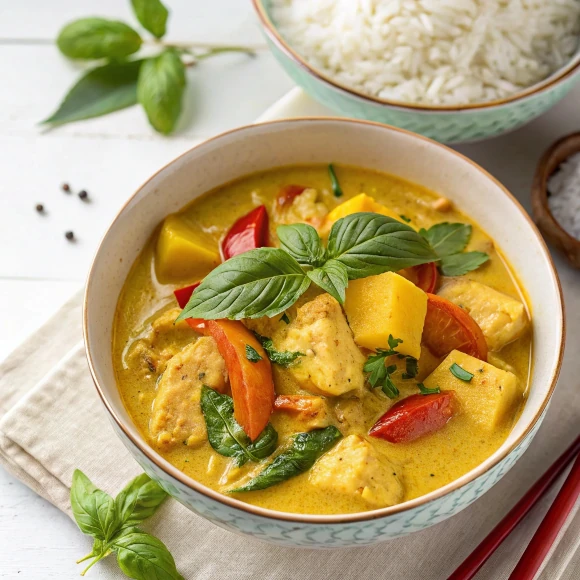
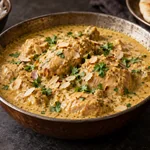
Thai Yellow Curry with Nam Prik Kaeng (Creamy Coconut Chicken Curry)
🍛 What you’ll make
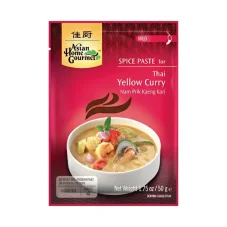
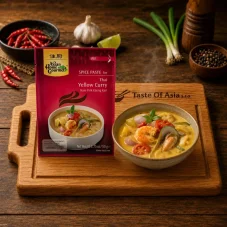
Thai yellow curry is known for its golden color, mellow warmth, and rounded spice. Using Nam Prik Kaeng (Thai yellow curry paste) gives you the classic foundation—aromatics, chilies, and spices—without needing to pound a paste from scratch. In this version, chicken, potatoes, and carrots turn it into a satisfying one-pot meal.
⏱️ Quick overview
Servings: 4
Prep time: 15 minutes
Cook time: 25 minutes
Total time: about 40 minutes
Difficulty: Easy
🧺 Ingredients
2–3 tbsp Thai yellow curry paste (Nam Prik Kaeng)
1 tbsp neutral oil (or coconut oil)
400 ml coconut milk
800 ml chicken stock (use up to 1 liter for a more soup-like curry)
500 g chicken thighs, bite-size pieces (or breast if you prefer)
1 medium onion, thinly sliced
2 garlic cloves, finely chopped
1 medium carrot, thin slices
250 g potato, 2 cm cubes
1–2 kaffir lime leaves (optional)
1–2 tbsp fish sauce, to taste
1–2 tsp sugar (palm sugar if you have it)
1–2 tbsp lime juice, to finish
Fresh coriander/cilantro, to serve
Cooked jasmine rice, to serve
Optional: 1 fresh red chili, sliced (for extra heat)
🔥 Method
Bloom the curry paste. In a pot over medium heat, warm the oil. Add onion and cook 3–4 minutes until softened. Stir in garlic for 30 seconds. Add the curry paste and fry for 1–2 minutes, stirring, until the kitchen smells intensely fragrant.
Add coconut milk and stock. Pour in the coconut milk and stir well to dissolve the paste. Add the stock and bring to a gentle simmer.
Cook chicken and vegetables. Add chicken, potato, carrot, and (if using) kaffir lime leaves and chili. Simmer uncovered for 18–22 minutes, stirring occasionally, until the potatoes are tender and the chicken is cooked through.
Balance the seasoning. Stir in fish sauce and sugar. Turn off the heat and add lime juice gradually, tasting as you go. Adjust with more fish sauce (saltiness/umami), sugar (roundness), or stock (lighter) as needed.
Serve. Ladle into bowls and top with coriander/cilantro. Serve with hot rice on the side, or spoon the curry over rice.
✅ Tips for the best flavor
Don’t skip frying the paste: it wakes up the aromatics and makes the curry taste deeper and less “flat.”
Soup vs. curry texture: use 800 ml stock for a thicker curry; go up to 1 liter for a more broth-forward bowl.
Gentle heat control: keep it at a simmer so coconut milk stays creamy (a hard boil can split it).
🔁 Easy swaps & variations
Vegetarian: replace chicken with firm tofu and use vegetable stock. Swap fish sauce for soy sauce plus a pinch of seaweed flakes (or simply soy sauce and extra lime).
Different curry styles: if you’d like a deeper, sweeter curry with warm spices, try Massaman paste; for a richer, peanut-leaning profile, try Panang paste (you can cook them the same way).
Add-ins: bell pepper, green beans, or a handful of baby spinach at the end.
🥡 Storage & reheating
Fridge: store in a sealed container up to 3 days.
Reheat: warm gently on the stove, adding a splash of water/stock if it thickens.
Freezing: possible, but coconut-based curries may separate slightly; stir well while reheating.
❓ FAQ
Is yellow curry always mild?
Usually it’s gentler than green curry, but heat depends on the paste. Start with 2 tbsp, then add more after simmering if you want it stronger.
What rice works best?
Jasmine rice is classic, but any long-grain rice works. If you prefer, serve with rice noodles for a soup-like meal.
Can I cook this without kaffir lime leaves?
Yes. Finish with lime juice and coriander for freshness; the curry will still taste great.
This site uses cookies to provide services, customize ads, and analyze traffic. Your consent to the use of cookies will significantly help us to improve our services. More information



 Česky (CZK)
 Slovensky (EUR)
 Deutsch (EUR)
 Austria
 Belgium
 Bulgaria
 Croatia
 Denmark
 Estonia
 Finland
 France
 Germany
 Greece
 Hungary
 Italy
Italy Latvia
 Lithuania
 Luxembourg
 Netherlands
 Poland
 Portugal
 Romania
 Slovenia
 Spain
Spain Sweden