


 Česky (CZK)
 Slovensky (EUR)
 Deutsch (EUR)
 Austria
 Belgium
 Bulgaria
 Croatia
 Denmark
 Estonia
 Finland
 France
 Germany
 Greece
 Hungary
 Italy
Italy Latvia
 Lithuania
 Luxembourg
 Netherlands
 Poland
 Portugal
 Romania
 Slovenia
 Spain
Spain Sweden










Street food style at home without complicated preparation: how to achieve bold flavor and proper texture
“Street food style at home” is not about copying stalls to the last detail. It’s about understanding why Asian street food works: speed, clear flavor, sauces and final seasoning, contrast of textures, and serving immediately without unnecessary complexity. The article contains a practical guide on how to transfer this logic to the home kitchen – even if you don’t cook from scratch.
Asian street food is in many parts of Asia an everyday way of eating – quick, affordable and often surprisingly precise. Each stall usually makes one or a few dishes that are “sharpened” into a form that works from the first bite. At home you don’t have the heat of a professional wok or the rhythm of a busy street, but you can get very close to the most important things: bold flavor, correct contrast, and the impression that the food is ready and alive right after cooking.
Street food style at home: what it is about (and what it isn’t)
It’s useful to distinguish two things: street food at the market and “street food style at home.” At home it’s usually not possible to exactly replicate:
- the same heat and pace of a professional stall,
- large volume broths, grills, or long-running bases,
- the atmosphere of a market or night street.
But what can be transferred very well:
- flavor profile (clear, easily readable flavor),
- logic of service (put together quickly and eat immediately),
- layering of dips, sauces and toppings,
- working with crunchiness, acidity and freshness,
- textural contrast (soft vs. crunchy, juicy vs. elastic).
Practically this means: don’t chase “perfect authenticity,” but build the dish so it has a clear base, strong final seasoning and one or two contrasts that make it interesting.
🌶️ What is typical for Asian street food: speed, specialization and sauces
Across regions, street food often meets several common features:
- Fast preparation or quick finishing of the dish in front of the eater.
- High specialization – the stall makes few things but does them very well.
- Connection to the place and community (city, neighborhood, market, specific style).
- Availability and everyday character – the food is not just an “experience” but routine.
- Distinct, readable flavor and a big role of sauces, dips, and final seasoning.
- Texture and contrast as part of the flavor, not just as decoration.
Important note: street food often does not arise as a “simplified version of a restaurant.” On the contrary – many dishes are refined to their most characteristic form in the street environment (because they must work quickly, repeatedly and consistently each time).
Hawker centre, market, stall, warung: the same word, different kind of experience
Street food in Asia doesn’t only take place “on the street.” Different environments naturally influence how food looks and how it’s eaten:
- Hawker centres function as community canteens: many small specialized stalls in one place, often with clear “icons” of individual cuisines and dishes.
- Markets and night markets are typical for quick flavors, takeaway food and the “come, taste, and move on” rhythm.
- Street stalls rely on speed and repeatability – often one dish in several variations.
- Warung and small businesses (typically Southeast Asia) can be something between a stall and a canteen – simple, accessible, everyday.
For home inspiration this is useful: sometimes you want “hawker” style (bowl, sauce, toppings), other times “night market” style (something crunchy and distinctly seasoned), and sometimes “warung” style (quick, filling food without complex preparation).
Street food is not just hand food: bowls, noodles, cold dishes and sweets
A common mistake is to narrow street food to skewers and fried snacks. Street food usually also includes morning soups, rice dishes, noodle bowls, rolls or cold dishes.
Cities and dishes that well show the logic of street food
- Osaka – takoyaki: iconic “fast food” bite from a broth-based batter with a piece of octopus. Crucial is the final layer – sauce, mayonnaise, and bonito flakes. Exactly the type of dish where the final seasoning makes half the experience.
- Singapore – hawker culture: an example that street food can be both everyday food and a cultural phenomenon. Typical dishes are chicken rice or laksa – simple base but clear flavor and straightforward service.
- Kuala Lumpur and Penang – multicultural scene: satay, char kway teow, assam laksa, chicken rice and roti coexist side by side. For home cooking, this is a good reminder that street food “style” is not one recipe but a shared logic of speed and distinctness.
- Hanoi and Ho Chi Minh City – Vietnamese street classics: from morning soups through sandwiches to rolls and rice dishes. Often what matters is the contrast of fresh herbs, acidity and pronounced seasoning.
Cold dishes as street food: why they work even without cooking “from scratch”
In many parts of Asia, cold or lukewarm dishes are important not only because of the climate but also because of speed and “live” flavor. Typically, cold food is not bland: it relies on herbs, acidity, chili, umami bases (e.g., fish sauce or soy sauce) and mostly on texture.
Sweet street food worlds: coconut, rice, tapioca and icy desserts
Street food has a sweet part in many regions as well. In Southeast Asia, there is a strong tradition of sweets based on coconut, pandan aroma, rice doughs, and tapioca textures. These include worlds like Malaysian and Singaporean kuih, Thai mango sticky rice, or icy desserts like halo-halo or cendol.
For home inspiration it’s more important to understand the ingredient logic than to chase the “perfect original”: rice (grain and flour), tapioca (elasticity and gelatinous texture) and coconut (smoothness and fullness) are building blocks for many quick sweet combinations.
How to assemble street food style at home without complicated preparation (specific guide)
The simplest path is surprisingly disciplined: choose one bold base, don’t overload the dish with too many directions, use a dip or “finishing” sauce, add fresh contrast and watch texture. The following procedure is usable for warm bowls, quick noodles and cold combinations.
1) Choose one strong base (and stick to it)
Street food works when it has a clear focus. At home, one of these base types works well:
- noodles (quick fried or just mixed with sauce),
- rice (as a bowl, side dish or base for toppings),
- one ready/quick component, which you just “fine-tune.”
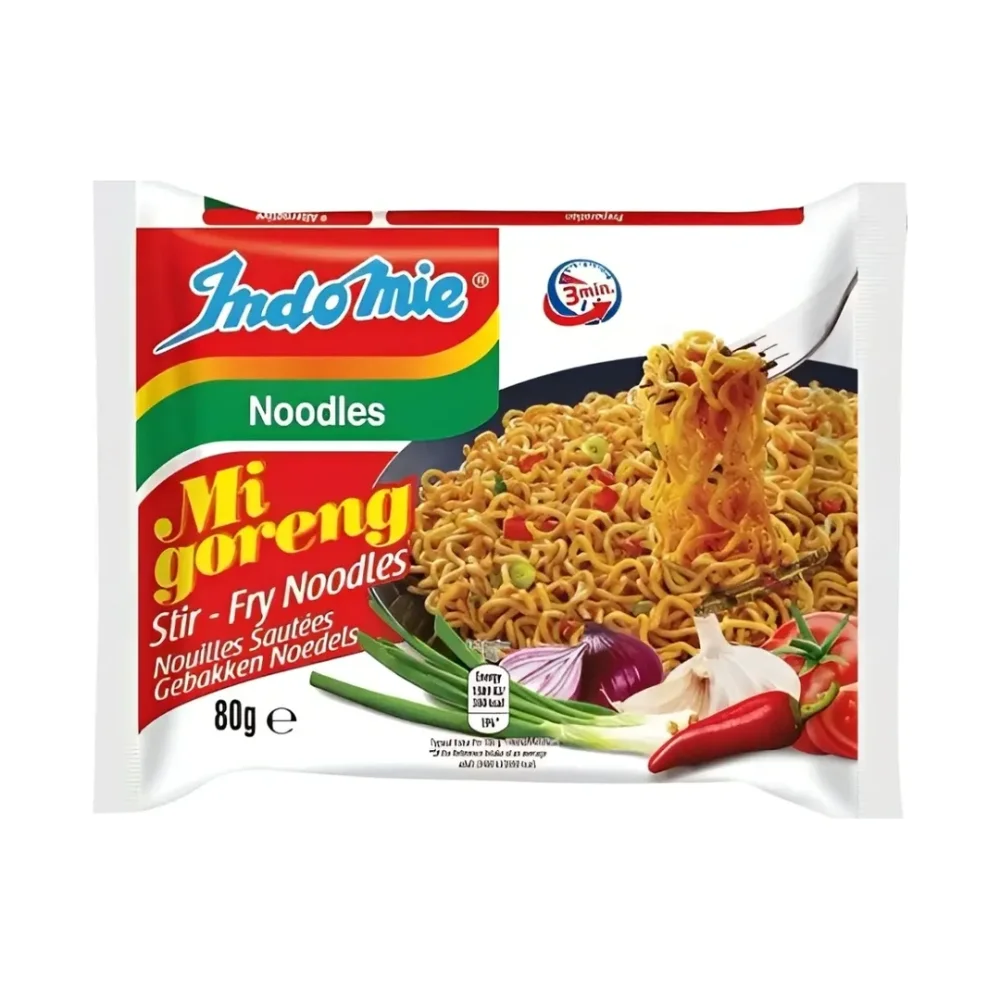
A practical example of a quick base are instant noodles, which can be pushed into street food style by adding one protein, one fresh item, and one final seasoning. As a start, something like IndoMie Instant Fried Noodles Mi Goreng – but consider them as a base, not as a “finished final.”
2) Make a quick “mise en place”: chopping and order are half the success
In quick meals, preparation before turning on the stove is decisive. If you chop during cooking, you lose pace and easily burn aromatics or overcook vegetables. A simple division into piles helps:
- aromatics (e.g. onion, garlic, ginger – anything you use),
- protein,
- firmer vegetables,
- softer/leafy vegetables,
- final elements (herbs, acidity, crunchy topping),
- sauce and optionally starch (if you heat the sauce).
Another rule: cut must match the technique. For wok and quick frying, smaller, even and thinner pieces fit better so everything can be done in the same rhythm.
3) Sauce or dip as “finishing”: quick way to bold flavor
Strong sauce, dip or final seasoning is typical for street food. At home it often means you don’t need to build flavor for 30 minutes – just cleverly “frame” it at the end.
As a simple guideline for one serving: start with 1–2 tablespoons of a strong sauce/dip, mix and then adjust in drops. Add acidity (lime/citrus or vinegar) rather by 1 teaspoon, chili in pinches. The goal is clarity, not overdoing.
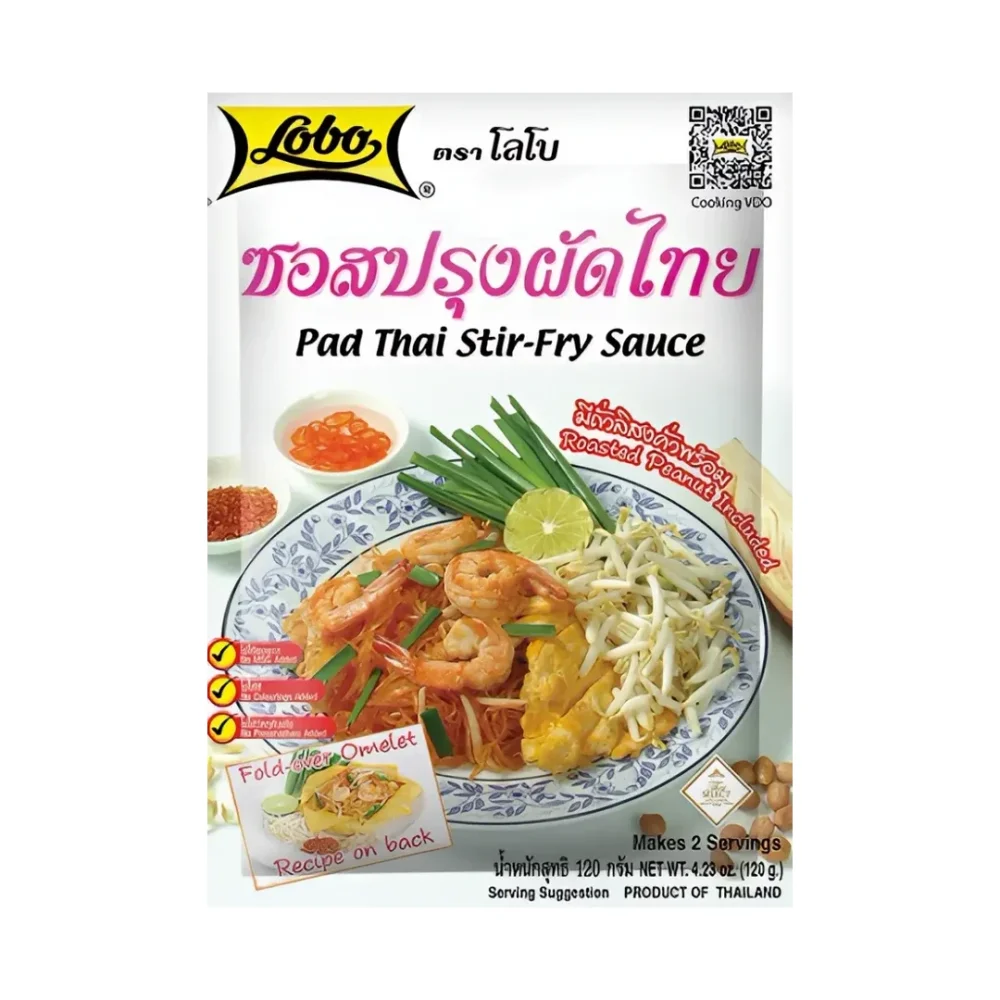
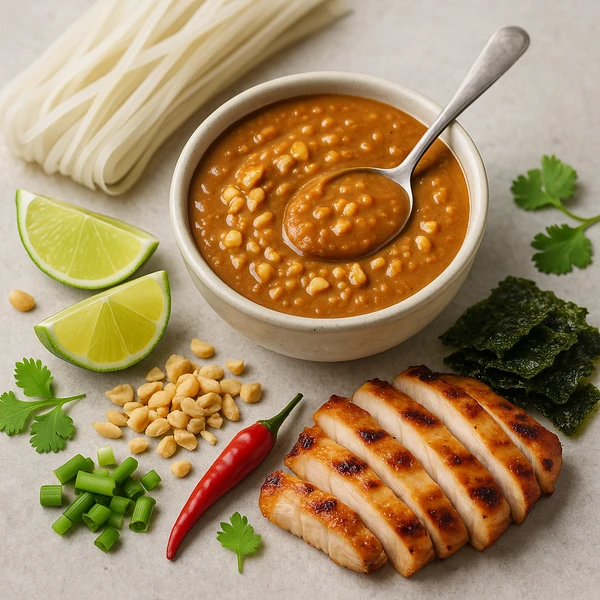
A specific example of a sauce that can quickly “bind” noodles into one street food impression is Lobo roasted peanut sauce for Pad Thai. In practice it is important not to add three dominant tastes at once – if you already have a strong peanut direction, keep the rest simpler and make contrast rather with freshness (e.g. lime, herbs, crunchy vegetables).
4) Fresh contrast: acidity, herbs, crunchy vegetables
Street food often feels “alive” thanks to fresh elements at the end. It doesn’t have to be complicated: a few herbs, some acidity and something crunchy. In cold dishes this logic becomes the backbone of the whole dish.
For cold bowls it is very practical to think in five layers:
- Base (rice, noodles, leaves, vegetables, rice paper)
- Main carrier of texture (tofu, egg, grilled meat, shrimps, mushrooms)
- Crunchy/fresh layer (cucumber, carrot, sprouts, cabbage, herbs)
- Dressing or dip (e.g., fish sauce / soy sauce / citrus / vinegar / peanut / sesame)
- Final contrast (chili, lime, sesame, peanuts, pickles)
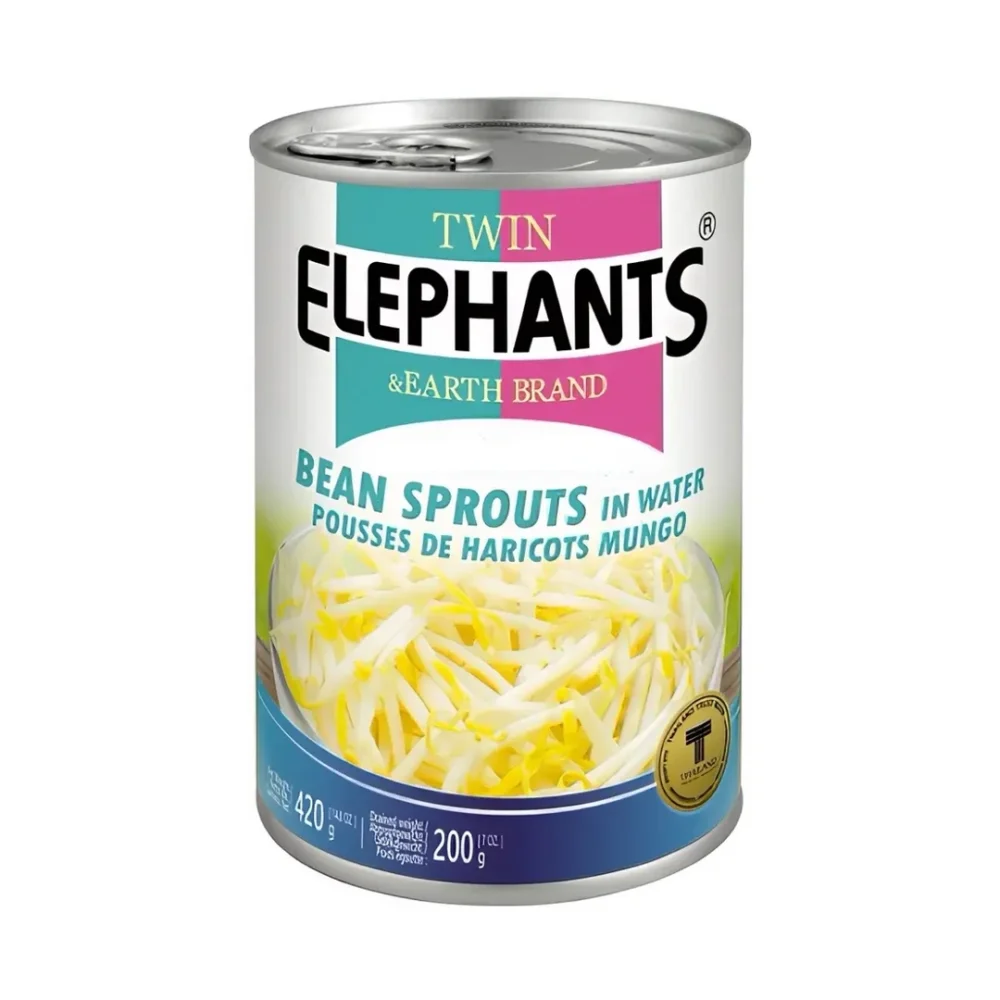
As a quick “crunchy acidic” component for warm and cold combinations pickled shoots work well – for example Twin Elephant Earth Pickled Mung Bean Sprouts. Consider them as a complement that adds structure and light acidity, not as the main ingredient.
5) Texture: without crunch it won’t feel “street”
Texture and contrast are typical for street food – even though the dish is otherwise simple. At home you can work with two quick paths:
- crunchy topping (something you add only at the end),
- quick coating and frying (when you want a “night market” effect).
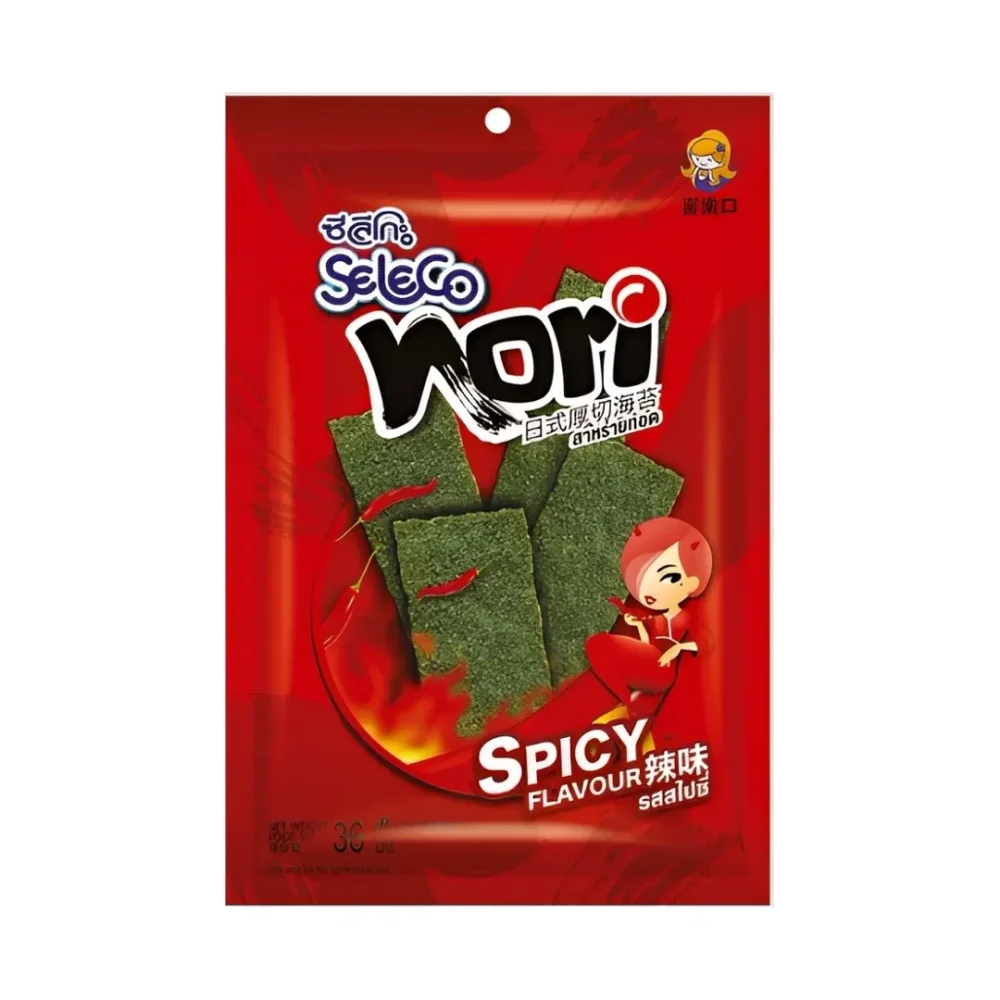
As a ready crunchy element that you just sprinkle on the bowl of rice or noodles right before serving, for example Seleco Spicy Seaweed works – precisely because you use it only at the end, the crunch stays intact.
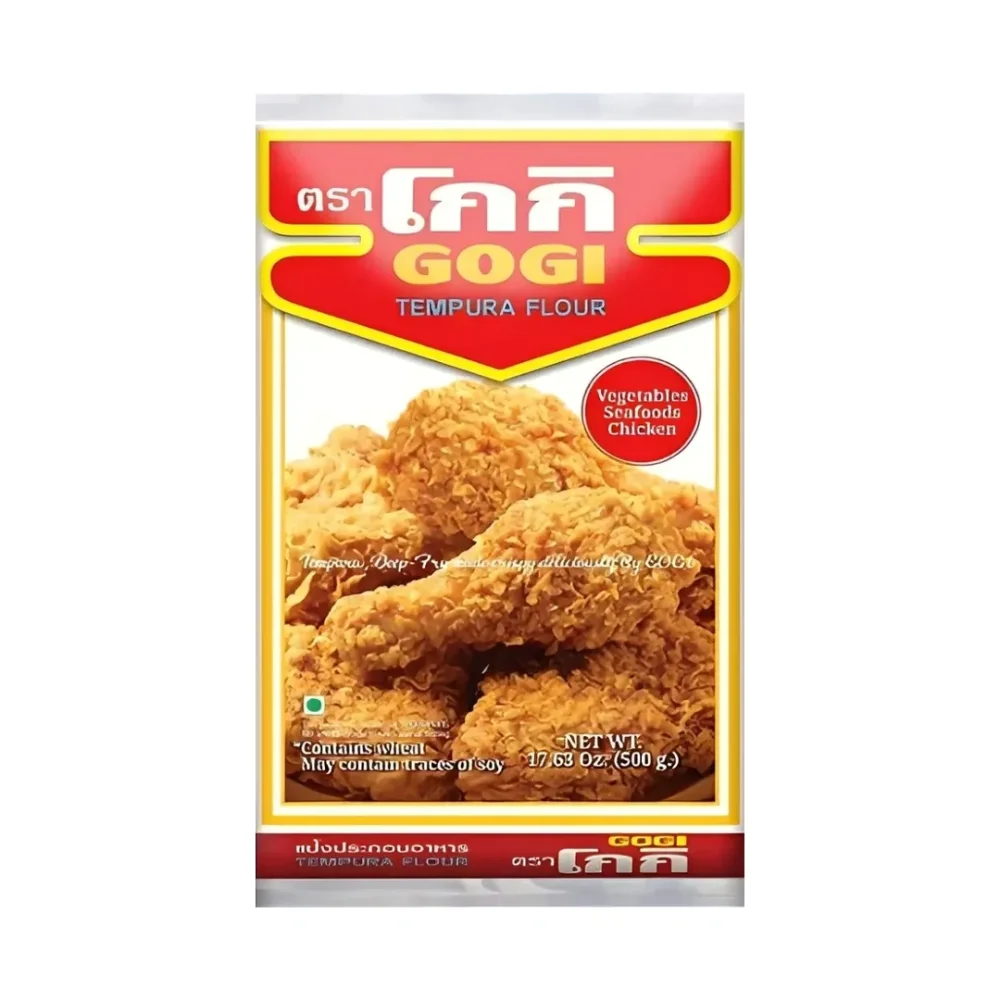
If you want a crunchy crust (vegetables, meat, seafood), tempura mix helps. For homemade tempura, the biggest value is often that you get contrast to the bowl or sauce without complicated batter. Example: Gogi Tempura as a way to light crunchiness that lifts even a simple base.
🍽️ Quick “street food” combinations without cooking from scratch (inspiration, not recipes)
- Noodles + sauce + fresh contrast + crunch: noodles as base, strong sauce, lime/acidity and crunchy topping at the end.
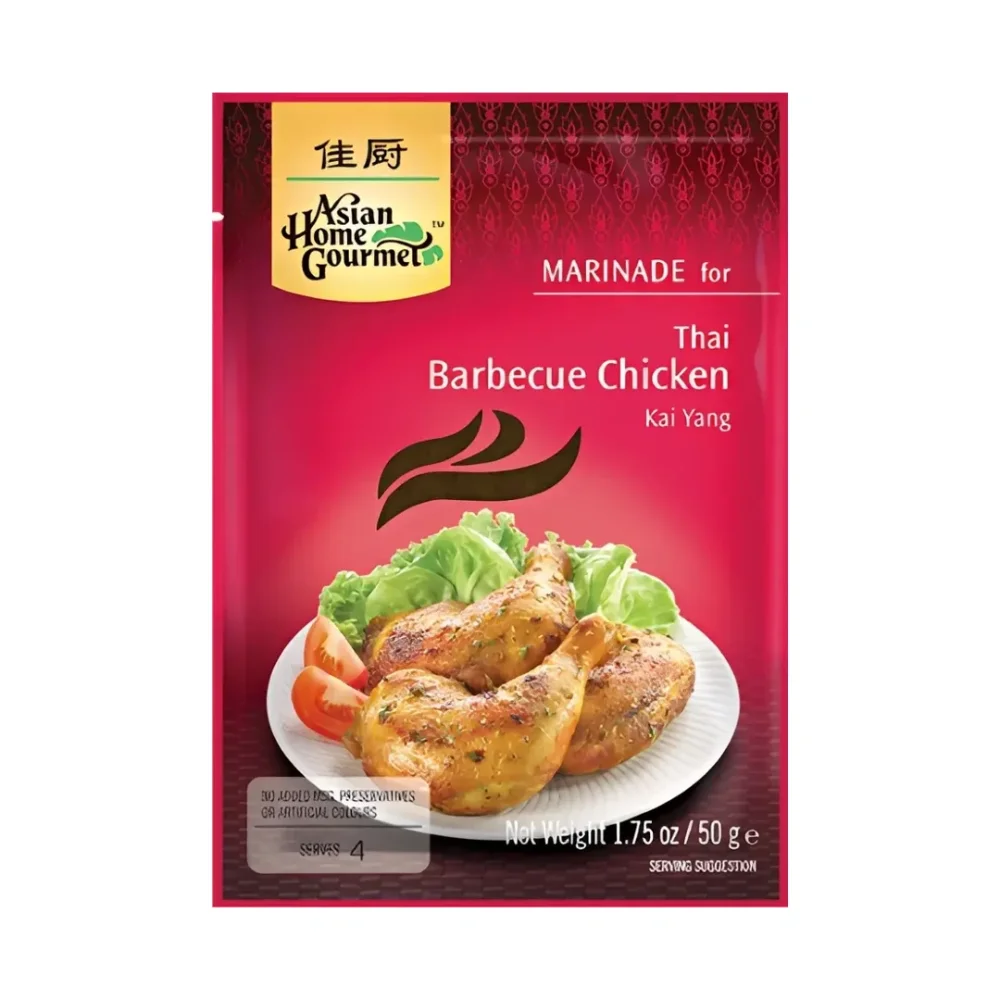
- Quick stall-style chicken: if you want a grilled impression without long seasoning adjustments, a ready-made marinade mix will help. For Thai inspiration, a starting point could be AHG Kai Yang chicken marinade – and you can achieve the street food effect by final seasoning (acidity, chili, herbs) and contrast of textures.
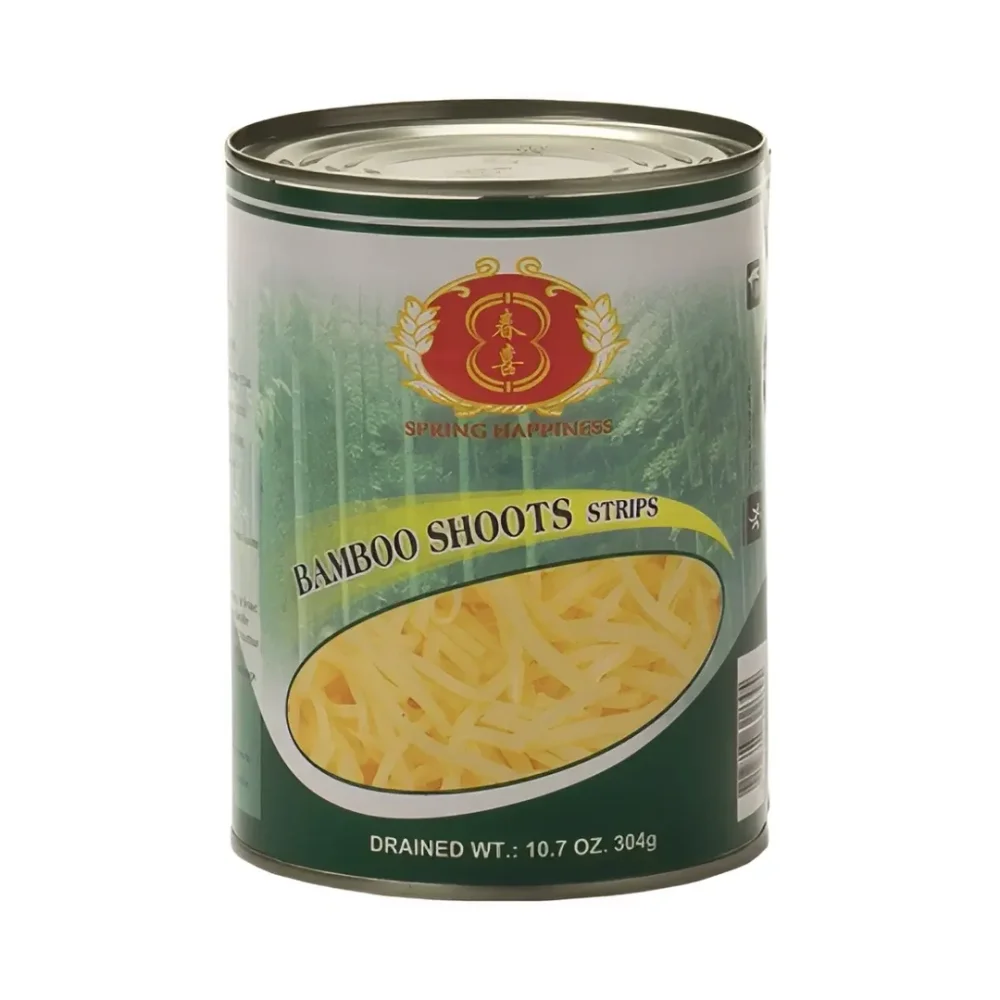
- Stir-fry that isn’t “watery vegetables”: add something that keeps the crunch and absorbs the sauce. For example, Spring Happiness bamboo shoot strips can quickly revive the wok mix precisely with texture (and by blending well with the sauce).
- Hearty quick dish without overcooking the base: sometimes street food style at home is mainly about serving “right now.” If you go the route of ready components, inspiration can also come from quick Indian dishes like Ashoka Instant Achari Aloo – and you add the street food impression by the added contrast (something fresh, something acidic, something crunchy).
If you enjoy speeding up cooking without losing flavor, it makes sense to have a reasonable selection of ready and semi-ready meals as a “base” that you simply fine-tune at home. A practical guide can be Ready meals – but the key remains the same: the result must feel fresh and finished from the first bite, not like a reheated substitute.
Common mistakes: why homemade “street food” sometimes doesn’t taste street food-like
- Overloading directions: you put too many dominant flavors into one dish (sweet, sour, spicy, peanut, sesame…) and lose clarity. Street food often relies on one clear profile and a few contrasts.
- Missing finishing touch: the dish is “cooked,” but not seasoned. Without the final step (acidity, chili, dip, herbs, crunchiness), the result feels flat.
- Cutting only during cooking: with quick techniques, there is no time. Typical consequence: burnt aroma, overcooked vegetables, sauce unevenly coats the dish.
- Wet ingredients in the pan: instead of frying, everything steams and texture is “grey.” If you want a quick wok impression, watch that the ingredients aren’t unnecessarily wet.
- Wrong order: hard and soft things in one heap end up with some raw and some overcooked. Dividing into groups according to hardness sounds trivial but makes a huge difference.
- Trying to literally copy the market: you can’t replicate everything at home (the heat, the rhythm, the big bases). Instead, focusing on flavor profile, contrast, and service will get you to the goal faster.
What to take away from the article
- Street food style at home isn’t about copying the street but about speed, clear flavor, contrast, and final seasoning.
- Street food isn’t just “to go”: common are bowls, noodles, soups, spring rolls, cold dishes, and sweets.
- The simplest home procedure: one strong base + finishing sauce/dip + fresh contrast + texture.
- For quick meals, preparation in advance matters: cutting and order of adding often make a bigger difference than the “secret ingredient.”
- If something doesn’t taste street food-like, first look for the problem in the missing final step (acidity, chili, herbs, crunchiness) or the dish is flavor overloaded.

Read next
If you want to explore this topic further, continue with these related blog guides and articles:
