


 Česky (CZK)
 Slovensky (EUR)
 Deutsch (EUR)
 Austria
 Belgium
 Bulgaria
 Croatia
 Denmark
 Estonia
 Finland
 France
 Germany
 Greece
 Hungary
 Italy
Italy Latvia
 Lithuania
 Luxembourg
 Netherlands
 Poland
 Portugal
 Romania
 Slovenia
 Spain
Spain Sweden










What to cook from a few ingredients without long preparation: a quick dinner in the style of Asian street food
A quick dinner from a few ingredients is not about "mixing something and hoping." In Asian street food, speed is based on a smart foundation, clear flavor, good final seasoning, and the fact that ingredients are prepared so they can be cooked in a short time. We will show you how to transfer this logic home without complicated preparation – and without overwhelming yourself with too many ingredients or steps.
Why it pays off to get inspired by street food for a quick dinner
Asian street food is not just "food from the street" nor just food to eat with hands. In many parts of Asia, it is an everyday way of eating that is based on speed, availability, high specialization (often just one or a few dishes), and a pronounced, easily recognizable flavor. Sauces, dips, and final seasoning – as well as texture and contrast – often play an important role.
For a quick home dinner, this is good news: you don't have to do everything "from scratch." Instead, just understand the principle: one strong base, a minimum of directions, quick finishing, and a fresh element that "wakes up" the dish.
What exactly "to cook from a few ingredients without long preparation" means
In practice, it’s not just about the number of items, but about where you spend time. Quick food usually happens in two modes:
- Quick heat treatment (typically short stir-frying / quick finishing) – here, the preparation in advance matters: cutting, drying, and order.
- Quick assembly (bowl, noodles, soup "on demand") – here, it is key that the flavor is held by one intense base (paste, dip, concentrated mixture) and the rest is just supplementation and contrast.
Home "street food style" does not mean copying the market. At home, you usually won’t achieve the same heat or rhythm as a professional stall. But what you can approximate: the flavor profile, serving logic (ready immediately), layering dips and toppings, and working with crispiness, acidity, and freshness.
3 functional types of quick dinners from a few ingredients (and how they differ)
1) Noodles or rice + “one” sauce + crunchy complement
This is the fastest and most versatile model: you cook the starchy side, add a distinctive seasoning, and one or two things that create contrast (crispiness, acidity, freshness). The key is not to overload the dish with too many directions.
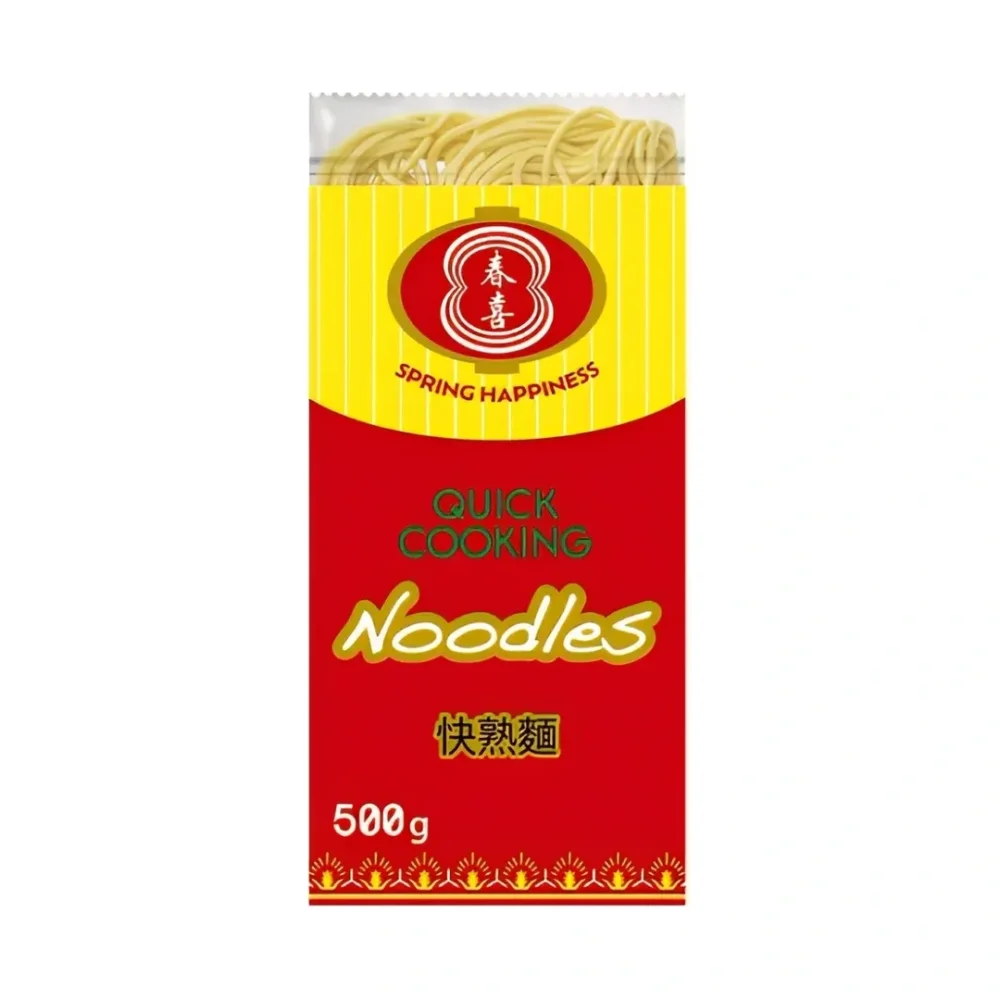
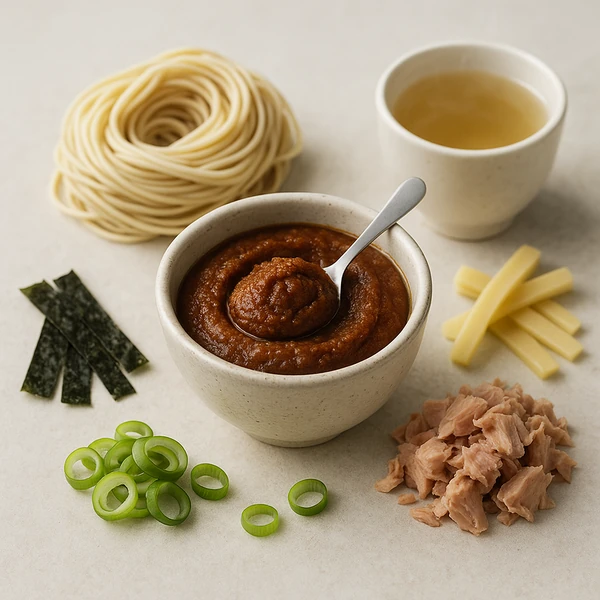
For a quick start, noodles that soften quickly and carry the sauce well are suitable – for example Spring Happiness quick egg-free noodles. To such a base, often just one vegetable with a distinctive texture is enough, for example bamboo shoots in strips, which quickly “liven up” the dish without long cutting.

2) Curry or “paste as an engine”: full flavor in a few steps
The curry model is typically fast because the flavor is carried not by dozens of individual spices and aromatics, but by one concentrated base. In a home version, it is practical to reach for a paste that leads you to a finished sauce without long preparations.
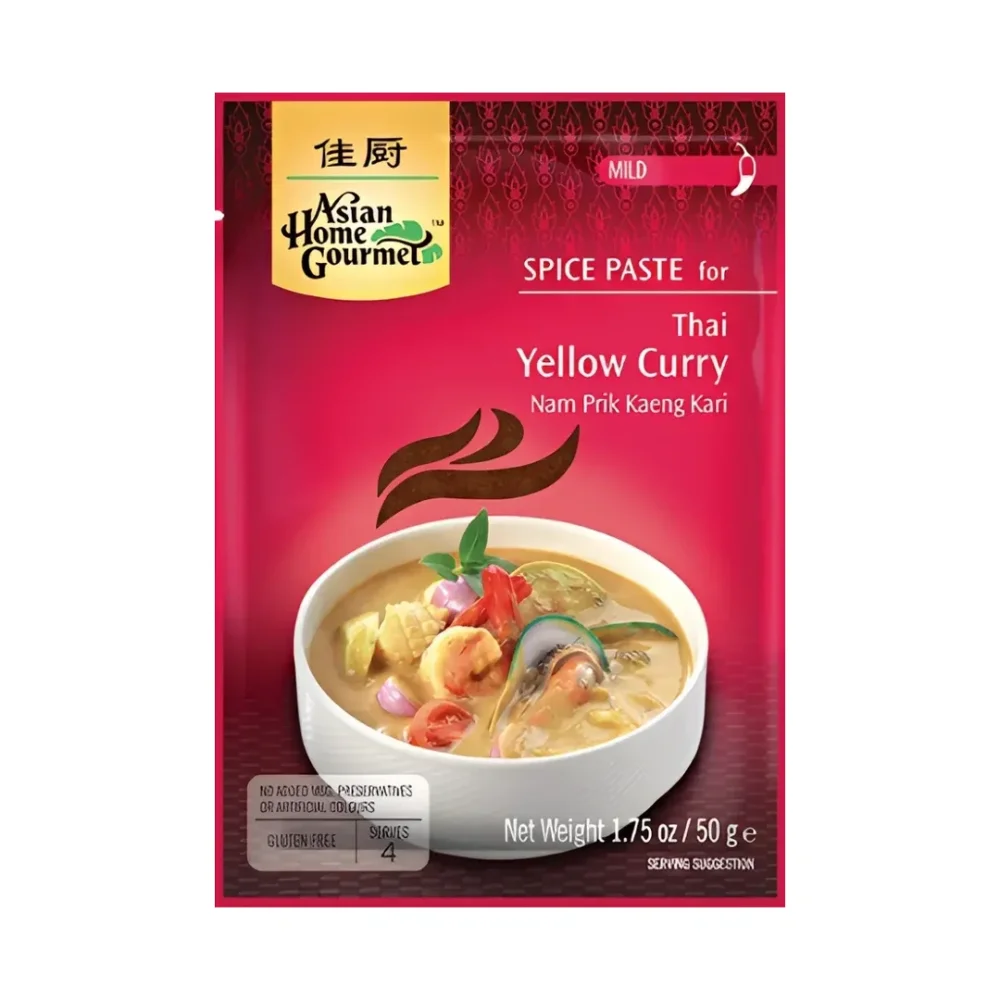
As an example of a strong base can work Thai yellow curry paste. It is important to keep it simple: choose one protein (meat/tofu), one to two vegetables, and watch that the sauce is not “drowned” in water from the ingredients.
3) Soup “on demand”: when you want warmth but no complications
Street food often relies on soups and bowls – fast to serve, intense in flavor. At home, the easiest way is to use a concentrated base that you stir into hot water or broth and adjust only with what you have on hand.
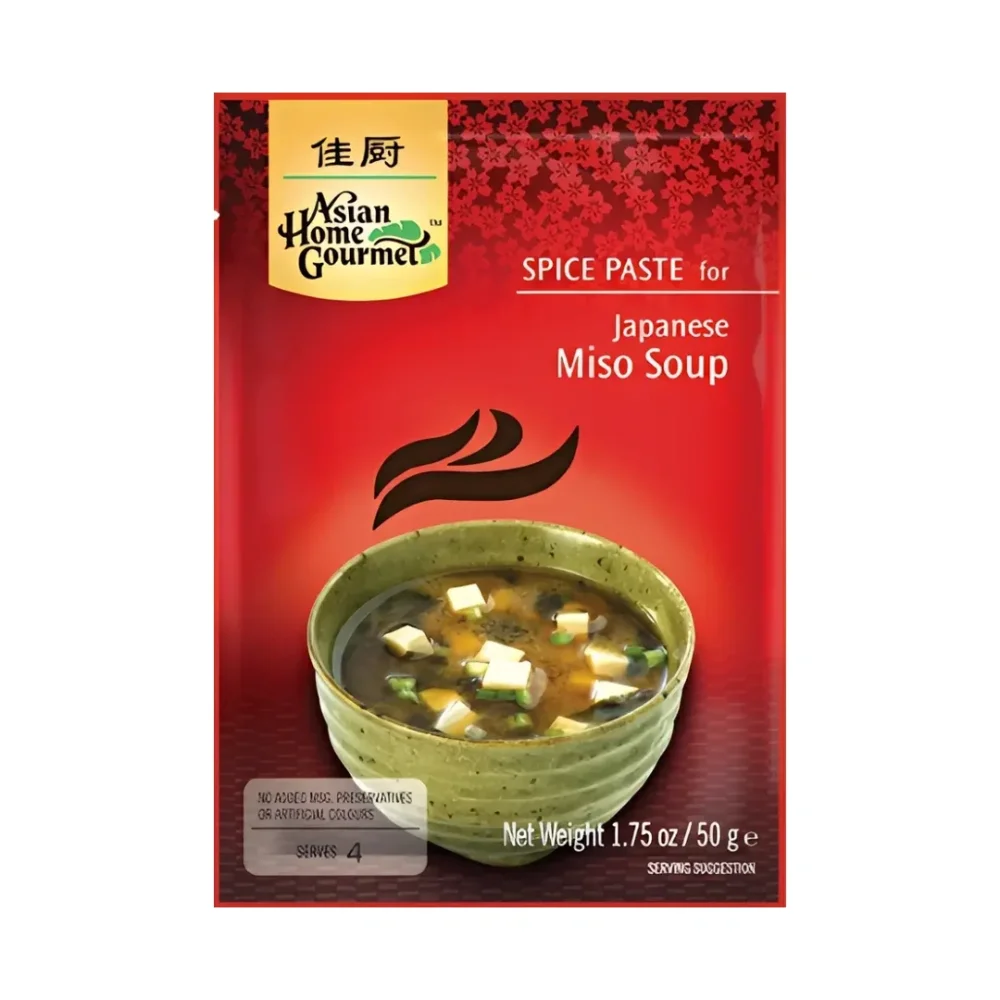
A practical example is miso soup paste. From the perspective of a “quick dinner,” the advantage is that the soup works even with minimal components: just one protein (for example, egg/tofu) and something green or crunchy on top.
How to assemble it at home so it is quick and yet "ready from the first bite"
The simplest home logic inspired by street food is this: choose one strong base, don't overload the direction, add a finishing element, complement with fresh contrast, and watch the texture. Below are concrete steps that work across meal types.
Step 1: Choose one “flavor engine” (and stick to it)
- Paste / mixture (curry, miso, marinade) – flavor is based on one foundation, you just add.
- Dip / finishing sauce – even a ready dip can often be “enhanced” with acidity (lime), spiciness (chili), and herbs to avoid flatness.
Practical dosing advice: for concentrated pastes, start rather with a smaller amount (e.g., 1 teaspoon per serving), cook briefly, and only then adjust. It’s easier to add than to rescue an overly intense base.
Step 2: Shorten preparation on the cutting board – but don’t ignore it
In fast techniques (stir-fry, noodles, fried rice), preparation before cooking often decides. If you start cutting only when the pan is heated, the dish breaks into chaos: some parts burn, some remain raw, and the sauce won’t stick evenly.
What helps most in practice:
- The cut must suit the technique: for quick stir-frying, make smaller and evenly sized pieces so everything finishes cooking at the same time.
- Separate ingredients into groups: aromatics, protein, hard vegetables, soft vegetables, leaves/fragile items, sauce, finishing elements. Each belongs in the pan at a different time.
- Watch the moisture: a wet surface means ingredients start to stew instead of roast. If you want a wok impression, dry at least what you can.
Step 3: Add one strong contrast (texture or acidity)
Street food often tastes “alive” because it’s not just soft and brown. At home, one contrast helps:
- Texture: something crunchy or springy (e.g., vegetables, shoots).
- Acidity and freshness: lime, spring onion, herbs – even a small amount can lift the flavor.
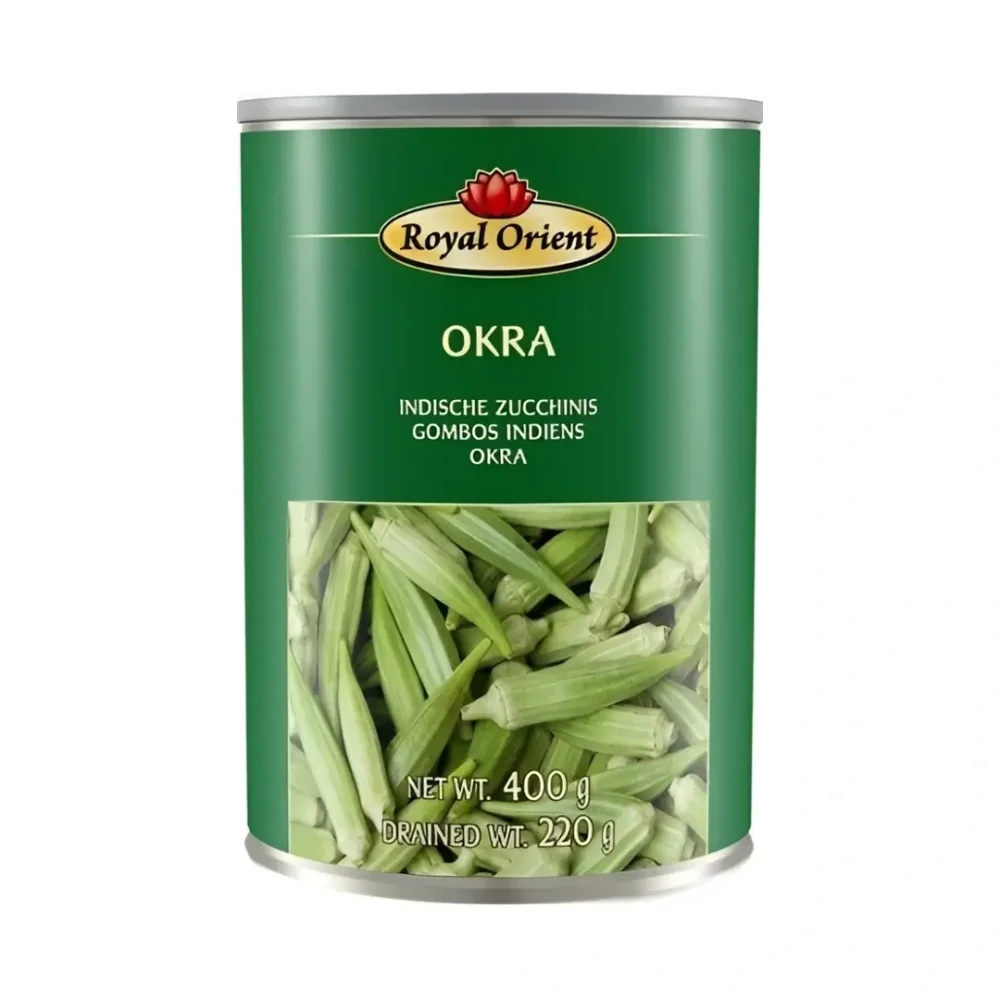
As a quick supplement without cutting, vegetables already ready to use can work – for example, okra in brine. But take it as a flavor-intense element (already salty), not as “neutral vegetable.”
Step 4: When you don’t want to cook almost at all – distinguish between “base” vs. “finished seasoning”
One of the most common shortcuts that makes sense even in the logic of street food at home is to work with more finished components. But it’s important to know what you buy: some are basic ingredients (giving you control), some are seasoned products (giving you speed and a specific flavor profile).
- Seasoned “ready” direction: when you want only to heat and build a dish on rice or noodles, for example, tuna in spiced tomato sauce in caldereta style. Here, the flavor is already set and you mainly handle the side and contrast (e.g., something fresh on top).
- Basic ingredient: if you want to use the same protein various ways (once in noodles, another time in a bowl, another time in a salad), it is more practical to have a “cleaner” version – for example, tuna chunks in oil – and manage seasoning yourself with your own sauce or paste.


It’s not about what is “better.” It’s about the choice fitting the goal: speed vs. control and variability.
Most common mistakes that make a quick dinner stressful (and how to fix them)
Mistake 1: Too many directions at once
A quick dinner from a few ingredients is safest when it has a clear center: one paste/sauce, one side, one contrast. If you put curry, soy sauce, sweet sauce, vinegar, several chili products, and three types of vegetables in different sizes into one pan, it will be more “taste searching” than quick cooking. Fix: reduce the number of seasonings and rather add one final element (acidity/freshness).
Mistake 2: Wrong order and everything in one heap
If you put aromatics, meat, and vegetables into the pan at the same time, often aromatics turn bitter before the rest finish – and harder vegetables remain raw. Fix: divide ingredients by hardness and add gradually. In quick techniques, order is as important as ingredient choice.
🍜 Mistake 3: Wet ingredients and overcrowded pan
In quick stir-frying, a common problem is ingredients releasing water and stewing instead of roasting. Fix: dry what you can and cook in smaller batches. If you want the sauce to coat the dish and the flavor to be “clean,” you need heat management in the pan, not steam.
Mistake 4: Mixing “strength” and “quality” in seasoning
A pronounced street food flavor does not automatically mean “as much as possible of everything.” Fix: choose ingredients by function (base vs. seasoned product; cooking vs. final seasoning) and adjust gradually. This is usually more reliable than seeking the “most authentic” solution regardless of usage.
What to take away from the article
- A quick dinner in the style of Asian street food is based on one strong base, quick finishing, and contrast (texture, acidity, freshness).
- Street food at home is not a copy of the market – but it’s about the same logic: distinct flavor, simple base, final seasoning, and immediate serving.
- In quick meals, preparation on the cutting board often decides: even cutting, separating ingredients, and the correct order save you time and mistakes.
- Distinguish basic ingredients (control and variability) and seasoned products (speed and a clear profile) – and choose according to what you want to cook today.

Read next
If you want to explore this topic further, continue with these related blog guides and articles:
