


 Česky (CZK)
 Slovensky (EUR)
 Deutsch (EUR)
 Austria
 Belgium
 Bulgaria
 Croatia
 Denmark
 Estonia
 Finland
 France
 Germany
 Greece
 Hungary
 Italy
Italy Latvia
 Lithuania
 Luxembourg
 Netherlands
 Poland
 Portugal
 Romania
 Slovenia
 Spain
Spain Sweden










Asian-style grilling: yakitori, satay, tandoor and what makes the difference in flavor
“Asian-style grilling” is not one specific recipe or a single universal marinade. In different parts of Asia, grilling is done over fire, on a grate, on a plate, on skewers, and even in a clay oven – and each time the result is somewhat different. In this guide, you will find clear orientation in the main styles (Japan, Southeast Asia, India) and especially practical tips on how to work at home with temperature, timing, and marinade so that the grilled food has a distinct seared surface, juicy interior, and "Asian" character.
What "Asian-style grilling" means and why technique matters
In Asian kitchens, technique is often as important as the ingredients themselves. The same piece of meat, tofu, or vegetables can taste completely different depending on whether it receives a short and intense heat or a slower, deeper preparation. With grilling, this difference is especially pronounced: it involves dry direct or indirect heat, often also with smoke, and the key is quick surface searing – a reaction where sugars, fats, and proteins meet on the surface to create the characteristic "grilled" taste and aroma.
But this also means that grilling requires precise timing. What is still "just right" in the pan can quickly turn into burnt bitterness on the grate – especially when the marinade contains sugar or when the food is brushed with sauce too early.
Forms of Asian grills: fire, grate, plate, skewers, and clay oven
Grilling in Asia is not one technique. It can be open fire, a grate over coals, a metal plate (griddle), grilling on skewers, or even a clay oven. Each method gives the food a different texture and works differently with moisture and searing.
Japan: yakitori, yakiniku and the difference between grate and plate
In the Japanese world, grilling has an important role and you often encounter two "poles":
- Yakitori (grilled skewers) shows how much it matters that these are small pieces with a large surface area. They cook more evenly and it’s easier to monitor the perfect moment of searing.
- Yakiniku (grilled slices of meat and other things) relies on speed and the type of grill surface you use.
An important practical detail is: grilling on a grate vs. a plate. The grate tends to produce a more pronounced "grilled" sear and drains fat away, while the plate keeps more contact and heat, which can create a different juiciness and a different type of surface sear. It’s not just cosmetic – it changes texture and how the food feels in the mouth.
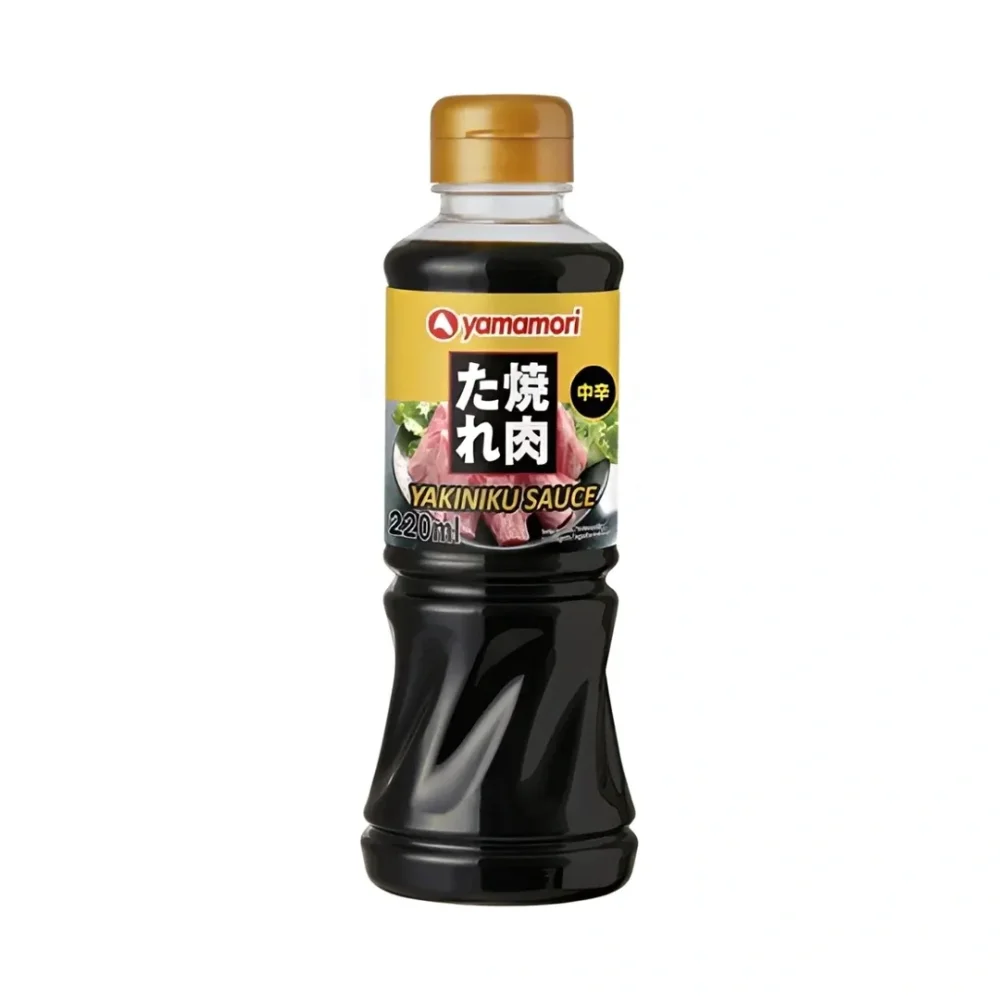
If you want a quick "yakiniku" character without complicated mixing, a ready-made Yamamori Yakiniku saucecan work well: it can be used as a marinade and as a final seasoning after grilling (similar in principle to dipping the finished pieces in sauce at the table).
Southeast Asia: satay, street food and the "marinade + dip" connection
In Southeast Asia, grilled skewers, chicken, fish, and other "over fire" dishes are the basis of many street food cultures. Typical is the combination of grilled component with marinade and then with dip (or a sauce served alongside the finished dish).
The practical advantage of this approach is clear: you get part of the flavor inside through marinating, but the "sharp" final accent (saltiness, sweetness, acidity, spiciness, nuttiness…) can be controlled on the plate. For home grilling, this is also a safer method: less sugar on the surface during grilling usually means fewer burnt spots.
India: tandoor and the world of extreme heat
The tandoori style is a separate chapter. Tandoor is a heated cylindrical clay oven that works with extreme heat: it allows quick searing of meat while also baking bread on the oven’s walls. The result has a different character than a typical home grill – partly because the combination of radiant heat and very high temperature changes the pacing of preparation and surface reaction.
At home, the tandoor is not simply mimicked by a "higher flame." It’s more sensible to understand the principle: short time, high heat, clearly monitored timing, and flavor constructed so it doesn’t burn at high temperature.
How to start at home: temperature, timing and working with marinade
If you want to take away one practical thing from Asian grilling, it’s this: prepare the logistics first, then light the grill. With intensive techniques (and grilling is one) it pays off to have everything ready because the window of “just right” is usually short.
Direct vs. indirect heat: when to use what
- Direct heat (over the flame) is for quick searing of the surface. It suits thinner slices, smaller pieces, and skewers – basically food that can cook through before the surface turns burnt and bitter.
- Indirect heat (away from the main flame) is a “safer zone” to finish cooking larger pieces or to calm the situation (for example, when the marinade starts darkening on the surface too quickly).
In practice, that means setting up the grill so you have two zones. Even on a smaller grill, often it’s enough to pile the coals more on one side.
Marinade, glaze, and dip: three different roles (and a frequent source of errors)
In Asian grilling, it’s useful to distinguish what exactly you are doing:
- Marinade: goes inside (over time) and helps build the base of flavor. It works mainly for smaller pieces or thin slices.
- Glaze: is more like a "layer" on the surface. If it’s sweet, it usually belongs at the end, otherwise, it burns easily over the heat.
- Dip / sauce for the finished dish: you control the final intensity with it. It’s a great way to have bold flavor without the risk of overcooking.
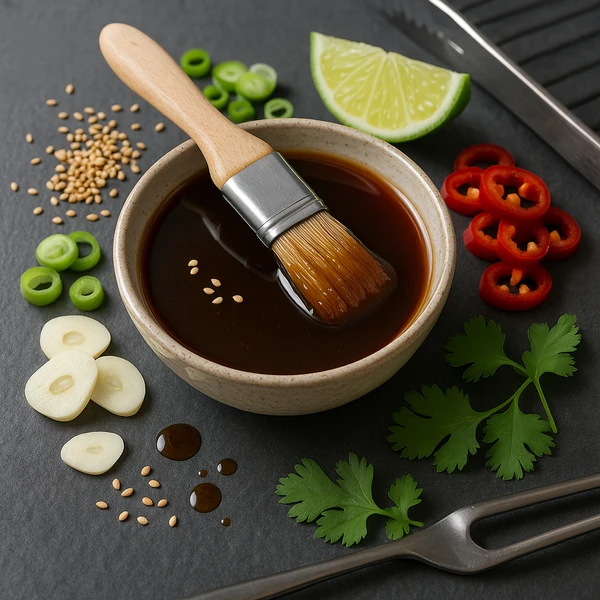
As a simple, quickly usable base, the already mentioned yakiniku saucecan serve well. At home, a common approach works: use part for a short marinade and keep some aside as a final dip (for hygiene, never mix sauce that has had raw meat with sauce for finished pieces).
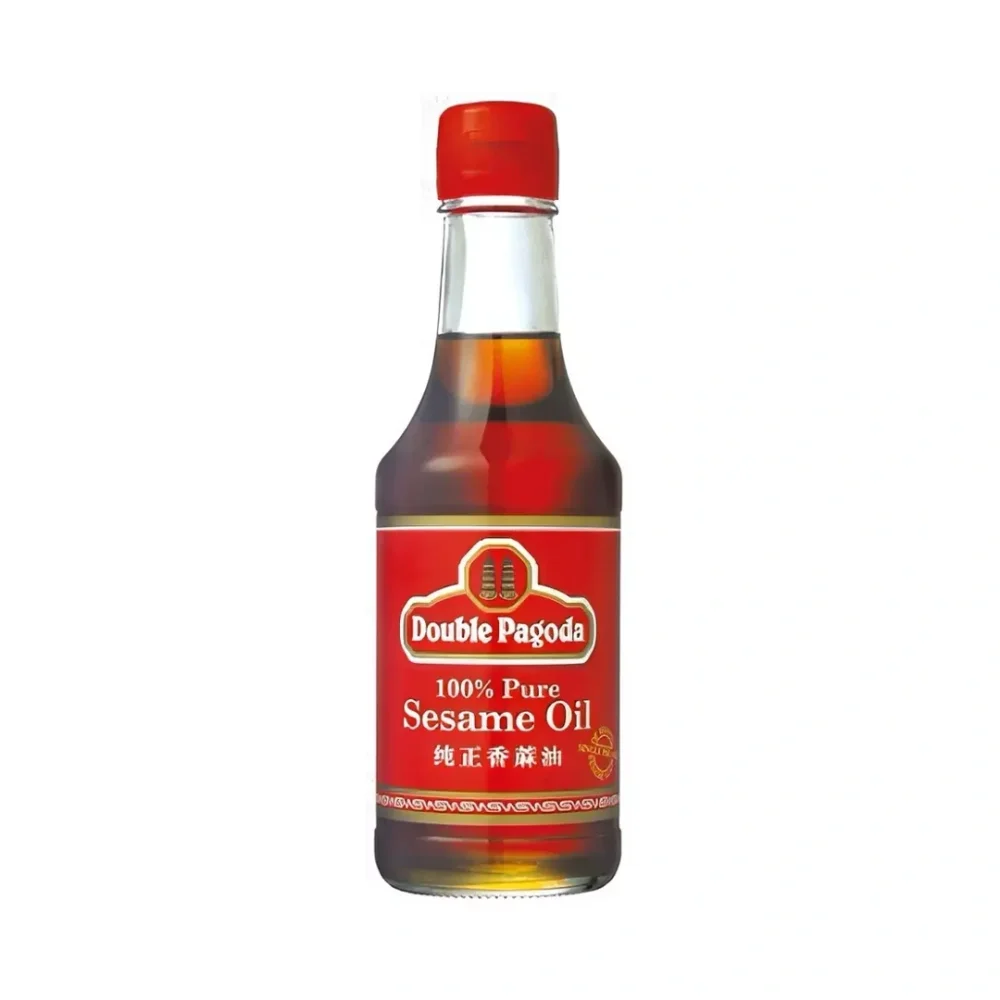
For a “nutty” finish and aroma, sesame is used in many Asian contexts. Practically, this means: sesame oil is usually not used as the main grilling fat, but rather dropped in small amounts at the end – into dips, dressings, or the finished dish. For example, Double Pagoda sesame oil is a type of product that makes sense exactly with this method: a small quantity strongly influences aroma and flavor.
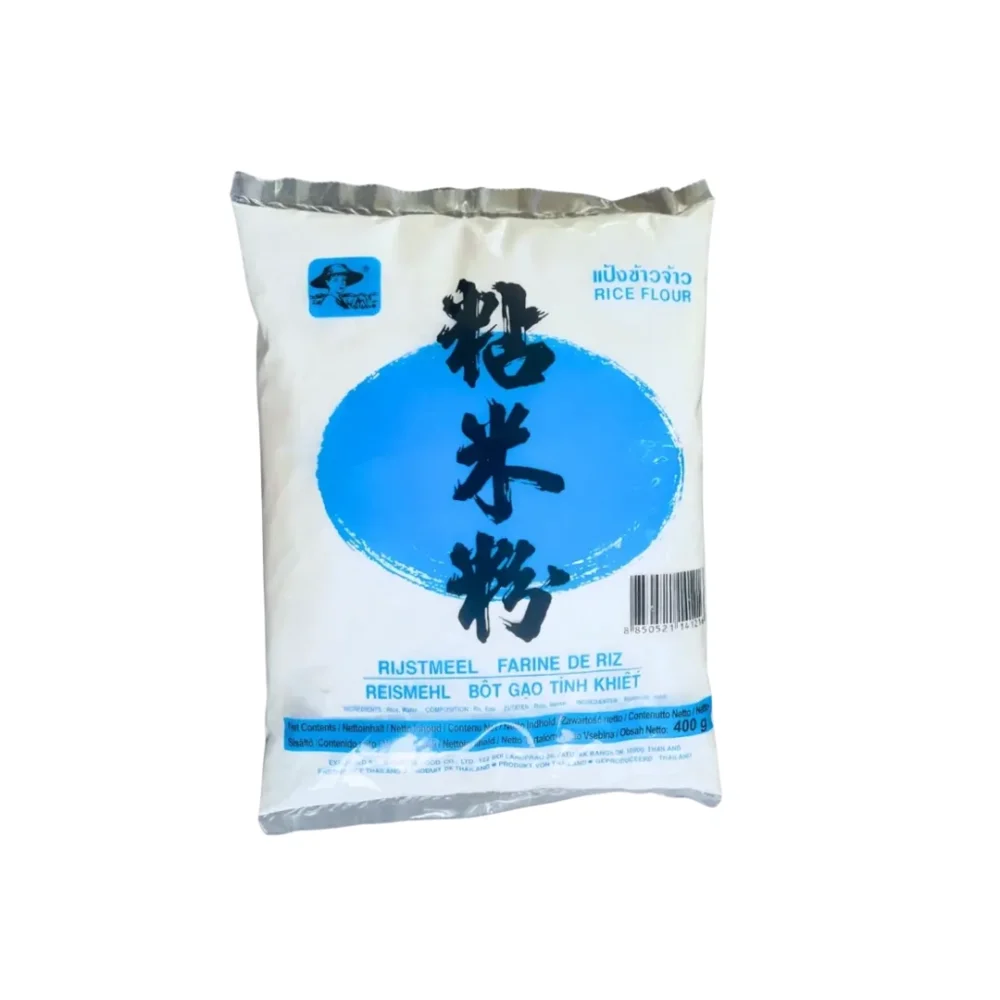
If you want the sauce on the finished dish to stick better (and not be watery), light thickening can help. In Asian cooking, various starches are used for this; a universal fine option can also be rice flour – just a very small amount mixed in cold liquid and briefly cooked in the sauce to increase viscosity. Don’t apply it on the grill beforehand; the goal is a “finished” dip or glaze at the very end.
Grilling without meat: it works when you focus on umami and texture
Asian vegetarian and vegan cooking doesn’t rely on a single meat substitute but on a combination of flavor, texture, fermented bases, spices, and well-chosen fats. This applies doubly for grilling: if you put only "something soft" on the grate, you’re likely to end up with a flat result.
- Don’t skimp on umami – without it, grilled vegetables or tofu will seem empty.
- Texture is just as important as flavor – it’s worth combining soft and crunchy, or working with smaller pieces that sear well.
- Watch out for hidden animal ingredients in sauces and seasonings (typically fish or oyster sauces or broth bases) if you aim for a purely plant-based version.
Quick side dishes that make sense with grill
In many Asian styles, grilled food is just one part of the "set" – and the rest complements with contrast: something fresh, something starchy, something with sauce. If you want a quick and practical side dish at home, often Asian noodles work (depending on type, either as a warm side dish or as a base for a cooler salad style).
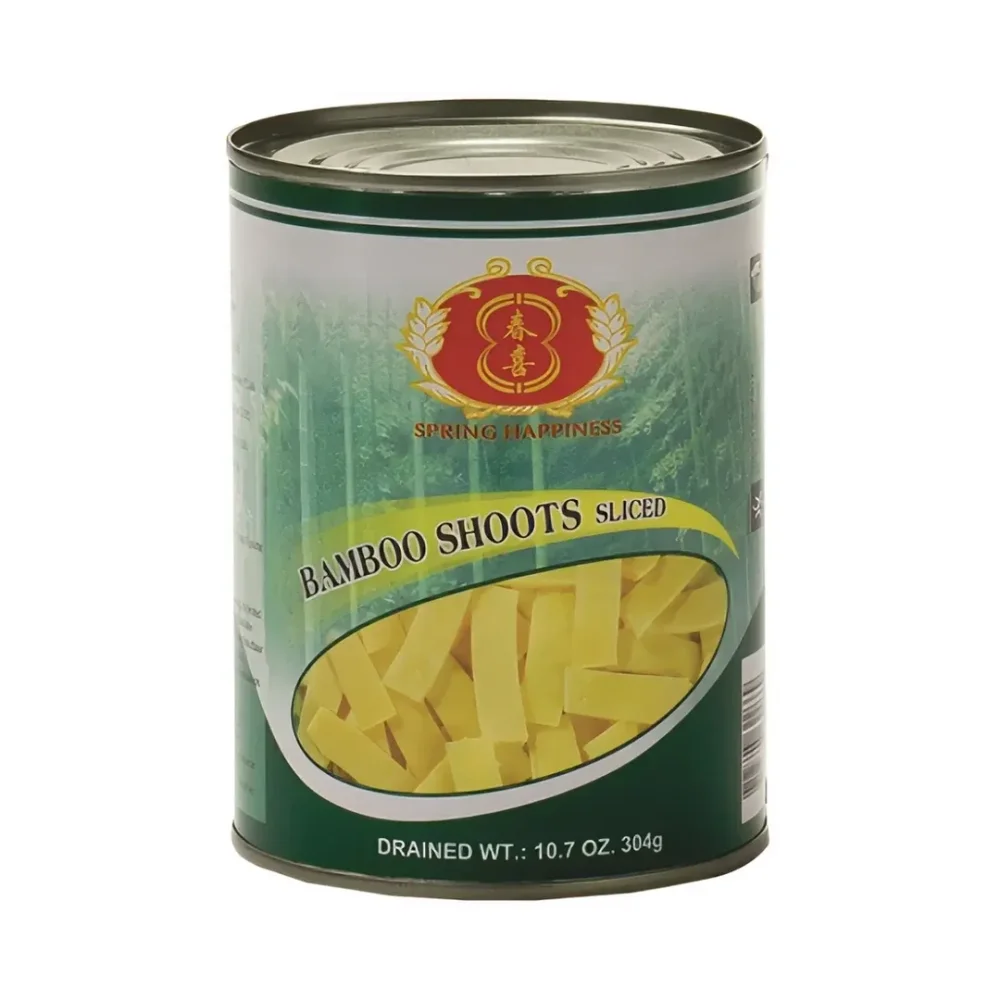
When you want to add a crunchy element that soaks up sauce well, you can use sliced bamboo shoots. It’s not a “grilling” ingredient in the narrow sense, but as an accompaniment to grilled pieces, it helps exactly with what Asian dining often seeks: contrasting textures.
Most common mistakes and misunderstandings
Grilling vs. baking: it’s not the same
A common mistake is to treat a grill as a “faster oven.” But grilling works with more direct heat and a more pronounced surface reaction, while baking is more even and enclosed. The practical consequence: what slowly finishes in an oven can quickly dry out or burn on the surface before it’s done inside on a grill.
Burnt marinade and bitter surface
Asian sauces and marinades are often flavorful – and often sweeter. On the grill, this means a higher risk of burning. A typical rescue isn’t "put more sauce," but changing timing:
- marinate only for an appropriate time and for sweeter bases, rather a shorter period,
- apply sweeter glazes only at the end,
- move pieces to indirect heat when the surface darkens and finish cooking away from main flame.
Poorly chosen cut and pace: dry inside, burnt outside
Grilling is "fast" only when the size and thickness of the ingredient correspond. If you put too large a piece on direct heat, often the surface is beyond done but the inside is not cooked yet. Conversely, with thin slices, it’s easy to over-grill by a minute and get a dry texture.
If you want a flavorful surface and control, it’s often easier to start with smaller pieces (skewers, slices) and only then move on to larger cuts.
Storing sauces, oils, and leftovers: safety is not the same as quality
With Asian ingredients, it is useful to distinguish three states: something can still be safe to eat but have lost some aroma or structure – only then truly spoil. This is important mainly for aromatic things and oils: sesame and similar oils might be “okay,” but without protection from heat, light, and air, they lose their most valuable part – aroma – faster.
For prepared meals and leftovers, discipline applies: don’t leave them long in the temperature range where microorganisms multiply well, cool quickly, store properly, and ideally reheat only the portion you will eat (repeated reheating and cooling increases risks and reduces quality).
What to take from the article
- Asian grilling is not one thing: it can be skewers (yakitori), tabletop slice grilling (yakiniku), street food skewers (satay) or the extreme heat of an oven (tandoor).
- The biggest difference is made by dry heat, smoke, seared surface and mainly timing.
- It’s practically useful to distinguish marinade, glaze, and dip – each belongs to a different phase and solves a different problem.
- At home, you’ll help yourself if you have two temperature zones (direct and indirect) and if you start with pieces that are easy to control.
- For the plant-based version, it’s crucial to watch umami, texture and “hidden” animal ingredients in seasonings.

Read next
If you want to explore this topic further, continue with these related blog guides and articles:
