


 Česky (CZK)
 Slovensky (EUR)
 Deutsch (EUR)
 Austria
 Belgium
 Bulgaria
 Croatia
 Denmark
 Estonia
 Finland
 France
 Germany
 Greece
 Hungary
 Italy
Italy Latvia
 Lithuania
 Luxembourg
 Netherlands
 Poland
 Portugal
 Romania
 Slovenia
 Spain
Spain Sweden










Street food from the market vs. street food at home: what cannot be copied (and what makes sense)
Asian street food is not just "food from the street." In many parts of Asia, it is an everyday way of eating, where speed, specialization, local identity, and especially taste "readable from the first bite" matter. That's why it is useful to distinguish street food from the market and street food home-style: at home, you usually won't replicate the same heat and rhythm of the stall, but you can very well imitate the flavor profile, the work with sauces, contrasts, and "right now" service.
What makes Asian street food street food
When you say street food, many people imagine something "to go". In the Asian context, it is broader and more precise: street food is a way to eat quickly and affordably, often at someone who specializes in one (or a few) dishes and makes them repeatedly until they are polished into the typical form.
- Quick preparation (or quick finishing in front of the customer).
- High specialization on a narrow repertoire.
- Clear connection to place (city, region, community).
- Accessibility and everydayness (part of the daily rhythm).
- Distinct, easily readable taste and a strong role of sauces, dips, and final seasoning.
- Texture and contrast (crispy vs. soft, fresh vs. rich).
Important detail: street food often does not arise as a "simplified version of a restaurant." On the contrary, it commonly happens that some recipes are refined into their most characteristic form precisely in the street environment.
Street food is not just food to go
In practice, this means that street food can be a bowl of noodles, rice, soup, quickly stir-fried wok dishes, as well as cold bowls and salads. Often it is possible to eat on the spot or take food away – but "street" mainly means the way of service, pace, and straightforward taste.
Market, stall, hawker centre: why "the same" tastes different depending on the place
Street food in Asia is tied to various types of places: markets, night markets, small street stalls, but also more organized food zones like hawker centers. This matters for home cooking for one reason: the food is closely connected to a specific place and context – and you can't replace that at home, even if you master the taste.
This is well seen in examples of cities and dishes representing street food:
- Osaka and takoyaki: small balls of dough based on broth with a piece of octopus, typically finished with final layers of sauce, mayonnaise, and bonito flakes. Here you can clearly see the logic of street food: simple base + strong final seasoning.
- Singapore and hawker culture: shows that street food can be everyday food and a cultural phenomenon; hawker centers often have stalls specializing in specific dishes.
- Kuala Lumpur and Penang: a multicultural scene where satay, char kway teow, assam laksa, chicken rice, or roti coexist – various techniques, textures, and "different types of speed."
- Hanoi and Ho Chi Minh City: Vietnamese street food covers morning soups, quick sandwiches, and rice dishes.
Lesson for home cooking: instead of trying to "do everything," choose one specific style (e.g., dry noodles, quick stir-fry, cold bowl) and stick to its logic.
Market street food: what you usually can't replicate at home (and why)
It is useful to admit what is part of the market experience and is usually missing at home:
- The same heat and immediate "performance" (typically wok, plancha, grill, quick frying).
- The rhythm of a professional stall – timing, trained hands, minimal hesitation.
- Large-volume broths or grills, which are built long and in large quantities.
- The atmosphere of the market – smells, noise, queue, immediacy.
What can be transferred very well
"Street food style at home" doesn't mean literally copying the street. It makes sense to copy what defines street food even without a market:
- Flavor profile (clear, distinct, without unnecessary detours).
- Logic of service (food should taste great immediately, not "after it settles").
- Layering dips and toppings (final sauce, chili, acidity, something crunchy).
- Work with crispiness, acidity, and freshness as a counterbalance to richer components.
- "Fast and distinct" character of the result.
How to build street food style at home without complicated preparation
The simplest way relies on several practical principles: choose one distinct base, do not overload the dish in many directions, add a dip or finishing sauce, complement with fresh contrast, and watch the texture. It is not about making everything from scratch – it is about making the result feel lively, fresh, and "ready" from the first bite.
1) Choose one distinct base (and stick to it)
Home street food often relies on helping yourself with ready or semi-ready bases and preparing the rest fresh and quickly. Practically, this can be, for example:
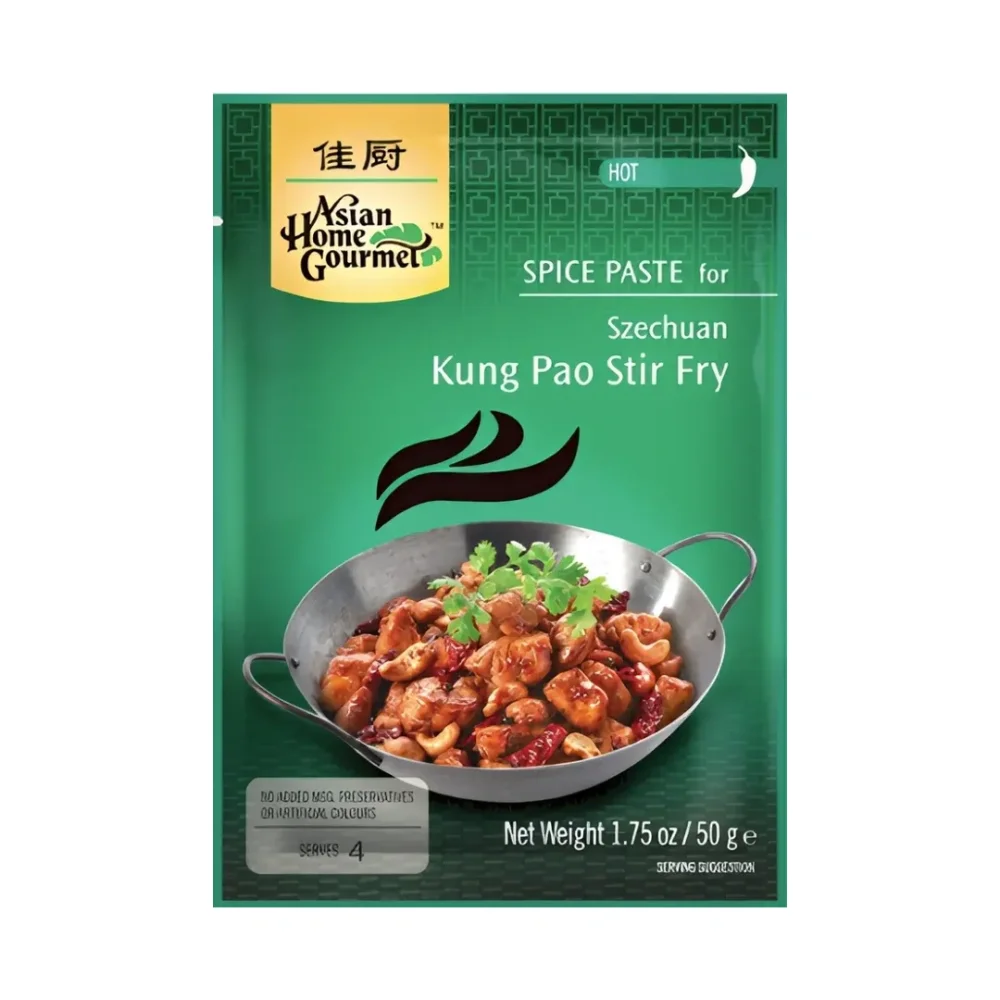
- Stir-fry paste as a start of the sauce – for Sichuan-style quick stir-frying, you can use AHG Pasta Kung Pao Stir-Fry. At home, this shortens the way to a distinct flavor, and you can devote your energy rather to timing and texture.
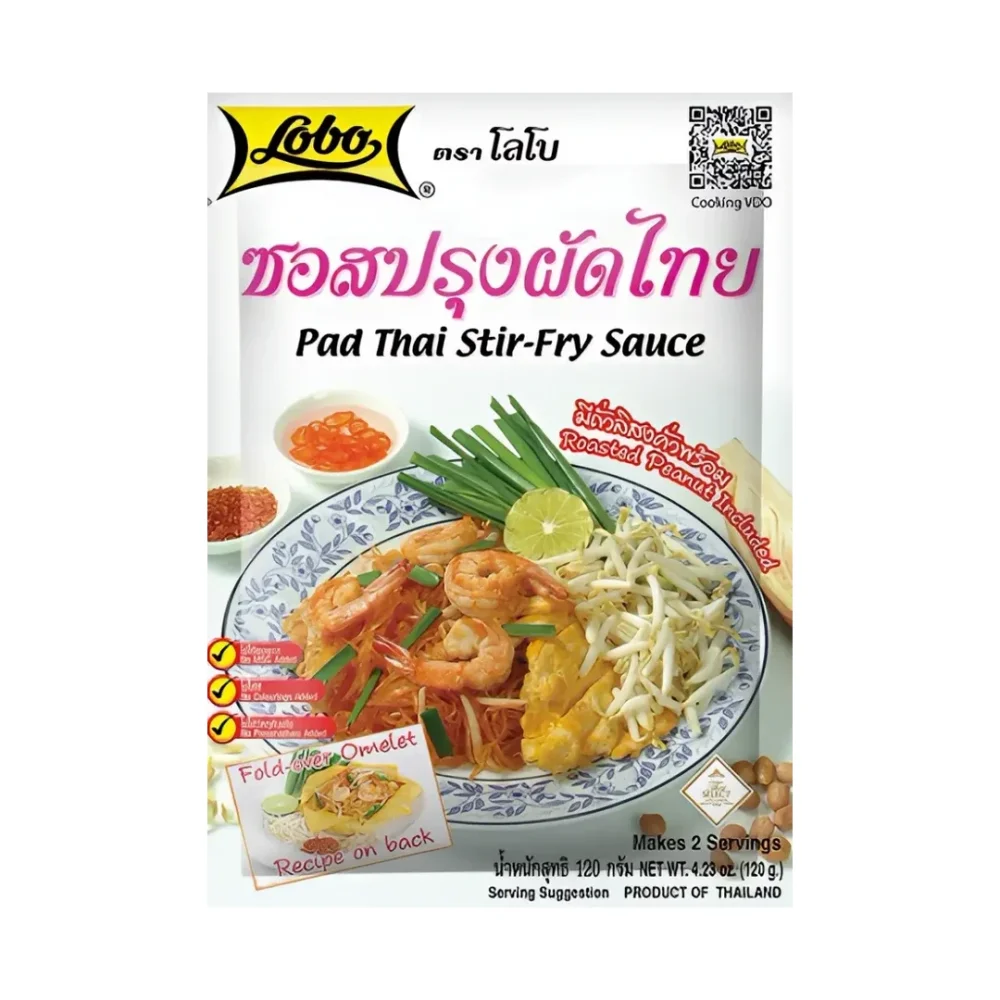
- Ready sauce for a specific noodle dish – if you want a Pad Thai type profile without a long tweaking process, it makes sense to reach for a ready sauce, e.g. Lobo Peanut Sauce for Pad Thai, and "liven" it up at the end (acidity, chili, herbs).
- Ready meal as a quick anchor – sometimes the most authentic street food choice is simply speed. When you need a hot meal without cooking, you can start from ready meals (roughly, for example via the guide Ready meals) and supplement them with what makes street food street food: something fresh and contrasting. A specific example of a "quick anchor" is Ashoka Instant Aloo Matar – and you are then mainly handling service and contrast, not the basic sauce.
- "Dry" noodles without broth – a type ideal for home street food style because it does not require large broth operations. Instant noodles in mi goreng style work illustratively, e.g. IndoMie Mi Goreng Barbecue Chicken Noodles: you cook, mix, finish, and eat right away.
Practical brake against chaos: at home, set yourself a limit of "one main direction" (e.g., peanut, Sichuan spicy, slightly sour, and herbal). Once you start mixing several strong styles, the result loses clarity – and that's exactly the opposite of good street food.
2) Carrier: rice or noodles that can carry the sauce and pace
For home street food, the carrier is key – because texture and whether the dish "holds together" depend on it.
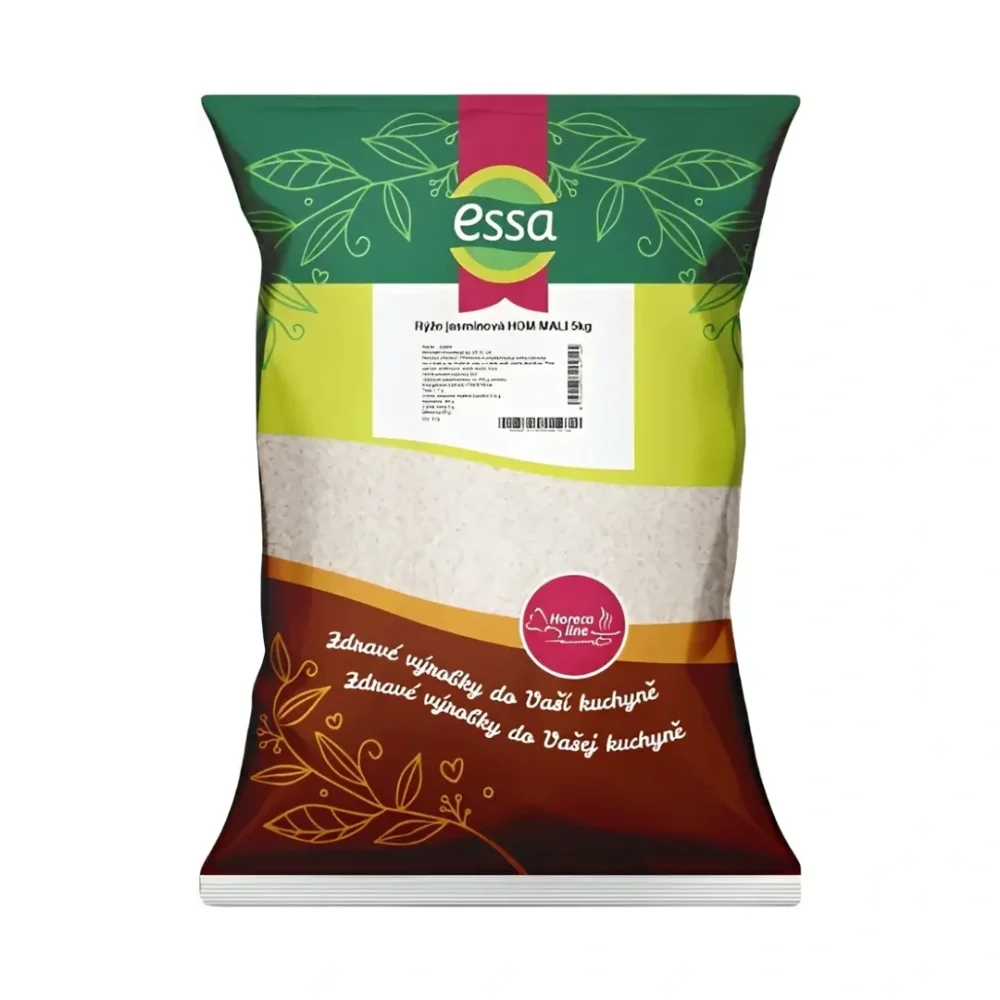
- Rice is great for quick bowls and stir-fry. If you want a fragrant, universal base that suits curry and stir-fried vegetables, a jasmine rice type makes sense (e.g. ESSA Hom Mali Jasmine Rice). The street food effect is then made by the sauce + contrasting topping.
- Noodles are not one thing: different noodles go into broth, others into wok, others into "dry" bowls. If you choose the wrong type or overcook them, the final sauce won't save the texture.
For noodles, it often matters whether they are supposed to carry broth or sauce – and also how much sauce is right. Too much sauce destroys texture, too little makes the dish dry and disconnected. At home, a good trick is to start with less sauce, mix, and add by spoonfuls if needed.
3) Finishing: sauce, chili, and the last minute decides
In the market environment, many things "play out" at the end: chili, acidity, fresh herbs, crispy element. At home, this is usually the fastest way to move from "good dinner" to a "street food" impression.
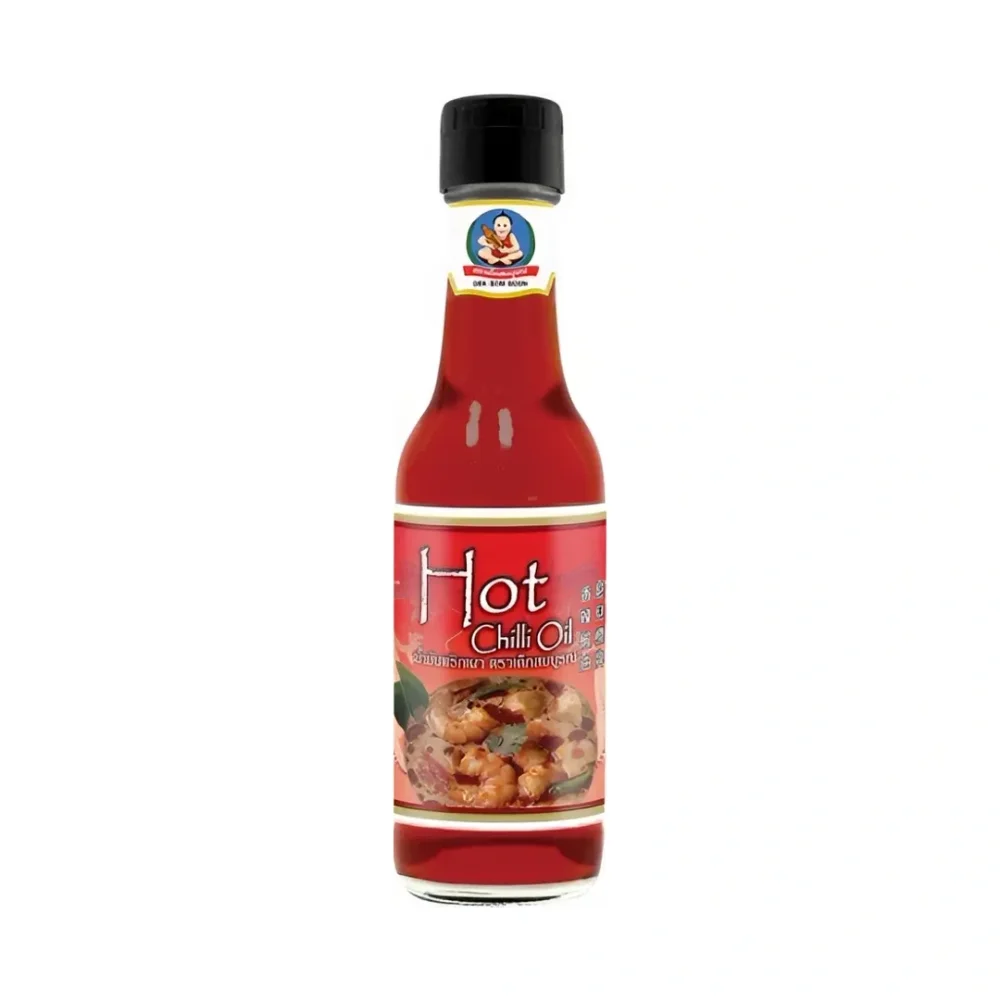
- Spicy dot: on the plate, final seasoning works better than cooking chili long in the sauce. As an example of a purely finishing approach, you can use Dek Som Boon Chili Oil – a few drops and the aroma becomes instantly more distinct.
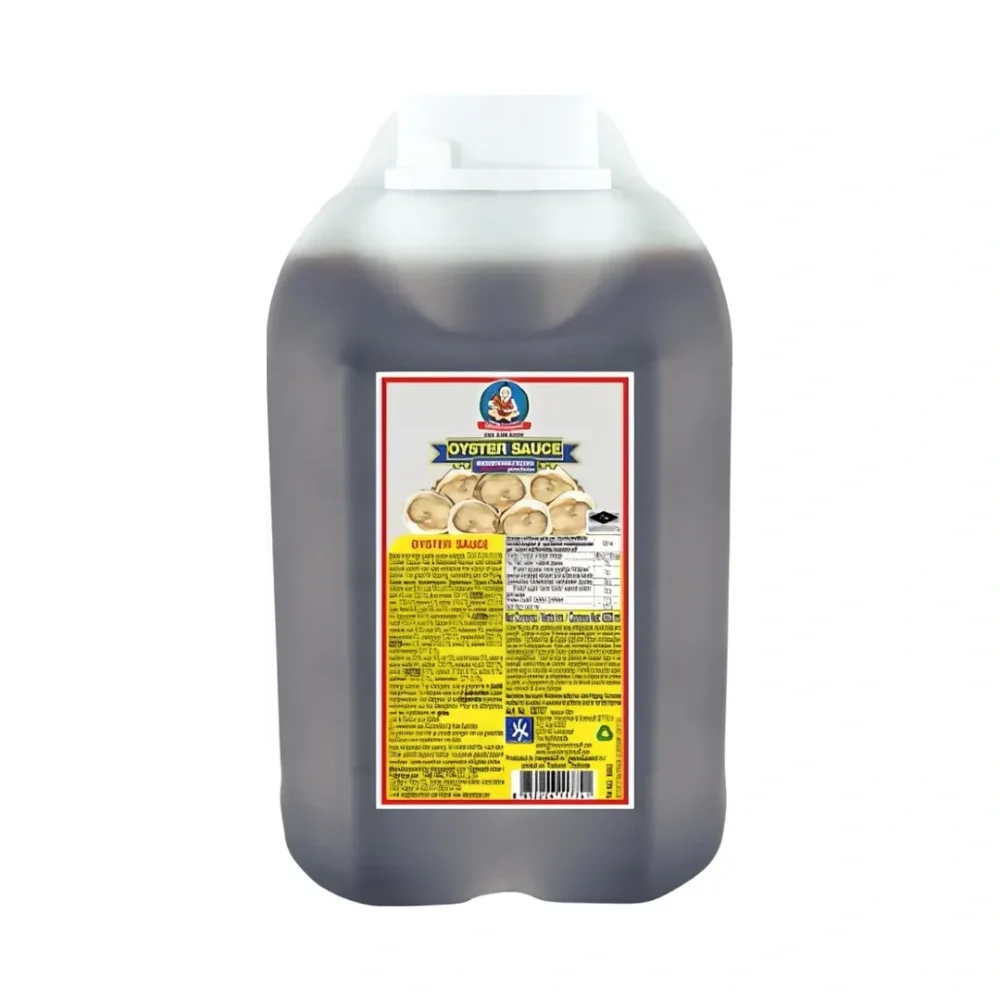
- Umami shortcut for quick stir-frying: for stir-fry, it is often important that the taste is "round" even without a long base. In this regard, sauces with umami character are used, for example oyster sauce (illustratively Dek Som Boon Oyster Sauce). At home, it is useful to dose carefully: first a small amount, taste, then add if needed.
Home "street food" rule for the conclusion: before serving the dish, ask yourself if it lacks (a) acidity or freshness, (b) a crispy element, (c) a final sauce/dip. Often, it is enough to add one of these – and the whole dish wakes up.
4) Texture: crispy elements that create the stall impression
Street food stands on contrast. When everything is just soft (noodles + sauce + soft vegetables), the dish feels flat, even if it is well-seasoned.
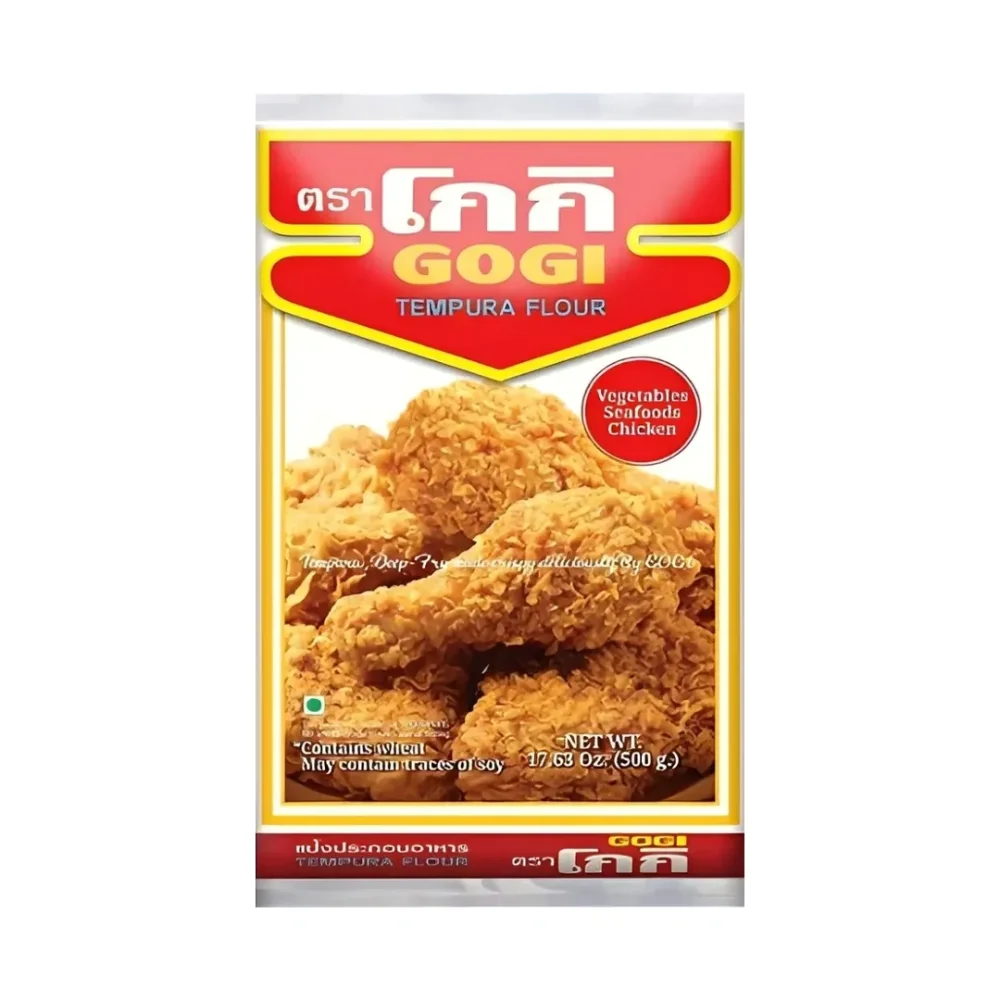
One home way to "stall" crispiness is quick frying in a light batter. Ready mixes can help for home tempura (e.g. Gogi Tempura) – the idea is that a crispy layer adds immediate contrast to noodles, rice, or salad.
5) When you don't want to chase heat: cold bowls, salads, and rolls as "quick street food"
In many parts of Asia, cold or lukewarm dishes are important partly because they make sense in warm and humid climates: they refresh, are not heavy, and work with herbs, citrus, and sour components. They are also naturally quick – and therefore work well as street food.
For home practice, it is useful to build such a dish "in layers" so that it tastes ready even without complicated cooking:
- Base: rice, noodles, leaves, vegetables, rice paper.
- Main texture carrier: tofu, tempeh, eggs, grilled meat, shrimp, mushrooms.
- Crispy or fresh layer: cucumber, carrot, sprouts, cabbage, herbs (possibly also crunchier fruit in an "unripe" form for salads).
- Dressing or dip: can be based on fish sauce/soy/citrus/vinegar or peanuts and sesame – the main point is that it is the flavor axis of the dish, not a detail.
- Final contrast: chili, lime, sesame, peanuts, fried onion, pickles.
Thanks to this approach, dishes like gỏi cuốn (Vietnamese summer rolls), noodle salads, som tam (green papaya salad), larb, or cold noodle bowls make sense: they are not "side dishes" but full-fledged street food meals that rely on freshness, acidity, and dip.
The most common mistakes in home "street food style" (and how to fix them)
- The effort to literally copy the market (including all the steps and effects) → Instead, copy the principle: quick service, bold flavor, dip/finishing, texture. The heat and atmosphere at home usually can’t be replicated, but the flavor profile can.
- Too many ingredients without a clear direction → Choose one axis (e.g. peanut, chili-garlic, slightly sour herbal) and stick to it. Street food should be readable.
- Overcooked noodles → This guards the very basic texture. Once the noodles are overcooked, even a good sauce won’t save them. If you’re not sure, start with a shorter time and cook longer in half-minute increments.
- Too much sauce (or almost none at all) → Add the sauce gradually. The goal is for the noodles/rice to be coated, not drowned. For dry noodles, it’s better to add sauce by spoonfuls, mix, and then adjust.
- Lacking acidity and freshness → At home, the impression is often 'heavier' than at the market. The fix is usually simple: a bit of citrus juice, herbs, crunchy vegetables, or pickles as a final contrast.
- Everything is soft → Add a crunchy layer (fresh or fried). Street food often relies on contrast, not complexity.
What to take away from the article
- Street food in Asia is primarily everyday, fast, and specialized food with a clear connection to place and bold flavor.
- Homemade street food is not about an exact copy of a stall: at home you usually won’t replicate the same heat, rhythm, and atmosphere, but you can very well imitate the flavor profile, finishing, and texture.
- The fastest way at home goes through one bold base (paste/sauce/ready-made), which you complement with fresh contrast and final seasoning.
- For noodles and rice, the carrier and consistency matter: watch the type, time, and amount of sauce, so you don’t kill the texture.
- The 'street food impression' is often made in the last minute: acidity, chili, dip, crunchy element and immediate service.
- Cold bowls, salads, and rolls are not secondary: in Asia, they are commonly full-fledged street food and at home they are often one of the easiest ways to achieve fresh, lively flavor without complicated preparation.

Read next
If you want to explore this topic further, continue with these related blog guides and articles:
