


 Česky (CZK)
 Slovensky (EUR)
 Deutsch (EUR)
 Austria
 Belgium
 Bulgaria
 Croatia
 Denmark
 Estonia
 Finland
 France
 Germany
 Greece
 Hungary
 Italy
Italy Latvia
 Lithuania
 Luxembourg
 Netherlands
 Poland
 Portugal
 Romania
 Slovenia
 Spain
Spain Sweden










How to choose coconut milk by fat content and usage (and why it matters)
Coconut milk looks like a simple ingredient, but in practice it is one of the categories where people get confused most often: they buy "coconut milk," cook curry, and the result is watery and lacking depth. In most cases, it's not a recipe error but a wrongly chosen type – mainly depending on fat content, the ratio of coconut component to water, and how the product behaves when heated. This guide will help you pick the right variant for curry, soups like tom kha, desserts, and drinks and avoid the most common mistakes.
🌶️ What is coconut milk and why do different brands behave so differently
Coconut milk is made from the white flesh of a mature coconut. The flesh is crushed, pressed, and extracted – with or without water. The result is a white emulsion, in which the key role is played by fat: it carries a large part of the flavor, aroma, and creamy texture.
That is why not all coconut milks are "the same." Two products with the same name can have completely different density, roundness of flavor, and performance in a sauce. For shelf-stable versions, a good guide is mainly fat content and composition – that is, how much of the product consists of coconut component and how much it is "diluted" with water.
In Asian cuisine, coconut milk is one of the most important ingredients for Thai curries, soups like tom kha, Filipino dishes such as ginataan, and a number of Malaysian and Indonesian sauces and stews. It can be equally important in desserts – just often a different type is needed there than for soup.
Types of coconut milk you might encounter: full-fat, cream, concentrate, and "light"
Full-fat coconut milk: a universal choice for curry, soups, and some desserts
The full-fat variant has a higher fat content, providing a fuller flavor and better ability to create a creamy "body" for sauces. When you want coconut in your dish to be not just a white color but a real taste and texture, this is usually your go-to.
Coconut cream: when you need more richness and thickness
Coconut cream is thicker and richer than regular coconut milk. It makes sense when you want a more pronounced creaminess (typically desserts, creams, puddings), or when you intentionally want a "richer" soup or sauce. In some dishes, a combination works well: a base of milk with a smaller portion of cream for a rounder result.
Concentrated coconut cream and coconut cream: coconut intensity vs. misleading names
Concentrated coconut cream is useful where you need high coconut intensity and minimal water. It's handy in recipes where you don't want to unnecessarily thin the sauce but want the coconut "body."
Beware of the term coconut cream: it can be purely a culinary product, but sometimes also something leaning towards a dessert. Without reading the label, you can't rely on the name alone.
Light coconut milk: lighter but often disappointing in curry
Light coconut milk is a lighter version with lower fat content. It is produced either by separating the thicker fatty part or further dilution. It is suitable where you want less fat but still a coconut note – typically in lighter soups, smoothies, drinks, or recipes where coconut should not dominate.
However, it is often too weak for rich curries, bold sauces, or coconut desserts. When a dish feels "lacking restaurant depth," the reason is usually simple: fat carries a large part of flavor and texture.
🍳 How to choose coconut milk in practice: label, fat content, and specific kitchen use
1) How to read the label: fat, coconut component, composition, and stabilization
For coconut milk, a simple rule applies: first clarify your use, then choose the specific product. What to watch for:
- Fat content – for curry and desserts you usually want a "fuller" type; for drinks and light recipes, a milder variant makes sense.
- Ratio of coconut component to water – a more watery product can easily disappear in a sauce.
- Short and clear composition – is a practical guide when deciding between two similar variants.
- Stabilization and behavior after heating – what matters is the reality in the pot: better-quality milk tastes round when heated, not like "white water."
As a practical sign: natural separation of fat and liquid is not automatically a defect (more in the mistakes section).
2) Thai curry: fat is part of the recipe, not "extra"
For Thai curry, look for full-fat coconut milk (or cream, depending on the desired thickness). Curry is a dish type where coconut often plays the main role – it forms the body of the sauce, carries the aroma of the paste, and softens the spiciness.
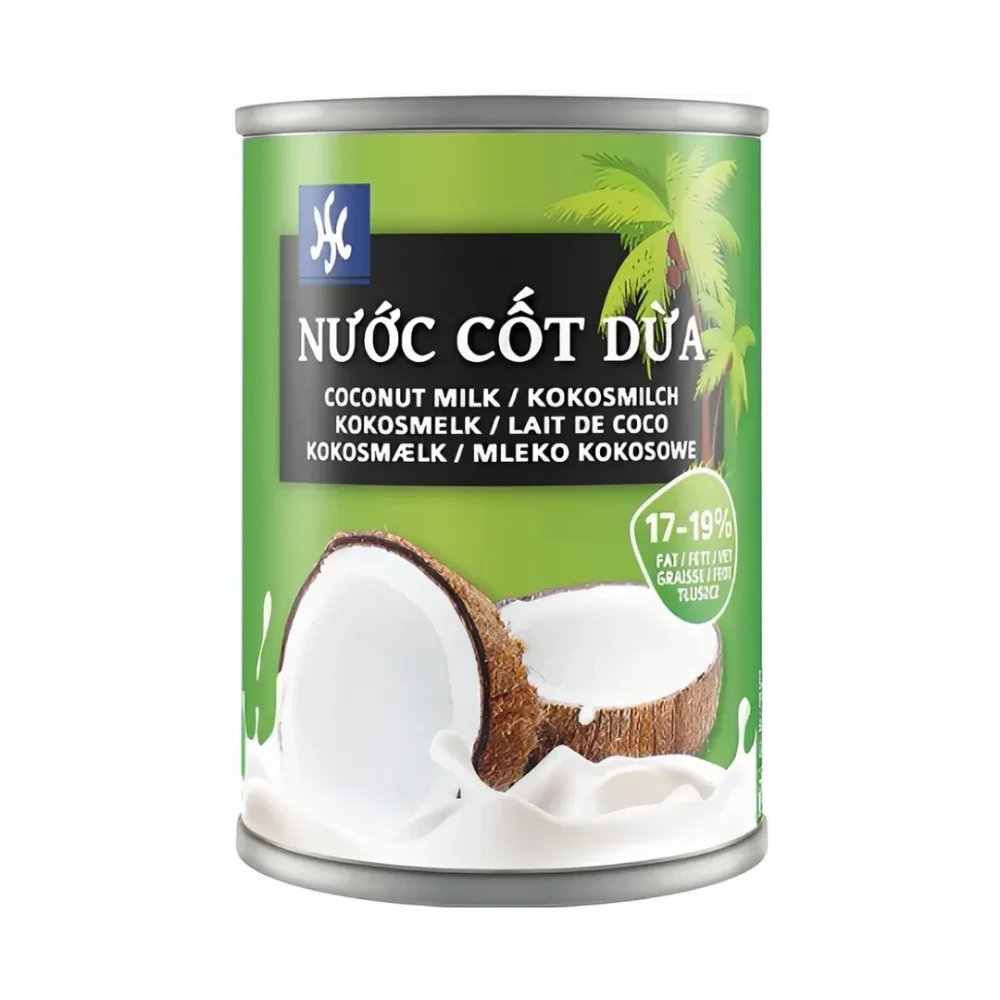
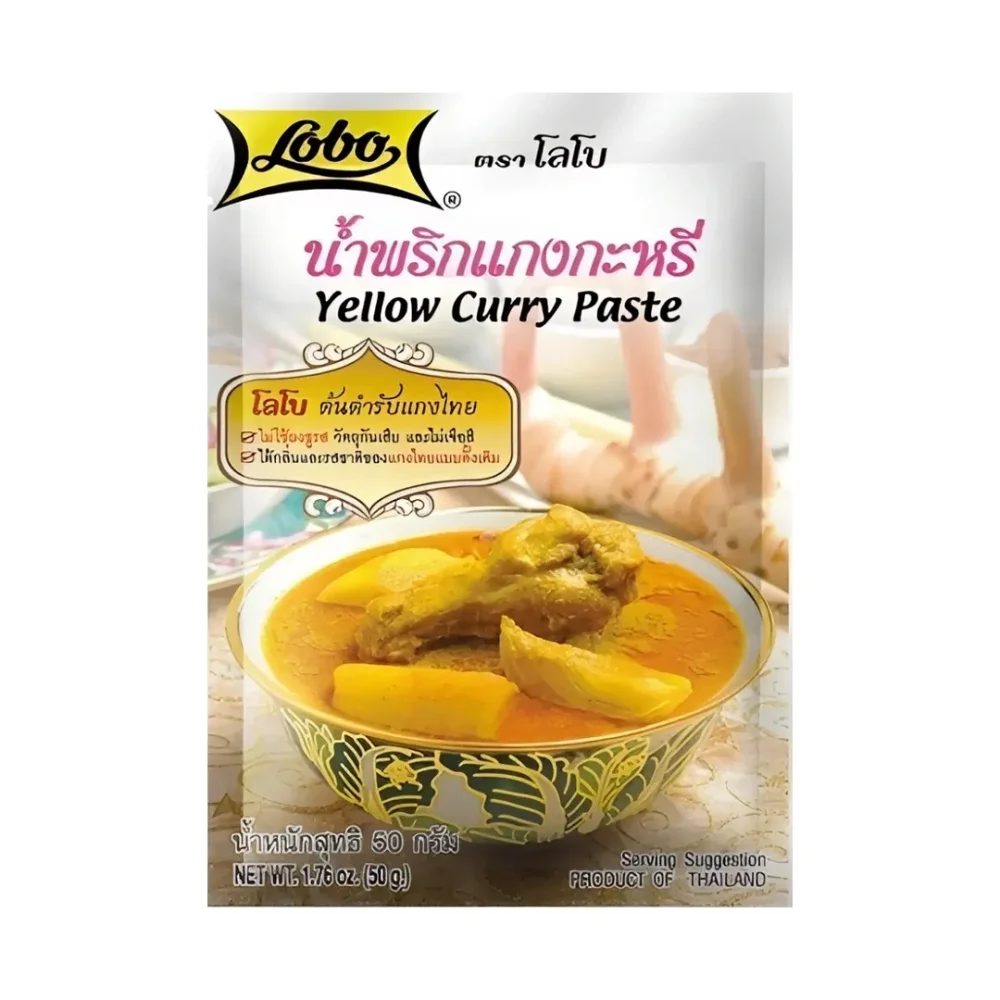
If you want a concrete example of full-fat style, you can reach for H&S Coconut Milk 17–19% (400 ml). And if you cook “faster but still authentically,” a practical option is combining it with curry paste – for example, Lobo yellow curry paste works as a base that coconut milk then rounds.
Curry is often served with rice; if you want universal sides handy as a guidepost, use rice and rice products.
3) Tom kha and similar soups: coconut as a creamy body, not a "heavy sauce"
For soups like tom kha typically coconut milk is used, or a combination of milk and a smaller portion of coconut cream, if you want a richer result. The soup should be creamy and fragrant but still "soupy" – so it’s common to adjust final thickness gradually (usually by adding liquid to a fuller base, not the other way around).
4) Desserts, creams, and puddings: often better to go for thicker variants
For desserts, coconut cream or good quality full-fat coconut milk works well. For creams and puddings, a thicker variant is usually better as structure is as important as taste. If you’re curious about all the coconut products in the kitchen (and why they behave differently), a broader orientation in coconut products helps – coconut is not just one ingredient but a whole "family" of products with various textures and functions.
As inspiration for sweet combinations, a guide can be fruit and fruit products (for example, when balancing coconut with fruit acidity).
5) Smoothies, drinks, and lighter cooking: here "light" makes sense
For drinks, smoothies, lighter soups, or diet modifications, light coconut milk can be practical: you don’t want as much fat but still want a coconut note. Just keep in mind that for dishes where coconut forms the flavor and body base (curry, bold sauces, coconut desserts), it will be weaker.
Common mistakes and how to avoid them: fat separation, storage after opening, and mix-ups
"The milk separated, it’s spoiled." Often not true
In canned and carton products, it’s common that coconut milk separates into a thicker fat layer and a more liquid layer. The separation itself is not automatically a sign of spoilage – often it is natural emulsion behavior.
What to do at home:
- If you want a uniform consistency, stir or briefly heat and whisk smooth.
- If you cook a dish where you want more thickness, you can consciously use the "thicker" part (and adjust thickness with the liquid part).
Poor storage after opening: coconut milk is not a pantry staple
Coconut milk and coconut cream often look more stable after opening than they really are. After opening, it’s good to consider that these are perishable foods.
- After opening, put the product in the fridge.
- Work cleanly (clean spoon, clean container).
- Don’t leave it unnecessarily long in the original opened can; if more practical, transfer it to a clean sealable container.
- Layer separation is not the main sign of a problem; more important is smell, taste, and overall condition.
Mixing up coconut milk and cream (and why "substitution" sometimes changes the whole dish)
Coconut milk and coconut cream do not have the same consistency – sometimes they can be functionally interchanged within the same family (if you adjust thickness), other times it shifts the dish outside the intended style.
Even trickier is trying to substitute coconut products with dairy cream: it brings creaminess but changes the flavor profile. And "water with coconut flavor" doesn't solve fat or texture. For curries and desserts where coconut forms the backbone of body and flavor, choosing the right type is more important than for a small supplementary amount in a wider sauce.
What to take away from the article
- Fat in coconut milk is not a detail: it carries flavor, aroma, and creamy texture – that’s why "light" often isn’t suitable for curry and desserts.
- Choose according to use: curry needs fullness, tom kha coconut body (possibly a bit of extra cream), desserts often thicker variant.
- Don’t be fooled by the packaging: coconut milk is not one standard; fat, ratio of coconut component to water, and behavior when heated decides.
- Separated fat is not automatically a problem – often it’s a natural emulsion separation.
- Store in the fridge and cleanly after opening: coconut products are sensitive and quality can change faster than expected.

Read next
If you want to explore this topic further, continue with these related blog guides and articles:
