


 Česky (CZK)
 Slovensky (EUR)
 Deutsch (EUR)
 Austria
 Belgium
 Bulgaria
 Croatia
 Denmark
 Estonia
 Finland
 France
 Germany
 Greece
 Hungary
 Italy
Italy Latvia
 Lithuania
 Luxembourg
 Netherlands
 Poland
 Portugal
 Romania
 Slovenia
 Spain
Spain Sweden










How to choose oil for frying and grilling: technique matters, not the name on the bottle
In Asian cooking, oil is often not just "something for the pan." Sometimes it is purely a working medium for high temperature, other times a carrier of aroma added only at the very end. This is the most common source of errors: people buy oil of the right category but the wrong type for the specific technique. In this guide, you will clarify how to think about oil when frying, deep-frying, and grilling – practically and without unnecessary myths.
Why oil is so important in frying and grilling
In Asian kitchens, the outcome is decided not only by what you cook but also how you work with heat, fat, and texture. The same ingredient can taste completely different depending on whether you sear it quickly, fry it in a small layer of fat, deep-fry it, or expose it to the dry heat of a grill.
Oil plays a role in two ways:
- as a technical tool (stable temperature management, crispiness, quick searing),
- as a flavoring tool (aroma, "the first layer of flavor," finishing the dish).
A good choice of oil thus doesn’t start with the brand or impression by smelling, but with the question: what role does the oil have in this specific dish and technique?
Frying in Asia isn’t just one technique: from light searing to double frying
Several different procedures are hidden under "frying" in practice. Each demands different temperature, amount of fat, and timing:
- light frying in a small layer of fat,
- quick searing (typically a short time at a higher temperature),
- deep frying,
- double frying (for extra crispiness),
- frying doughs, dumplings, tofu, and some desserts.
Why is frying so important? Because it creates crispiness, gives contrast to a juicy or soft center and often adds "readiness" to the dish from the very first bite. This applies to typical dishes like tempura, spring rolls, various crispy fried street food pieces or fried tofu.
What this means for oil selection
The biggest difference in frying is whether you primarily use the oil as a heat carrier, or want it to also be a distinct flavor element. For most techniques (quick searing, classic frying, deep-frying), oil is primarily technical. For aromatic oils (typically sesame oils), it is the opposite: they are meant to be flavorful and often are added only at the end.
Deep frying without unnecessary greasiness: oil is just part of the equation
Deep frying isn’t just "a lot of oil." When technically mastered, the result doesn’t have to be excessively greasy. Key points from practice are:
- Correct oil temperature – and especially do not let it drop too low during frying.
- Don’t overload the batch – putting too much in the oil causes the temperature to drop sharply and the surface starts to "drink" oil.
- Prepare and dry the ingredient well – water on the surface means worse crispiness and bigger "battle" with temperature.
- After frying, let it drain and rest briefly – crispiness often stabilizes only after removal.
Keep this in mind when choosing oil, too: don’t look for a "magic bottle for frying." Often the bigger difference is in how you work with temperature and quantities rather than which variant you reach for.
Grilling the Asian way: from yakitori through satay to tandoor
Grilling in Asia is also not just one technique. It can be open fire, grate, metal plate, charcoal, skewers, or a clay oven. Typical for the final taste is:
- dry direct or indirect heat,
- smokiness and a seared surface,
- quick reaction of sugar, fat, and proteins on the surface,
- the need for precise timing.
Examples of styles where this is nicely seen: Japanese yakitori (grilled skewers), Japanese grilled styles like yakiniku, Southeast Asian satay or Indian tandoori cuisine with the tandooroven.
What this means for oil
Oil in grilling is often more a part of the marinade or a light seasoning than the main medium of heat. It is therefore useful to return to the basic question: Is the oil on the grill mainly supposed to "work," or should it be distinctly noticeable? In many cases, it makes sense to keep aromatic oils more as a final touch and not overload the heating phase itself with them.
👃 Two roles of oil most commonly confused: working vs. aromatic (sesame)
One of the most common mistakes in home Asian cooking is confusing "stronger" with "better" – using aromatic oil as universal. However, a simple rule applies: choose by function, not by impression.
A typical example: sesame oil is great for finishing dishes, but it’s not sensible to make it a universal frying oil. It often works as "aroma at the end" – a few drops can change the character of a dish more than a large amount.
How to choose sesame oil by flavor and role
Even among sesame oils, there are differences in style and intensity. Practically, it helps to think like this:
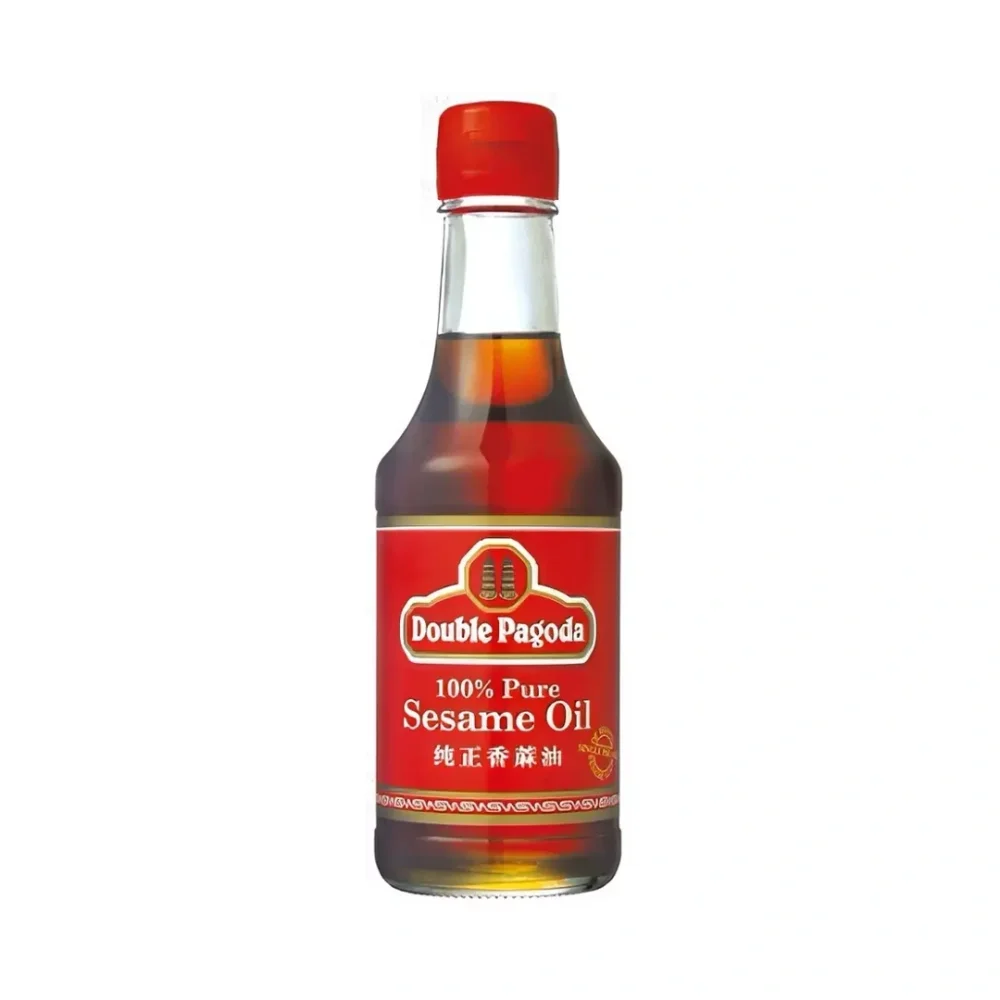
- I want a pronounced nutty aroma for final seasoning (dip, dressing, sauce, finishing noodles or rice). An example that fits this role well: Double Pagoda sesame oil 250 ml.
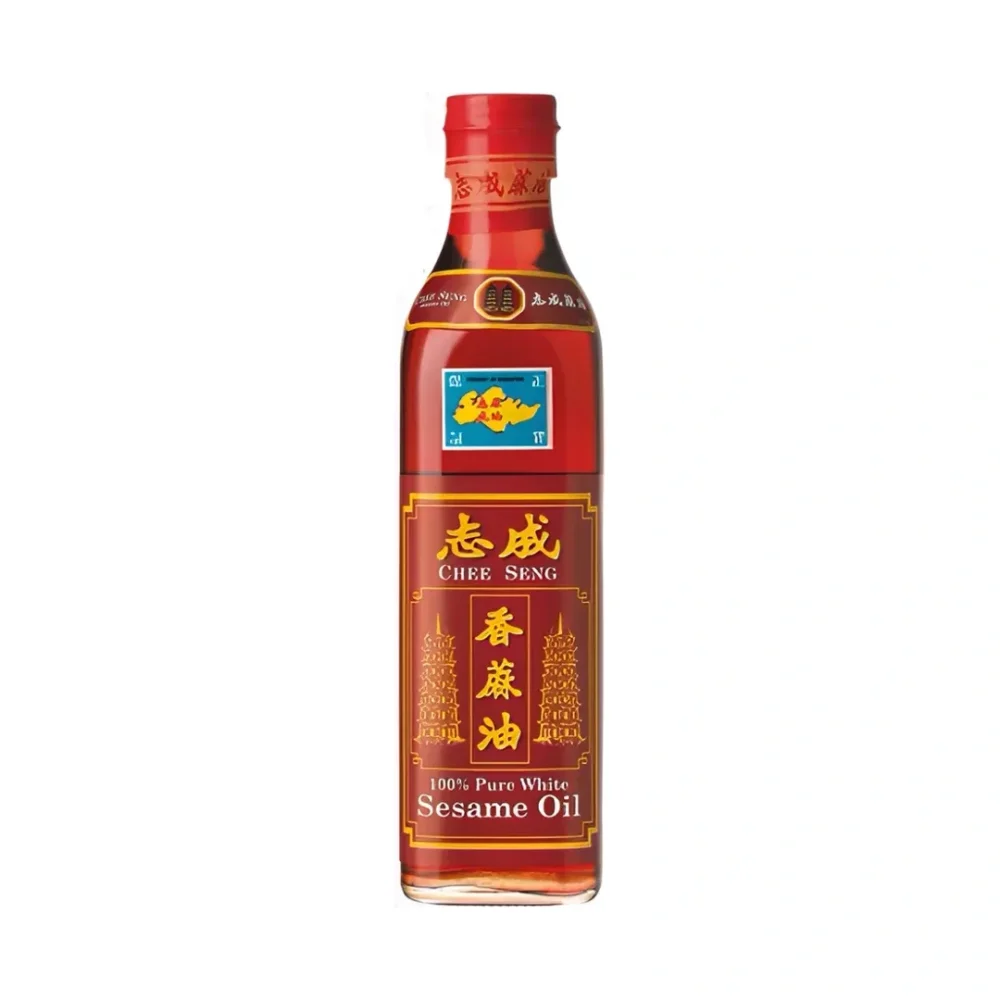
- I want a milder sesame profile for marinades, dressings, and dips where you don’t want the aroma to overpower the rest. Representing the milder approach can be Chee Seng white sesame oil 375 ml.
- I want to start cautiously and dose in drops, because I mainly use sesame oil as a "finishing touch." For this approach, a smaller bottle is practical, e.g. sesame oil 150 ml (Oh Aik Guan).
How to choose oil step by step (and use it correctly at home immediately)
To not buy "the right category but the wrong type," proceed systematically when choosing and using:
1) First name the technique: frying, deep-frying, or grill?
- Light frying / quick searing: oil is primarily a technical tool. Prepare everything in advance (cutting, measuring sauces) because the high temperature waits for no one.
- Deep frying: watch temperature, batches, and dry surfaces of ingredients. Oil deserves discipline more than a "secret trick."
- Grilling: you deal with dry heat and precise timing. Oil often plays a role in the marinade or only at finishing.
2) Distinguish "base" vs. "flavored product"
For Asian ingredients, it is very useful to monitor whether you are buying a base ingredient (which should work universally), or a flavored product (which should be distinct and used intentionally). This typically is decided by sesame oil: it is often an aromatic final component, not a working oil for everyday frying.
👃 3) Learn simple dosing of aromatic oil
The most practical rule for sesame oil at home: start with little and add gradually. In many dishes, it makes sense to add it only at the end:
- to cooked noodles or rice: start with a few drops, mix, and then add more if needed,
- to dressing or dip: add in small doses so the aroma doesn’t overpower the rest.
4) When frying noodles in a wok, think of oil and sauce as "technique"
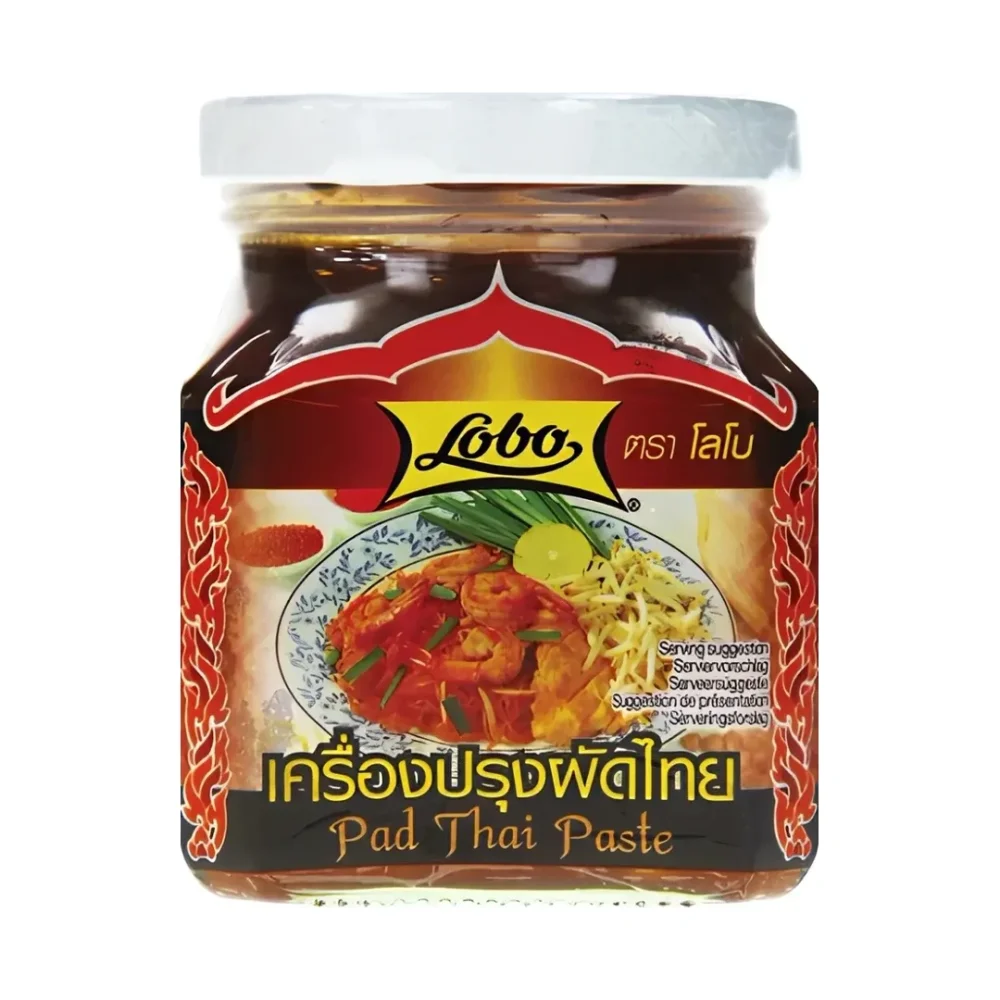
Stir-fry (quick frying) rests on precise temperature and timing. In noodle dishes, it’s often not only the oil but also how the sauce behaves during frying and binds to the noodles. If you want to simplify this style and get a stable result, a ready-made base made directly for frying in a pan or wok can be useful – for example Pad Thai sauce (Lobo) 280 g. You can then use sesame oil as a final seasoning, not as the main frying fat.
For choosing the right type of noodles for frying and soups, it helps to have a guide on hand: Noodles.
Oil storage: safe vs. fragrant is not the same
With oils (and generally with fatty aromatic components), it's useful to distinguish two things: whether the product is still health-safe, and whether it is still in the best flavor condition. Aromatic oils often do not "spoil" dramatically, but their scent and purity can change faster than people expect.
For sesame oil, the most damaging after opening is:
- light,
- heat,
- long standing near the stove,
- and unnecessarily large contact with air.
If you consume sesame oil quickly, often a cooler dark place is enough. With slower use, a refrigerator can make sense (expect the oil to partially thicken).
🍳 Most common mistakes when choosing and using oil (and how to fix them)
- I use sesame oil as a universal frying oil because it "has flavor".
Fix: keep sesame oil as an aromatic component for the end. For frying, work with oil whose role is mainly technical. - Frying is greasy, so the oil is to blame.
Fix: first check the technique: the temperature must not drop, portions must not be overloaded, the ingredient must be prepared and dried, and it must drain after removal. - I want an "authentic" flavor, so I take the strongest oil for everything.
Fix: do not confuse authenticity, strength, and quality. Boldness is just one attribute – sometimes the oil should be in the background, sometimes the final touch. - I don't care about storage – the oil is in a bottle and it's fat after all.
Fix: aromatic oils are sensitive to light and heat. Move them away from the stove, minimize air contact, and watch that they do not "fade" before you can consume them.
What to take from the article
- Choose oil based on technique: light frying, quick searing, frying and grilling are different disciplines.
- Distinguish working oil (heat carrier) and aromatic oil (seasoning). Sesame oil typically belongs to the second group.
- For frying, the main factors are temperature, portion size and dry surface – not a "secret" oil brand.
- Protect aromatic oils from light and heat; they may be safe, but flavor-weary.

Read next
If you want to explore this topic further, continue with these related blog guides and articles:
