ketja manis

Products

Articles

Taste of Indonesian cuisine: sambal, kecap manis, coconut, and rice as the center of the meal

Taste of Indonesian cuisine: sambal, kecap manis, coconut, and rice as the center of the meal

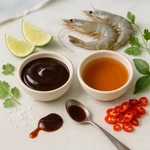
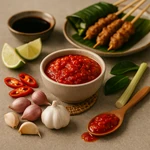
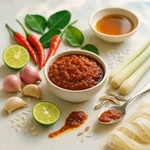
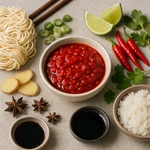
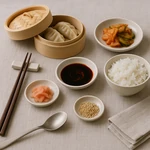
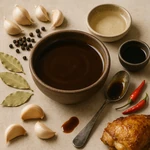
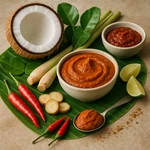
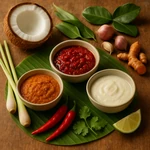
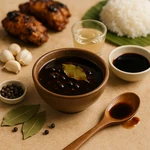
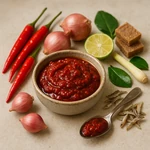
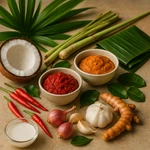
Indonesian cuisine is not a single "national taste," but a broad family of regional styles spread across a vast archipelago. Yet, it repeatedly returns to several fixed points: rice as the center of the meal, chili and sambal, sweet-salty depth thanks to kecap manis, aromatic pastes, and coconut, which can both soften and intensely concentrate the flavor. In this article, we will put these pillars together so that when cooking at home for the first time, you know what you are actually looking for and why it tastes "Indonesian."


How to start with Indonesian cuisine: rice, sambal, kecap manis, and a few dishes that will teach you the most

How to start with Indonesian cuisine: rice, sambal, kecap manis, and a few dishes that will teach you the most

Indonesian cuisine is not one "uniform" flavor, but a huge world of regional styles across the islands. The good news is that starting at home is surprisingly easy if you don't try to cook everything at once. In the article, we will show what is typical for Indonesia, how to recognize its flavor, what the most important differences are (including a brief orientation in island Southeast Asia), and how to choose your first ingredients and first dishes without unnecessary mistakes.


Typical Indonesian ingredients: what makes Indonesia Indonesian (and how to start with them at home)

Typical Indonesian ingredients: what makes Indonesia Indonesian (and how to start with them at home)

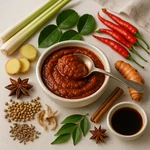
Indonesian cuisine is a huge island world – from Sumatra through Java to Bali – yet it has a few common ingredients that you recognize at the first taste. In this guide, you will find an overview of key Indonesian ingredients, their role in the food, main differences (especially in sambal, kecap manis, and coconut products), and a practical guide on how to cook with them without unnecessary mistakes.


Oyster vs. fish sauce: what is the difference and when to use each

Oyster vs. fish sauce: what is the difference and when to use each

Oyster and fish sauces can be easily confused at first glance: both are among the “basic” Asian seasonings and both can add distinct umami. However, they have different roles in the kitchen. Once you understand the difference between their roles (salting vs. rounding and connecting flavors), you will cook more confidently – and you will stop unintentionally shifting dishes into a completely different flavor logic.


Mee Goreng (Southeast Asian Fried Noodles) – Easy Weeknight Recipe

Mee Goreng (Southeast Asian Fried Noodles) – Easy Weeknight Recipe

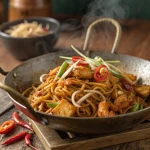
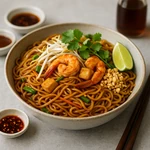
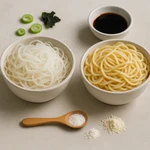
Mee goreng is the kind of dish you make once and then crave regularly: springy noodles tossed in a sweet-savoury, lightly spicy sauce, finished fast over high heat. This version is flexible (chicken, shrimp, tofu, or veg), works in a wok or large pan, and comes together quickly when you prep everything first.


All about soy sauce

All about soy sauce

Soy sauce is one of the oldest condiments in the world. What is it made of, what types we know and other tips in our blog.


Nasi goreng, fried rice and “Cantonese” rice: how to tell them apart and what to expect on the plate

Nasi goreng, fried rice and “Cantonese” rice: how to tell them apart and what to expect on the plate

On menus and in home cooking, three names for “pan” rice often meet: nasi goreng, fried rice and Cantonese rice. They sound similar but do not mean the same thing. In this guide we'll clarify what is a technique (fried rice), what is a specific national style (nasi goreng) and why it makes sense to ask for clarification with “Cantonese rice.” And most importantly: how to choose the right rice and how to achieve good flavor at home without cooking “by one universal recipe.”


Typical Indonesian dishes: what to taste and how to quickly get your bearings

Typical Indonesian dishes: what to taste and how to quickly get your bearings

Indonesian cuisine is not a single uniform style, but a large world of regional traditions spread across a vast archipelago. Yet it has clearly recognizable common features: rice as the center of the meal, pronounced chili (often in the form of sambal), aromatic bases and frequent use of coconut. The article provides an overview of the most typical Indonesian dishes (nasi goreng, rendang, satay and gado-gado), an explanation of what makes them typical, and practical tips on how to start cooking them at home.


Typical Malaysian dishes: from nasi lemak to laksa (and how to understand them)

Typical Malaysian dishes: from nasi lemak to laksa (and how to understand them)

Malaysian cuisine is hard to fit into one "typical flavor" – and that is exactly its strength. It is a practical mix of Malay, Chinese, Indian, Peranakan, and local Bornean influences, best understood through specific dishes: coconut rice nasi lemak, satay skewers, various worlds of laksa, festive rendang, and simple chicken rice. The article provides orientation, differences, and tips on how to recreate Malaysian flavors at home without unnecessary mistakes.


How to choose fermented and specialty soy products: sauces, pastes and “not tofu”

How to choose fermented and specialty soy products: sauces, pastes and “not tofu”

Fermented and specialty soy products are two different things in the kitchen at once: some of them act as a flavor base (soy sauces, fermented pastes), others are standalone ingredients with their own texture (yuba, aburaage, fermented tofu). Once you clarify that role, the “similar” names will stop confusing you and you’ll start choosing based on what the ingredient should actually do in the dish.


Bami Goreng Noodles (Indonesian-Style Fried Noodles) — Easy Weeknight Recipe

Bami Goreng Noodles (Indonesian-Style Fried Noodles) — Easy Weeknight Recipe

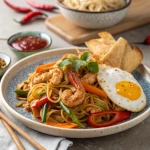
Bami Goreng is Indonesia’s beloved fried noodle dish: springy noodles tossed in a savory-sweet soy seasoning, quickly stir-fried with vegetables and your choice of chicken, shrimp, or tofu, then finished with egg and a squeeze of lime. This version is fast, flexible, and designed to work well on a home stovetop.


Influences in Malaysian cuisine: how the Malay base, Chinese wok, and Indian spices meet

Influences in Malaysian cuisine: how the Malay base, Chinese wok, and Indian spices meet

Malaysian cuisine is hard to describe in one sentence because it is not "one" – it is a practical mix of several cuisines that historically met in one territory. These influences (Malay, Chinese, Indian, Peranakan, and Bornean) explain why coconut rice plates, broth noodle soups, and richly spiced dishes coexist – and why it makes sense to learn to read them as different culinary branches.


How to choose tofu: the key is texture (silken vs. firm) and the way it is used

How to choose tofu: the key is texture (silken vs. firm) and the way it is used

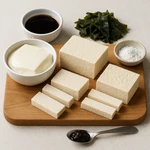
Tofu is not a one-size-fits-all block. The differences between smooth silken tofu and firm tofu are crucial in the kitchen – they determine whether tofu will create a creamy texture in soup or withstand the pan, marinade, and grill. In this guide, you'll learn how tofu is made, what its main types are, and how to choose the right one based on the dish you want to cook.


The taste of Filipino cuisine: acidity, vinegar, rice, and umami that hold the food together

The taste of Filipino cuisine: acidity, vinegar, rice, and umami that hold the food together

Filipino cuisine is often simplified to "adobo," but its typical flavor is much broader and above all very practical: rice as the center of the meal, pronounced acidity (often from vinegar), saltiness and umami from soy and fish seasonings, garlic-onion aroma, and a sense for texture as well as complementary sauces. In the article, we will show you how to recognize these flavors in typical dishes and how to safely start with them at home without unnecessary mistakes.


Taste of Singaporean cuisine: hawker energy, layers of umami, and final seasoning at the table

Taste of Singaporean cuisine: hawker energy, layers of umami, and final seasoning at the table

Singaporean cuisine is hard to summarize in one sentence – and that is exactly what makes it typical. It is a port, urban, and multicultural cuisine: Chinese, Malay, Indian, and Peranakan influences coexist side by side, but in practice, you recognize it best by how it works with sauces, broths, chili, coconut, and the "final touch" at the table. In the article, we will break down its flavor layers based on specific dishes (chicken rice, laksa, chili crab) and show how to bring this logic home without complicated recipes.


Typical Singaporean dishes: what to taste and how to understand them

Typical Singaporean dishes: what to taste and how to understand them

Singaporean cuisine is not a "single national cuisine" in the traditional sense. It is an urban, port, and multicultural gastronomy that arose from the meeting of Chinese, Malay, Indian, Peranakan, and other influences – and is best understood through specific dishes and the environment where they are eaten every day. This guide features iconic Singaporean dishes, explanations of what makes them typical, and practical tips on how to approach them at home without unnecessary mistakes.


Rice vs. wheat noodles: when to choose which (and why it's not just "about taste")

Rice vs. wheat noodles: when to choose which (and why it's not just "about taste")

Rice and wheat noodles behave similarly at first glance, but they serve completely different roles in the bowl. The difference is not just in the ingredient – it reflects in elasticity, "bite", behavior in broth, in the wok, and how easily the noodles overcook. This guide will help you pick the right type based on the dish (pho, pad thai, ramen, udon, mie goreng…) and avoid the most common mistakes.


Tempeh, edamame, and other soy products: how to understand and use them in the kitchen

Tempeh, edamame, and other soy products: how to understand and use them in the kitchen

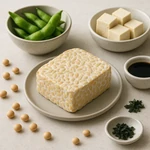
Soy products are not just one "protein cube" in different packages. From the same crop comes delicate tofu, fresh edamame, soy milk, and also distinctive fermented products like tempeh – and each behaves completely differently in the kitchen. In this article, you will clarify the differences, typical uses, and the most common mistakes that lead to disappointment.


How to serve Asian food at home so it makes sense

How to serve Asian food at home so it makes sense

Serving is not just "nice extra dishes." For many Asian dishes, it directly determines how they will be eaten: whether they will keep the temperature, whether it will be easy to combine rice with sauce or broth with noodles, and whether the communal meal in the middle of the table will work naturally or chaotically. In this article, you will find a practical home model that makes sense even without collecting and without the feeling that you need a complete exotic set.


Typical Filipino dishes: adobo, sinigang, kinilaw and sisig (and how to understand them at the table)

Typical Filipino dishes: adobo, sinigang, kinilaw and sisig (and how to understand them at the table)

Filipino cuisine has a clear identity, but it cannot be reduced to a single "national" dish. Typical Filipino dishes only make sense when you understand three things: rice is the center of the plate, sourness and saltiness are the main flavor axis, and vinegar and salty seasonings play an important role. In this article, we will show you four representative dishes (adobo, sinigang, kinilaw, sisig) and practically explain how to eat them and why they taste the way they do.


Asian noodle guide: how to choose the right type for soup, wok, and cold bowls

Asian noodle guide: how to choose the right type for soup, wok, and cold bowls

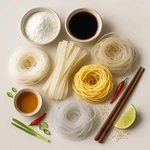
Asian noodles are not a single universal ingredient, but a large family of products. They differ in base (wheat, rice, buckwheat, starch, konjac), thickness, elasticity, and how they react to broth, sauce, or quick stir-frying. When you know what to expect from noodles, you will choose much more easily—and stop struggling at home with clumped or overcooked "mash."


How to start with Singaporean cuisine: from hawker logic to your first meals at home

How to start with Singaporean cuisine: from hawker logic to your first meals at home

Singaporean cuisine is best understood as an urban, port “crossroads of flavors”: Chinese, Malay, Indian and other influences live side by side and create dishes with a clear identity. If you want to start at home, the goal is not to cook “all of Singapore,” but to pick a few typical hawker specialties, understand the role of rice and noodles, broth and coconut components, and learn to work with chilli dips (sambal) and table-seasonings.


How to flavor tofu and vegetables: marinade, glaze, and final seasoning without unnecessary mistakes

How to flavor tofu and vegetables: marinade, glaze, and final seasoning without unnecessary mistakes

Tofu and vegetables can be great, but on their own, they often feel 'flat' – lacking saltiness, umami, and aroma. In Asian cuisine, this is not solved with a single universal marinade but with a cleverly divided approach to flavor: some is added in advance, some develops on the pan, and some is refined at the end. When you understand what each step is supposed to do, seasoning will start to make sense and the results will be consistently better.


How to read a soy sauce label: what really matters (and what confuses you)

How to read a soy sauce label: what really matters (and what confuses you)

Soy sauce looks simple at first glance: dark, salty, “somehow Asian.” But under the same name, there are more distinctly different styles - from Japanese shoyu through Chinese light and dark sauces to Thai variants for wok cooking or sweet Southeast Asian directions. That's why it's worth reading the label: not for the details themselves, but so you don't bring home a sauce that behaves completely differently in the kitchen than you expect.


How to start with Malaysian cuisine: 5 logics to quickly get oriented at home

How to start with Malaysian cuisine: 5 logics to quickly get oriented at home

Malaysian cuisine is not one "typical taste," but a practical mix of several traditions meeting in one country – Malay, Chinese, Indian, Peranakan, and local Bornean. When you want to start with it at home, it doesn’t make sense to learn everything at once. In this guide, you will set simple orientation points (rice vs. noodles, coconut vs. broth, the role of sambal, accompanying sauces and dips) and pick a few first dishes to learn the Malaysian "system" fastest.


Typical Singaporean ingredients: what makes laksa, nasi lemak, and hawker dishes flavorful

Typical Singaporean ingredients: what makes laksa, nasi lemak, and hawker dishes flavorful

Singaporean cuisine originated in a port city where different communities and their techniques have long met. Therefore, you won't find a single "national" pantry here, but a functional mix: rice and noodles, coconut, chili and sambal, soy and fish umami seasonings, aromatics like garlic and ginger – alongside ready-made pastes that have a clear role in specific dishes. In the article, you'll sort out what is typical for Singapore, what the main variants are, and how to start with these ingredients at home without unnecessary mistakes.

%s ...
%s
%image %title %code %s
%s