


 Česky (CZK)
 Slovensky (EUR)
 Deutsch (EUR)
 Austria
 Belgium
 Bulgaria
 Croatia
 Denmark
 Estonia
 Finland
 France
 Germany
 Greece
 Hungary
 Italy
Italy Latvia
 Lithuania
 Luxembourg
 Netherlands
 Poland
 Portugal
 Romania
 Slovenia
 Spain
Spain Sweden










Typical Indonesian ingredients: what makes Indonesia Indonesian (and how to start with them at home)
Indonesian cuisine is a huge island world – from Sumatra through Java to Bali – yet it has a few common ingredients that you recognize at the first taste. In this guide, you will find an overview of key Indonesian ingredients, their role in the food, main differences (especially in sambal, kecap manis, and coconut products), and a practical guide on how to cook with them without unnecessary mistakes.
🍜 Why it makes sense to know "typical Indonesian ingredients"
Indonesia is not a single uniform cuisine – it is an archipelago of regional styles, where Sumatra tastes differently, Java differently, Bali or Sulawesi differently. Yet certain ingredients and flavor principles repeat across the islands: rice as the center of the meal, chili and sambal, aromatic pastes, coconut products, and the importance of fermented seasonings. When you orient yourself around these points, you can assemble the Indonesian taste at home too – without needing to memorize dozens of recipes.
A good way of thinking is simple: Indonesian food often depends on how it connects the base (rice/noodles), sauce or paste, fresh aromatics and table seasoning (for example, sambal). It’s not just "spicy" – it’s bold, layered, and very much about the balance between sweet, salty, sour, and spicy.
🍜 How to quickly categorize Indonesian ingredients: base, depth, freshness, spiciness
Before we dive into individual ingredients, a brief orientation by function helps (not by how many exotic-sounding words you want to check off):
- Food base: most often rice, or rice or wheat noodles.
- "Depth" of flavor: sweet-salty seasoning like kecap manis and also fermented components (typically terasi).
- Creaminess and richness: coconut milk and other coconut products, including coconut sugar.
- Spiciness and character: sambal (and chili in various forms generally).
- Freshness and "opening" the flavor: tamarind and lime.
- Aromatic base: lemongrass, galangal, turmeric + the common pair shallot and garlic.
- Protein and texture: tempeh, tofu, peanuts, and peanut sauce.
Precisely the combination of these groups is why Indonesian food can be both bold and "rounded" – sharp chili often stands alongside coconut, sweet-salty seasoning, and sour components.
🍜 Typical Indonesian ingredients (and what they’re good for in practice)
Rice, rice noodles, and wheat noodles: the base that carries everything else
Rice is the center of a typical meal in Indonesia. In practice, this means sauces, pastes, and side dishes tend to be more pronounced – because it’s assumed you will be "eating them with rice," not on their own. Alongside rice, you will also find rice noodles and wheat noodles (especially useful where you want a quick meal with sauce/paste and a firmer texture).
👃 Sambal: spiciness, aroma, and personality of the dish
Sambal is not one universal "chili sauce." From a practical point of view, the key is to know if you’re holding:
- table sambal (as final seasoning on the plate),
- cooking base (which is first fried and then carries the whole dish),
- a fermented variant (often deeper, more complex),
- or a simpler chili sauce, which primarily adds spiciness.
Quality sambal has character and depthnot just raw heat. In Indonesian logic, sambal is often what allows you to finalize a dish "at the plate" – similar to salt and pepper, just more expressive.
Kecap manis: sweet soy sauce that makes Indonesian flavor “rounded”
Kecap manis (sweet soy sauce) is one of the fastest ways to approach the Indonesian profile. It gives sweetness, saltiness, and a dark color and often meets chili and aromatics. The important thing is that good kecap manis has thickness and balanced sweetness – it should not come across only as a "sweet syrup without depth."
Terasi: fermented depth (and why to treat it cautiously)
Terasi is a typical fermented seasoning that adds "bottom" and umami. In Indonesian cuisine, it belongs among ingredients that can make a big difference even in small amounts – but at the same time demand sensitivity because they are intense. If you’re starting with terasi, treat it as an accentnot as the main flavor.
Coconut milk and coconut sugar: richness, body, and contrast to spiciness
Coconut appears often in Indonesia – especially when the dish is to be richer and more rounded. With coconut milk it’s worth recognizing that it’s not just one standard: differences lie in thickness, fat content, stabilization, and how coconut milk behaves when heated.
A practical rule from ingredient selection: richer types usually fit better into curries and richer dishes,while a lighter version can make sense for lighter uses. A common mistake is expecting "coconut milk" to always deliver the same result.
Coconut sugar is not just a "sweetener" but also a flavor tool – it helps round off sharp and salty components without making the result purely sweet.
Tempeh, tofu, peanuts: protein and texture (not just "meat substitutes")
Tempeh and tofu belong to the Indonesian soy world. Tempeh is fermented, therefore it has its own character – with quality tempeh, important are firm texture and a clean fermented profile. With tofu, quality is recognized by texture, freshness, and taste (and mainly by whether it holds its shape in the dish or crumbles).
Peanuts and peanut sauce are then the typical way to add richness, nuttiness, and pleasant "thickened" taste – they work great as a counterbalance to chili and sourness.
Tamarind and lime: acidity that lifts the dish
Acidity in Southeast Asia often functions as an axis as important as salt. In Indonesian ingredients, tamarind and lime repeat – both can “open” the flavor, lighten coconut and sweeter components, and make the dish livelier. When homemade Indonesian food feels heavy or flat, it’s often because of a lack of acidity.
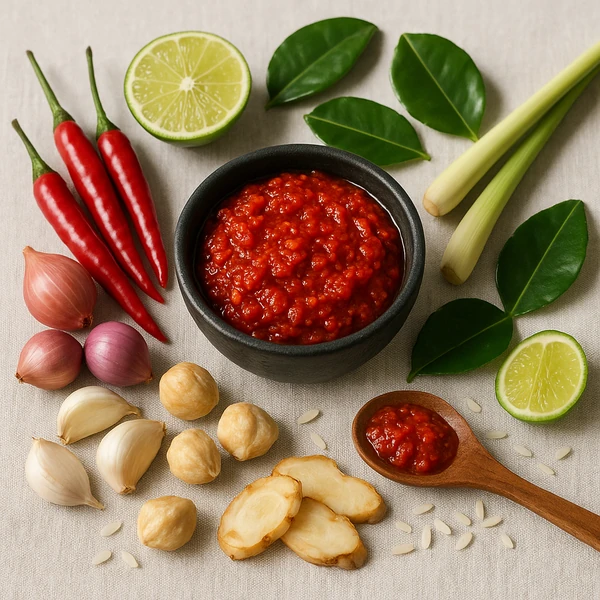
👃 Lemongrass, galangal, turmeric, chili, shallot, garlic: aromatic base
This is the group that forms the typical aroma and "direction" of the dish. In practice, it’s useful to perceive them as a base that meets fat (oil, coconut milk) – only then does it develop. Chili belongs here not only for heat but also as aroma.
Indonesia in the context of the "island axis": how it differs from the Philippines, Malaysia, and Singapore
For quick orientation in island Southeast Asia, it helps to see contrasts (these are not absolute rules, more of a practical map):
- Indonesia typically stands on the combination of sambal + kecap manis + coconut and soy products like tempeh. The result often feels bold, rounded, and "can be sweeter" (for example in some Javanese areas), without it being dessert-like sweetness.
- The Philippines in this axis often identify themselves by the emphasis on vinegar and acidity and by a dish archetype like adobo (as a flavor direction, not a single universal sauce).
- Malaysia and Singapore are perceived as a place where multiple influences meet (urban "hawker" culture) and where dishes like nasi lemak or laksa often appear – usually with a coconut base and strong seasoning (including sambals).
This context is useful especially when choosing: some ingredients (coconut, chili pastes) are shared in the region, but the resulting flavor logic is different. Therefore, it’s good to know whether you want an "Indonesian" sweet-salty profile with kecap manis or a more acidic Filipino direction.
How to start with Indonesian ingredients at home: the minimum that will do the maximum
The worst strategy is to buy everything that sounds exotic. Much more practical is to build the base in layers: a few recurring ingredients and then specialties.
1) The first “functional” base (so you can cook even without a big purchase)
- Rice (as a base) + at least one noodle variant if you like to alternate textures.
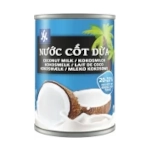
- Coconut milk (for creaminess and richness) – a useful access point can be the category coconut milk.
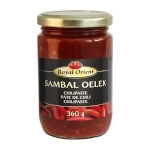
- Sambal or chili paste (for spiciness and character) – the category sambal and chili pastes.
- One sweet-salty seasoning (typically kecap manis) + something sour (lime/tamarind depending on what you use more often).
- Aromatic base (shallot, garlic, chilli + lemongrass/galangal/turmeric depending on what you have available).
2) How to assemble flavor at home without a recipe (practical dosing)
When you have cooked rice and a pan, you can proceed simply and control the taste step by step:
- Sauté the aromatic base in oil (shallot/garlic/chilli, optionally aromatic paste) – the goal is aroma, not burnt edges.
- Add the “body”: coconut milk, or conversely just a little liquid depending on the dish.
- Season towards: in the Indonesian profile, the sweet-salty element (kecap manis) often works, for a spicier direction add more sambal.
- Final adjustment: acidity (lime/tamarind) and optionally a small teaspoon of sambal as table seasoning.
As a rough start, with sambal begin calmly with only 1/2 to 1 teaspoon per serving and add gradually. For sweeter seasonings like kecap manis start with 1–2 tablespoons into the pan (for 1–2 servings) and adjust according to how “dark” and sweet-salty profile you want.
3) First dishes that make sense to start with (without complicated steps)
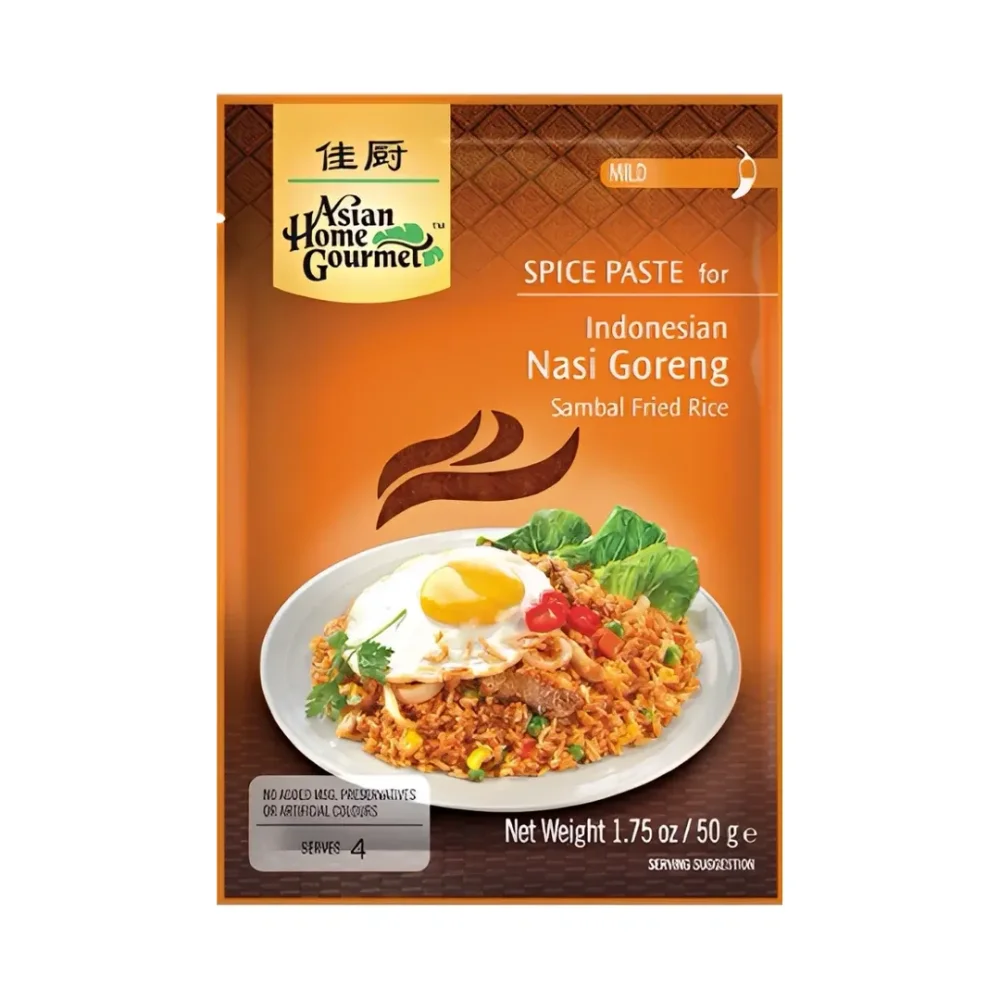
At the beginning, it is good to cook dishes where typical ingredients manifest quickly and clearly. For the Indonesian direction, for example, fried rice nasi goreng, where rice, aromatics and chilli base naturally meet. If you want a simple “bridge” between theory and practice, a ready-made paste can help, showing the typical profile without complicated mixing: AHG Paste for Nasi Goreng rice 50 g.
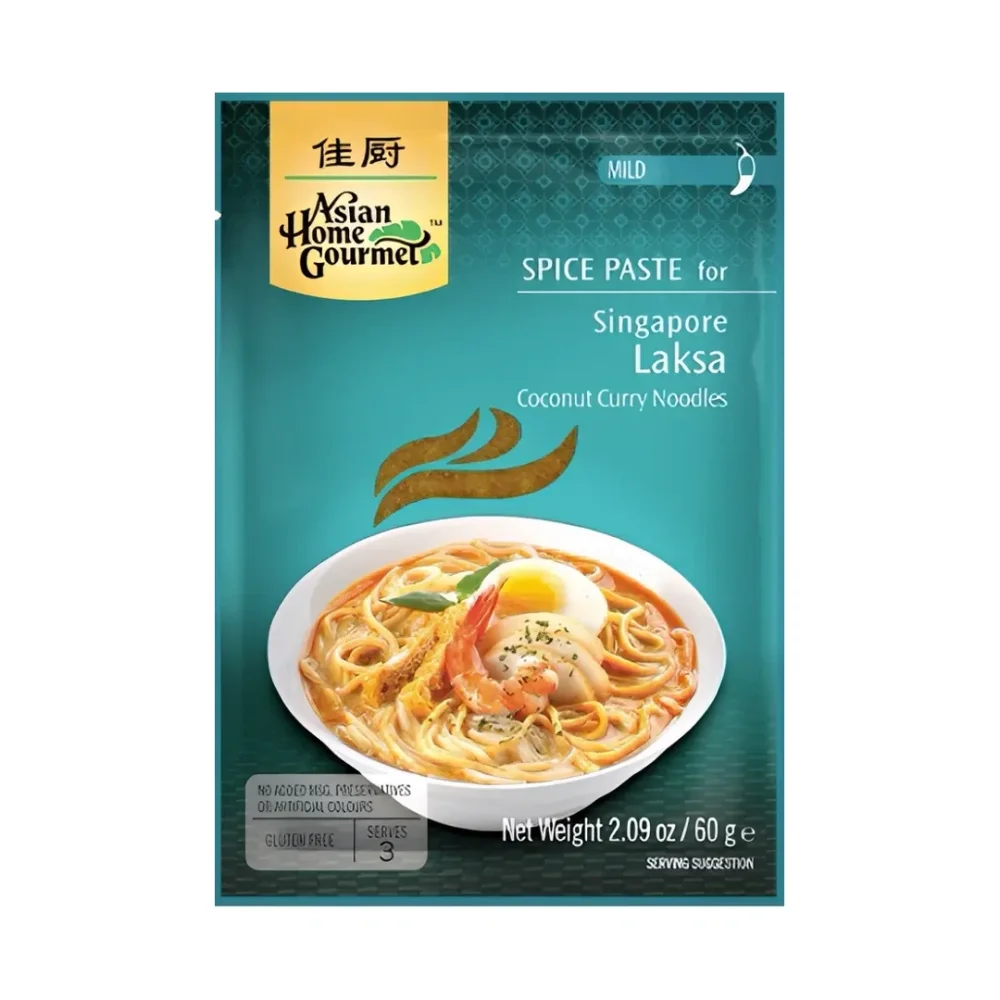
For comparison with the island axis (Malaysia/Singapore), it is good to also know the flavor direction like laksa – creamy coconut curry noodles. There you can nicely see the work with coconut base and strong seasoning: AHG Paste for Coconut Curry Noodles Laksa 60 g. It is not an "Indonesian obligation," but it is a useful comparison if you are attracted by the broader island Southeast Asia.
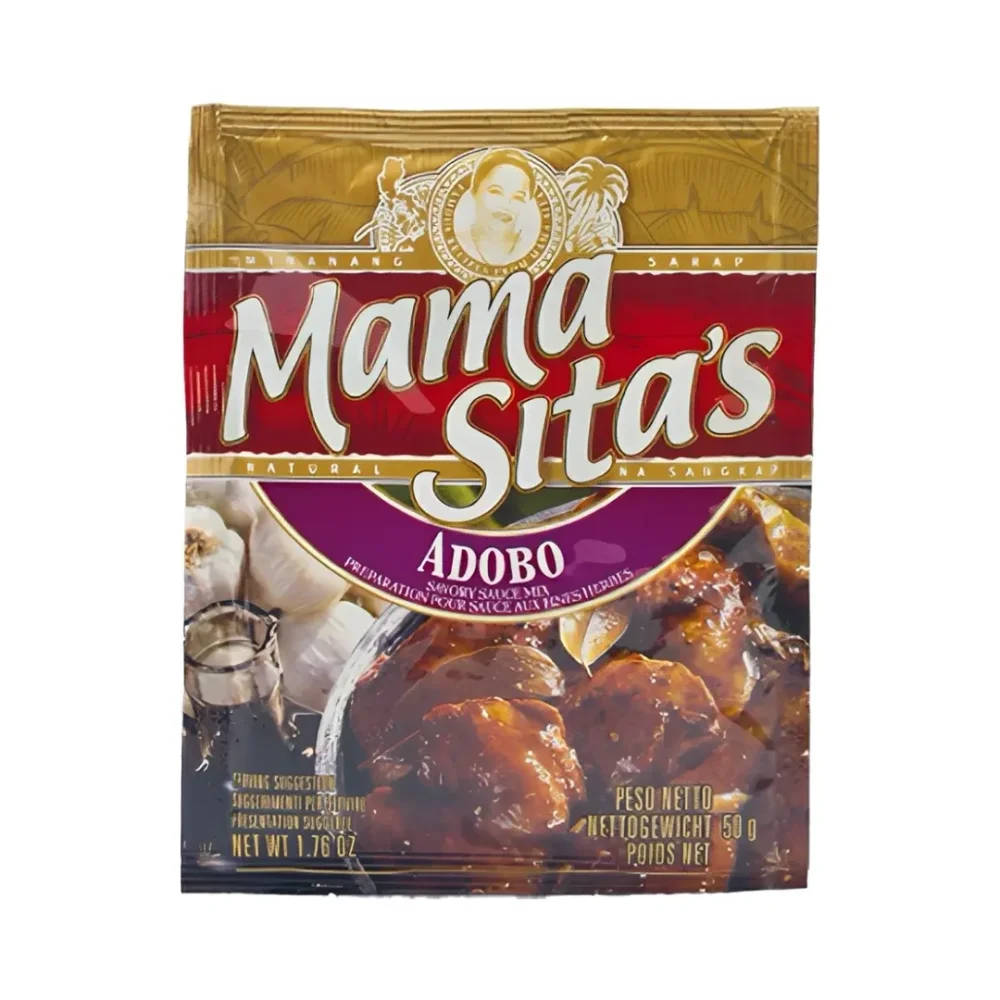
And if you are interested in the Filipino contrast (acidity/vinegar, adobo direction), it can serve as a tasting point Mama Sita's Mix for Adobo Sauce 50 g – precisely so that you realize how differently the “main flavor axis” can work compared to the Indonesian kecap manis + sambal profile.
Common mistakes and misunderstandings: why sometimes Indonesian food “doesn't taste Indonesian”
Confusing sambal with universal chilli sauce
The most common problem: expecting every sambal to be the same “spicy seasoning.” In reality, you need to know whether it is table sambal, cooking base, fermented type, or just a simple chilli sauce. If you use the wrong type, the dish can be either roughly spicy without depth, or conversely bland.
Kecap manis as a “sweet syrup” instead of balanced seasoning
With kecap manis, it is a mistake to think that sweet soy sauce is just about sugar. In Indonesian logic, it should be thick and balanced – and add not only sweetness but also flavor depth. If you use a product that only works as a sweetener, the dish easily “flattens” into sweet.
Watery coconut milk that ruins the whole dish
Coconut milk varies in density, fat content, and how it behaves during cooking. A weak or watery type can turn curry or coconut base into a bland sauce without body. Practical advice: if you want a richer result, choose a fuller variant and expect that coconut can react differently after opening and heating (fat separation is not automatically a defect – what matters is what it does in the finished dish).
Tempeh and tofu don’t “fall apart on their own” – it's often a matter of quality and handling
With tempeh, quality is recognized by firm structure and clean fermented character. With tofu, texture and freshness are key. If your tofu turns to mush in the pan, the problem is often a combination of too aggressive stirring and a tofu type unsuitable for the intended use.
Missing acidity: the dish is heavy, “dull” and lacking sparkle
Indonesian combinations (coconut, sweet-salty seasoning, fermented components) easily feel dense if they don't have a counterbalance. Tamarind or lime often work as the last step that opens the flavor. When your home attempt feels flat, try first a small amount of acidity – often it works better than more salt or more chilli.
What to take away from the article
- Indonesian cuisine is regionally diverse but united by several recurring pillars: rice, sambal, kecap manis, coconut, and fermented seasonings.
- With sambal, it is key to know what type you have (table vs cooking base vs fermented) – otherwise you easily miss the result.
- Coconut milk is not just one thing: density and cooking behavior fundamentally change the dish.
- Tempeh and tofu are not just “meat substitutes” – they are ingredients with their own texture; for tempeh, important is firmness and clean fermented character.
- When the dish feels heavy or flat, often missing is acidity (tamarind/lime), not more spiciness.

Read next
If you want to explore this topic further, continue with these related blog guides and articles:
