


 Česky (CZK)
 Slovensky (EUR)
 Deutsch (EUR)
 Austria
 Belgium
 Bulgaria
 Croatia
 Denmark
 Estonia
 Finland
 France
 Germany
 Greece
 Hungary
 Italy
Italy Latvia
 Lithuania
 Luxembourg
 Netherlands
 Poland
 Portugal
 Romania
 Slovenia
 Spain
Spain Sweden










Sambal and Indonesian pastes: how to understand spiciness, depth of flavor, and proper use
Sambal in Indonesia does not mean one "chili paste," but a whole family of seasonings – from milder to very spicy, from fresh to cooked or fermented. In practice, sambal can function as a table condiment, but just as well as a base of a dish that transforms plain rice into a distinctive meal. In this article, we clarify the differences between types of sambal and ready-made pastes, how to choose them and how to start using them at home without the most common mistakes.
Why sambal is so essential in Indonesia (and why it’s not just a "spicy sauce")
Indonesian cuisine is not one uniform cuisine, but a very broad set of regional styles across a vast archipelago. Sumatra tastes different, Java different, Bali, Lombok or Sulawesi differently – and that is precisely why you cannot speak of a single "typical" spiciness or a universal sauce in Indonesia.
One thing is common though: a strong role of chili and sambal and at the same time a pronounced use of aromatic pastes. Sambal here is not just adrenaline on the tongue. It is an everyday tool used to fine-tune food with rice, fried dishes, and sauces – and often it determines whether a dish feels flat or "Indonesian."
In this sense, sambal in Indonesia has a similar everyday role as other key flavoring elements might have elsewhere – it’s not the same technique, but a similarly important function in everyday dining.
What exactly is sambal and what are its functions on the plate
Sambal is a broad family of dips, sauces, and seasoning pastes. It can be fresh, cooked, fermented, milder or very spicy. The most important thing to understand is that sambal does not have to fulfill just one role.
In practice, sambal can:
- bring spiciness (from "warming" to very hot variants),
- bring saltiness and umami (that is, flavor "depth"),
- add acidity and overall "cut through" the dish,
- work as a table condiment – added at the end to taste,
- form the base of a dish – a starting flavor on which further layers are built,
- transform plain rice or fried food into a distinctive dish.
Therefore, it makes sense to look at sambal not as one specific thing, but as a "family of solutions": sometimes you want just a spicy dot on a finished dish, other times you need a paste that you first fry in oil and then build an entire dish on.
Indonesian pastes: when sambal serves as a cooking base
Besides sambal as a table seasoning, there is also another level: pastes and mixes that function as a cooking base. This follows the typical characteristic of Indonesian cuisine – pronounced use of aromatic pastes – and also the fact that a large part of dishes practically revolves around rice.
Simply put, you can set a useful distinction at home:
- Table sambal: you add it little by little at the plate (or just before serving) to control spiciness and bite character.
- Cooking paste: starts in the pan/pot – briefly fried to release aroma and flavor, and only then the dish is built on it (rice, noodles, sauce).
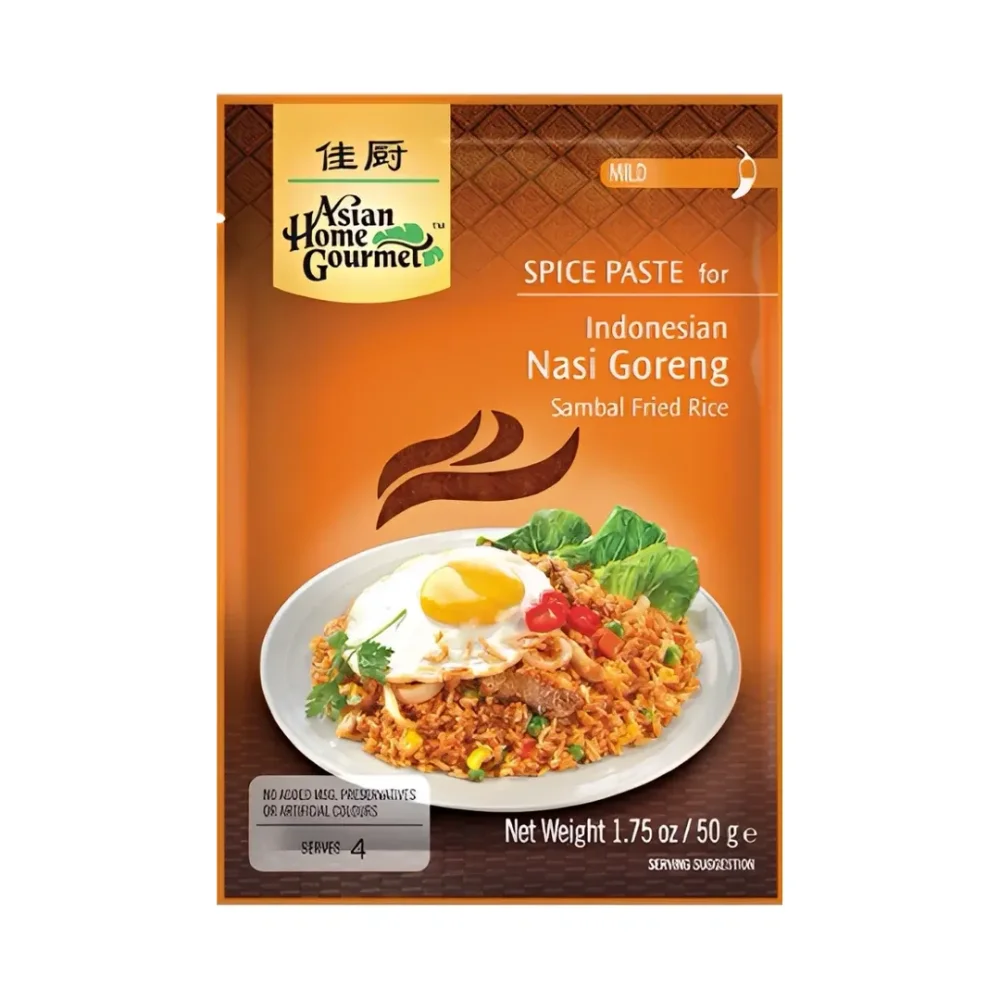
A practical example of a cooking paste is a ready base for fried rice: AHG Paste for Nasi Goreng rice 50 gYou will use this type of paste exactly when you do not want to "tweak" the flavor from zero laboriously, but at the same time want the rice to be not just salty and spicy, but with a clear character.
Typical sambal variants and why they differ
Indonesia is regionally very diverse, and sambal fits this logic: there are various local homemade sambals according to region and also known named variants. Among the typically mentioned are:
- sambal oelek,
- sambal terasi / trassi,
- sambal bajak,
- sambal matah,
- sambal ijo.
What is important for orientation: differences among sambals are not only in "how spicy it is," but also in whether the sambal is fresh, cooked, or fermentedand what role it plays in the dish (table seasoning vs. cooking base).
Regional context also comes into play. For example:
- Sumatra is often associated with a more pronounced, spicier, and coconutty cuisine and a large role for spicy sauces.
- Java is strong in the everyday form of Indonesian food and in some areas (especially central Java and Yogyakarta) food may be somewhat sweeter.
- Bali and Lombok are known for stronger profiles; Lombok and its surroundings are often perceived as spicier.
- Sulawesi brings pronounced fish and seafood cuisines where spiciness and acidity also play a role.
All this can reflect in the type of sambal served with the dish and its role in it.
🍽️ How to start at home: dosing, "warming up" the paste and what sambal works best with
1) Sambal as a table seasoning: start with a smaller dose
If you are just learning to understand sambal, the safest approach is to use it as a table seasoning. A practical tip:
- For one portion of rice or a finished dish, start with about 1/4 teaspoon, mix into part of the bite and then add more.
- If it’s just "spicy" but tasteless, it signals that you need a sambal with more depth (or that you are using it in a role it’s not suitable for).
In this way, sambal often does the greatest service with simple rice-based dishes or fried dishes where it has to "deliver the last word."
2) Paste as a cooking base: briefly fry, then build the dish
With cooking pastes (and some sambals used as a base), a simple rule applies: first briefly fry, then add the main ingredients. Thanks to this, the flavor develops and will not taste raw or flat.
A concrete example: Koningsvogel Chilli paste Nasi Goreng 260 g is a type of paste you can briefly fry and then mix with rice (often also with egg, meat or vegetables). If you are starting with similar pastes, keep roughly to this framework:
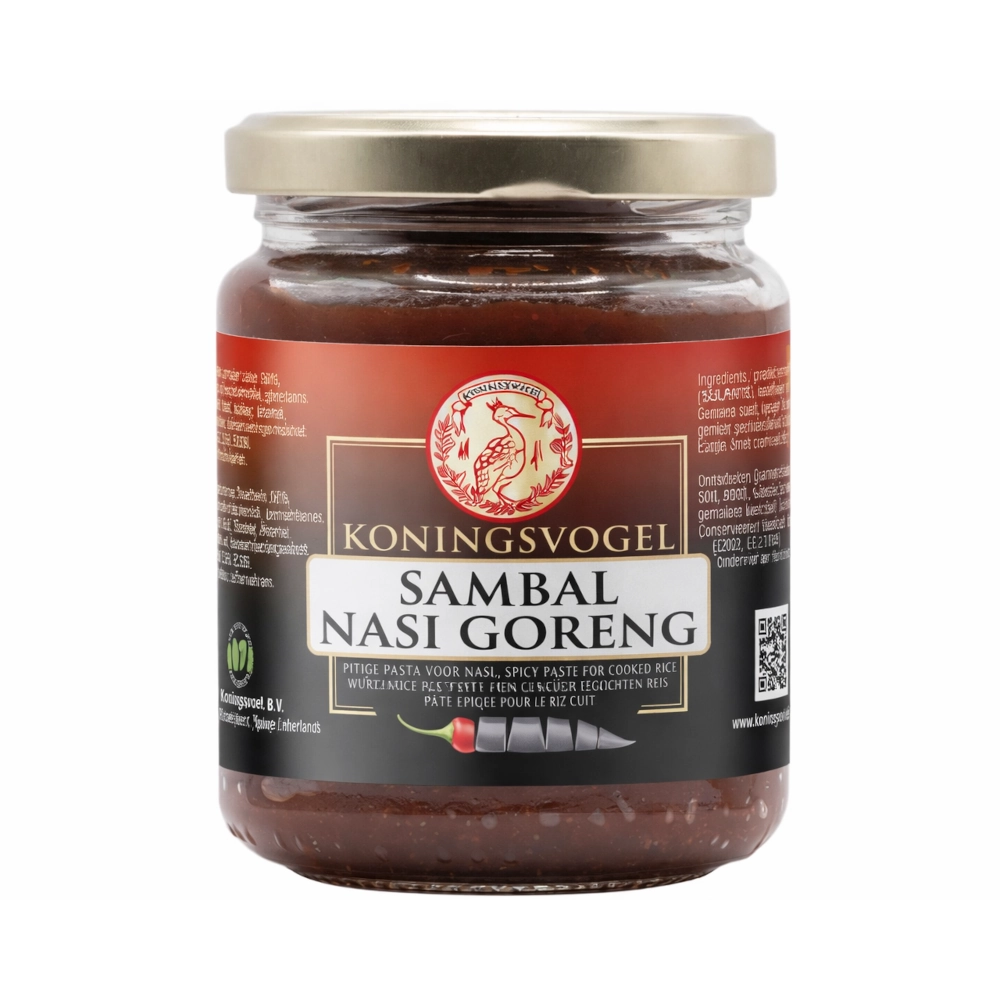
- For one portion of rice, try first 1 teaspoon of paste,
- if you want a stronger flavor, add in 1/2 teaspoon,
- if the paste starts to burn quickly in the pan, lower the heat and add a little oil or part of the rice earlier.
It’s not the "right number for everyone" – it’s a safe start to avoid overshooting the spiciness and to understand how strong a particular paste is.
3) Coconut and coconut milk: how to soften and "round off" the spiciness
For island Southeast Asia (including Indonesia and Malaysia), frequent use of coconut and coconut milk is typical. In practice, it’s a great tool also for home cooking: coconut milk can soften the spiciness and round the flavor, without "killing" the sambal.
If you make a dish where sambal or paste is too sharp or "angular," try adding a bit of coconut milk instead of more salt or sugar and briefly cook it to blend the flavors. A guide for choosing different types of coconut milk can be found in the category Coconut milk.
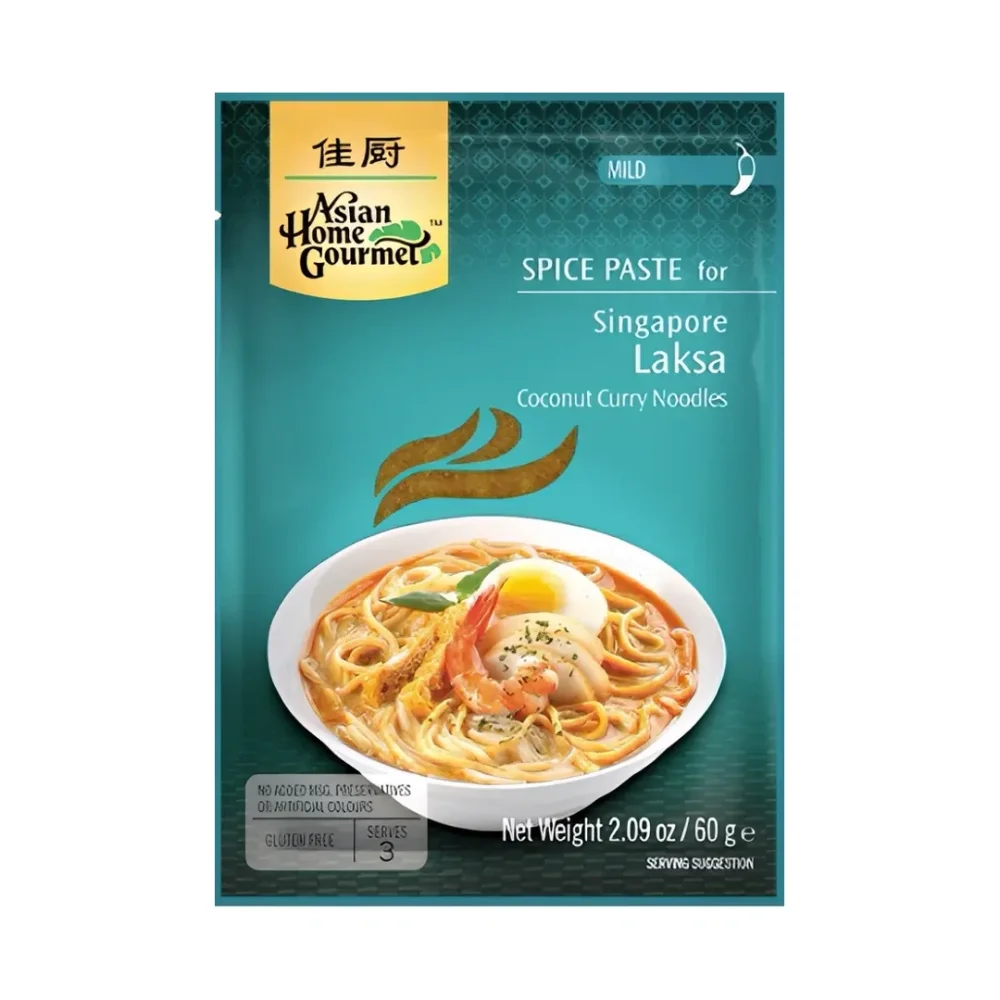
It is well visible in dishes like laksa, where the coconut base often forms a substantial part of the character. An example of a ready base for this style: AHG Paste for coconut curry noodles Laksa 60 g – typically mixed in liquid and finished quickly with coconut milk and noodles.
4) Island "relatives": what to expect if besides Indonesia you are also attracted by the Philippines or Malaysia
Southeast Asia shares some common features (rice, chili, street food energy) but the flavor logic can differ. This is useful also when choosing pastes and mixes:
- Indonesia: strong role of sambal, aromatic pastes and often coconut; in some areas, a sweeter profile can also prevail.
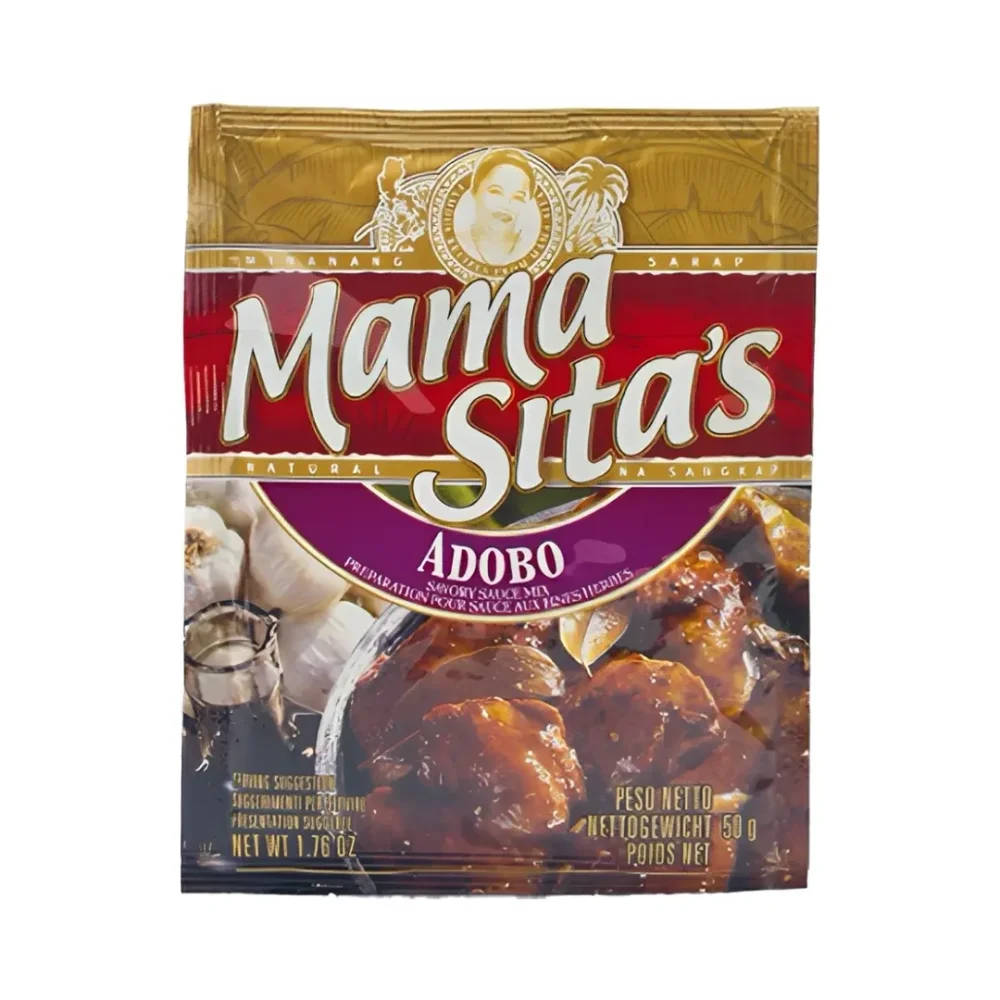
- Philippines: pronounced role of acidity (often through vinegar) and practical combinations of saltiness and acidity. A typical term is adobo. If you want to try this direction without complicated tweaking, a mix like Mama Sita's Adobo Sauce Mix 50 gcan help, which you use as a base for sauce and marinade (start recommendation: begin with part of the content, taste and gradually add more).
- Malaysia and Singapore: coconut, chili, aromatics and a "mix of influences" often appear; dishes like nasi lemak and laksa are distinctive. Sambal here also belongs to important seasoning families.
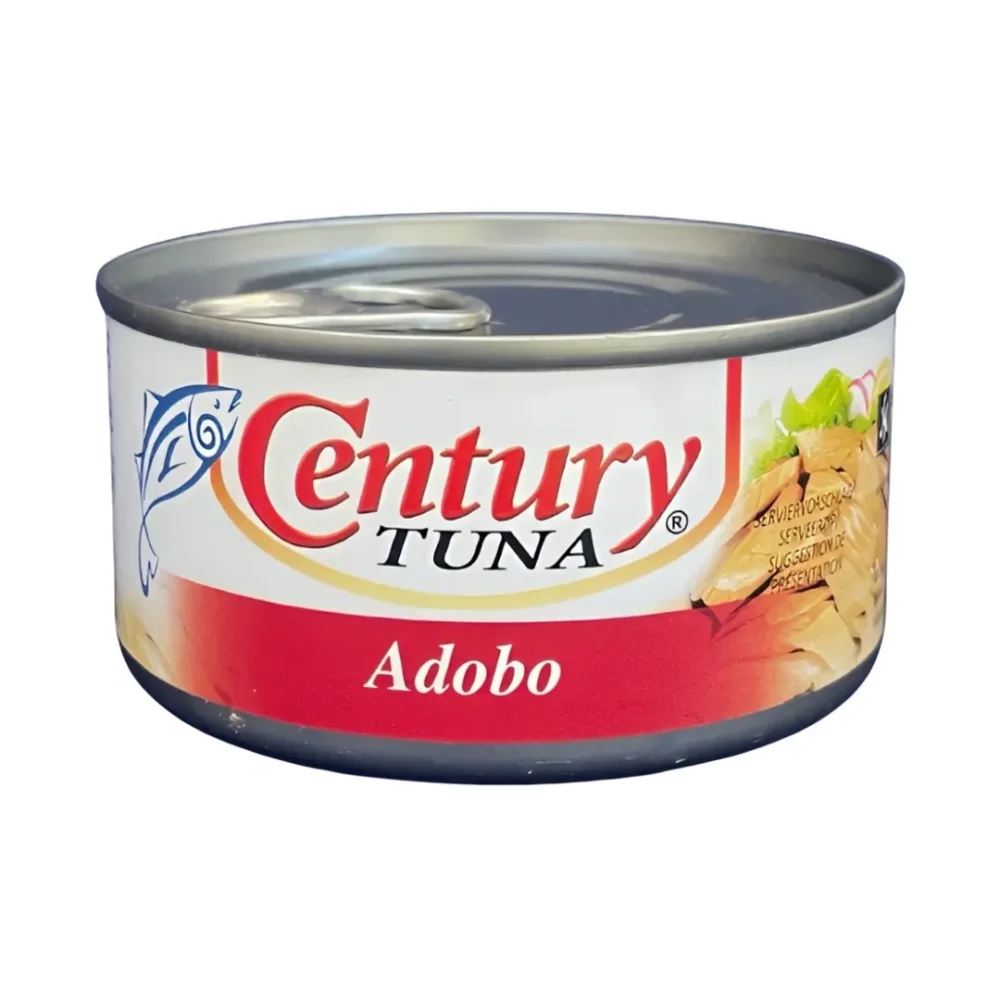
Practically: if you enjoy sambal but want to taste a different type of "expressiveness" than pure spiciness, the Filipino adobo direction is often a good change. An example of a ready adobo-flavored product is Century Tuna Adobo Tuna Chunks 180 gwhich can be easily combined with rice or quick meals.
How to choose sambal and paste: table vs. cooking, fermented vs. "straightforward"
When choosing sambal and chili pastes, a simple but crucial rule applies: first clarify what role the product should play in the dish. Indonesian practice distinguishes (at least functionally) several types:
- table sambal – you have it at the meal and add it little by little,
- cooking base – first fried and then the dish is built on it,
- more fermented variant – when you want more "depth" than just spiciness,
- simpler chili sauce/paste – when you are looking for straightforward heat without great complexity.
A quality sambal or paste can be considered one that has character and depth, not just rough spiciness. If the result is “just hot” from your point of view, it often means one of two things: either you have chosen a type that is not intended as the main flavor base, or you are using it in too large a dose right at the beginning.
Common mistakes and errors: why sambal sometimes disappoints (and how to fix it)
- “Indonesian cuisine is mainly spicy.” Spiciness is important, but it is not the only principle. Equally important are coconut, sweet-salty depth, fermented components, and the structure of the dish (for example, the relationship between a strong dish and rice).
- “Sambal is just chili paste.” Sambal is a family of seasonings with different functions, structures, and depths. When you expect only heat from it, you easily miss the main thing: the ability to provide saltiness/umami, acidity, or to be the basis of the dish.
- “Nasi goreng = the definition of all Indonesia.” Nasi goreng is a famous dish, but only one part of a much broader world. If one paste “for fried rice” does not taste good to you, it does not mean you do not like Indonesia.
- Burning the paste at the beginning. With cooking bases, a common mistake is to use too high heat and burn the paste before it merges with the oil and other ingredients. The correction is simple: lower temperature, shorter sautéing, or possibly add ingredients earlier.
- Expecting Indonesia to taste the same everywhere. Regional differences are fundamental. If you like one sambal, it doesn’t mean you will like them all – and vice versa.
What to take away from the article
- Sambal is not one chili paste, but a family of seasonings that can be fresh, cooked, fermented, mild, or very hot.
- The function of sambal is broader than spiciness: it can carry saltiness and umami, acidity, and can be a table condiment or the base of a dish.
- Indonesian pastes often act as cooking bases – it pays off to sauté them briefly and add gradually.
- Regions of Indonesia differ (Sumatra, Java, Bali/Lombok, Sulawesi…), and with them, the logic of spiciness and seasoning can also differ.
- For a good choice, it is key to know what you are buying: table sambal, cooking base, more fermented variant, or simpler chili product.

Read next
If you want to explore this topic further, continue with these related blog guides and articles:
