tom yu

Products

Articles

Thai soup Tom Yum

Thai soup Tom Yum

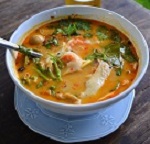
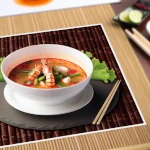
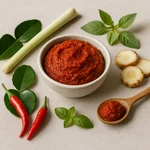
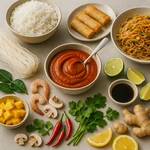
Tom yum is characterised by its distinct hot and sour flavours, with fragrant spices and herbs generously used in the broth.


Tom Yum vs Tom Kha: how they differ and which Thai soup to choose

Tom Yum vs Tom Kha: how they differ and which Thai soup to choose

Tom Yum and Tom Kha are two Thai soups that look similar at first glance – both are based on sourness, aromatic herbs, and strong seasoning. However, the difference is fundamental: changing the liquid base (clear vs. coconut) turns the entire character of the bowl upside down. In the article, we’ll translate the differences into practice: how to choose the soup, how to "set it" at home without a complicated recipe, and what to avoid.


Tom Yum Soup (Thai Hot & Sour Soup) – Easy Home Recipe

Tom Yum Soup (Thai Hot & Sour Soup) – Easy Home Recipe

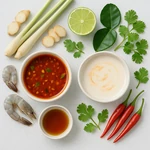
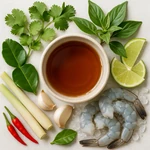
Tom Yum is Thailand’s famous hot-and-sour soup: aromatic lemongrass and kaffir lime leaves, a bright hit of lime, salty fish sauce, and as much chilli heat as you like. This recipe keeps the process simple while delivering the bold, restaurant-style flavour Tom Yum is known for.


Tom Kha Soup (Thai Coconut Chicken Soup) — Easy Home Recipe

Tom Kha Soup (Thai Coconut Chicken Soup) — Easy Home Recipe

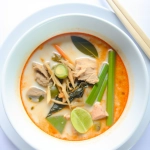
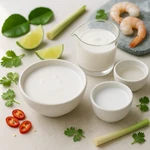
Tom Kha is a classic Thai soup built on coconut milk, fragrant herbs, and a bright lime finish. This home-friendly version delivers the signature creamy–tangy balance with chicken and mushrooms, plus practical tips so the coconut stays silky and the flavours stay clear.


The Taste of Thai Cuisine: How to Understand It and Build It at Home (Without Common Mistakes)

The Taste of Thai Cuisine: How to Understand It and Build It at Home (Without Common Mistakes)

Thai food can taste “very bold”, but its strength is rarely one dominant flavour. What’s typical is layering: first you build an aromatic base (often with pastes), then you season gradually (for example with soy sauce), and only at the end you fine-tune heat and top aromas. When these steps get swapped or pushed too hard, the result is often just spicy, over-salty, or oddly flat. This guide gives you a practical framework for building Thai flavour at home step by step—and for fixing the most common problems.


Broths

Broths

Všichni bujóny známe ale opravdu víme jak se používají ty Asijské?


Typical Thai ingredients: what they taste like, what they are for, and how to use them at home

Typical Thai ingredients: what they taste like, what they are for, and how to use them at home

Thai cuisine is based on balancing contrasts: saltiness and umami, acidity, sweetness, spiciness, and herbal freshness. To make food taste "Thai," one spicy component is not enough – it is more important to know the role of each ingredient and how to work with it in small amounts. This guide provides an overview of typical Thai ingredients, their function in the dish, the main differences between similar products, and practical tips on how to start using them at home without unnecessary mistakes.


Types of Meals and Occasions

Types of Meals and Occasions

How do fast street foods, festive menus, noodle bowls, or dishes based on seaweed and mushrooms differ in Asian cuisine? This guide explains the main types of meals according to the occasion, presents representative examples, and offers practical advice: what to buy at the start, how to combine ingredients, and how to avoid the most common mistakes.


Regions of Thai cuisine: why Bangkok, the north, and Isan don’t taste the same

Regions of Thai cuisine: why Bangkok, the north, and Isan don’t taste the same

Thai cuisine is often described through famous dishes like tom yum, green curry, or pad thai. However, this easily creates the impression that "Thai tastes like this" – and that’s it. In reality, Thailand is regionally distinctive: the same principle of balancing flavors (saltiness and umami, sourness, sweetness, spiciness, herbal freshness) is composed differently in various parts of the country. If you want to cook Thai food at home or just better understand dishes on a menu, regions are one of the shortest ways for the flavors to start making sense to you.


How to compose a menu for a visit and a larger table

How to compose a menu for a visit and a larger table

Are you planning a feast or a larger family visit and want the food to work smoothly for more people? This practical guide will show how to arrange the menu according to Asian sharing principles: the roles of rice, soup, and side dishes, how to combine flavors, and what to prepare in advance.


How to choose coconut milk by fat content and usage (and why it matters)

How to choose coconut milk by fat content and usage (and why it matters)

Coconut milk looks like a simple ingredient, but in practice it is one of the categories where people get confused most often: they buy "coconut milk," cook curry, and the result is watery and lacking depth. In most cases, it's not a recipe error but a wrongly chosen type – mainly depending on fat content, the ratio of coconut component to water, and how the product behaves when heated. This guide will help you pick the right variant for curry, soups like tom kha, desserts, and drinks and avoid the most common mistakes.


When to use coconut water (and when to avoid it in a recipe)

When to use coconut water (and when to avoid it in a recipe)

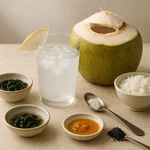
Coconut water is often confused with coconut milk – and this mix-up is exactly why curry tastes "watery," desserts don't hold their structure, or soups lack roundness. Coconut in Asian cuisine is a whole family of products with distinctly different functions. In this article, we will show when coconut water makes sense, when the recipe actually needs coconut milk or cream, and how to quickly decide based on the desired result.


Typical Thai dishes: what they taste like and how to recognize them

Typical Thai dishes: what they taste like and how to recognize them

"Typical Thai dishes" are not just a few famous names like pad thai, tom yum, or green curry. Thai cuisine is based on balancing contrasts – saltiness and umami, sourness, sweetness, spiciness, and herbal freshness – and it is this flavor logic that connects Thai dishes across styles and regions. In the article, we will show you how to navigate typical Thai dishes, what the main differences between the most common types of dishes are, and how to put together the Thai taste at home without unnecessary mistakes.


How to choose coconut milk: fat, consistency, and the right type for curry, soups, and desserts

How to choose coconut milk: fat, consistency, and the right type for curry, soups, and desserts

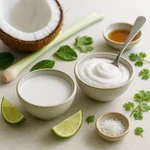
Coconut milk is one of the most important ingredients of tropical Asia – in Thai curries, soups like tom kha, Filipino dishes called "ginataan," but also in various desserts. At the same time, it is a category where significantly different products are sold under the same name. In practice, it is often not that the recipe "doesn't work," but that you have chosen the wrong type (or too thin a variant) for the specific dish.


Coconut products in Asian cuisine: how to understand milk, cream, and cream

Coconut products in Asian cuisine: how to understand milk, cream, and cream

Coconut is one of the most versatile ingredients in tropical Asia – and at the same time one of the most frequently confused. "Coconut" in a recipe can mean coconut water, milk, cream, concentrated base, dried pulp, and other products that differ in taste, density, and what they do to the final dish. This guide will clarify the differences and especially how to choose the right type for the specific use.


Asian Street Food: Basic Overview

Asian Street Food: Basic Overview

Asian street food is not just "food from the street" for tourists. In many cities, it is an everyday way of eating: fast, affordable, often incredibly specialized, and closely connected to a specific place and distinctive taste. This overview will clarify what is typical for Asian street food, where you can encounter it, and how to quickly navigate it—even if you want to explore it mainly at home.


Shared tables and Asian-style feasts: how they work and how to understand them in practice

Shared tables and Asian-style feasts: how they work and how to understand them in practice

Shared food "Asian style" is not just a style of serving, but a way people communicate at the table. Often it is a board composed of several bowls and side dishes, where the order, placement, and how it is taken from the common dishes matter. In the article, we will show why food-sharing is so common in many parts of Asia, how the everyday shared table differs from a festive feast, and how to create a similar experience at home without stress.


Herbs for Soup: Turn a Plain Broth into a Fragrant Asian-Style Bowl

Herbs for Soup: Turn a Plain Broth into a Fragrant Asian-Style Bowl

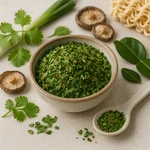
A great soup doesn’t rely on one big “secret ingredient” — it’s built in layers. Herbs are one of the fastest ways to make a simple broth smell inviting, taste brighter, and feel like a finished bowl (even when you’re using quick noodles or a shortcut stock). Here’s how to use fresh and dried herbs in Asian-style soups without losing their aroma.


Coconut milk vs. coconut cream: what is the difference and when to use which

Coconut milk vs. coconut cream: what is the difference and when to use which

Coconut milk and coconut cream are not just two differently named "coconut things." They mainly differ in fat and water content – and consequently in how they thicken curry, soften soup, or behave in pudding or cream. In the article, we will show practical rules for cooking and desserts, how to read the label, and how to avoid the most common mistakes.


Asian ingredients and products: how to understand, choose and cook without disappointment

Asian ingredients and products: how to understand, choose and cook without disappointment

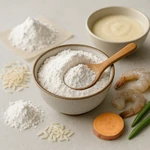
A good "Asian ingredient" is not the most expensive nor the one with the prettiest packaging. The difference mainly lies in whether you understand the function of the ingredient (what it is used for in food), its types and composition – and whether you select it for a specific use. This article is a practical guide: it will teach you to quickly read labels, distinguish between basic and flavored products, and choose the right type, for example with coconut, sesame, chili, and starches.


The Most Common Mistakes in Ingredient Preparation (and How to Quickly Fix Them)

The Most Common Mistakes in Ingredient Preparation (and How to Quickly Fix Them)

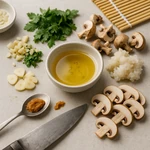
In Asian cooking, the result often “breaks” even before you turn on the stove: on the cutting board, in bowls with prepared ingredients, and in how you organize the steps. High temperature, quick stir-frying, and precise order of adding ingredients don't forgive when vegetables are cut haphazardly, aromatics wait next to a hot wok, or wet ingredients fly into the pan. This article summarizes the mistakes that most often ruin texture and taste – and most importantly, what to do about them in practice.

%s ...
%s
%image %title %code %s
%s