
panko

Products

Articles

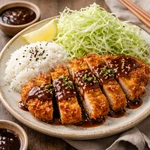
Recipe for Tonkatsu with Sauce

Recipe for Tonkatsu with Sauce

Discover the magic of Japanese cuisine with this recipe for a crispy dish that will amaze you with its simplicity and great taste. When tender pork chops meet a delicious sauce, the result is a dish that is perfect for any occasion. Be inspired by this recipe and experience a unique combination of flavors right in your own kitchen!


Cantonese Lemon Chicken (Crispy Chicken with Bright Citrus Sauce)

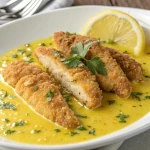
Cantonese Lemon Chicken (Crispy Chicken with Bright Citrus Sauce)

Cantonese-style lemon chicken is all about contrast: juicy, crispy-coated chicken pieces tossed in a glossy lemon sauce that’s sweet, tangy, and lightly savory. This home-friendly version keeps the crunch and delivers that restaurant-style citrus shine—without complicated steps.


Flours and starches in Asian cuisine: how to choose the right type for thickening, coating, and dough

Flours and starches in Asian cuisine: how to choose the right type for thickening, coating, and dough

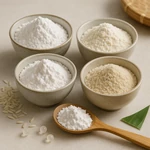
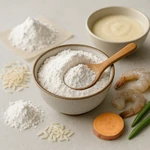
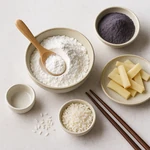
Flours and starches are inconspicuous in Asian cuisine, but they often decide the most important thing: texture. Thanks to them, the coating can be crispy and light, the sauce smooth and glossy, the dumpling elastic, or the dim sum wrapper delicately translucent. In the article, you will clarify when to reach for rice flour, when for glutinous rice flour, when for tapioca starch, and what to watch out for when reading labels.


Frying without unnecessary greasiness: what really decides crispiness

Frying without unnecessary greasiness: what really decides crispiness

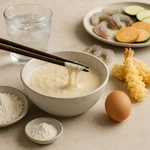
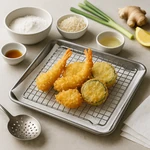
Deep frying should not be synonymous with "heavy and greasy food." In Asian cuisines, frying is a key technique precisely because it can create clean crispiness and texture contrast – when done technically correctly. The article provides a practical guide on what to watch for regarding oil temperature, batch work, ingredient preparation, and draining so that the result is not unnecessarily soaked.


Asian ingredients and products: how to understand, choose and cook without disappointment

Asian ingredients and products: how to understand, choose and cook without disappointment

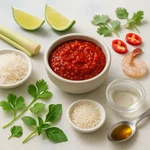
A good "Asian ingredient" is not the most expensive nor the one with the prettiest packaging. The difference mainly lies in whether you understand the function of the ingredient (what it is used for in food), its types and composition – and whether you select it for a specific use. This article is a practical guide: it will teach you to quickly read labels, distinguish between basic and flavored products, and choose the right type, for example with coconut, sesame, chili, and starches.


Mise en place Asian style: why good food is often decided even before cooking

Mise en place Asian style: why good food is often decided even before cooking

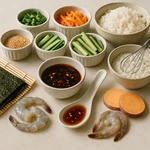
In many Asian kitchens, the outcome is decided not at the stove, but on the cutting board: by chopping, order of preparation, separating components, drying, soaking, and timing. Mise en place (prepared ingredients and components in advance) is not a "professional luxury" here, but a practical assurance that nothing will burn, nothing will remain raw, and the food will have a clean rhythm and flavor.


10 ingredients with which you can cook the most

10 ingredients with which you can cook the most

A good "Asian pantry" is not about having dozens of sauces and pastes at home. It's about a few functional basics that repeat across many dishes: something for saltiness and umami, something for acidity and sweetness, something aromatic, something starchy and a few quick guarantees for texture. Here is a practical ten that will let you cook a surprisingly wide range of Asian dishes even from common fresh ingredients.

%s ...
%s
%image %title %code %s
%s