

 Česky (CZK)
 Slovensky (EUR)
 Deutsch (EUR)
 Austria
 Belgium
 Bulgaria
 Croatia
 Denmark
 Estonia
 Finland
 France
 Germany
 Greece
 Hungary
 Italy
Italy Latvia
 Lithuania
 Luxembourg
 Netherlands
 Poland
 Portugal
 Romania
 Slovenia
 Spain
Spain Sweden










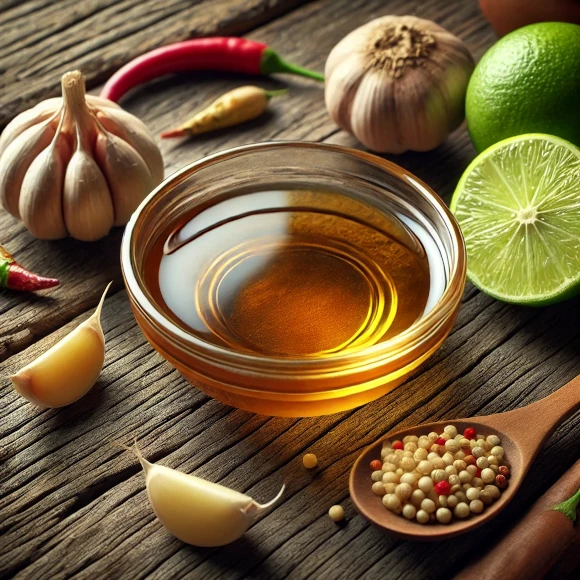
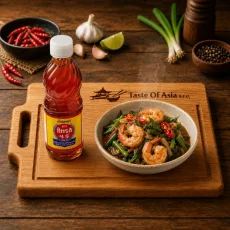
🐟 Fish sauce: the umami engine of Vietnamese and Thai cooking
Fish sauce (Vietnamese nước mắm, Thai nam pla) is the Southeast Asian equivalent of salt and broth rolled into one: a tiny amount creates a big upgrade. It brings salinity, depth, and umami, and—most importantly—it helps sweet, sour, and heat “click” into balance. This isn’t a pour-on finishing sauce. Think of it as a flavor concentrate you use drop by drop.
Browse fish sauces here: Taste of Asia – Fish sauces. Useful balance tools: Vinegars, Sugar & salt, Chili sauces, Soy sauces, and Sauces.
💡 Tip: If you’re worried about “fishiness,” don’t start by adding it straight into a dish. Start by mixing it into a dip with sugar and acid—this is the fastest way to learn dosing.
🧂 How it’s made and why it tastes so intense
Fish sauce is produced by fermenting fish with salt. The category description for Rybí omáčky states it’s made by fermenting fish with sea salt and used as a seasoning across many Asian cuisines. During fermentation, proteins break down into amino acids, which is why the umami hits hard. One key point: fish sauce is both a salt lever and an umami lever. If you overdo it, you don’t just oversalt—you crush the whole balance.
👃 Flavor profile and when to use it
A good fish sauce doesn’t taste like pan-fried fish. In food, it reads as salty, deep, slightly rounded umami. Often you can’t “identify” it—your brain just registers that the dish tastes more complete. It shines in:
- Vietnamese dips and dressings (nuoc cham)
- Thai stir-fries (seasoning at the very end)
- soups and broths (pho-like direction, coconut soups)
- marinades (with sugar + acid it boosts juiciness and depth)
- fresh salads (Som Tam style; often with lime + sugar)
For more inspiration, Taste of Asia also has an article: Fish sauce: history and kitchen uses.
✅ How to cook with fish sauce without overpowering a dish
The most common mistake is using it like soy sauce. Fish sauce is usually more assertive (and often saltier), so a simple workflow helps:
- Start small: for one portion, 1/2 tsp in a sauce or a few drops in soup is often enough.
- Balance: when you add fish sauce, you often need a touch of acid (lime/vinegar) or a pinch of sugar.
- Add late: in hot cooking, add it near the end for a cleaner aroma.
- Dissolve in liquid: mix it into broth, sauce, or dressing rather than splashing on dry food.
✅ Tip: If you oversalt with fish sauce, the fix is water + acid + sugar. Turn it into a dip/dressing and finish the dish lightly, instead of forcing more into the pan.
🛒 How to choose fish sauce (practically)
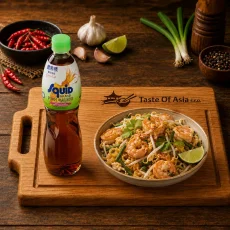
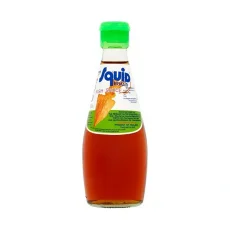
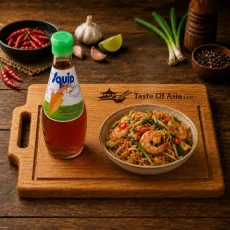
On product pages, check ingredients and origin. Many popular fish sauces are anchovy-based. For example, Squid lists anchovy extract and salt (plus sugar) and describes production via natural fermentation: Squid Fish sauce 4.5 L. What to look for:
- Ingredients: ideally simple (fish/fish extract + salt; sometimes sugar).
- Intensity: some are gentler, others bolder—beginners often prefer a middle profile.
- Size: 700 ml is a great everyday bottle; bulk sizes make sense if you cook frequently.
- Allergens: always Fish.
🛒 Picks on Taste of Asia
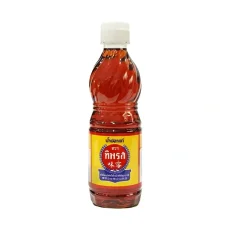
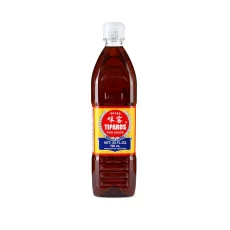
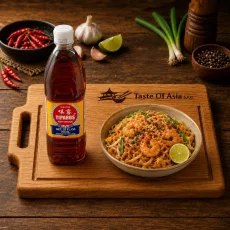
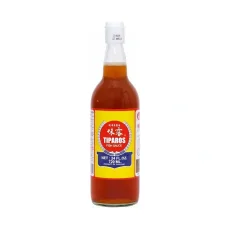
- Tiparos 700 ml – everyday workhorse for soups, stir-fries, marinades.
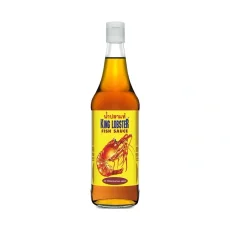
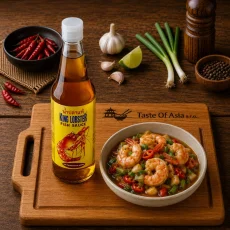
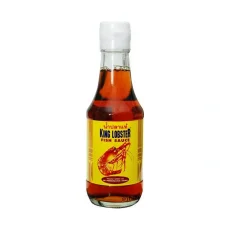
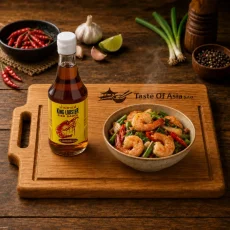
- King Lobster 700 ml – bolder profile for stir-fry and sauces.
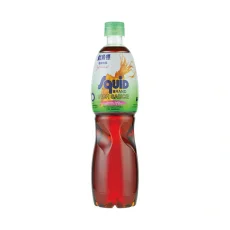
- Squid 4.5 L – large format for frequent cooking.
More options: Fish sauce category.
🥣 Recipe 1: Nuoc Cham – the Vietnamese dip that works with almost anything
This is the safest way to “learn” fish sauce. Sugar and acid soften the saltiness and create a balanced dip.
Ingredients
- water 4 tbsp
- sugar 2–3 tbsp
- fish sauce 2 tbsp
- acid: ideally lime (or a few drops of vinegar)
- garlic 1 clove (finely)
- chili to taste (or a few drops from chili sauces)
Method
- Dissolve sugar in water.
- Add fish sauce and acid; taste.
- Add garlic and chili; rest 10 minutes.
Use with spring rolls, grilled meats, rice, noodles, or as a salad dressing base.
🌶️ Recipe 2: Nam Pla Prik – Thai quick table seasoning
Simple concept: fish sauce + chili + acid. Use it as a table seasoning (a few drops on finished dishes).
Ingredients
- fish sauce 3 tbsp
- chili
- acid: lime or a pinch of vinegar from Vinegars
- optional pinch of sugar from Sugar & salt
Method
- Mix fish sauce with chili.
- Add acid; optionally add a pinch of sugar.
- Use drop by drop on rice and noodle dishes.
🍳 Recipe 3: “Wok finish” – fast end-of-cook seasoning
If a stir-fry tastes “fine” but lacks a final punch, it’s often missing umami + balance. This mini mix is reliable:
Mini mix (for 1–2 servings)
- fish sauce 1/2–1 tsp
- pinch of sugar from Sugar & salt
- a few drops of acid (lime / vinegar from Vinegars)
- optional drop of soy sauce for rounder salinity
How to use
- Mix in a spoon or small bowl.
- Stir into the wok at the end and turn off the heat immediately.
- Taste and adjust in drops (especially fish sauce).
📦 Storage and “tiny crystals”
Fish sauce is stable thanks to high salt. Store it dry and away from heat. Some bottles may develop tiny crystals (usually salt); they typically dissolve during cooking.
🔥 Common mistakes and quick fixes
- Too salty: add water + acid + a little sugar; convert into a dip/dressing and finish lightly.
- Too “fishy”: you’re missing sugar and acid—make nuoc cham.
- Flat taste: add a few drops of fish sauce + pinch of sugar + a drop of acid.
- Heat without depth: reduce chili and add a few drops of fish sauce for umami body.
✅ When to reach for fish sauce
- when you want umami without making stock
- when balancing dips (sweet–sour–spicy)
- when a stir-fry needs a “final dot”
- when you want authentic Southeast Asian flavor
Go slowly. With fish sauce, the rule is simple: drops, tasting, and small steps.