


 Česky (CZK)
 Slovensky (EUR)
 Deutsch (EUR)
 Austria
 Belgium
 Bulgaria
 Croatia
 Denmark
 Estonia
 Finland
 France
 Germany
 Greece
 Hungary
 Italy
Italy Latvia
 Lithuania
 Luxembourg
 Netherlands
 Poland
 Portugal
 Romania
 Slovenia
 Spain
Spain Sweden










How to marinate meat Asian style: what marinade should do, what it's made of, and when not to overdo it
Marinating in Asian cuisine is neither a mandatory ritual nor a universal "magic sauce." It's a targeted tool for working with flavor and especially the surface of the meat before heat treatment: it pre-adds saltiness and umami, helps with color and caramelization, binds aromas, and prepares the meat for a specific technique (wok, grill, pan, roasting). Equally important is knowing what counts as seasoning during cooking and what is the final tuning at the end.
1) What marinating in Asian cuisine really aims to do (and why a whole dish often doesn’t depend on it)
In home cooking, marinade is often seen as a step that "arranges the flavor for you." In Asian kitchens, however, marinating usually works more as a preliminary directional setting – and the rest of the flavor is developed during cooking and mainly at the end.
Practically, marinating most often serves to:
- pre-add basic saltiness and umami (that is, the "framework" of flavor),
- unify the taste of the surface of the meat that will be quickly seared,
- help with color and caramelization during searing or grilling,
- bind aromatic components (garlic, ginger, etc.) to fat or liquid so they spread over the surface,
- prepare the meat for a specific technique – wok/stir-fry, pan, grill, roasting, or possibly stewing,
- differentiate the character of the dish even before final seasoning (which can happen in the bowl, through table sauces, vinegar, herbs, chili oil, or broth).
This is useful to remember especially when you cook a dish that will have a pronounced sauce only during heat treatment. In such a case, the marinade often shouldn’t be the "main star" but just a well-aimed base to help the result.
2) Marinating vs. seasoning during cooking vs. final seasoning: three different things
One of the most common reasons for disappointment is mixing these steps into one:
- Marinating = preliminary work with raw meat (mainly its surface) before heat.
- Seasoning during cooking = adjusting flavor during heat treatment (when flavors change with heat and combine with drippings/oil).
- Final seasoning = tuning after cooking or only at serving (this often creates contrast, freshness, and the "last word").
Asian cuisines very often don’t rely solely on marinade. Part of the flavor is deliberately left until the end – therefore it makes sense to marinate in a way that the marinade does not overpower what is meant to come at the end.
Marinade is not the same as sauce
Even if the mixture looks similar, the role is different:
- Marinade prepares the raw ingredient, assumes it will undergo heat treatment, and typically works mainly with the surface.
- Sauce completes the finished dish, manages the final texture, and can be milder, thicker, or more contrasting – technologically it doesn't behave the same as marinade.
In practice, this often means a simple rule: if you want to use part of the same mixture also at the end as a glaze or table seasoning, set it aside before it contacts the raw meat.
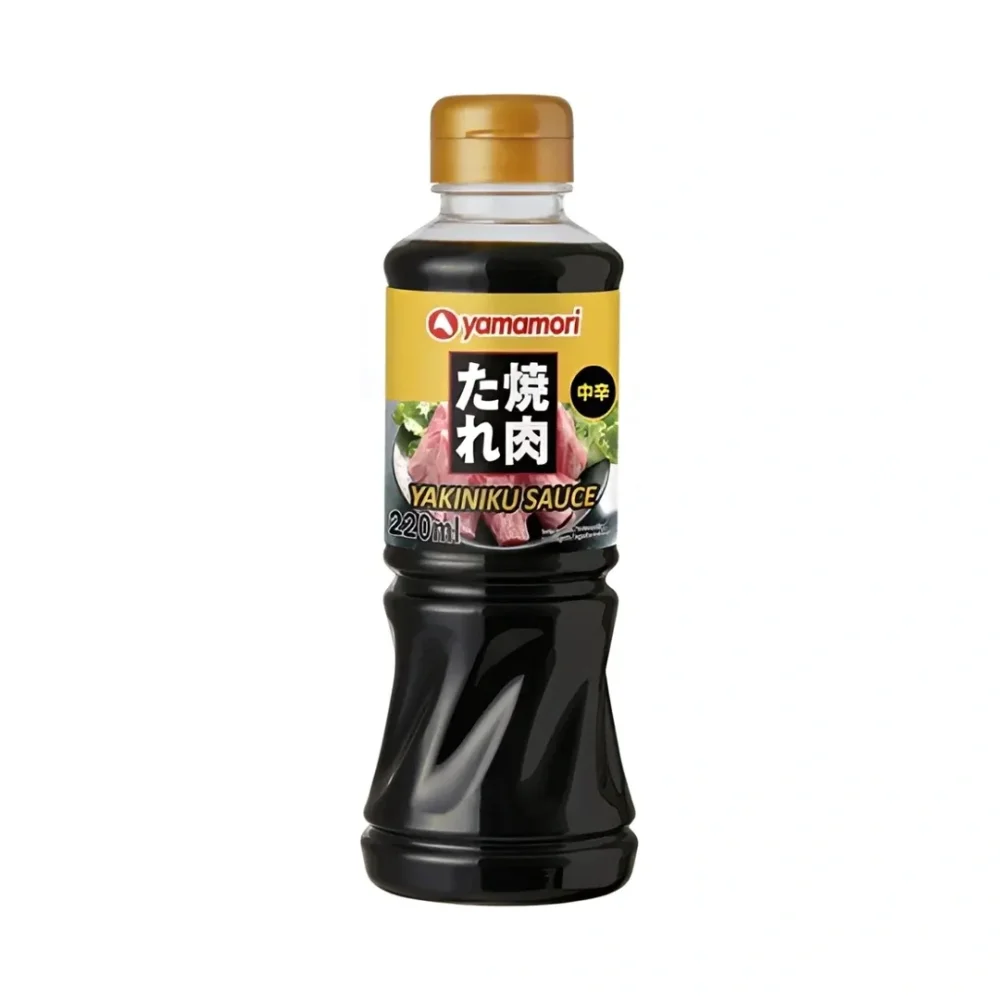
An example of a mixture often used in the kitchen both for working with meat and for final seasoning can be Yamamori Yakiniku sauce – for such types of seasoning, this division (part for marinating, part “pure” for the finish) is crucial.
3) Main types of marinating: wet vs. dry and short vs. longer (depending on technique and meat cut)
In Asian cooking, there is no one "correct" marinade for everything. The decisive factors are mainly technique and shape of the meat.
Wet marinade: when you need the flavor to stick and the surface to sear nicely
Wet marinade typically relies on salty/umami components (various types of sauces), often complemented by a sweet element, aromatics, and sometimes acidity. You use it mainly where you want to:
- quickly flavor thin slices for stir-fry,
- support color and shine during searing,
- prepare larger pieces for grilling or roasting so the surface has a “ready” flavor from the first minutes.
Dry marinating (dry seasoning): when you want a cleaner surface and control
Dry seasoning is in many situations more practical than “dipping meat in sauce.” It’s suitable when you want to:
- keep the surface drier (easier searing without unnecessary stewing),
- have more precise control over what happens during heat treatment,
- let most of the flavor develop during cooking and final seasoning.
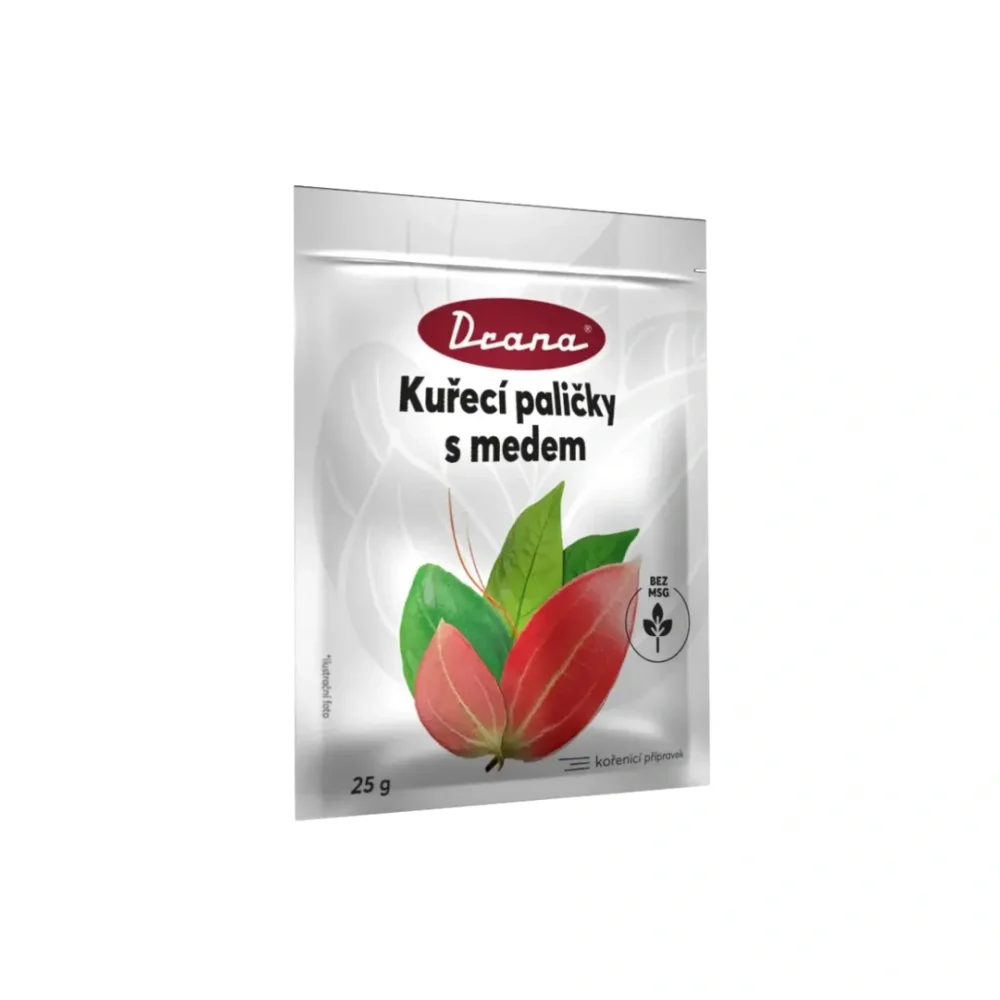
As a quick dry variant, a seasoning mix designed for a specific style can work – for example, Drana Chicken Drumsticks with Honey can be used as a dry base, which you then "open" as needed with a bit of fat (so the aroma spreads well over the surface).
Short and precise vs. longer and deeper: it’s not a contest of “who marinates longer”
For meat, it pays off to consider the situation:
- Thin slices for stir-fry need shorter and more precise marinating. The goal is to quickly flavor the surface, not to “remake” the whole meat.
- Larger pieces for grill or roasting can handle deeper flavor and longer contact.
- Meat that will go into a very pronounced sauce, doesn’t always need a strong marinade – sometimes the basic saltiness and aromatics are enough, and the rest is left to the sauce and final seasoning.
4) What a good Asian marinade consists of: five building blocks you can combine
A functional marinade can be composed of several recurring roles. You don’t always need to use everything – it’s important that the components make sense for the specific technique and that the marinade is not a “universal bucket.”
Salty and umami component: the backbone of the marinade
This is the base that most often decides whether the result will feel flat or “finished.” In Asian cuisines, this role is often carried by various sauces – but they are not automatically interchangeable.
A common mistake is to judge only by color (“it's dark and salty, so it will be the same”). Dark color can mean various things: a different style, more sugar, different thickness, a different proportion of ingredients, or a completely different source of umami. It’s safer to consider questions like:
- What is the main source of saltiness?
- What carries the umami?
- What adds color?
- What adds sweetness?
- Is this a base for cooking or rather finishing at the end?
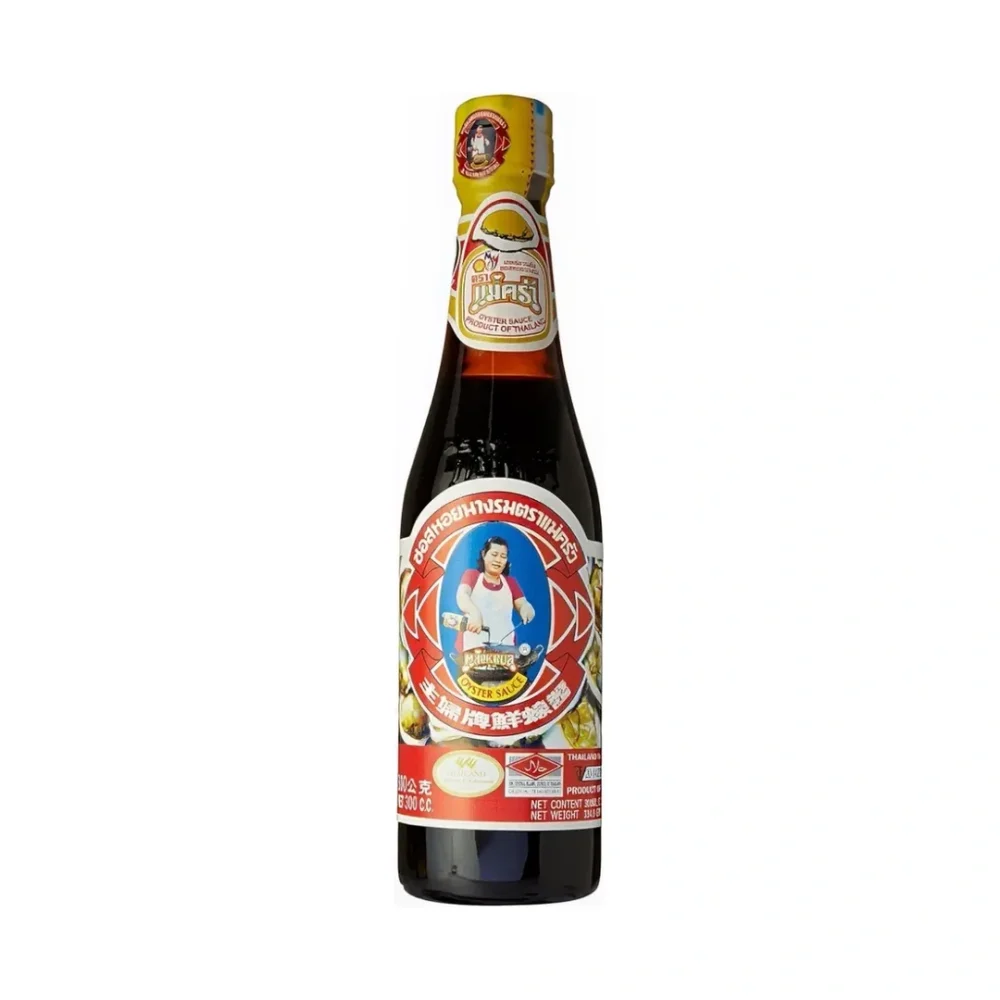
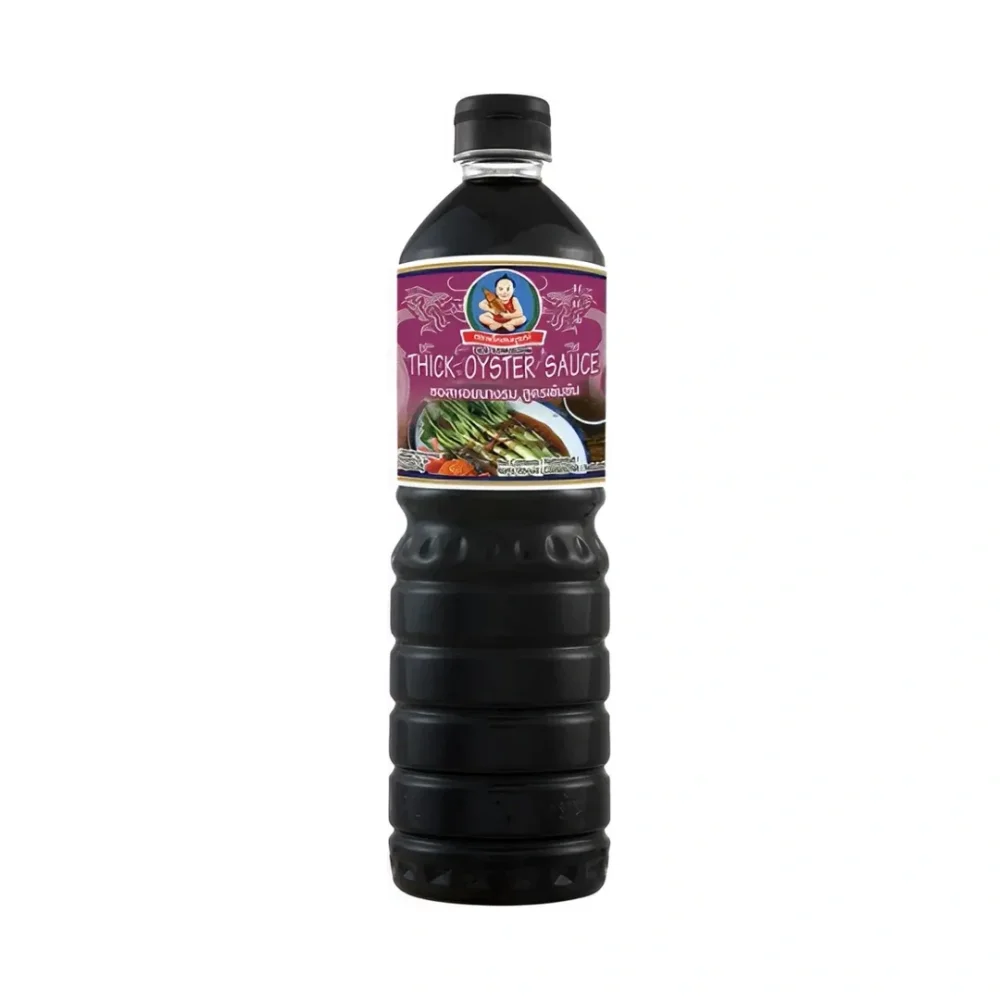
For “rounding out” and fuller flavor in marinades and stir-fry, oyster sauce often works well – for example, Maekrua Oyster Sauce. A thicker type of oyster sauce also easily sticks to the surface of meat and other ingredients; as an example of such a style, you can look at Dek Som Boon Thick Oyster Sauce.
Sweet component: color, shine, and caramelization (but also the risk of burning)
Sweetness in a marinade is not just “to make it sweet.” It often helps with color and glaze during searing. At the same time, it’s true that sweeter marinades require watching temperature and time so that the surface does not burn before the meat is cooked through.
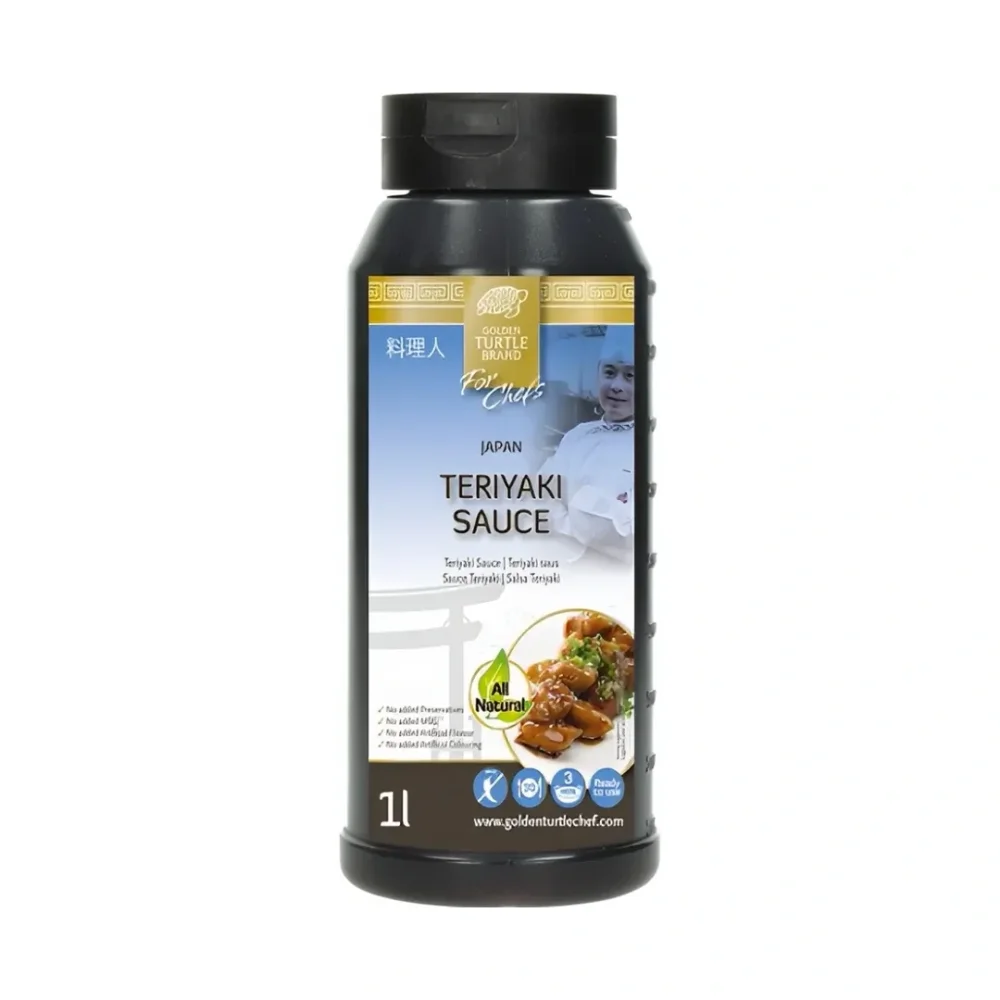
As a typical sweet-savory style that can behave glaze-like when stir-frying, you can use for example Golden Turtle Teriyaki Sauce. It is practical for quick cooking in a pan or wok because the surface gains expression already during a short heat treatment.
🍜 Acidic component: contrast and "brightening" of flavor (carefully depending on the ingredient)
Acidity can lift the marinade, balance sweetness, and add contrast. At the same time, it’s true that acidic and aggressive marinades can damage the surface of more delicate ingredients – therefore it’s better to use acidic components deliberately and not overdo it just because “acidic = tender.”
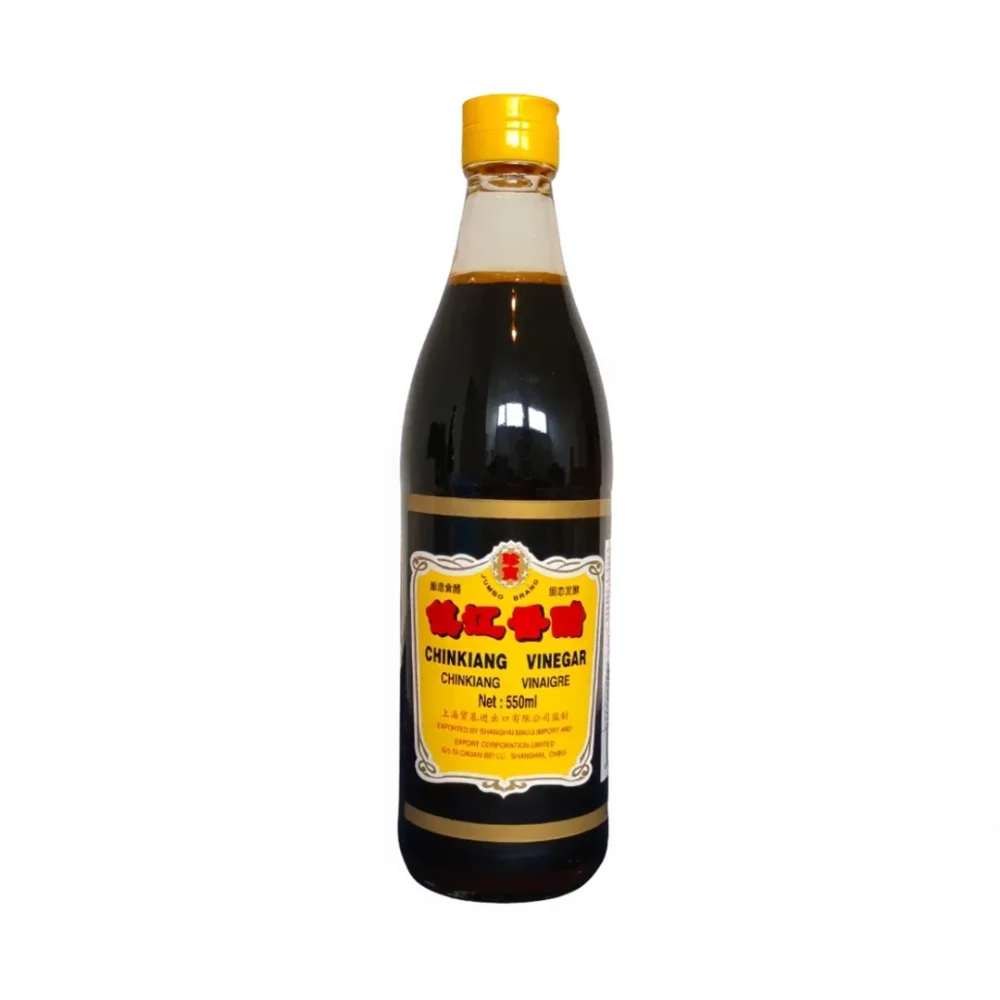
For darker marinades and sauces, rice vinegar is also used; a specific example of an acidic component for this type of work can be Jumbo Black Rice Vinegar.
👃 Aromatics: so the marinade smells good, not just salty
Aromatic components (for example garlic and ginger) often form what a person imagines as "Asian" flavor. An important practical note: aromatics develop better when the marinade has something to attach to – typically fat or a liquid component.
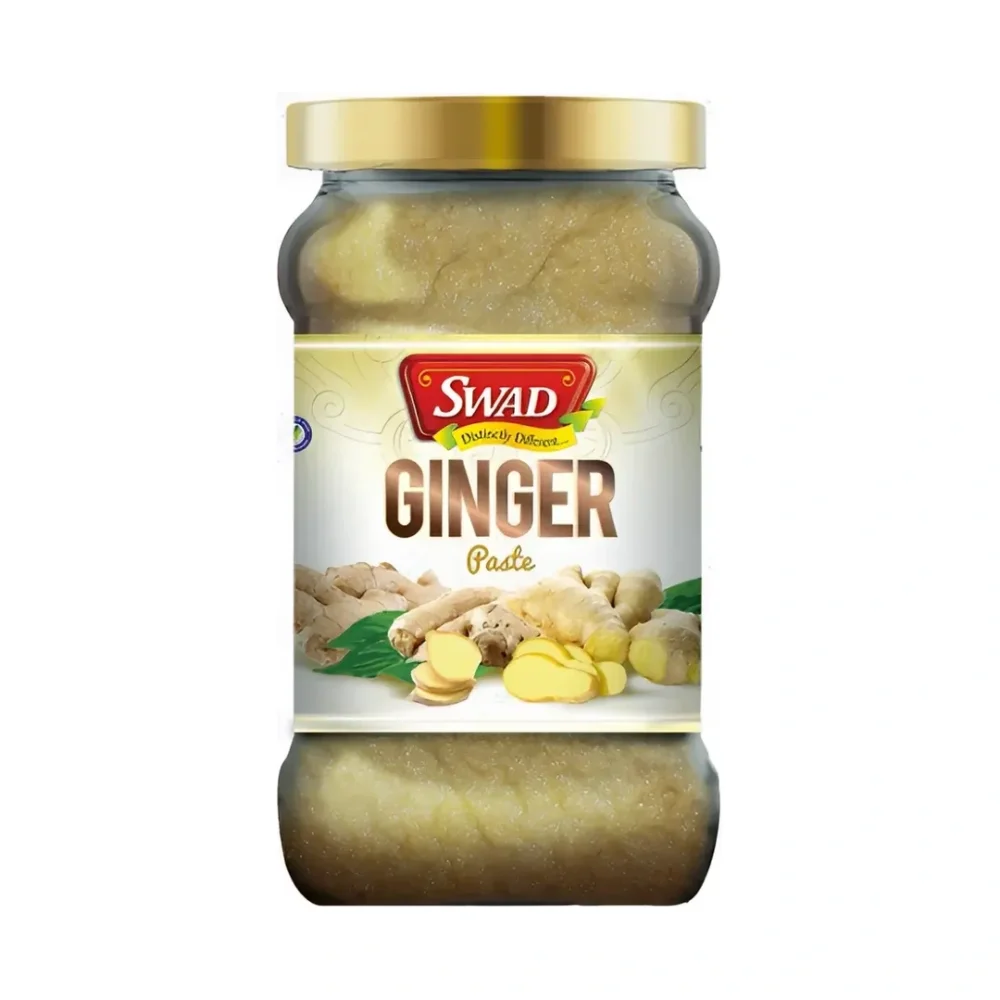
If you want a quick solution without peeling and grating, there are also ready pastes; an example can be SWAD Garlic Paste with Ginger, which can be used as an aromatic base for marinades and quick stir-fried dishes.
Fat: flavor carrier and "contact" with the surface
Fat is not just a technical thing. It helps bind aromas to the surface and improve the marinade’s contact with the meat. In practice, it’s often enough that the marinade contains some fat component, or that the meat is briefly mixed with a bit of oil after seasoning (especially with dry seasoning).
5) Practical onboarding: how to set up marinating at home to make sense (wok, grill/roasting, meat for a strong sauce)
The following procedures are not "recipes," but kitchen decisions that will save you from blind trials. The goal is always to match the marinade with what you will do next.
Quick wok/stir-fry: the goal is to flavor the surface and prepare it for high heat
- Cut the meat into thinner slices. For stir-fry, surface area matters more than “depth” of marinating – the flavor will happen mostly on the surface anyway.
- Build the marinade around the salty/umami component and add aromatics. Use sweetness so that it helps with color but does not take control.
- Marinate briefly and precisely. For thin slices, shorter contact is typically better than long soaking – you do not want the meat to release unnecessary juice and stew in the pan.
- “Finish” the flavor during cooking. This is common logic in Asian cooking: part of the flavor develops in the pan (contact with heat, drippings, fat binding) and part only at the very end.
Grilling and roasting: marinade helps with color, caramelization, and uniform surface
- Keep in mind that sweet components catch color quickly. If the marinade is sweeter, watch the heat intensity and don’t use it as the only source of “moisture” – the surface can darken before the inside is done.
- For larger pieces, deeper flavor and longer contact make sense. However, longer does not automatically mean better.
- Work with aromatics and fat. It's especially worthwhile at the grill/baking stage when the marinade can "stick" to the surface.
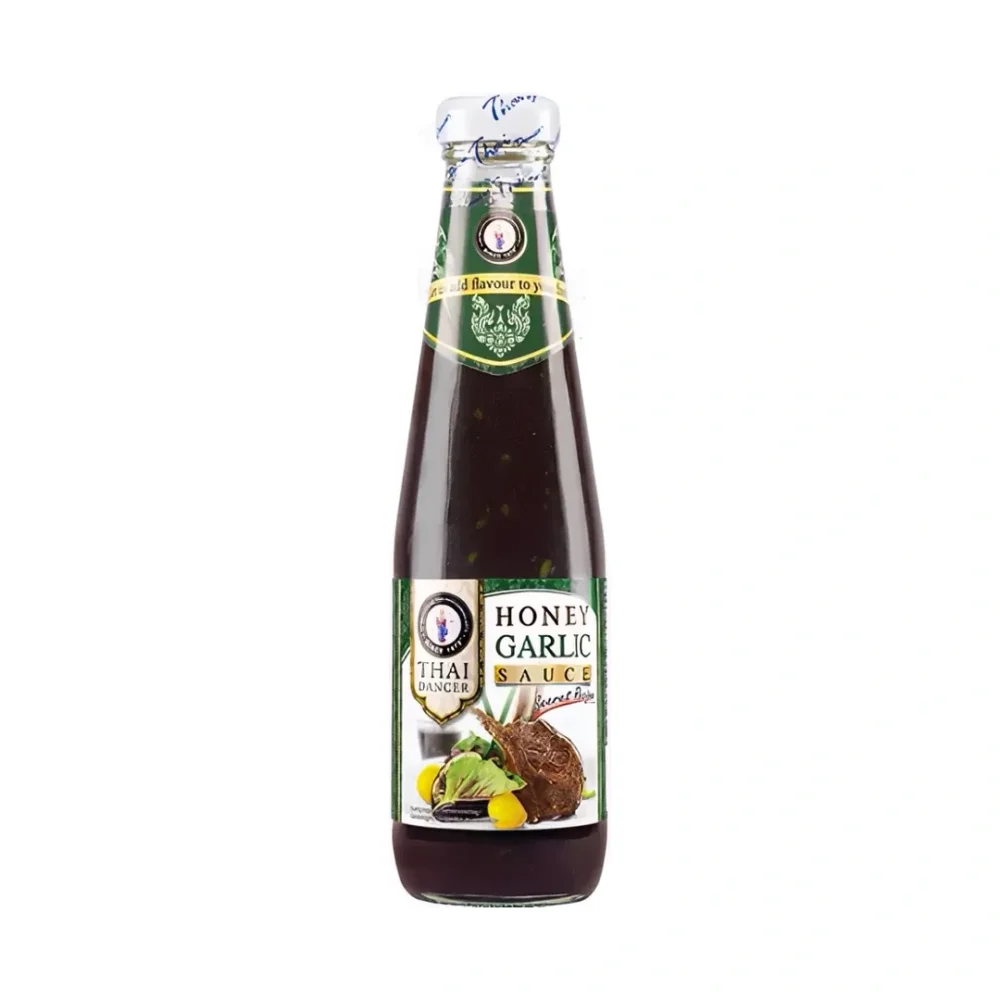
If you want a really quick ready-made mix for this type of use, there are also purely marinating products – as an example of a pronounced garlic marinade with a sweeter aftertaste you can use Thai Dancer Garlic Marinade with Honey.
Meat that will go into a strong sauce: simplify the marinade and leave space for the finale
If you know the meat will eventually be in a strong sauce, it's often unnecessary (and sometimes counterproductive) to build a "super marinade." In such situations, it is proven to:
- keep the marinade rather basic (saltiness/umami + a bit of aromatics),
- not overdo the sweetness (the sauce can provide it itself),
- not overdo the acidity (the contrast can come at serving),
- keep in mind that final seasoning is part of the technique, not an "extra cosmetic."
As a practical crossroads for ready-made mixes intended directly for marinating, the category Marinades makes sense for times when you need to quickly hit a certain flavor direction without building a mix from scratch.
6) Common mistakes, confusions, and safety: what to watch out for to make marinating work
Mistake: "One universal mix for everything"
A marinade is not a universal solution. It behaves differently on thin slices for a wok and differently on a large piece for the grill. Meat that will go into a strong sauce needs it differently than meat that should be flavor-ready after roasting.
Mistake: confusing sauces just based on color and saltiness
A dark sauce is not automatically "dark soy sauce," and a thin sauce is not automatically weak. Asian sauces mix regional logic, export names, and various types of products. Therefore, it is helpful to think according to role (saltiness, umami, sweetness, color, finishing), not just because "it looks similar."
Mistake: expecting the marinade to replace final seasoning
In many Asian dishes, the flavor is adjusted at the very end. If this is skipped, the dish may seem "marinated," but without contrast and without the final accent.
⚠️ Safety and storage: this is no place for improvisation
- Marinate in the cold, not at room temperature.
- Do not reuse marinadethat has been in contact with raw meat unless it is thoroughly boiled first.
- Set aside part of the marinade for the final sauce or glazing (this is the easiest and safest method).
- Too long marinating is not automatically better – especially if the marinade is acidic or "aggressive."
- Acidic marinades can damage the surface of more delicate ingredients; for meat, this mainly means unnecessary "breaking" of the surface, which may not be desirable for your chosen technique.
What to take from the article
- Marinating in Asian cuisine is targeted work with the surface and preparation for a specific technique, not an automatic step "for flavor."
- Distinguish three things: marinating (in advance), seasoning during cooking (during) and final seasoning (at the end).
- Marinade and sauce are not the same – if you want the same mix also for the end, set part aside before contact with raw meat.
- For stir-fry, the winner is a short and precise marinade; for grill/baking, deeper work with the surface makes sense, but sweetness requires heat control.
- Sauces are not automatically interchangeable: think according to role (saltiness, umami, sweetness, color, finishing), not color.
- Safety is part of the technique: cold, no reuse of raw marinade, and clear separation of the part for final glaze.

Read next
If you want to explore this topic further, continue with these related blog guides and articles:
