


 Česky (CZK)
 Slovensky (EUR)
 Deutsch (EUR)
 Austria
 Belgium
 Bulgaria
 Croatia
 Denmark
 Estonia
 Finland
 France
 Germany
 Greece
 Hungary
 Italy
Italy Latvia
 Lithuania
 Luxembourg
 Netherlands
 Poland
 Portugal
 Romania
 Slovenia
 Spain
Spain Sweden










Dry vs. wet marinades: when to choose which and why it matters
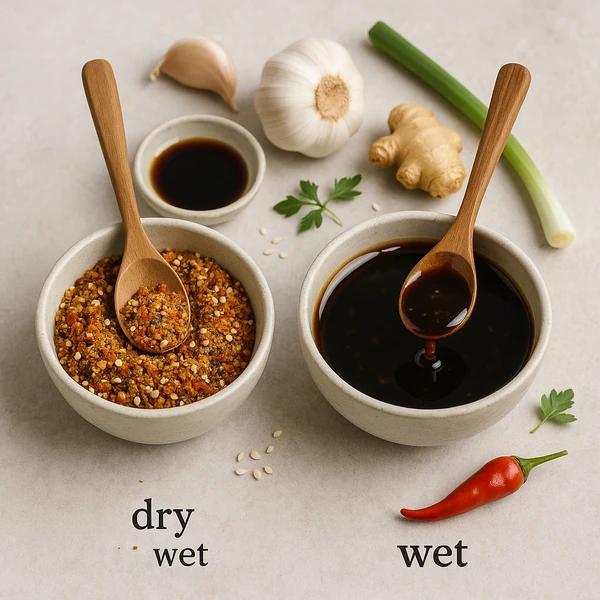
“To marinate” does not automatically mean “to drown in sauce.” In Asian cooking, marinating is primarily about working with the flavor and surface of the ingredient before heat—often a short, precisely targeted step is enough. The division into dry and wet marinades is a practical compass: it helps you achieve better searing, a cleaner flavor, or conversely better coating and glaze—depending on what you are cooking.
Why even choose between a dry and a wet marinade
The difference between a dry and a wet marinade is not “just” that the mixture is liquid. It’s actually about what you want to happen to the surface of the ingredient during cooking:
- Do you want pronounced browning, searing and direct flavor? Dry seasoning often works better because there isn’t unnecessary moisture on the surface.
- Do you want to combine multiple flavors into one whole, thoroughly coat the ingredient and possibly create a base for glazing? A wet marinade gives you more possibilities.
In Asian cuisines, the marinade is also usually not the only “source of flavor.” Some flavor develops during cooking and some is often adjusted at the end (for example with table sauces, vinegar, herbs, chili oil or stock). That makes it even more important that the marinade does exactly what you need—and doesn’t get in the way of what comes next.
What marinating in Asian cooking really means (and what to expect from it)
Marinating is primarily about flavor and the ingredient’s surface before heat. It does not always mean prolonging storage and does not always “deeply” change the interior of the ingredient. In home practice it often serves these functions:
- to provide basic saltiness and umami in advance,
- to unify the surface flavor (so the result doesn't taste flat),
- to help with color and caramelization,
- to bind aromatic components to fat or liquid,
- to prepare the ingredient for a specific technique (wok, grill, pan, oven, stock).
It’s important not to confuse three different steps that look similar in the kitchen but do different jobs:
- Marinating – preliminary work with the ingredient.
- Seasoning during cooking – taste adjustment during the heat process.
- Final seasoning – finishing touches after cooking or at service.
Once you separate these roles, you’ll stop looking for “one universal mix for everything” — and results typically improve even without more complicated procedures.
Dry marinade (dry seasoning): when you want searing and a cleaner, more direct flavor
A dry marinade (often simply meaning dry seasoning) makes sense where you don’t want to add much moisture. Typically:
- for the grill,
- for roasting/baking,
- for ingredients that brown well,
- when you want a cleaner and more direct flavor.
Advantages of a dry marinade
- Less water on the surface – easier searing.
- Better browning (and thus a more pronounced “seared” flavor).
- Simpler control (you can easily see how much of each thing is on the surface).
- Cleaner kitchen work.
When a dry marinade can be a weaker choice
- It has less ability to carry some aromatics (some flavors develop and “stick” to the surface more easily in a liquid/fat).
- It coats the ingredient less than a wet mixture.
- It’s less suitable for more delicate glazed styles, where you expect shine and a continuous layer on the surface.
Practical interpretation: dry seasoning often wins when the goal is good searing. Wet marinades, on the other hand, are better when you want the surface flavors to “hold together” as a whole.
Wet marinade: when you want to coat the ingredient, merge flavors and possibly glaze
A wet marinade is suitable where you want to combine multiple flavors into one whole and work with liquid sauces or fermented pastes. It typically relies on a salty/umami component and aromatics, and possibly sweetness and acidity depending on the dish's style.
Advantages of a wet marinade
- It carries more aromatics and flavors at once.
- Coats better tofu, meat and vegetables.
- Can create a base for glazing (shine, “varnish” on the surface).
- Allows you to work well with liquid sauces and fermented pastes.
What to watch for with a wet marinade
- Too wet a surface can hinder browning – instead of browning, the ingredient can easily start to steam.
- A high sugar content burns easily at high heat.
- Acidity and salt can worsen the result if marinated for too long (often mainly on the surface – both in flavor and texture).
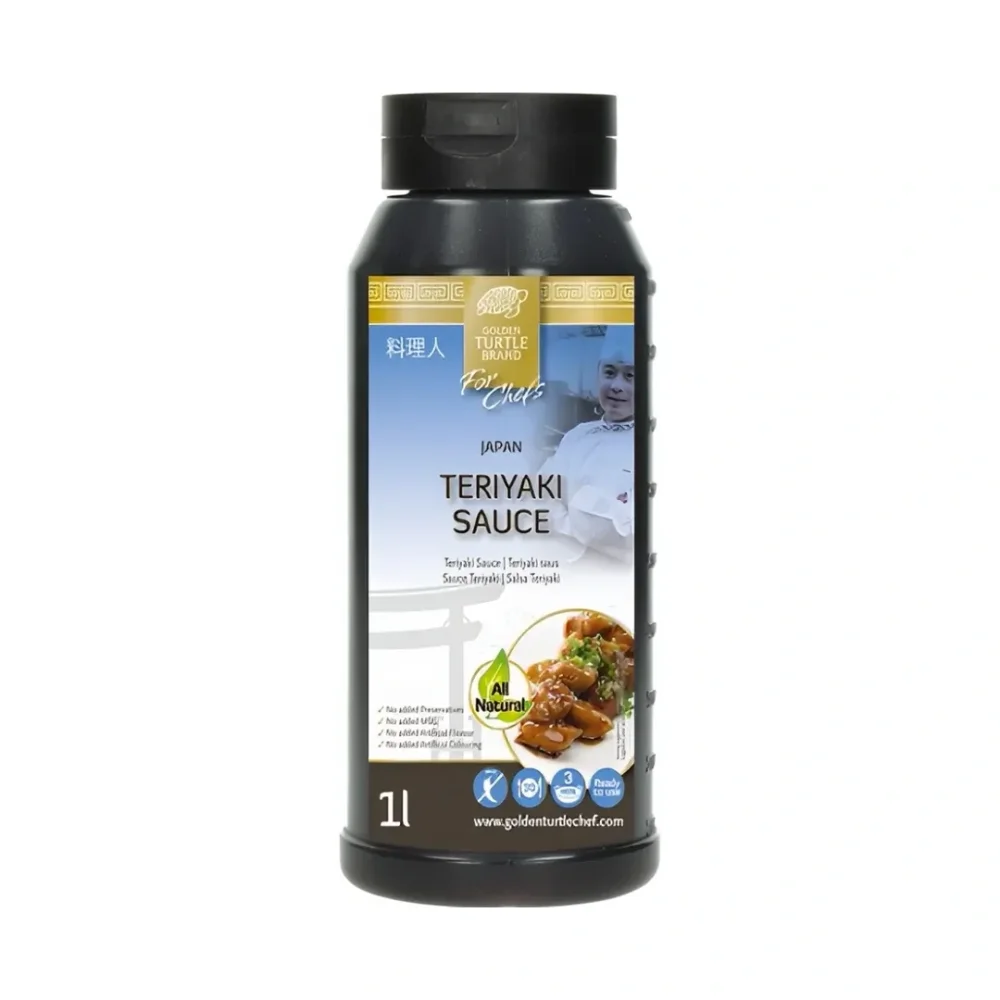
If you want a typically “glazed” effect, it makes sense to choose a wet base designed for that. An example of a sweet-salty mix that can create shine when stir-fried is Golden Turtle Teriyaki sauce – suitable where you want the marinade to seamlessly become a surface glaze.
How to choose the right type of marinade (and how to start at home without unnecessary mistakes)
1) First clarify the goal: “browning” vs. “coating”
- I want browning and caramelization: go more for dry seasoning. Practically this often means minimizing surface moisture on the ingredient and letting the direct flavor come through.
- I want coating and flavor fusion: choose a wet marinade. But expect that for good browning it may be important to monitor the “wet film” on the surface.
2) When building a wet marinade, think in components (not by color)
A useful way to think is to divide the marinade into functional parts. It's not the only correct composition, but each ingredient should have a role:
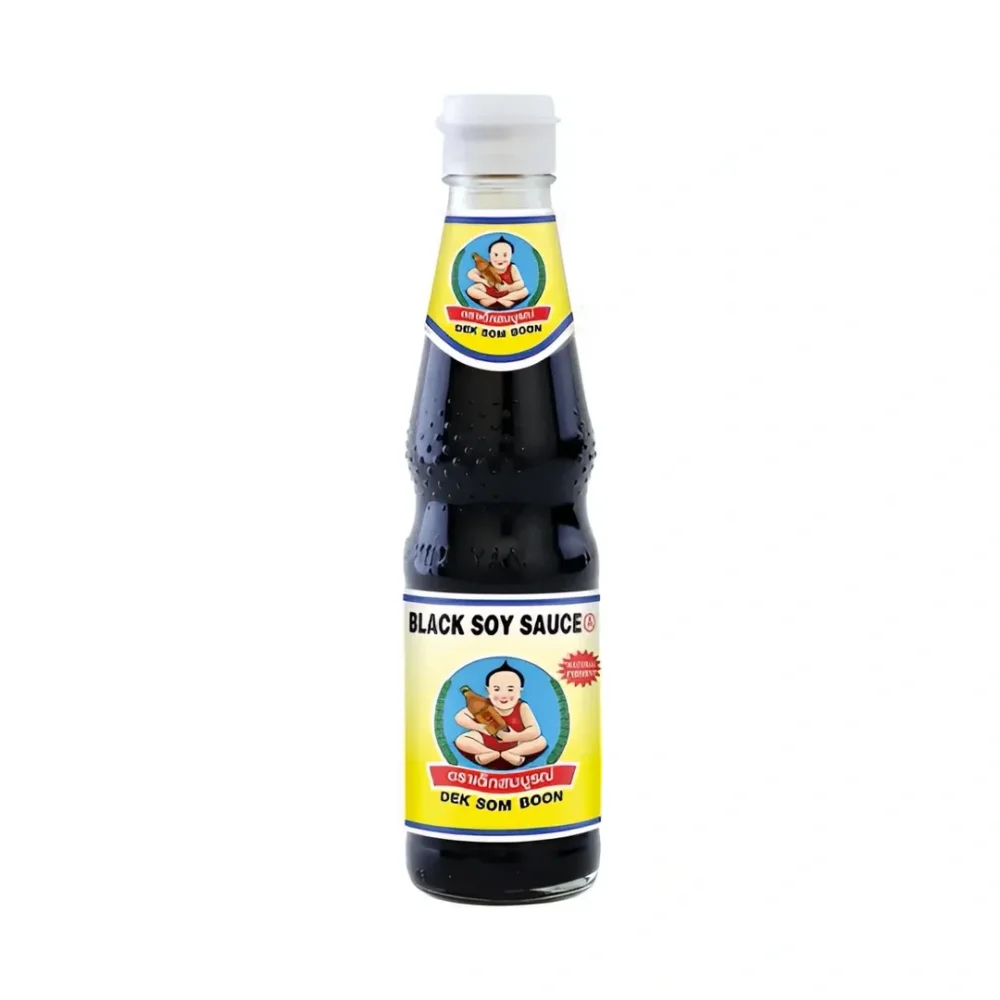
- Salty and umami component – provides the base and “depth”. In practice this is often carried by soy, fish or oyster sauces. For darker color and a rounded effect, for example, Dek Som Boon dark soy sauce (dark soy sauce is often used for color as well as saltiness).
- Sweet component – helps caramelization and “roundness”, but increases the risk of burning at high heat.
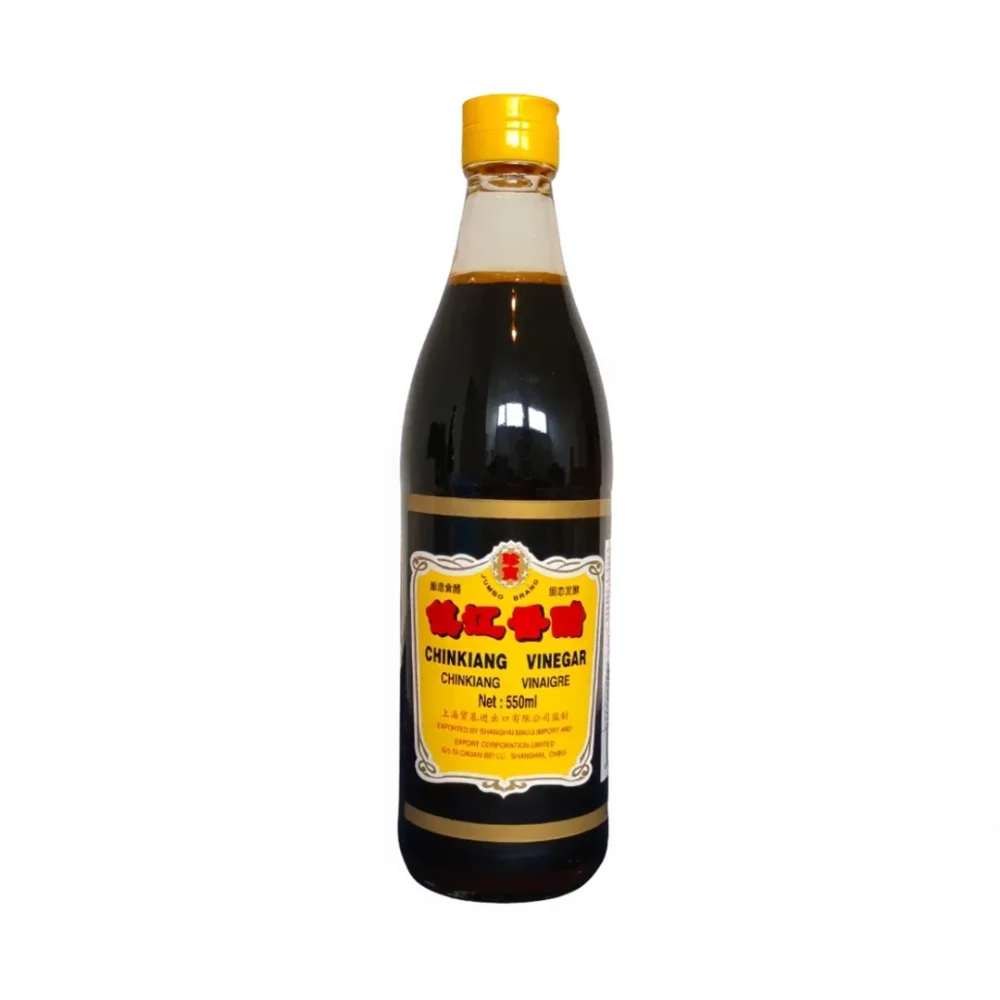
- Acid component – brings contrast and lifts the flavor. For darker profiles (e.g., with meat and “dark” sauces) it can make sense to use Jumbo black rice vinegar.
- Aromatic components – typically garlic, ginger and other strong aromas. For quick, consistent aromatics without lengthy prep, you can use SWAD garlic-ginger paste.
- Fat – helps carry some aromas and “coat” the surface (this is why some flavors in wet marinades feel fuller).
Important practical note: a dark-colored sauce doesn't automatically mean it’s the same as another dark one. Choose based on role (what salts, what carries umami, what sweetens, what colors), not appearance.
3) When to reach for a sauce that can both marinate and season
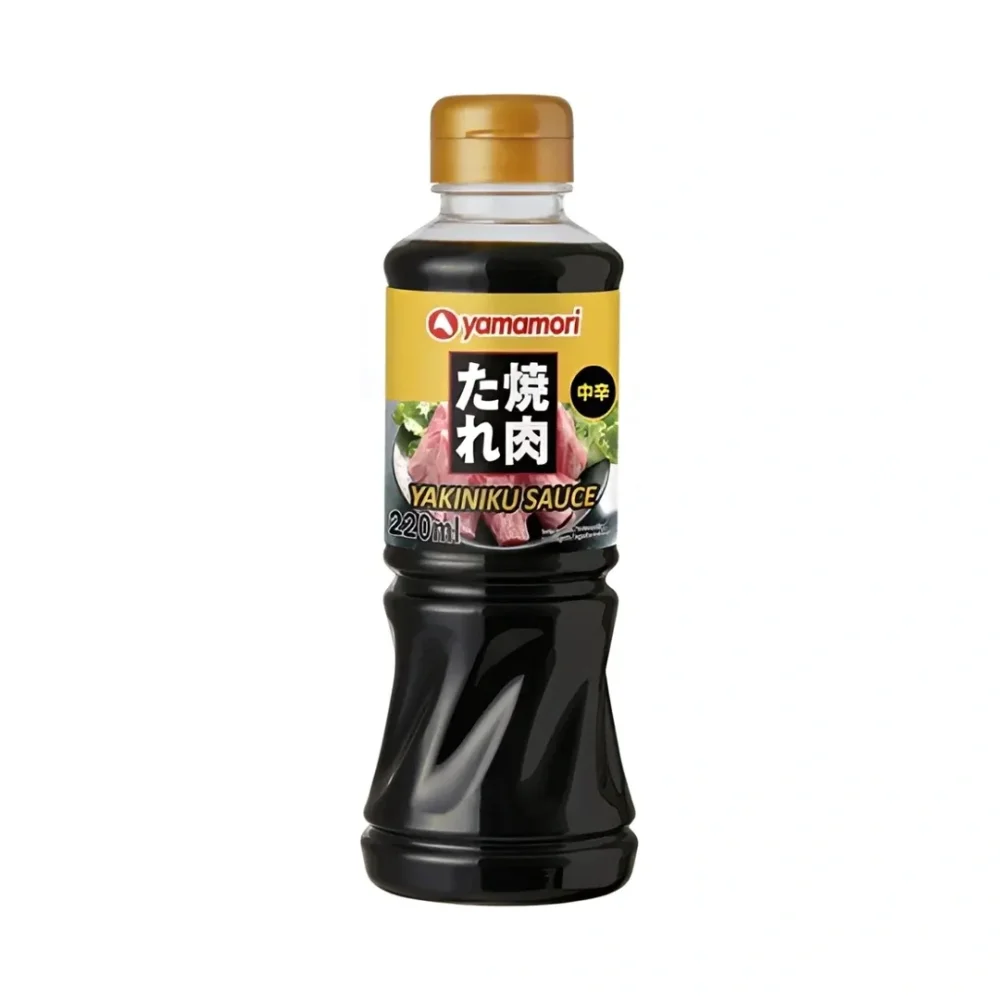
Some mixes can be used both for marinating and for final seasoning of a finished dish. That’s convenient, but this is where marinade and sauce roles are often confused. A typical example is Yamamori Yakiniku sauce: it can help set the flavor before the grill or pan, but it can also work as a “finishing touch” on cooked meat or vegetables. The key is to consciously decide when you use the mix as a marinade (before cooking) and when as a sauce (on the finished dish).
4) If you want a quick start, treat ready-made marinades as a tool (not a shortcut without thought)
For quick home use it can be useful to have ready-made mixes from the Marinadescategory on hand. The same selection logic still applies: if a mix is very sweet, it will be more sensitive to high-heat searing; if it's very liquid, it can hinder browning; if it's built on a strong umami component, often less is needed.
Common mistakes and misunderstandings (and how to fix them quickly)
Mistake 1: “Marinade = sauce”
This is one of the most common confusions. A marinade prepares the ingredient and must take cooking into account. A sauce completes the finished dish and can handle contrast, thickness and final texture differently. The result is usually best when you divide the work: some is done by the marinade, some by cooking, and some by final seasoning.
Mistake 2: Too wet a surface and then disappointment at the lack of “browning”
If you want browning, a wet marinade can hold you back. The fix is usually simple: work with amounts so the ingredient is coated but not “drowned”, and remember the goal is surface flavor and control during searing.
Mistake 3: Sweet marinade at too high heat
Sweet-salty mixes are great for shine and glaze, but sugar burns easily. If that happens, it doesn't mean the marinade is “bad” – you need to adjust heat and timing so the flavor develops without burning.
Error 4: "Dark and salty sauces are interchangeable"
It's not safe to assume two dark sauces will behave the same. A dark color can mean a longer fermentation, more sugar, a different viscosity, a different soy/wheat ratio, or a completely different regional style. Practical tip: ask what is the main source of saltiness, what carries umami, what provides the color, what adds sweetness and what is more of a finishing than a base.
Takeaways from the article
- Dry marinade is great when you want searing, browning, and direct flavor — typically grilling and roasting.
- Wet marinade excels at coating, flavor integration, and glazing — but can inhibit browning and sweet components burn easily.
- In Asian cooking a marinade is often not the "everything": flavor is built from prep, seasoning during cooking, and final adjustment.
- Don't judge sauces by color. Think in terms of role: saltiness, umami, sweetness, acidity, aromatics, and whether the ingredient is intended more for cooking or for finishing.

Read next
If you want to explore this topic further, continue with these related blog guides and articles:
