

 Česky (CZK)
 Slovensky (EUR)
 Deutsch (EUR)
 Austria
 Belgium
 Bulgaria
 Croatia
 Denmark
 Estonia
 Finland
 France
 Germany
 Greece
 Hungary
 Italy
Italy Latvia
 Lithuania
 Luxembourg
 Netherlands
 Poland
 Portugal
 Romania
 Slovenia
 Spain
Spain Sweden










Why knives matter more than most kitchen upgrades 🔪
A sharp, well-chosen knife makes cooking faster, cleaner, and safer. “Safer” might sound surprising, but it’s true: a dull edge forces you to press harder, increasing the chance of slipping. The best knife is the one that matches what you cook, feels stable in your hand, and stays sharp with the amount of care you’re realistically willing to give it.
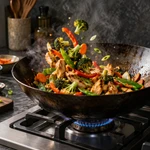
For Asian cooking in particular—fine slicing for stir-fries, precise prep for sushi, quick vegetable work for soups and hot pots—knife geometry and steel choice make a noticeable difference.
From stone flakes to modern heat treatment: a quick context
Knives have evolved alongside food culture: early stone tools gave way to bronze and iron, then to refined steelmaking and specialized blade shapes. Japan’s knife tradition grew out of swordsmithing techniques—careful heat treatment, hard cutting cores supported by tougher outer layers, and a focus on clean, low-resistance cutting. Modern makers combine that heritage with new stainless alloys and precise grinding methods.
Knife types you’ll actually use (and what they’re for)
You don’t need a drawer full of blades. Most home kitchens can cover 90% of tasks with two or three well-chosen knives.
Everyday essentials
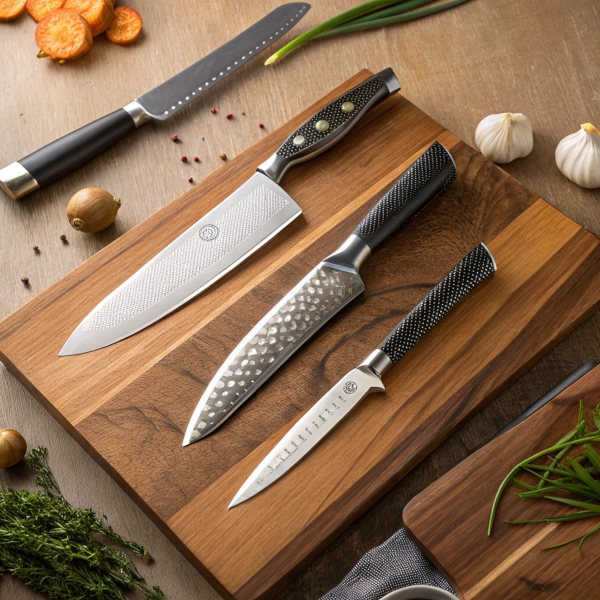
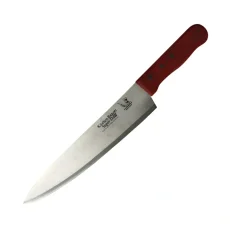
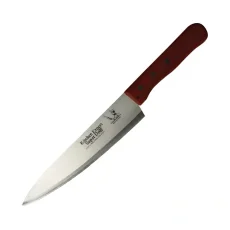
- Chef’s knife (Western): the classic all-rounder for chopping, slicing, and mincing. Usually heavier with a curved belly for rocking cuts.
- Gyuto (Japanese “chef’s knife”): similar role, often thinner and lighter. Great for precise slicing and push-cutting.
- Santoku: a compact Japanese-style all-rounder; typically a bit shorter and taller than a chef’s knife, excellent for meat, fish, and vegetables (the name is often explained as “three virtues”).
- Small utility / paring knife: peeling, trimming, garlic, strawberries—anything that needs control more than power.
Specialists worth adding when your cooking demands it
- Bread knife (serrated): crusty loaves, soft buns, sponge cakes—serrations cut without crushing.
- Slicing / carving knife: long and narrow for clean slices of roast meat (less tearing, better texture).
- Boning knife: narrow and maneuverable for joints, trimming fat, and working around bones.
- Fillet knife: thin and flexible for fish; designed to follow the bones cleanly.
Japanese classics (when you want true specialization)
- Deba: sturdy fish knife for breaking down whole fish and working through small bones; not for hard frozen food or thick beef bones.
- Nakiri: straight-edged vegetable chopper that excels at fast, efficient prep—cabbage, scallions, carrots, herbs—especially for stir-fries and soups.
- Yanagiba: long slicer for sashimi; commonly single-bevel for ultra-clean cuts.
- Usuba: traditional vegetable knife (often single-bevel) used for very fine, precise cuts.
Blade materials explained: what changes in daily use 🧱
Steel choice affects four things you’ll notice immediately: how sharp the knife gets, how long it stays sharp, how easily it sharpens again, and how much maintenance it needs to avoid rust or chipping.
Stainless steel (everyday practicality)
Best for: most home cooks, busy kitchens, and anyone who wants low-maintenance tools.
Stainless steels resist corrosion thanks to chromium. They’re forgiving if you occasionally leave a knife wet on the counter (though you still shouldn’t). Many stainless knives balance toughness and edge retention well, making them a reliable “one-knife” choice.
Carbon steel (sharp, easy to sharpen, but needs attention)
Best for: cooks who enjoy sharpening and want excellent bite and feedback on the board.
Carbon steel can take a very fine edge and is often quicker to sharpen than many stainless alloys. The trade-off is reactivity: it can discolor with acidic foods and can rust if left wet. Over time, many carbon blades develop a dark patina that helps protect them—but you still need to wash, dry, and store them carefully.
High-performance Japanese stainless steels (e.g., VG-10, SG2/R2)
Best for: people who want a sharper, longer-lasting edge with stainless convenience.
Many Japanese knives use harder steels and thinner grinds than typical Western knives. In practice, that means they can feel dramatically “slicier,” especially on vegetables and boneless proteins. Harder steel can chip if mistreated, so cutting technique and board choice matter.
Ceramic blades (very hard, very brittle)
Best for: fruit and vegetables, quick light slicing, and kitchens where corrosion is a concern.
Ceramic doesn’t rust and stays sharp for a long time, but it can chip or crack if dropped or used on hard items (bones, frozen foods, squash stems). It’s a niche tool rather than a main knife for most cooks.
Damascus-style layered blades (performance + appearance)
Best for: cooks who value feel and aesthetics—when the underlying steel and heat treatment are good.
Modern “Damascus” kitchen knives usually use layered cladding around a core steel, creating a distinctive pattern. The look alone doesn’t guarantee performance; what matters is the core steel, heat treatment, and grind. Treat it like any other knife with similar hardness—avoid twisting and hard impacts.
How to choose the right knife (without overthinking it)
1) Start with your main job
- General cooking: chef’s knife, gyuto, or santoku.
- Vegetable-heavy cooking: add a nakiri.
- Whole fish and seafood: consider a deba (and later a slicer for clean portions).
2) Pick a comfortable size
As a rough guide: 18–21 cm works for most people as an all-purpose blade. Shorter can feel easier in small kitchens; longer is efficient for big prep and proteins. The right length is the one you can control confidently.
3) Check balance and handle shape
A knife should feel stable when you pinch-grip it (thumb and index finger on the blade, not just the handle). If the handle is too thick or slippery, you’ll fatigue faster. Japanese knives may come with wa handles (light, often wood) or Western-style handles (heavier, sometimes with a full tang). Choose what feels secure, especially with wet hands.
4) Match steel to your habits
If you know you won’t wipe and dry immediately, choose stainless. If you’re happy to maintain a routine and want maximum sharpening ease, carbon steel can be rewarding. If you want “sharp for longer” and don’t pry or twist, harder Japanese stainless steels can be a great fit.
Use and care: the habits that protect your edge 🧽
Cleaning
- Wash by hand with mild soap; rinse and dry immediately.
- Avoid dishwashers: heat, detergent, and banging against other items quickly damage edges and handles.
Honing vs. sharpening (they’re not the same)
- Honing realigns a slightly rolled edge (common on softer steels). It’s quick and can be done often.
- Sharpening removes material to create a new edge (stone or sharpener). It’s needed less frequently but is essential over time.
If you use a hard Japanese knife, honing rods are not always helpful and can be risky if used aggressively. Many cooks prefer light touch-ups on a fine stone instead.
Cutting boards and surfaces
Your board is part of your knife system. Use wood or quality plastic. Avoid glass, marble, granite, and ceramic boards—they dull edges fast and can cause micro-chipping on harder blades.
Storage
- Use a knife block, magnetic strip, or edge guards in a drawer.
- Don’t let knives rattle loose with other utensils—edges lose the fight every time.
Common mistakes that shorten a knife’s life ⚠️
- Using a thin knife as a pry bar: twisting in hard squash, lifting lids, separating frozen items—this leads to chips or bent edges.
- Cutting bones or frozen food with the wrong blade: use the right tool (cleaver, saw, or dedicated bone/chopping knife).
- Leaving reactive steel wet: carbon blades can rust quickly; wipe during prep, especially with citrus and tomatoes.
- “Steeling” everything: a heavy hand on a rod can damage hard edges. Choose a method that fits your knife’s hardness.
A quick technique tip for cleaner prep
For thin Japanese-style knives, try a push cut: move the blade slightly forward as it goes down, letting the edge do the work. It’s especially effective for onions, scallions, cabbage, and sashimi-style slicing. Avoid twisting the blade while it’s in the ingredient—lift and reset instead.
Our picks (Japanese-style specialists) 🛒
- Japanese knife Santoku 20 cm – a versatile everyday blade for meat, fish, and vegetables.
- Japanese chopper Nakiri 20 cm – a dedicated vegetable knife for fast, straight chopping.
- Japanese knife Deba 20 cm – built for breaking down fish and working with seafood.
Related category
If you’re comparing shapes and looking for the right starting point, browse our Kitchen knives selection.
FAQ
Do I need Japanese knives to cook Asian food?
No—but certain styles (like nakiri for vegetables or yanagiba for sashimi) make specific tasks easier and more consistent.
Why do some Japanese knives chip more easily?
Many use harder steel and thinner edges for low-resistance cutting. That performance comes with less tolerance for twisting, bones, frozen foods, and very hard cutting surfaces.
What’s the best “first good knife”?
A well-fitting chef’s knife/gyuto or santoku in stainless steel is the most practical starting point. Add a small utility knife next; specialize later based on what you cook most.