Česky (CZK)
 Slovensky (EUR)
 Deutsch (EUR)
 Austria
 Belgium
 Bulgaria
 Croatia
 Denmark
 Estonia
 Finland
 France
 Germany
 Greece
 Hungary
 Italy
Italy Latvia
 Lithuania
 Luxembourg
 Netherlands
 Poland
 Portugal
 Romania
 Slovenia
 Spain
Spain Sweden










Wok Pan: How to Choose, Season, and Cook Faster at High Heat
Why a wok changes the way you cook 🔥
The wok was born in China as a practical tool for cooking fast over very high heat. That same idea is why it feels so modern today: quick meals, crisp vegetables, juicy proteins, and sauces that cling instead of turning watery.
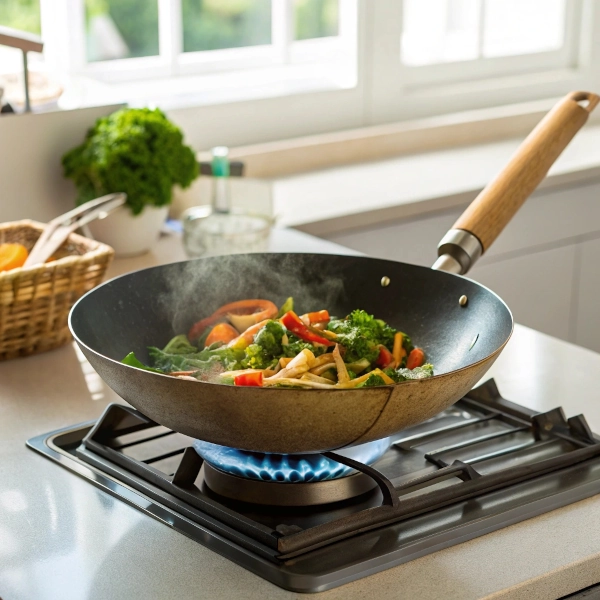
Its key advantage is the bowl-like shape. The hottest zone is in the center for searing; the sloped sides act as a “parking area” where food stays warm while you cook in batches. That’s how you avoid steaming your stir-fry and get that lively, roasted aroma often described as wok hei.
What makes a wok different 🥢
- High, curved walls: easier tossing and mixing, fewer spills, better control with larger portions.
- Heat zoning: sear in the center, move food up the sides to slow cooking down.
- Efficient cooking: short cook times can help keep vegetables bright and crisp.
- More than stir-fry: great for shallow-frying, steaming (with a rack), braising, and even quick soups.
Bottom shape: round vs. flat (and why it matters) ⚙️
Round-bottom wok
The classic choice for open flames. Heat wraps around the bowl, which is perfect for fast stir-frying and tossing. On modern flat cooktops it won’t sit securely, so it typically needs a wok ring or a dedicated burner setup.
Flat-bottom wok
Designed for home kitchens. It sits stable on most stovetops and is the easiest option if you want one wok for everyday use. You may lose a little of the “flame wrapping” effect compared to round-bottom, but the practicality is hard to beat.
Induction note: some steel woks work on induction, but performance depends on how flat the base is and how well it makes contact with the cooking zone. If you cook mostly on induction, prioritize a flat, stable base and check compatibility before buying.
Materials: which wok is right for you? 🛠️
Carbon steel (the classic)
Fast to heat, responsive, relatively light, and develops a natural nonstick patina with use. This is the go-to for traditional stir-fry technique. It does require seasoning and basic care to prevent rust.
Cast iron
Holds heat extremely well, which can be great for searing and longer cooking. It’s heavier, slower to respond, and can be less convenient for quick tossing. Also needs seasoning and careful drying.
Stainless steel
Durable and low-fuss, but less naturally nonstick. It can work well if you’re comfortable controlling heat and using enough oil to prevent sticking.
Nonstick-coated woks
Easy for beginners and gentle cooking, but coatings don’t like sustained high heat—the very thing that makes wok cooking special. Use moderate heat and non-metal tools, and expect a shorter lifespan than seasoned steel.
How to cook in a wok: a practical method that works 🍜
- Prep first: cut everything before you turn on the heat. Stir-frying moves too fast for last-minute chopping.
- Get the wok hot: preheat until a drop of water sizzles and evaporates quickly.
- Add oil, then aromatics: swirl oil to coat; add garlic/ginger/scallion briefly so they don’t burn.
- Cook in batches: overcrowding causes steaming. Sear protein first, remove, then cook vegetables, then combine.
- Sauce last: mix sauce separately; add at the end so it reduces quickly and coats.
Seasoning a carbon steel or cast-iron wok (simple and reliable) 🧼
Seasoning creates a protective layer that improves release and helps prevent rust. You’ll only do the full process once—after that, normal cooking keeps it improving.
- Wash off factory residue: use hot water and a small amount of mild detergent once, then rinse and dry thoroughly.
- Heat the wok empty: warm it until it’s fully dry and the metal begins to change color (normal for carbon steel).
- Apply a very thin oil film: use a high-smoke-point oil (e.g., canola, peanut, grapeseed). Wipe until it looks almost dry.
- Heat until it smokes lightly: ventilate well. Let cool.
- Repeat 2–4 times: thin layers beat thick layers (thick oil gets sticky).
Everyday care: keep it fast and rust-free
- After cooking: rinse with hot water and scrub gently with a soft brush if needed.
- Dry on heat: put it back on the burner for 30–60 seconds to evaporate moisture.
- Light oil wipe: a drop of oil spread thinly helps storage, especially in humid kitchens.
- Avoid soaking: standing water is the enemy of seasoned steel.
Common wok mistakes (and easy fixes)
- Food sticks: wok not hot enough, or added food before the oil was shimmering. Preheat longer and cook in smaller batches.
- Vegetables go soft: overcrowding causes steam. Keep portions smaller or cook in rounds.
- Burnt garlic/ginger: add aromatics after oil, and only for a few seconds before the main ingredients.
- Rust spots: scrub the area gently, dry on heat, then re-season a thin layer. Rust is usually fixable.
Buying checklist: what to look for 🧾
- Size: 33–38 cm is a great range for most home kitchens; go bigger if you often cook for a crowd.
- Handle style: a long handle gives control for tossing; two handles are stable for heavy loads and larger sizes.
- Flat vs. round bottom: match your stove and your comfort level.
- Weight: lighter is easier for stir-fry tossing; heavier is steadier but less agile.
Our picks (steel woks)
- WOK pan made of steel with a flat bottom 33 cm – a practical everyday size for quick stir-fries and fried rice.
- WOK pan made of steel with a flat bottom 38 cm – more room for batch cooking without overcrowding.
- WOK pan steel two-handed 45 cm – ideal when you cook large portions and want extra stability.
FAQ
Do I need a wok if I already have a frying pan?
If you cook stir-fries, noodles, fried rice, or like high-heat vegetables, a wok makes the process easier and the results more consistent—especially because of heat zoning and higher sides.
Can I use metal utensils in a wok?
On seasoned carbon steel or cast iron, yes (it’s common). On nonstick-coated woks, use wooden or silicone tools to avoid damaging the coating.
Why does my carbon steel wok look blotchy or darker in spots?
That’s normal. Seasoning builds unevenly at first and becomes more uniform with regular cooking.

Recommended products7
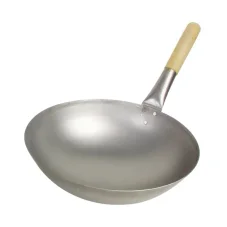
Non Food WOK steel pan with round bottom 30 cm
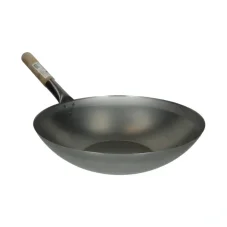
Non Food Steel WOK pan with flat bottom 35 cm
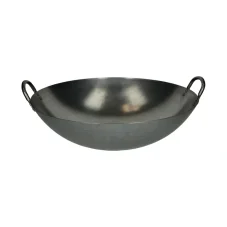
Non Food WOK pan steel two-handed 45 cm
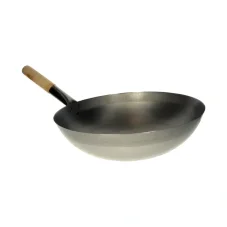
Non Food WOK steel pan with round bottom 33 cm
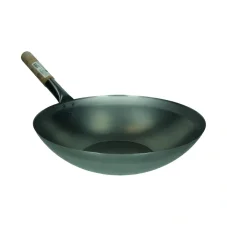
Non Food WOK pan made of steel with a flat bottom 33 cm
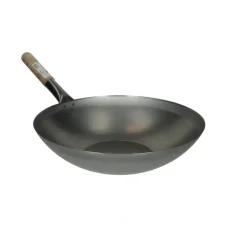
WOK pan made of steel with a flat bottom 38 cm
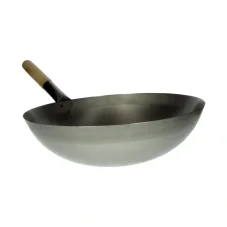
Non Food WOK steel pan with round bottom 38 cm
Read next
If you want to continue with the same topic, here are more related articles to explore: