

 Česky (CZK)
 Slovensky (EUR)
 Deutsch (EUR)
 Austria
 Belgium
 Bulgaria
 Croatia
 Denmark
 Estonia
 Finland
 France
 Germany
 Greece
 Hungary
 Italy
Italy Latvia
 Lithuania
 Luxembourg
 Netherlands
 Poland
 Portugal
 Romania
 Slovenia
 Spain
Spain Sweden










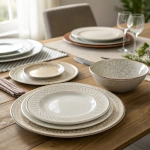
Why plates matter more than you think
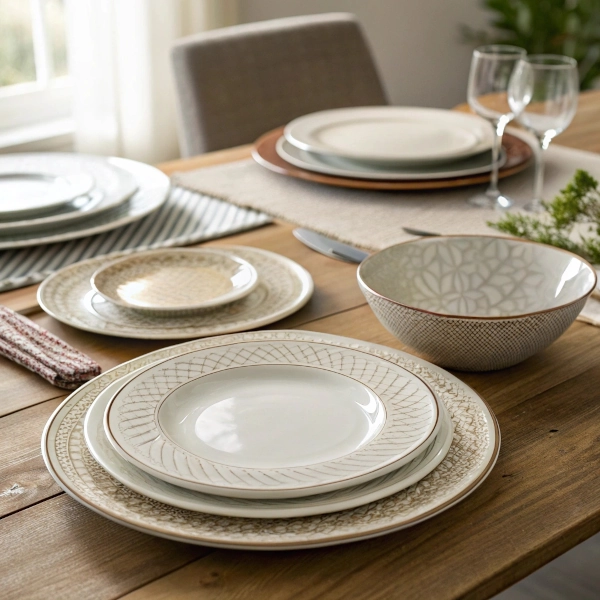
We use plates so often that it’s easy to treat them as “background.” But the plate you choose quietly shapes the whole meal: how hot your food stays, whether sauces spill, how easy it is to carry a full portion, and even how appetizing the colours look. If you cook Asian dishes at home, this becomes especially noticeable—think brothy ramen, saucy curries, crispy tempura, or a table full of shared sides.
Good plates don’t have to be expensive or complicated. The goal is to match the plate to how you actually eat: the dishes you cook most often, the space you have in cupboards, and how much you rely on the dishwasher and microwave.
🏺 A quick look back: from improvised surfaces to modern tableware
The idea of serving food on a dedicated surface is ancient, but it didn’t start with neat matching sets. Early eating “plates” were whatever was available—large leaves, flat stones, or carved wood. As pottery spread through early civilizations, flatter dishes and shallow bowls became common for serving, storing, and sharing meals.
In many parts of Europe during the Middle Ages, sturdy slices of bread were used as edible “trenchers,” while wealthier households used metal or finer ceramics. Later, porcelain—first highly prized imports, then locally produced—turned plates into a symbol of craft, status, and increasingly, a coordinated dining set. Today the range is wider than ever: traditional porcelain and stoneware alongside glass, melamine, and sustainable serving pieces made from wood or bamboo.
🍽️ Plate shapes and sizes (and what they’re best for)
Instead of buying random pieces, it helps to think in jobs. A versatile collection usually covers these roles:
- Large flat dinner plates (about 26–28 cm): Everyday main plates for rice dishes, stir-fries, grilled fish, or Western-style mains. A slightly raised rim helps keep sauces contained.
- Deep plates / wide bowls: Ideal for dishes with broth or plenty of sauce—ramen, udon, pho-style soups, curry with rice, pasta, or stews. The depth keeps liquids where they belong and makes carrying safer.
- Side / dessert plates (about 19–22 cm): For snacks, fruit, cake, bao buns, pancakes, or small plates at a shared table. They’re also useful as “personal plates” when serving family-style meals.
- Oval platters: Great for whole fish, long fillets, skewers, sushi assortments, or serving shared dishes in the centre of the table.
- Rectangular or square plates: Often used for sushi and appetisers because they frame food neatly and make portions look intentional. Just note they can be harder to stack and store.
Rim vs. coupe: Rimmed plates give you a clean border and help with saucy foods; coupe plates (with minimal rim) feel modern and make plating easier, but spills are more likely if you move the plate around a lot.
🧱 Materials: what changes in daily use
Material affects weight, heat retention, chipping, and whether you can use the dishwasher and microwave without worry. Here’s a practical guide:
- Porcelain: Smooth, non-porous, and usually very practical. It doesn’t hold odours or stains easily, handles heat well, and is often dishwasher- and microwave-safe (unless it has metallic decoration). A strong everyday choice that can still look refined for guests.
- Stoneware / ceramic: Often heavier with a more artisanal feel, sometimes with reactive glazes and natural variations. It can retain heat nicely, which suits warm rice bowls or grilled dishes. Check manufacturer notes: some pieces are not microwave-safe, and certain glazes can mark more easily with cutlery.
- Glass: Clean, minimalist, and great for desserts or cold appetisers. The main risk is thermal shock—sudden temperature changes can cause cracking—so avoid moving glass straight from fridge to a very hot environment.
- Melamine: Lightweight and highly impact-resistant, making it useful for kids, picnics, camping, or outdoor dining. It’s not suitable for microwaves and shouldn’t be used for very hot cooking tasks.
- Wood and bamboo: Best as serving pieces (sushi, snacks, bread, cheese boards). They need gentle washing and thorough drying; long soaking and dishwashers are a fast route to warping or cracking.
🥢 Choosing plates for Asian-style home cooking
If your weekly rotation includes rice bowls, noodles, curries, and shared side dishes, a few smart choices make a big difference:
- Prioritise depth for soups and saucy meals: A wide, deep bowl can replace several “special” pieces and is often the most-used item in an Asian-focused kitchen.
- Think in shared serving: Oval platters and medium plates work well for family-style meals—dumplings, tempura, grilled skewers, or stir-fried vegetables in the middle of the table.
- Pick colours that suit your food: White and light neutrals highlight rich sauces and colourful toppings; darker plates can make pale foods (rice, tofu, noodles) pop.
- Check your storage reality: Plates that don’t stack neatly can become annoying fast. If cupboard space is limited, choose shapes designed to stack.
- Match weight to who carries them: Heavy stoneware feels satisfying, but a full stack can be uncomfortable. If kids help set the table, lighter pieces reduce chips and drops.
✅ Plating basics that instantly look cleaner
- Leave breathing room: Avoid covering the whole plate; a clean border makes any meal look more intentional.
- Keep rims clean: Wipe small splashes—especially with oily sauces or curry—before serving.
- Use contrast: Dark food on a light plate (and vice versa) improves definition and makes textures stand out.
- Use temperature to your advantage: Warm plates help hot food stay hot longer; chilled plates make desserts and salads feel fresher.
🧼 Care and storage: how to keep plates looking new
Most plate damage is preventable. A few habits go a long way:
- Dishwasher reality check: Many plates are dishwasher-safe, but metallic trims (gold, platinum) and delicate decorative finishes can dull over time. When in doubt, wash those pieces by hand.
- Avoid thermal shock: Don’t pour boiling liquid into a cold glass plate; don’t move ceramic straight from fridge into a hot oven unless it’s explicitly rated for it.
- Stack with protection: If you notice scratches or chipped rims, place a paper napkin, soft cloth, or felt separator between plates—especially with rougher stoneware or textured glazes.
- Care for wood and bamboo: Wash quickly, dry thoroughly, and occasionally rub with a food-safe oil to reduce drying and cracking.
Related categories
- Plates & serving ware
- Bowls for noodles and rice
- Sushi serving pieces
FAQ
- What’s the most useful “first” plate if I’m building a set?
A sturdy dinner plate plus one deep bowl type will cover most everyday meals. Add side plates next, then serving pieces.
- Are handmade glazes safe for everyday use?
Quality ceramics intended for food use should be safe, but durability varies. If you see persistent cutlery marks, staining, or glaze cracks (crazing), reserve the piece for lighter use.
- Can I microwave all porcelain?
Not always. Plain porcelain is often microwave-safe, but anything with metallic decoration should stay out of the microwave.
- Do rectangular sushi plates actually help?
They can: the shape naturally guides portioning and makes presentation tidy. Just consider whether they stack well in your cupboard before buying many.