

 Česky (CZK)
 Slovensky (EUR)
 Deutsch (EUR)
 Austria
 Belgium
 Bulgaria
 Croatia
 Denmark
 Estonia
 Finland
 France
 Germany
 Greece
 Hungary
 Italy
Italy Latvia
 Lithuania
 Luxembourg
 Netherlands
 Poland
 Portugal
 Romania
 Slovenia
 Spain
Spain Sweden










Ground Ginger in Asian Cooking: How to Use It for Full Aroma and Flavor
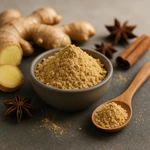
🔥 What ground ginger really is (and why it tastes different from fresh)
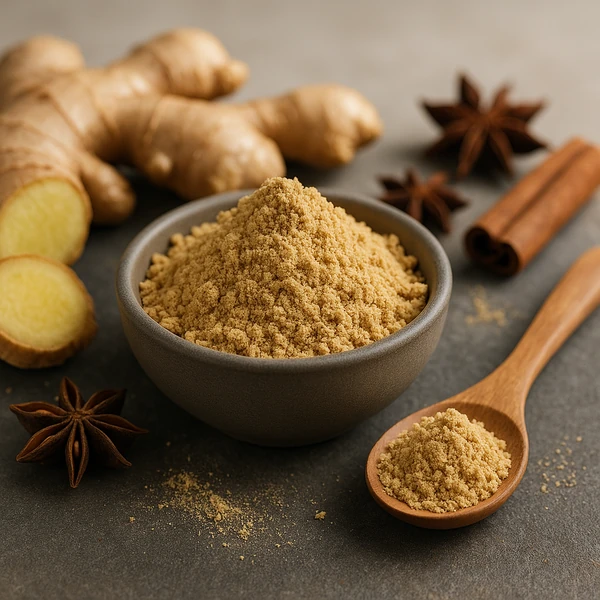
Ground ginger is made from mature ginger root that’s cleaned, dried, and finely milled. That drying step changes the character of ginger:
- Fresh ginger tastes bright, juicy, and sharp with a “green” citrus lift.
- Ground ginger tastes warmer and rounder—more spice-cabinet “heat” than fresh zing—so it blends smoothly into sauces and spice mixes.
That’s exactly why it’s useful in many Asian styles of cooking: it distributes evenly, you can measure it precisely, and it builds a steady background warmth in sauces, braises, and marinades.
🧂 When to use ground ginger instead of fresh
Ground ginger shines when you want ginger flavor without texture, and when the dish has enough liquid, fat, or cooking time to carry the aroma.
- Dry rubs and spice mixes: it coats evenly and won’t make mixtures wet.
- Marinades: no grating, no ginger strands stuck to the pan.
- Simmered sauces, curries, and soups: the flavor integrates and becomes “part of the base.”
- Quick weeknight cooking: you get ginger character in seconds.
Choose fresh ginger when you specifically want that bright, punchy top note (for example, a fresh ginger–scallion sauce, or finishing a dish right before serving).
🍛 Getting the best aroma: when to add it (and how not to burn it)
Timing matters with ground spices. Use these simple rules:
- Add early for depth: stir it into the sauce base, curry, or braise so the warmth spreads through the whole dish.
- Add mid-cook for balance: great for quick pan sauces or stir-fry sauces that simmer 1–3 minutes.
- Add at the end for a stronger “lift”: use tiny pinches to brighten aroma without turning the dish harsh.
Best practice: “bloom” ground ginger gently—mix it into a little warm oil, coconut milk, stock, or soy-based sauce before adding to the full dish. Avoid dumping it into very hot oil alone; it can scorch fast and taste bitter.
🥢 Flavor pairings that consistently work in Asian cuisines
Ground ginger plays well with both savory and sweet elements. These combos are reliable across many regional styles:
- Ginger + garlic: the classic backbone for marinades, stir-fries, and dipping sauces.
- Ginger + chili: warming heat plus aromatic heat (add chili gradually so it doesn’t dominate).
- Ginger + soy sauce: deep umami with a spicy edge—ideal for glaze-style sauces.
- Ginger + rice vinegar or citrus: acidity keeps the warmth from feeling heavy.
- Ginger + coconut milk: rounded, fragrant curries and soups.
- Ginger + warm spices (turmeric, coriander, cumin): for curry profiles and slow-cooked dishes.
📏 How much to use (so it doesn’t overpower)
Ground ginger is concentrated and can read “dry” if overused. For most savory dishes serving 2–4 people:
- Stir-fry sauce or glaze: start with 1/4 tsp, then taste and adjust.
- Marinade for tofu/chicken/pork (about 400–600 g): 1/2 tsp is a good baseline.
- Curry or soup (about 1 liter): 1/4–1/2 tsp depending on other spices.
If you’re swapping for fresh ginger: as a rough guide, 1 tsp fresh grated ginger ≈ 1/4 tsp ground ginger. It won’t be identical (fresh is brighter), but it gets you in the right intensity range.
🚫 Common mistakes (and quick fixes)
- It tastes flat: the spice may be old. Ground spices fade—replace rather than doubling the dose.
- It tastes bitter: it likely burned. Next time, bloom it in a bit of liquid or add it after the pan cools slightly.
- It forms little clumps: whisk it first into a spoonful of oil, soy sauce, or stock, then add.
- The dish tastes “dusty”: the cooking time was too short. Give the sauce 1–2 minutes of gentle simmering to round out the flavor.
🧊 Storage: keep it fragrant for longer
- Store airtight, in a cool, dark cupboard.
- Don’t shake it directly over steaming pans—steam adds moisture and dulls flavor faster.
- If your kitchen runs warm or humid, consider storing ground ginger in the freezer in a sealed container (it won’t freeze solid; it just keeps aroma longer).
🍽️ A quick, practical use: 2-minute ginger-soy stir-fry sauce
This is a simple way to taste what ground ginger does in savory cooking.
- Mix: 2 tbsp soy sauce, 1 tbsp water, 1 tsp sugar (or honey), 1/4 tsp ground ginger, 1 small grated garlic clove (optional), 1 tsp rice vinegar or lemon/lime juice.
- Use: add to a hot pan with vegetables, tofu, or meat; simmer 60–90 seconds until glossy.
Tip: If you want more aroma without extra harshness, add an additional pinch of ground ginger right at the end.
Our picks
- Royal Orient Baby Corn 425 g – a great stir-fry ingredient to try with a ginger-soy sauce (baby corn holds its crunch and soaks up flavor well).
❓ FAQ
Does ground ginger make food spicy?
It’s more warming than chili-hot. Think gentle peppery heat and fragrance rather than burn.
Can I add ground ginger directly to a stir-fry?
Yes, but it’s best mixed into sauce or a spoonful of liquid first. Added straight into very hot oil, it can scorch quickly.
Why does my ground ginger smell weak?
Ground spices lose volatile aroma over time. If it smells faint in the jar, it will taste faint in food—replace it for better results.

Recommended products3

Drana Ginger Ground 500 g
Drana Ginger Ground 20 g
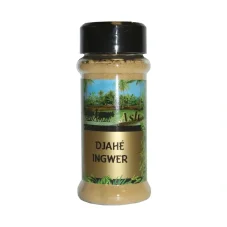
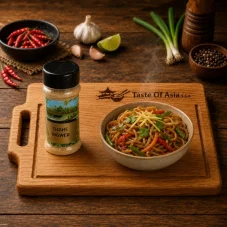
Asli Ginger ground 35 g
Read next
If you want to continue with the same topic, here are more related articles to explore: