

 Česky (CZK)
 Slovensky (EUR)
 Deutsch (EUR)
 Austria
 Belgium
 Bulgaria
 Croatia
 Denmark
 Estonia
 Finland
 France
 Germany
 Greece
 Hungary
 Italy
Italy Latvia
 Lithuania
 Luxembourg
 Netherlands
 Poland
 Portugal
 Romania
 Slovenia
 Spain
Spain Sweden










Whole Nutmeg: How to Use It for Maximum Aroma and Flavor
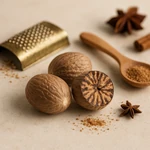
🌰 What whole nutmeg actually is (and why it matters)
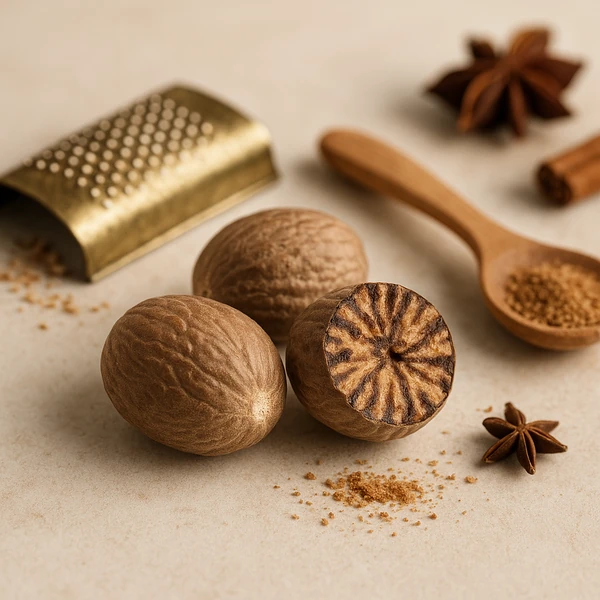
Whole nutmeg is the dried seed of Myristica fragrans, an evergreen tree originally associated with Indonesia’s Maluku (Spice) Islands. Its aroma comes from delicate essential oils that fade quickly once the spice is ground.
That’s the main advantage of buying nutmeg whole: the “shell” of the seed protects those oils. You release the fragrance only when you grate it—right into the pan—so the spice tastes fuller and cleaner even if you use it only occasionally.
Worth knowing: nutmeg is not the same as mace (the lacy red covering around the seed). Mace is lighter and more floral; nutmeg is warmer, deeper, and slightly sweeter.
👃 Flavor profile: what to expect in food
Nutmeg isn’t hot like chili. Its strength is aromatic: warm, sweet-spicy, and slightly woody. Used well, it doesn’t shout “nutmeg”—it quietly makes a dish taste more complete.
- Best effect: rounds sharp edges (chili heat, acidity), boosts perceived creaminess, and adds depth to spice blends.
- Where it can go wrong: too much tastes bitter, heavy, and medicinal.
🧂 Whole vs. ground: when each makes sense
Choose whole nutmeg if you want
- Maximum aroma (freshly grated oils are the point).
- Better control (you can add half a pinch, taste, then stop).
- Longer shelf life (months to years, if stored well).
Ground nutmeg is fine when
- You need speed (baking mixes, quick marinades).
- You’re making large-batch seasoning blends.
If you like the flavor, having both is practical: whole for finishing and ground for “background” seasoning.
🍛 How to grate and dose it so it smells amazing (not overpowering)
Tools
- A fine grater (Microplane-style) gives the most even, fragrant result.
- A small nutmeg grater works well too.
Timing
Add nutmeg late in cooking or even off the heat. Long simmering dulls its top notes and can push it toward bitterness.
How much to use (practical starting points)
- Per serving: 2–6 light strokes on a fine grater (think “dusting,” not a visible layer).
- For a pot of soup/curry (about 1–1.5 liters): start with roughly 1/16–1/8 tsp worth of freshly grated nutmeg, then taste.
- For béchamel-style or coconut-based sauces: a tiny pinch at the end is usually enough.
Nutmeg tends to “bloom” after a minute or two. Taste, wait briefly, then decide whether it truly needs more.
✅ Where nutmeg fits in Asian-style cooking (subtle but effective)
Nutmeg is rarely the headline spice in everyday East and Southeast Asian home cooking, but it plays a smart supporting role in dishes that already lean warm, creamy, or layered with spices. Think of it as a finishing note that ties flavors together.
Coconut curries and mild spice pastes
In coconut-based sauces, nutmeg can make the dish taste richer without adding more fat. It also softens the “spiky” feeling of chili heat. Add it near the end, especially if you’re using a ready-made curry paste—those are already complex, and nutmeg should stay in the background.
Broths, noodle soups, and stews
A whisper of nutmeg can deepen chicken or vegetable broths, especially if the base includes aromatics like onion, garlic, ginger, or star anise. It’s best in soup styles that aim for warmth and roundness rather than sharp brightness.
Spice-forward dishes (where it belongs naturally)
Nutmeg feels at home in dishes influenced by warm spice blends—think Indonesian or Malaysian-inspired braises, peanut sauces, or stews that already include cinnamon, clove, cardamom, or cumin. It can also complement soy-based sauces when you want a more “roasted” aroma without actual roasting.
Asian desserts and drinks
Try a tiny grating over coconut rice pudding, taro or sweet potato desserts, milk tea, or hot chocolate. Nutmeg pairs especially well with coconut, palm sugar, and toasted nuts.
What nutmeg pairs well with (quick cheat sheet)
- Coconut milk/cream, evaporated milk, dairy-based sauces
- Ginger, garlic, onion, scallion
- Warm spices: cinnamon, clove, cardamom, star anise
- Umami bases: soy sauce, mushrooms, slow-cooked broths
- Sweet ingredients: palm sugar, honey, vanilla, toasted sesame
Common mistakes (and how to avoid them)
- Adding too much: nutmeg should be hard to identify. If you can clearly taste it, you probably overshot.
- Adding it too early: long cooking flattens the aroma. Grate it in late.
- Storing it poorly: heat, light, and moisture steal fragrance. Keep it airtight in a cool cupboard.
- Pre-grating “for later”: freshly grated is the whole point. Grate only what you need.
Storage tips
- Keep whole nutmeg in a tightly closed jar, away from sunlight and steam.
- Don’t store it above the stove (temperature swings matter).
- If it smells weak when freshly grated, it’s time to replace it.
❓Safety note: can you use too much nutmeg?
Yes. Nutmeg is safe in normal culinary amounts, but very large doses can cause unpleasant effects. The good news: cooking doses are tiny. Treat nutmeg as a finishing spice—measured in strokes of a grater, not spoonfuls.
Optional quick idea: “finish” a coconut curry
- Cook your curry as usual and balance it first (saltiness, sweetness, acidity).
- Turn off the heat and let it sit for 30 seconds.
- Grate 2–4 light strokes of nutmeg into the pot, stir, and rest 1 minute.
- Taste. Only then decide if it needs one more stroke.
Our picks (simple add-ons that help)
- A fine grater dedicated to spices (keeps aromas clean).
- A small airtight jar stored in a cool cupboard.
Our picks
Relevant internal links for this topic:

Recommended products2
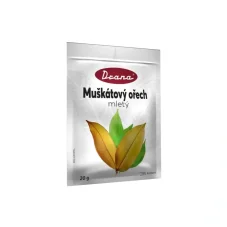
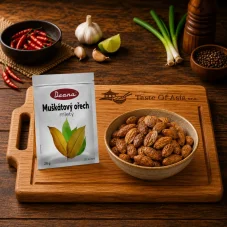
Drana Ground Nutmegs 20 g
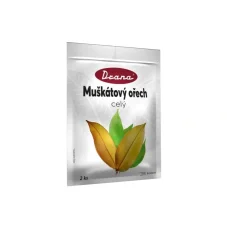
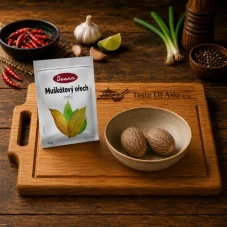
Drana Nutmeg Whole 2 pcs
Read next
If you want to continue with the same topic, here are more related articles to explore: