Česky (CZK)
 Slovensky (EUR)
 Deutsch (EUR)
 Austria
 Belgium
 Bulgaria
 Croatia
 Denmark
 Estonia
 Finland
 France
 Germany
 Greece
 Hungary
 Italy
Italy Latvia
 Lithuania
 Luxembourg
 Netherlands
 Poland
 Portugal
 Romania
 Slovenia
 Spain
Spain Sweden










White teas
🍵 White teas from Asia: the gentle cup that tastes great without sugar
White tea is quiet luxury. It doesn’t flex like black tea, it’s not as grassy as some green teas, and it’s not trying to be dramatic. Instead, it delivers soft sweetness, a floral lift, and a clean, calming finish. Brewed well, it often tastes complete without sugar, lemon, or milk.
Asian teas and ingredients for your home tea ritual are available at Asian Food Shop. For browsing, jump into Teas.
💡 Tip: The fastest way to ruin white tea is boiling water. Drop the temperature and the cup instantly turns smoother and rounder.
🕰️ History and origin
White tea is strongly associated with China (especially Fujian), where its clean character and gentle processing have been appreciated for generations. It’s not a tea category that depends on heavy processing — it’s about good leaf material and careful handling.
In an everyday Asian tea mindset, white tea is often “the calm cup”: when you want flavour that’s subtle but not boring, and a finish that doesn’t leave your mouth feeling bitter.
🧪 How it’s made, types and what the leaves are doing
White tea is known for being minimally processed. The core steps usually look like this:
- withering (the leaves and buds slowly lose moisture)
- light natural oxidation (typically less than oolong/black teas)
- gentle drying to stabilize aroma and keep the profile clean
You’ll often see white tea styles named by leaf grade:
- Silver Needle / Bai Hao Yin Zhen – mostly buds, ultra delicate and elegant
- White Peony / Bai Mu Dan – buds + young leaves, fuller and easier to read
- Shou Mei – more leaf-forward, often a bit deeper and sometimes lightly fruity
✅ Tip: If you want a white tea that works daily, Bai Mu Dan is a sweet spot: still gentle, but with a clearer body.
👃 Flavour profile
- 🌼 soft floral notes, sometimes a honey-like finish
- 🍐 subtle fruit hints (more “suggestion” than syrup)
- 🥜 occasional light nutty tones in some styles
- 🚫 low bitterness when temperature and time are right
White tea isn’t about a punch. It’s about space and clarity. When you hit the right brew, it feels surprisingly premium even without any sweeteners.
🫖 How to brew white tea so it’s actually good
Here’s a simple, reliable setup. If you don’t want to use a thermometer, remember: don’t boil — slightly cooler water is safer.
✅ Basic brew (easy and consistent)
- 4–5 g tea per 500–600 ml water
- water temperature: 75–85°C (167–185°F)
- time: 2–4 min (depending on how light you like it)
🍵 Multiple infusions (if you want to explore)
- keep the first steep shorter (e.g., 1.5–2 min), then add time with each round
- white tea rewards patience and gentler water
🧊 Cold brew (smoothest option)
- 4–5 g tea per 600 ml cold water
- 6–10 hours in the fridge
- very clean flavour with almost no bitterness
💡 Tip: If the cup feels “too thin,” try 30–60 seconds longer. If it tastes astringent, it’s almost always water that’s too hot.
🍹 How to use white tea in drinks
🧊 Clean iced tea without syrupy sweetness
White tea makes a great iced base because it stays light but not watery. Cold brew is especially reliable — no “cooked” taste, no harsh edges.
🍊 Citrus twists (yuzu, lemon, lime)
Add yuzu after brewing. That way the tea stays delicate and the citrus sits on top as a bright accent.
🫚 Ginger as a micro-accent
Ginger is strong. With white tea, go tiny: you want a warm finish, not a ginger lemonade takeover.
🫶 Wellness notes (realistic)
White tea is often mentioned alongside antioxidants and gentle processing. The most practical benefit is simple: it’s an easy, pleasant drink that’s smooth enough to sip throughout the day.
If you’re caffeine-sensitive, start with less leaf and shorter steep times — even gentle teas can feel lively.
✅ How to choose a good white tea
- Style: Bai Mu Dan is often the best everyday pick
- Look: buds + young leaves usually signal better leaf material
- Aroma: clean and fresh, never musty
- Brewing: cold brew is the “no mistakes” method
- Storage: dry, dark, sealed (white tea absorbs odors easily)
🛒 Our picks (verified products)
- Golden Turtle White Tea Pai Mu Dan 15 g – a gentle Chinese white tea with a readable flavour, great for first steps and multiple infusions
- Golden Turtle Green Tea Jasmine Mao Feng 30 g – similar softness, but with a clearer jasmine floral aroma
- Shan Wai Shan Oolong Tea 50 g – a middle ground: gentle sweetness, fuller body, still not bitter-heavy
More options are in Teas.
🧊 Recipe: White tea cold brew with yuzu and ginger
This is a “clean” drink: white tea as the soft base, yuzu for brightness, and ginger as a tiny warm finish. Balanced, refreshing, and not overly sweet.
Ingredients
- white tea (Pai Mu Dan) 4–5 g
- cold water 600 ml
- yuzu 1–2 tsp (to taste)
- ginger 1/2 tsp (optional)
- ice
- lemon or lime slice (optional)
Method
- Add tea to a carafe or jar.
- Pour in cold water, stir, and refrigerate for 6–10 hours.
- Strain. Stir in yuzu (and ginger if using) — adjust slowly.
- Serve over ice. Add lemon/lime if you want extra sparkle.
✅ Tip: Yuzu and ginger are powerful. With white tea: start small and tune it in the glass.


Recommended products1
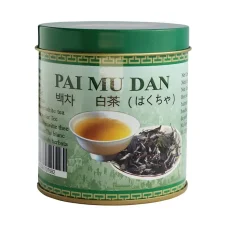
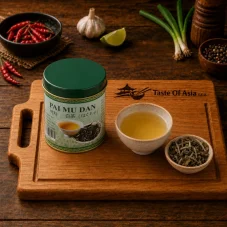
Golden Turtle White Tea Pai Mu Dan 15 g
Read next
If you want to continue with the same topic, here are more related articles to explore: