


 Česky (CZK)
 Slovensky (EUR)
 Deutsch (EUR)
 Austria
 Belgium
 Bulgaria
 Croatia
 Denmark
 Estonia
 Finland
 France
 Germany
 Greece
 Hungary
 Italy
Italy Latvia
 Lithuania
 Luxembourg
 Netherlands
 Poland
 Portugal
 Romania
 Slovenia
 Spain
Spain Sweden










Light, dark, Japanese, and Korean soy sauce: how to understand and choose the right type
Soy sauce is not a single universal liquid "for everything," but a whole family of sauces with different roles in the kitchen: sometimes mainly to salt and add umami, other times to darken and round off, and sometimes it acts as a table condiment. In this guide, we will compare the most common styles (light/dark, Japanese shoyu, and Korean ganjang) and especially how to use them practically at home without unnecessary mistakes.
🌶️ What is soy sauce (and why one bottle usually isn’t enough)
Soy sauce is a broad category of liquid seasonings based on soy, salt, and fermentation – or on a mix of fermented and technologically processed ingredients. It is not a single ingredient with a fixed flavor profile. Under one name, significantly different styles come together: Chinese light and dark sauces, Japanese shoyu in several traditional types, Korean ganjang, Thai soy sauces intended for wok and noodles, and sweet Southeast Asian variants.
For practical purposes, it is most important to understand that different soy sauces serve different functions. Some mainly salt and bring pure umami; others darken the food, add shine, and round off flavors, others are table condiments and some are firmly tied to specific national traditions – and without them, certain dishes don't behave "correctly."
Why there's so much confusion around names: "light," "dark," shoyu, ganjang…
The confusion doesn't arise because people "can't cook," but because several layers are mixed at once:
- Different countries use different classifications and names. What is a basic working sauce in one cuisine may be a specialty in another.
- The words "light" and "dark" don't mean the same everywhere. Sometimes it’s mainly about color and role in the dish, other times something with a different flavor and function is sold under a similar name.
- Some products are long-fermented and some are technologically styled. Both can work, but behave differently in the kitchen (aroma, depth, "roundness" of taste).
- Some sauces are pure soy sauces and others are flavored derivatives. This is practically crucial: a flavored product can be excellent, but cannot automatically be used as a basic "salting" soy sauce.
- The market mixes the language of origin, export nomenclature, and marketing. The result is that two "dark soy sauces" can be completely different tools in practice.
Light and dark soy sauce: Chinese (and broader Asian) logic
Dividing into light and dark soy sauce is very useful for home orientation – if you know it’s not just about shade, but about function in the dish.
Light soy sauce = main "working" seasoning
Light soy sauce is usually the main working sauce for seasoning. It tends to have cleaner saltiness, thinner body, and wide use. It’s used in stir-fry, marinades, dips, sauces, noodles, and rice. If you want only one bottle "for cooking" at home, it often makes sense to start here (or the universal Japanese shoyu below).
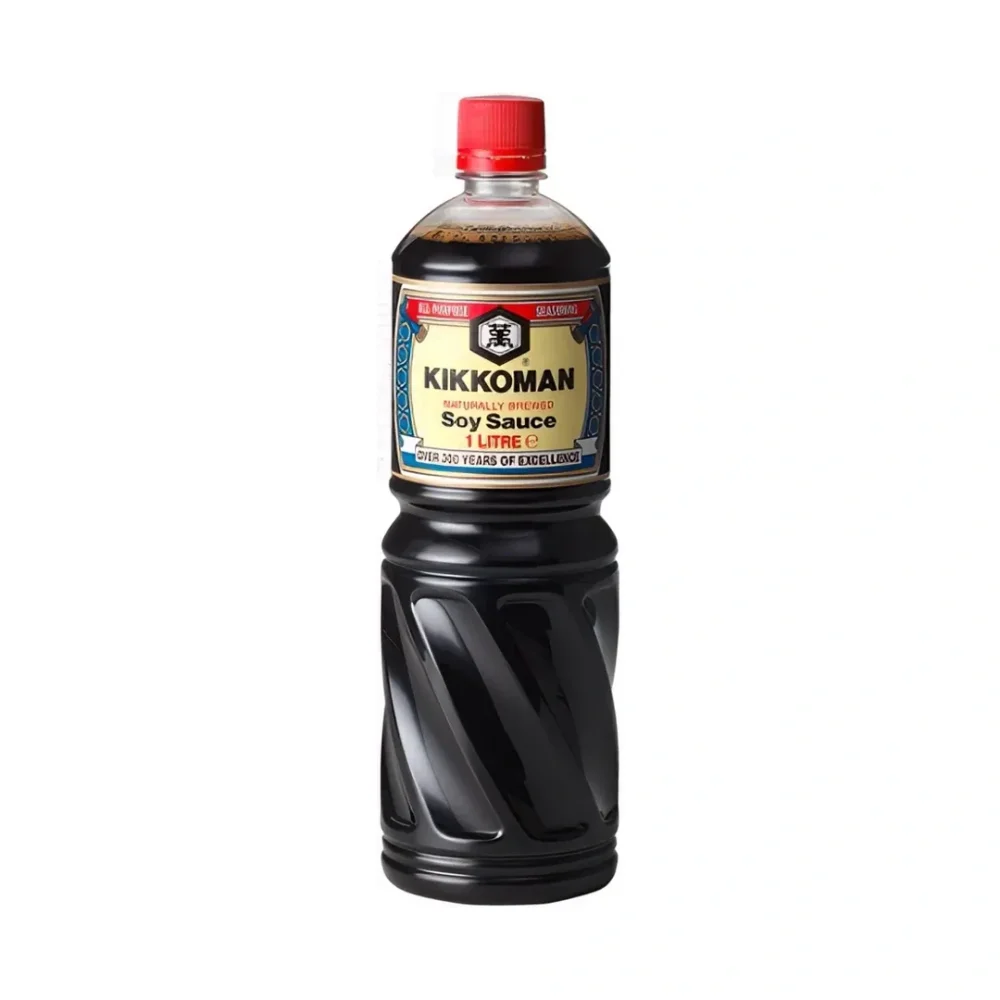
A practical example of a universal Japanese soy sauce often used as an everyday working sauce is Kikkoman soy sauce (shoyu) 1 l.
Dark soy sauce = color, shine, and rounding (used more sparingly)
Dark soy sauce serves mainly for color, shine, and rounding. It is often slightly sweeter, sometimes due to sugar or caramel. It is used sparingly and very often together with light: light does the "salting work," dark fine-tunes the appearance and tone.
A practical cooking tip: if you feel the food is already properly salty but still looks "pale" or tastes sharp, that's usually when a small amount of dark soy sauce makes more sense than another dose of light.
Mushroom soy sauce = darker, flavored, suitable for meatless dishes
Mushroom soy sauce is usually darker and flavored with mushroom components. It is suitable for meatless dishes, noodles, stir-fried vegetables, and where stronger umami is desired.
Beware of "light/dark" in the Thai context
The Thai market can be tricky for European customers: you encounter several bottle types that look similar but behave differently in the kitchen.
- Thai light soy sauce often matches what one expects from a regular "light soy sauce": a working seasoning for woks, stir-fried noodles, fried rice, vegetables, and marinades (typically dishes like pad see ew).
- Thai dark soy sauce is mainly for color and gentle rounding; it is usually not intended as the sole source of saltiness.
- Thai sweet dark soy sauce is thicker and sweeter, closer to a glaze than a regular salty seasoning sauce.
This is exactly why it’s good not to rely solely on the word "dark" but to consider the sauce’s role in the recipe.
Japanese soy sauces: shoyu as a distinct world
The Japanese system is more precisely classified compared to the "light/dark" logic and is useful to know separately. When a Japanese recipe just says "shoyu," it often means the most common type.
Koikuchi: the most common, universal shoyu
Koikuchi is the most common Japanese soy sauce: balanced, universal, and suitable for cooking and table use. You will use it for everyday cooking, marinades, dips, table seasoning, noodles, rice, meat, and vegetables.
Usukuchi: lighter in color but not necessarily less salty
Usukuchi is lighter in color but not necessarily less salty. It was created for cuisine where a delicate color of broths and ingredients is important. It practically makes sense for delicate broths, soups, stewed vegetables, and dishes where sauce shouldn’t darken.
Tamari: thicker and soyier – but don’t automatically take it as gluten-free
Tamari tends to be soyier, thicker, and usually stronger. It often contains less wheat than regular shoyu, but it is wrong to automatically assume it is gluten-free. Uses: dips, glazes, stronger final seasoning, meat, tofu, grill.
Saishikomi and other types: exist but are rather specialities
Saishikomi is twice brewed or re-fermented sauce. In Japanese context, the type shirois also mentioned. If you are just starting with Japanese types, it is more practical to first master koikuchi (and possibly usukuchi or tamari depending on what you cook).
Korean soy sauce: ganjang and why not to rewrite it as "shoyu"
In Korean cuisine, you will encounter the term ganjang. It is another proof that "soy sauce" is not one thing: the terminology and expected behavior of the sauce come from the particular cuisine.
A practical rule that works even without deeper theory: if a recipe or method aims for a Korean flavor, stick to the Korean name (ganjang). If it aims for a Japanese flavor, stick to shoyu. Replacing "because it’s also soy sauce" often leads to the dish losing its intended character.
How to choose and use at home: a simple decision map
When you want soy sauce to really help (and not just increase saltiness), select it based on function. This is a practical process based on how soy sauces are actually used.
1) First, decide what the sauce should do
- I want to salt and add umami (stir-fry, noodles, rice, marinade) → typically light soy sauce or universal shoyu (koikuchi).
- I want to darken, add shine, and round off (darker surface, more "finished" look) → dark soy sauce, used sparingly.
- I want a delicate broth color / don’t want darkening → Japanese usukuchi.
- I want stronger final seasoning or dip → often tamari or quality shoyu used more "at the end" than as main salting.
2) Always distinguish the basic product vs. the flavored derivative
One of the most practical rules for selecting Asian ingredients is to watch whether you are buying a basic product, or a flavored product. Flavored versions can be excellent, but if you replace the basic "working" soy sauce with them, you can easily disrupt the sweetness, color, and overall tone of the dish.
3) Watch if the sauce isn’t unnecessarily oversweetened (and how it smells when opened)
With soy sauce, it’s practical to check if it isn’t unnecessarily oversweetened, unless you are specifically looking for a sweet style. And when opened, a simple guideline applies: the aroma should be strong, but it should not smell flatly "chemical."
🍳 4) How to get started in the kitchen: a small set that covers most situations
For home cooking, it often works better to have two distinct roles than one universal bottle:
- One universal working sauce (light or Japanese koikuchi/shoyu) for everyday seasoning.
- One dark sauce for color and rounding, added sparingly.
If you cook a lot Japanese-style, naturally another "delicate" tool (usukuchi) or a dip-like type (tamari) fits in. If you cook Korean-style, watch for the Korean label (ganjang) and adhere to the role the particular dish expects from the sauce.
🍳 5) Practical usage on familiar dishes (without recipe)
- Noodles and quick stir-fry dishes: light soy sauce or shoyu makes the main seasoning; add dark only when you want to darken and round off.
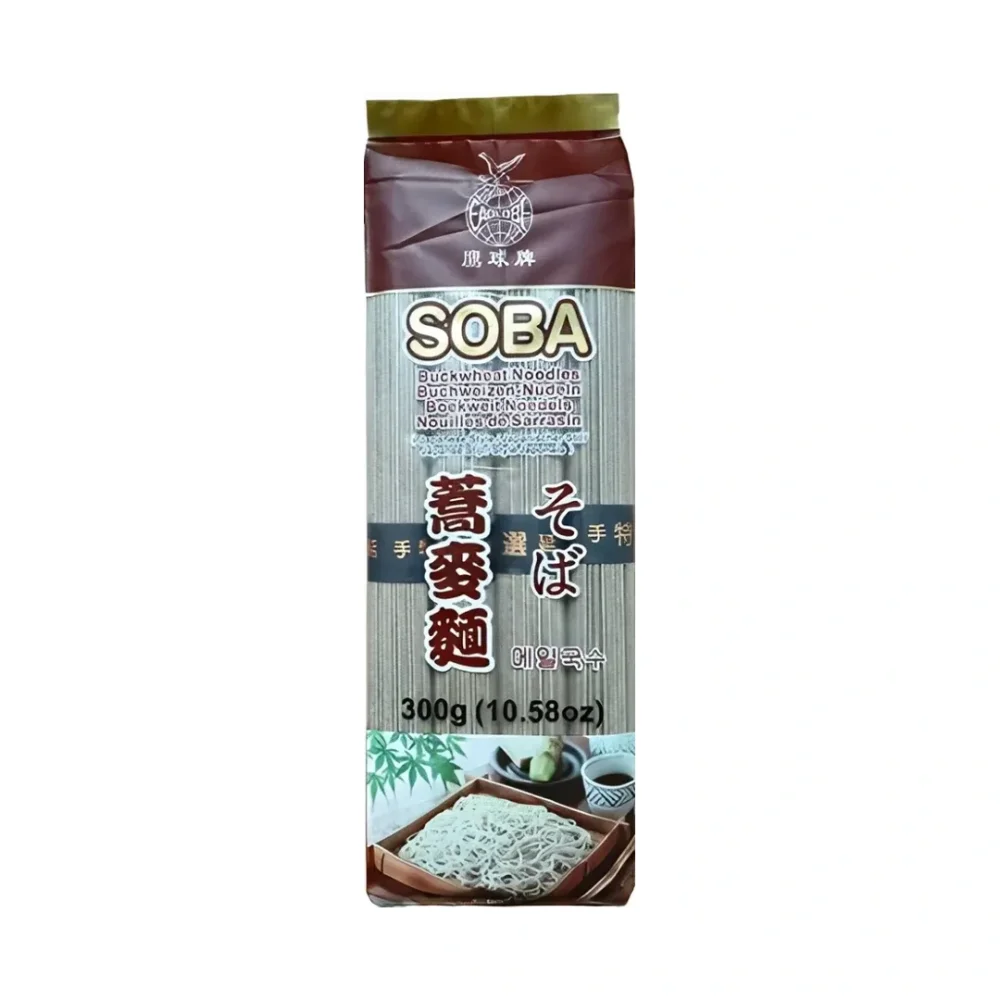
- Japanese soba noodles: naturally go well with soy sauce. If you want to have one ingredient at home to try it out, you can start for example with Eaglobe soba noodles 300 g and work with how the flavor changes depending on the type of soy sauce.
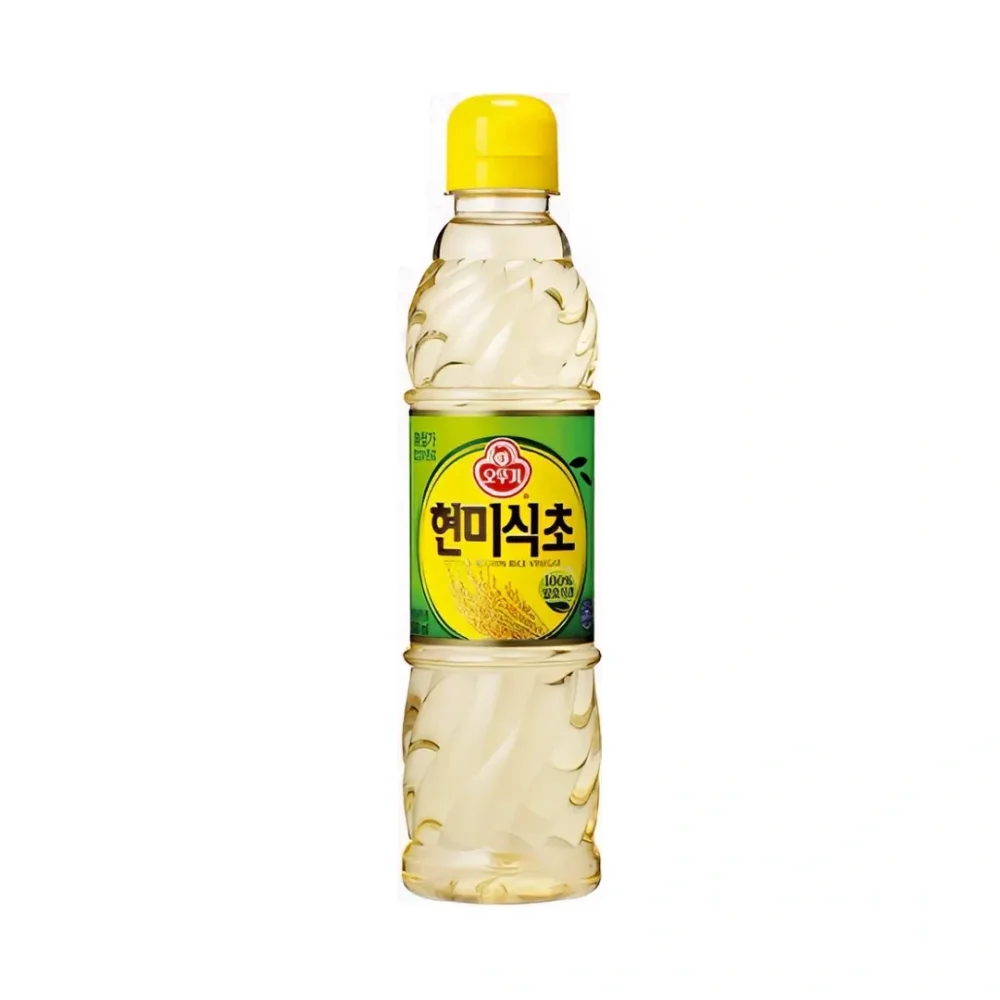
- Sushi and rice: soy sauce often works as a table condiment here, but the Japanese flavor frame also includes a mild acidity – typically rice vinegar. For such use, for example, Ottogi brown rice vinegar 500 mlis suitable.
- Nori as an umami “add-on”: sheets of nori are used for sushi rolls (e.g. JH foods Yaki Nori seaweed for sushi 25 g), while for bowls of rice, noodles, or soups, a quick topping in the form of cut strips is suitable (e.g. JH foods Kizami Nori seaweed 25 g ). In both cases, it’s good to view soy sauce as a seasoning, not the "main flavor of everything."
Common mistakes (and how to recognize and fix them)
- Confusing light and dark: light often 'salts and carries flavor', dark often 'colors and rounds out'. If you use dark as the main seasoning, the result can be unnecessarily dark and taste-shifted.
- Pouring dark sauce over food: dark soy sauce is usually used more sparingly. If you overdo it, adding more dark usually won’t help; rather, go back to balancing the dish (more base, more ingredients, more 'volume') so the sauce spreads out.
- “Usukuchi is lighter, so it’s weaker”: lighter color does not automatically mean less salty. In delicate broths and soups, it mainly means that the sauce does not darken.
- “Tamari = gluten-free certainty”: tamari often contains less wheat than regular shoyu, but it’s not correct to automatically assume it’s gluten-free.
- Mechanically replacing basic soy sauce with sweet and thick types: some sweeter dark styles are closer to glazes than to regular salty seasoning sauces. When you use them as 'universal' soy sauce, you can easily throw off the sweetness and overall tone of the dish.
- Confusing “soy” with other dark sauces: in Asian cuisine, there are sauces that round and unite dishes with a different logic (e.g., oyster sauce) or that are sweet-salty and spicy on their own (e.g., hoisin). They are not automatically interchangeable just because they are dark.
- ⚠️ Ignoring the cuisine you are targeting: shoyu and ganjang are names tied to specific traditions. If you want a Japanese result, stick to shoyu; if Korean, stick to ganjang.
What to take away from the article
- Soy sauce is a family of sauces, not one universal ingredient.
- Light soy sauce typically serves as the main working seasoning, dark typically handles color, gloss, and rounding and is used more sparingly.
- Japanese shoyu has its own typology: koikuchi (universal), usukuchi (for a delicate color), tamari (thicker; do not automatically assume gluten-free).
- Don’t mechanically rewrite the Korean designation ganjang as 'shoyu'—pay attention to the cuisine you are targeting.
- When choosing, always distinguish basic products from flavored derivatives and check whether the sauce is unnecessarily too sweet for your use.

Read next
If you want to explore this topic further, continue with these related blog guides and articles:
