


 Česky (CZK)
 Slovensky (EUR)
 Deutsch (EUR)
 Austria
 Belgium
 Bulgaria
 Croatia
 Denmark
 Estonia
 Finland
 France
 Germany
 Greece
 Hungary
 Italy
Italy Latvia
 Lithuania
 Luxembourg
 Netherlands
 Poland
 Portugal
 Romania
 Slovenia
 Spain
Spain Sweden










How to Start with Thai Cuisine: Flavors, Sauces, and the First Sure Steps
Thai cuisine is not just a few famous dishes. It is a cooking method where salty (umami), sour, sweet, spicy, and herb-fresh flavors are deliberately balanced – so the result feels lively but not chaotic. In the article, you will understand what makes the "Thai taste" Thai, how not to get lost in curry pastes, fish sauce, and coconut products, and how to set up a simple, functional start at home.
Introduction: Why Thai Cuisine is a Great Start to "Asian" Cooking
With Thai cuisine, the first tasting often works – and then comes the question of how to repeat it at home. The good news is that for many Thai dishes, the key is not in long simmering but in smart seasoning and working with aromatics: a quick sauté of the base, rapid preparation, and final adjustment of contrasts. It's not about "adding more chili," but understanding how saltiness and umami, acidity, sweetness, spiciness, and fresh herbal notes fit together.
In this article, don't expect full recipes. Instead, you will get a practical guide on how to compose the Thai taste at home: which types of ingredients make the biggest difference, how to choose and use basic sauces and pastes, and which common mistakes to watch out for.
What is the "Thai taste" and how to navigate it
Thai cuisine is based on balancing contrasts. Typical Thai flavor usually does not arise from food being just spicy or just sweet – the strength is in the combination of saltiness, acidity, sweetness, spiciness, herbal freshness, and deep umami into one harmonious whole.
What is most frequently repeated in Thai cooking:
- Strong role of fresh herbs and aromatics – the taste is meant to be "alive," not just spicy.
- Working with pastes and seasoning sauces – many dishes are based on a concentrated base that is briefly sautéed and only then "developed" with additional components.
- Quick preparation for many dishes – which makes the order of steps and final seasoning even more important.
- Regional differences – the same dish or "curry" may not taste the same everywhere; therefore it is important to read the recipe as a specific style, not as a universal definition.
Variants and differences: curry, fish sauce, and coconut are not "one thing"
1) Curry: under one word hides several different bases
"Curry" is not a uniform category. In European environments, different bases are often hidden under this word: Thai (typically moister and more concentrated) curry pastes, Indian mixes and pastes, Japanese curry roux, and other regional styles. To start, it is practical to know mainly this:
- Curry paste is usually moister and more concentrated, often containing fresh or wet components and after brief sautéing can quickly build aromatic depth.
- Curry powder / spice mix is a dry ground spice mixture – behaves differently and gives a different type of flavor.
- Curry roux is another type of base (typically Japanese style), which is not cooked down as a paste and works differently in texture and taste.
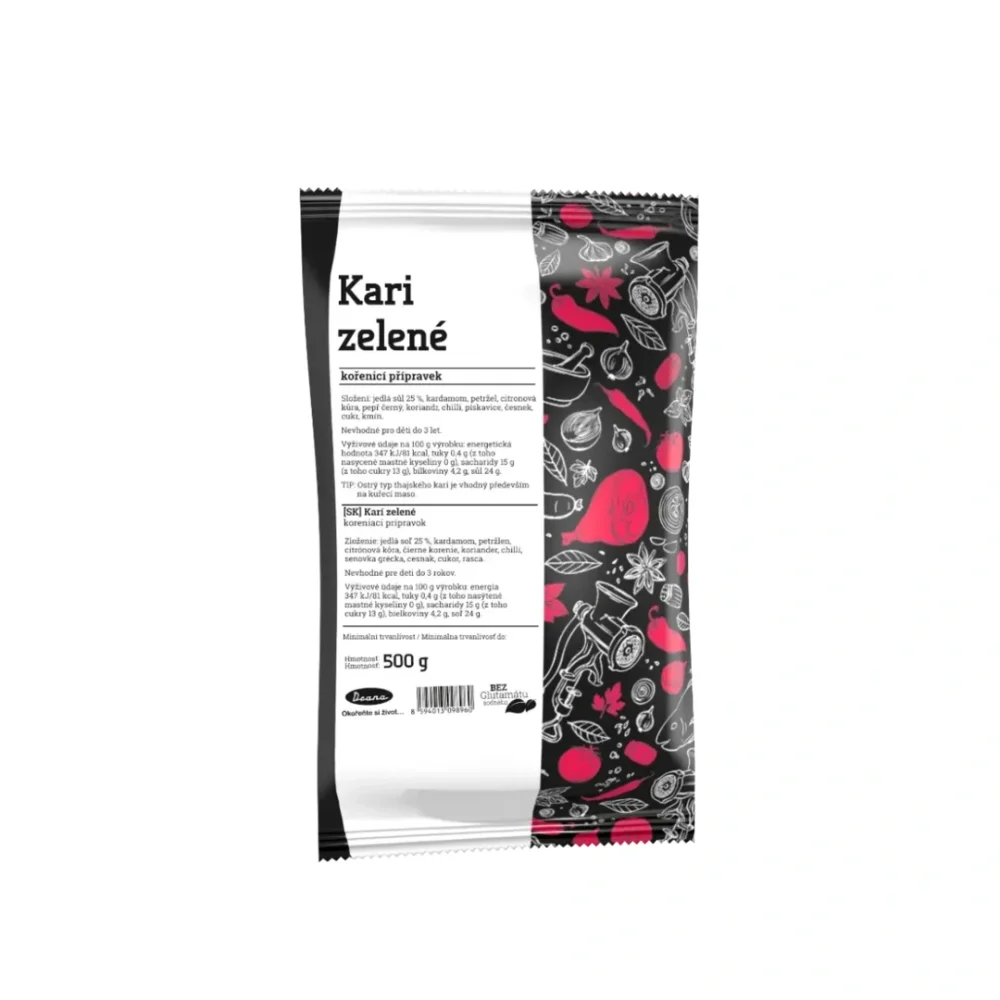
If you want a quick entry into Thai curries, it makes sense to start with a specific "base for curry" and learn on it how to work with balancing flavors (saltiness/umami vs. acidity vs. sweetness vs. spiciness). An example of such a start can be Drana Green Curry 500 g – and at the same time, it is a good opportunity to check whether you are buying a paste (moist, concentrated) or rather a dry type of mix.
2) Fish sauce: it is not a "fish flavor," but an umami tool
Fish sauce is one of the most important seasoning bases of Southeast Asia. In small amounts, it gives the dish saltiness, depth, a long finish, and strong umami. In practice, it does not work as an "extra fish flavor" but as a concentrated element that connects other ingredients and makes the taste "more complete."
Quality matters: it is said about fish sauces that longer fermentation often leads to fuller and more complex flavor and that the first extraction is usually considered gentler. On the other hand, cheaper bottles often use dilution, sugar, coloring, or flavor enhancement. When choosing, pay special attention to the composition (fish / fish extract and salt) and information about concentration (e.g., nitrogen – higher usually means higher concentration of broken-down proteins).
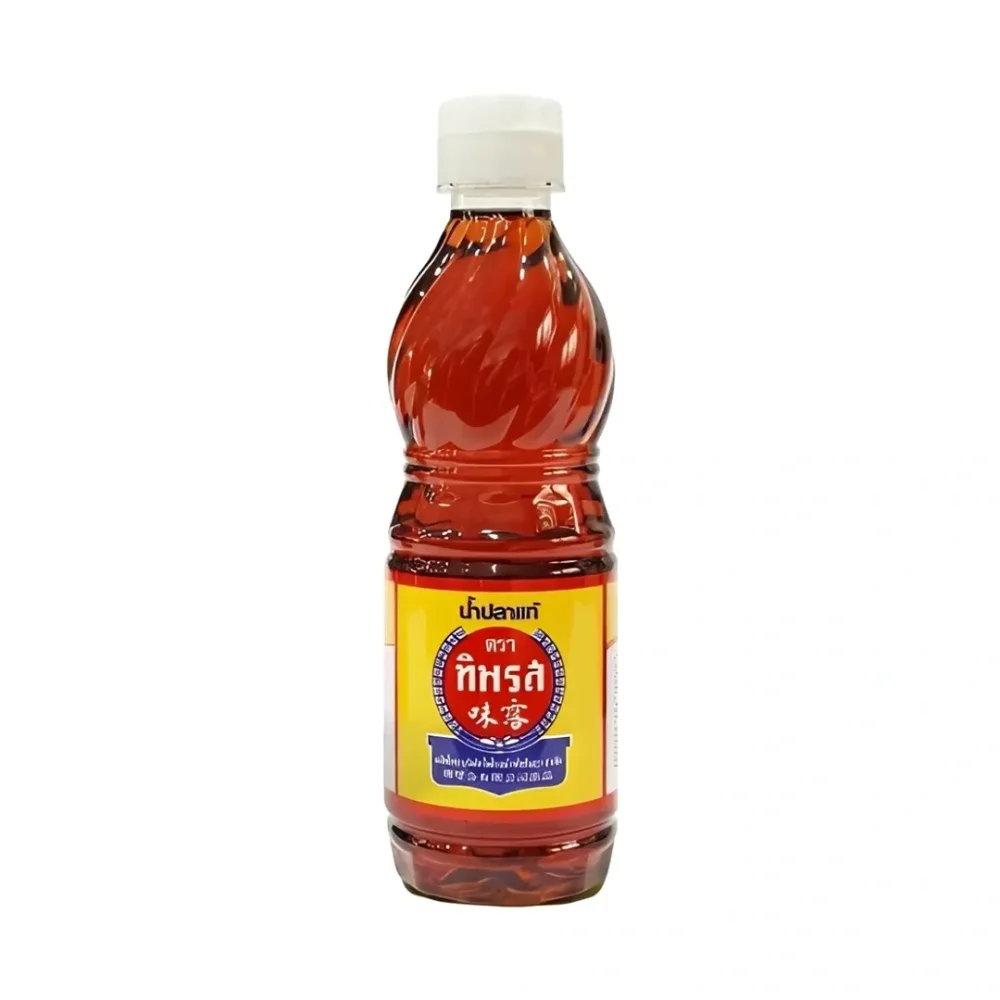
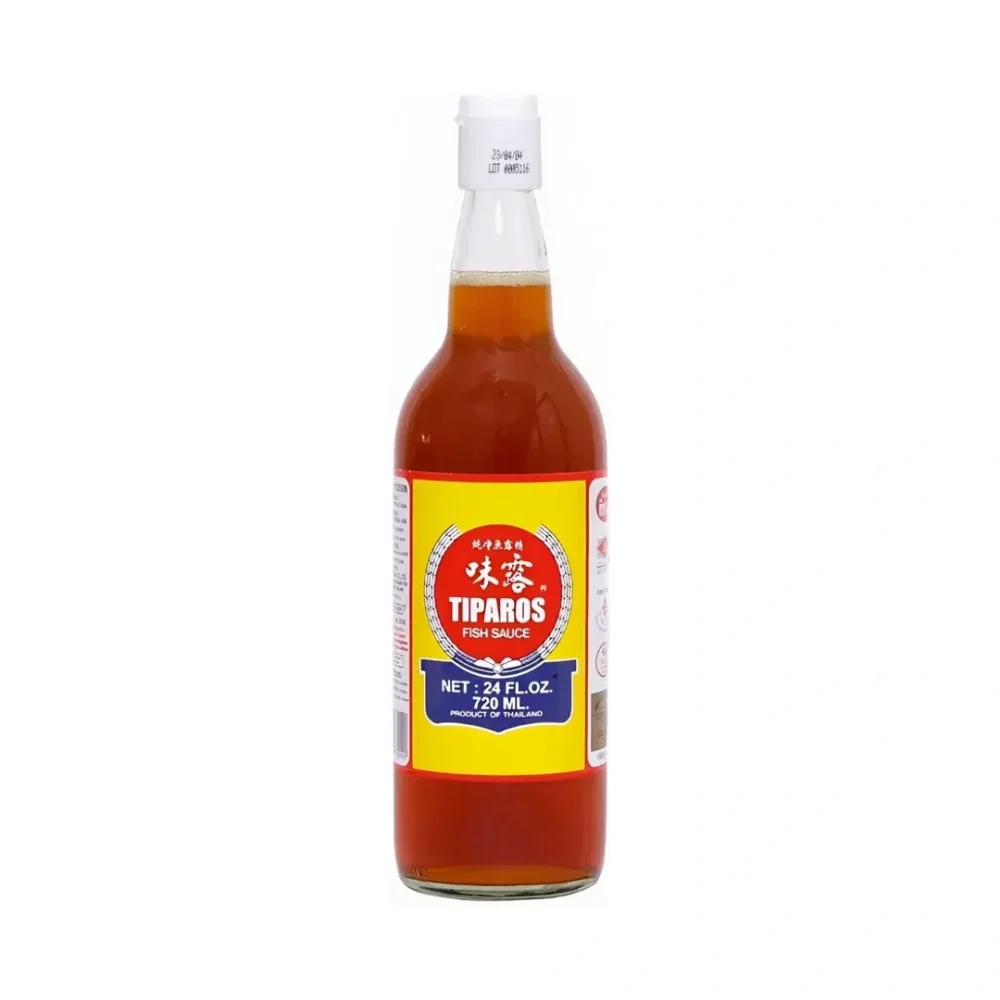
As a practical example of Thai fish sauce, you can use Tiparos Fish Sauce 300 ml (or a larger package Tiparos Fish Sauce 720 ml), but the key is mainly to learn to work with fish sauce in small doses and gradually.
🍳 3) Coconut: milk, cream, and cream differ in usage
Coconut in Asian cuisine is not one ingredient but a whole family of products that differ in flavor, texture, fat content, and usage. For Thai cooking, it is crucial to distinguish at least the basic thing: coconut milk and coconut cream are not the same and cannot be automatically substituted without impact on the result.
- Coconut milk usually brings coconut flavor along with a higher liquid content – suitable for sauces and soups where you want creaminess but also need volume.
- Coconut cream is thicker – gives more "body" and a stronger coconut impression.
- Concentrated coconut cream is suitable where you need high coconut intensity and minimal water.
- Coconut cream may be purely culinary or already partly a dessert product – without reading the label, you cannot automatically tell.
How to start in practice: a simple plan that works at home
Step 1: build your "seasoning triangle" (saltiness/umami – acidity – sweetness)
A beginner's mistake is trying to solve the Thai taste only with spiciness. Much more stable is to start with three flavor controllers and take spiciness as one of the options, not as the main driver:
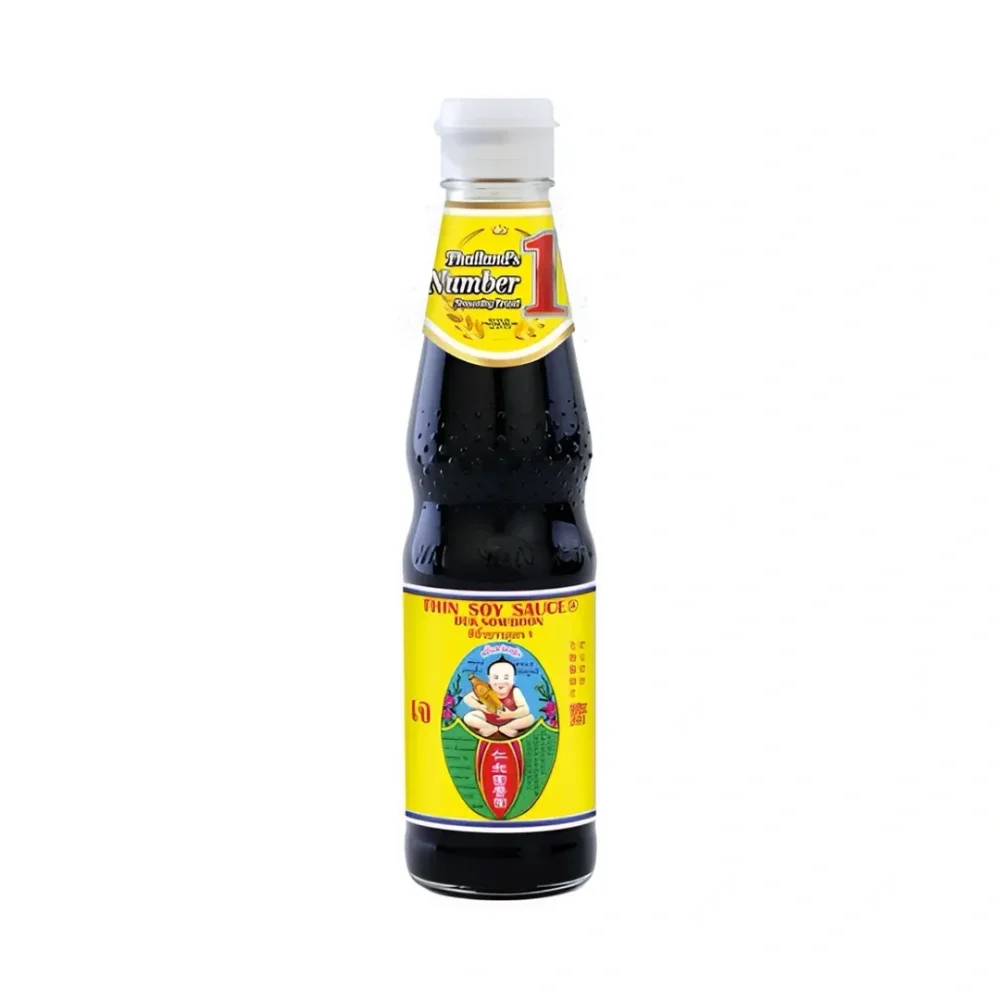
- Saltiness and umami: typically fish sauce, possibly soy sauce too. For milder saltiness, you can reach for Dek Som Boon light soy sauce 300 ml.
- Acidity: Thai dishes often rely on being "clearly" acidic (and then balanced with the rest). The specific source of acidity varies by recipe – it is important to add it gradually and taste.
- Sweetness: should not turn the dish into a sweet dish but round off acidity and spiciness and connect them with umami. Again: better in small amounts.
Practical dosing aid for the start: with fish sauce, start really cautiously – for example half a teaspoon into a portion of sauce or soup, stir, taste, and only then add more. Saltiness is easy to "overdo"; it is harder to correct than acidity or sweetness.
Step 2: learn to work with the curry base (short sauté = big difference)
With Thai curry pastes, the important principle is: they are concentrated and quickly build aromatic depth through short sautéing. This means that instead of long cooking, often the first few minutes decide. If you use some green curry base (e.g. Drana Green Curry 500 g), start with a small amount, briefly develop it with heat, and only then add the liquid component (often coconut product) and gradually adjust saltiness/umami and acidity.
Practically: when a dish is "flat," it is often not about adding more paste but rather fine-tuning umami (fish sauce drop by drop) and acidity (little by little). When it is too sharp or too aromatically aggressive, it helps to increase volume (more liquid) and balance with sweetness and umami.
Step 3: distinguish sauces by role, not by color
In Thai (and generally Southeast Asian) cuisine, sauces have different functions: some are "salting" (add saltiness and umami), others are more sweet and thick, others serve as ready dips. As a sweet-spicy dip or quick seasoning, you can use Encona Sweet Thai Chili Sauce 142 ml – but treat it as a convenient shortcut, not as a universal substitute for basic seasoning.

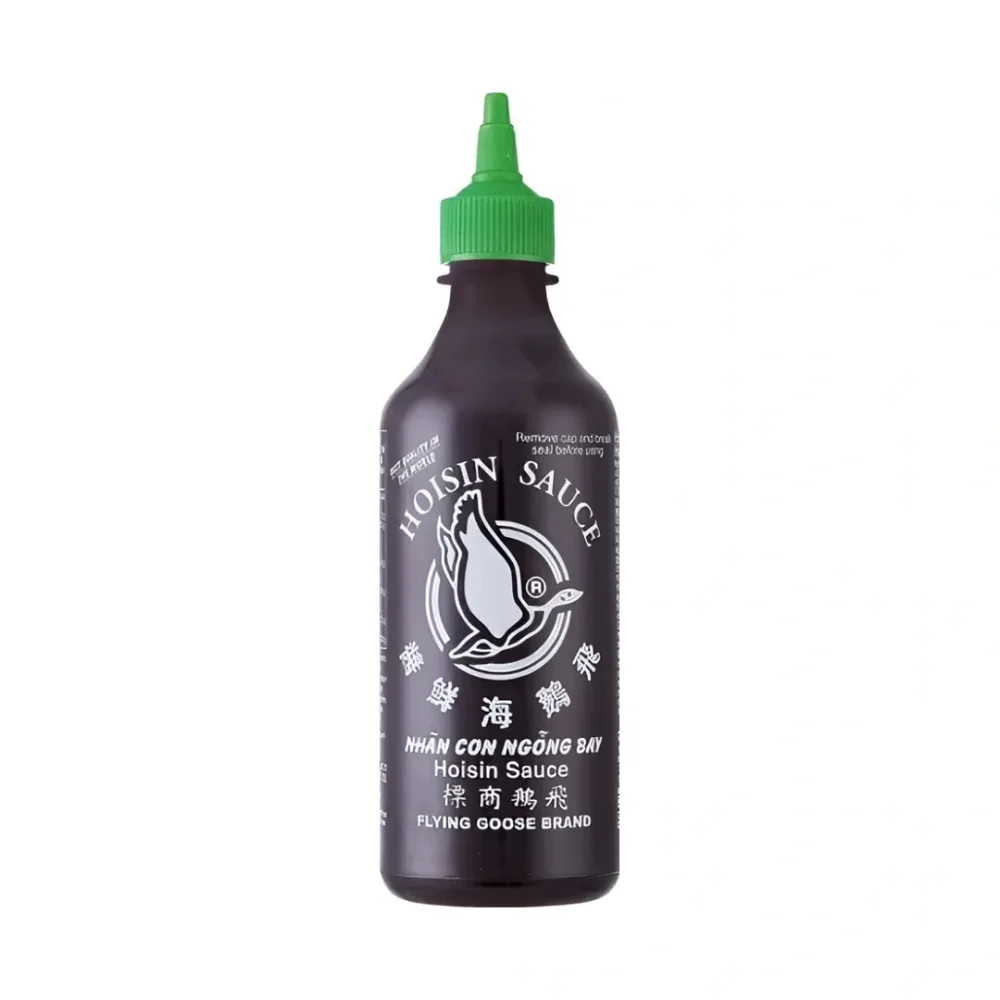
Conversely, sauces like hoisin are different in flavor and function (often sweeter and thicker). If you have at home Flying Goose Hoisin Sauce 455 ml, use it deliberately where a sweet-thick profile fits – but don’t expect it to replace fish sauce as a source of saltiness and umami.
🍳 Step 4: a small thing that helps the most – preparation of ingredients and knife work
Because many Thai dishes are swift, it pays off to have ingredients prepared beforehand. A sharp knife and comfortable chopping are not a "luxury" but a practical advantage: they reduce stress and help maintain the order of steps. If you are considering basic equipment, inspiration can be found in the category Home Supplies (for example also in the form of knife sets such as Herzberg 8-piece knife set – yellow).

Common mistakes and how to quickly fix them
- "I can't do fish sauce in it, I don't like the taste." The problem is often the dose. Fish sauce should work as a concentrated umami – start with half a teaspoon, stir, and taste. If you use too much, the dish will taste coarsely salty and overpower other flavors.
- Confusing types of "curry." If the recipe calls for curry paste (moist, concentrated) and you use a dry mix, the result will be different. Pay attention to whether you are working with a paste or dry seasoning, and adapt the procedure accordingly (pastes are often briefly fried to develop aroma).
- Uncertainty in coconut products. Coconut milk, cream, and coconut cream differ in fat content and use. When a dish lacks "body" and coconut should play the main role, a thicker variant is usually needed; if the result is too heavy, a thinner coconut base or a larger proportion of liquid helps.
- Chasing one taste (only spicy / only sweet). The Thai taste is based on contrasts. When a dish is "too sour," often a pinch of sweetness and a drop of umami helps; when it is "too spicy," spreading it (more sauce/liquid) and rounding off with sweetness and umami helps.
- Trying to replace basic seasoning with ready-made sweet sauce. Sweet-spicy sauces are fine as dips or quick seasonings, but they will not replace the logic of saltiness/umami, acidity, and sweetness that holds Thai dishes together.
What to take away from the article
- Thai cuisine is a system of balancing flavors: salty/umami, sour, sweet, spicy, and herb-fresh.
- "Curry" is not one thing: paste, dry mix, and roux are different bases and behave differently.
- Fish sauce is an umami tool – start with small doses and taste.
- Coconut milk, cream, and coconut cream are not automatically interchangeable; the difference is mainly in texture and intensity.
- For quick Thai dishes, the preparation of ingredients and the order of steps decide – so good knife work and mise en place pay off.

Read next
If you want to explore this topic further, continue with these related blog guides and articles:
