


 Česky (CZK)
 Slovensky (EUR)
 Deutsch (EUR)
 Austria
 Belgium
 Bulgaria
 Croatia
 Denmark
 Estonia
 Finland
 France
 Germany
 Greece
 Hungary
 Italy
Italy Latvia
 Lithuania
 Luxembourg
 Netherlands
 Poland
 Portugal
 Romania
 Slovenia
 Spain
Spain Sweden










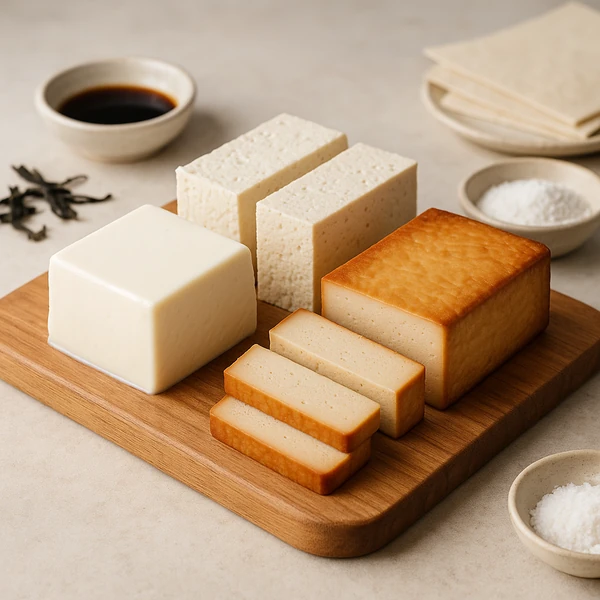
Soft, firm, and smoked tofu: how to understand and use them correctly
Tofu is not a single universal "block" that fits everywhere the same. The difference between soft (silken/soft), firm (firm/extra firm), and flavored varieties like smoked tofu lies mainly in texture, water content, and how tofu tolerates stirring, frying, and how quickly it absorbs the flavor of sauces. In this guide, you will compare the basic types and get practical rules to choose the right tofu for soup, wok, or a quick rice bowl.
🌶️ What is tofu and why it is important to consider its firmness
Tofu is made from soy milk, which curdles (similarly to milk in cheese-making) and the resulting mass is then pressed into blocks. Precisely the amount of retained water and the processing method decide whether tofu is soft and delicate or firm and "chewy."
The practical impact is crucial: tofu itself is usually mild in flavor; its strength is that it excellently absorbs the taste of surrounding ingredients — marinades, sauces, broths, and spices. However, not every tofu can handle the same treatment. The firmer the tofu, the more suitable it is for pan-frying, grilling, and baking. The softer it is, the better it works in soups, cold dishes, or creams.
At the same time, it is good not to perceive tofu as "one meat substitute." A whole family of products arises from soy – from fresh and minimally processed to fermented and intense. And every member of this family has a different role in the kitchen.
Soft tofu (silken/soft): softness for soups, cold dishes, and creams
Silken tofu (often also called very soft tofu) is smooth, fragile, and holds its shape only gently. It's ideal where you want creaminess and a delicate texture, but do not want to turn, squeeze, or stir tofu aggressively.
When to choose it
- Soups and broths – tofu is heated in them but not mechanically stressed.
- Delicate stews, where you want soft cubes "to the spoon."
- Cold dishes – for example appetizers, dips, dressings.
- Desserts and creams – tofu can function as a neutral, delicate texture.
What not to expect from it
Silken tofu is not suitable for situations where you will often handle it in a pan. If you flip and stir it like firm tofu, it will easily fall apart, and instead of cubes, you will end up with "scrambled tofu." This is not always bad – but it's good to know that it's a characteristic of the type, not your mistake.
Firm tofu (firm/extra firm): when you need cubes for wok, baking, or grilling
Firm tofu is firmer, holds shape better, and tolerates work in the pan. This is exactly where it makes sense to think of tofu as a "flavor carrier": a firm block can be cut into cubes or slices, fried, and then coated with a sauce that gives it a specific regional character.
When to choose it
- Stir-fry and wok dishes – tofu holds its shape in quick cooking.
- Frying, baking, grilling – you need tofu not to fall apart.
- Marinating – firmer tofu is typically used where you want a "chewy" result.
- Rice bowls and salads – fried cubes combine easily with rice and vegetables.
In some texts, you might also encounter a division into two "worlds" of tofu (soft vs. firm) under different names. For home cooking, however, the most important is to stick to a simple rule: softness = silken/soft, cooking in pan = firm/extra firm.
Smoked tofu: when you want tofu with its own flavor
Smoked tofu is tofu with a pronounced smoky aroma - that is, a variety that brings not only texture and the ability to absorb sauce into the dish but also its own flavor imprint. In practice, it is especially useful when you want to quickly create a "finished" flavor without a complicated marinade.
Even with smoked tofu, the same basic rule applies: always observe, what its texture is. If smoked tofu is softer, treat it like soft tofu (be careful when stirring). If it is firm, you can use it similarly to firm tofu – for frying and bowls.
How to choose and use tofu in practice (and how to flavor it)
When tofu doesn't work out, very often it's not "bad tofu," but rather the wrong type chosen for the dish. It helps to ask yourself a few specific questions in advance: should the tofu be soft or chewy? Will it be in soup or in a pan? Should it taste pronounced on its own or mainly carry the sauce?
Quick orientation according to the dish
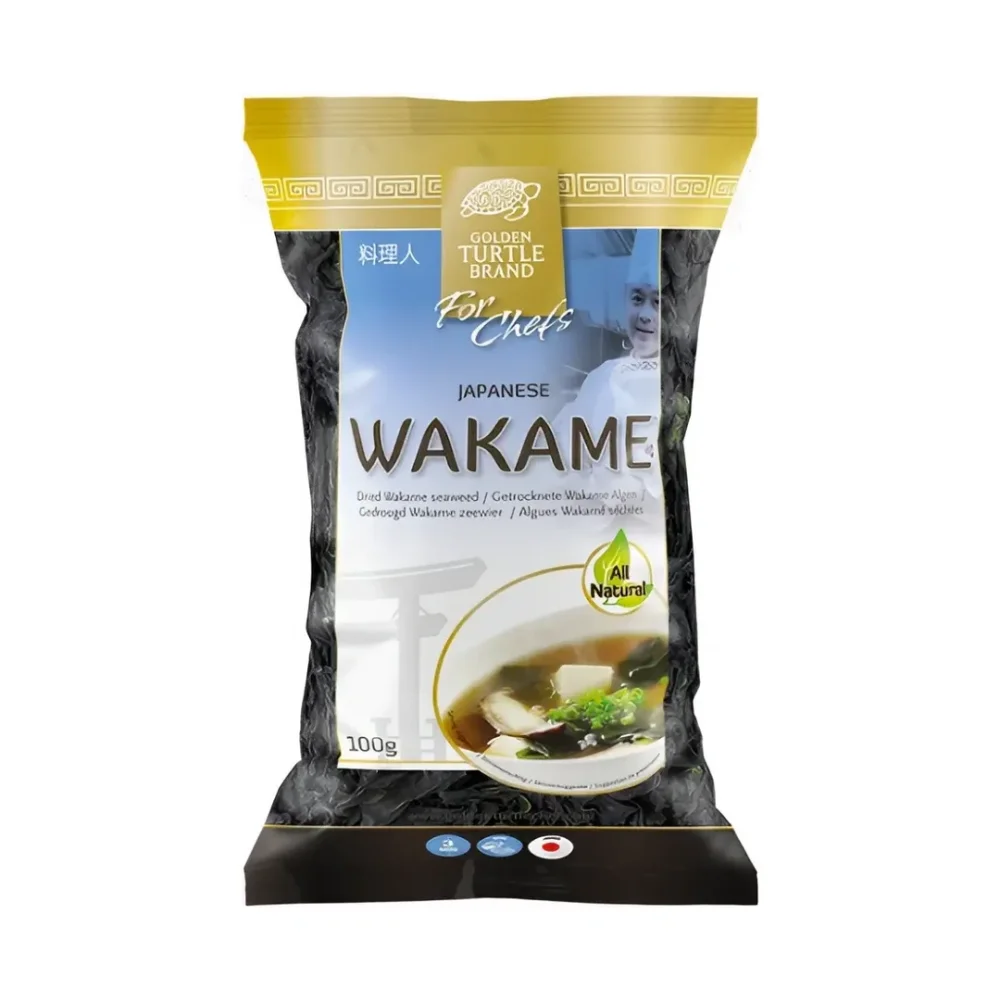
- Soups: choose silken/soft tofu – it retains softness and fits naturally into broth. If you're making a Japanese-style soup, taste and the "sea" feeling are often supported by seaweed – for example, dried wakame, which expands and softens after soaking.
- Wok and quick stir-frying: typically firm tofu – cut into cubes and withstands flipping.
- Baking/grilling: again, rather firmer tofu, so it holds shape and can be glazed.
- Cold dishes, dips, and creams: silken tofu for smoothness.
Soy sauce as the backbone of seasoning (but not the only one)
Because tofu readily absorbs the taste of its surroundings, often the sauce decides. With soy sauces, it is good to know that it is not a single fixed ingredient: there is a wide family of styles, and terminology mixes depending on countries and export labels. As a universal starting point for cooking, soy sauces as a whole work – and then it makes sense to distinguish whether you want mainly seasoning without significant darkening (often helped by light soy sauces) or on the contrary, also add color and a more "rounded" effect (often using dark soy sauces).
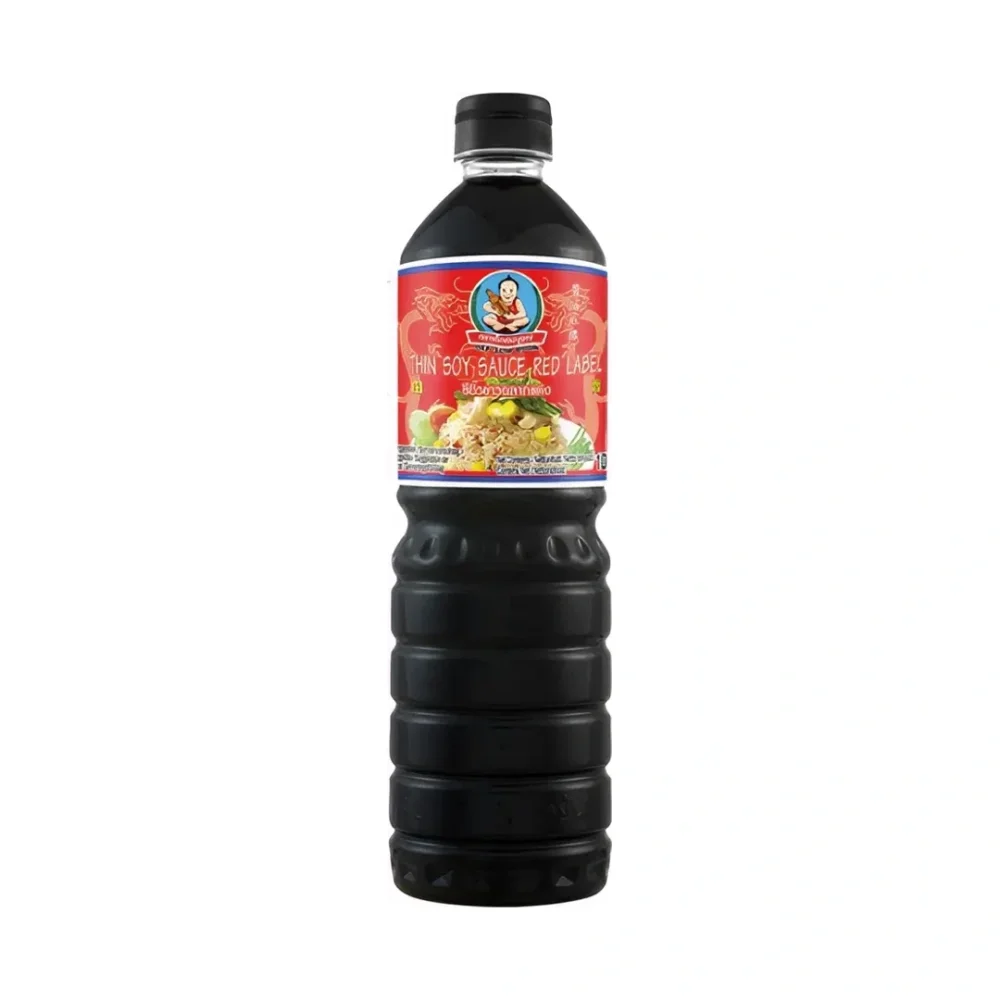
For quick stir-fry, noodles, or rice, you can, for example, reach for Dek Som Boon light soy sauce, which enhances umami without significant darkening. However, add it gradually: tofu and other ingredients can easily be oversalted, and then the taste is hard to balance back.
When you want pronounced umami even without a long marinade
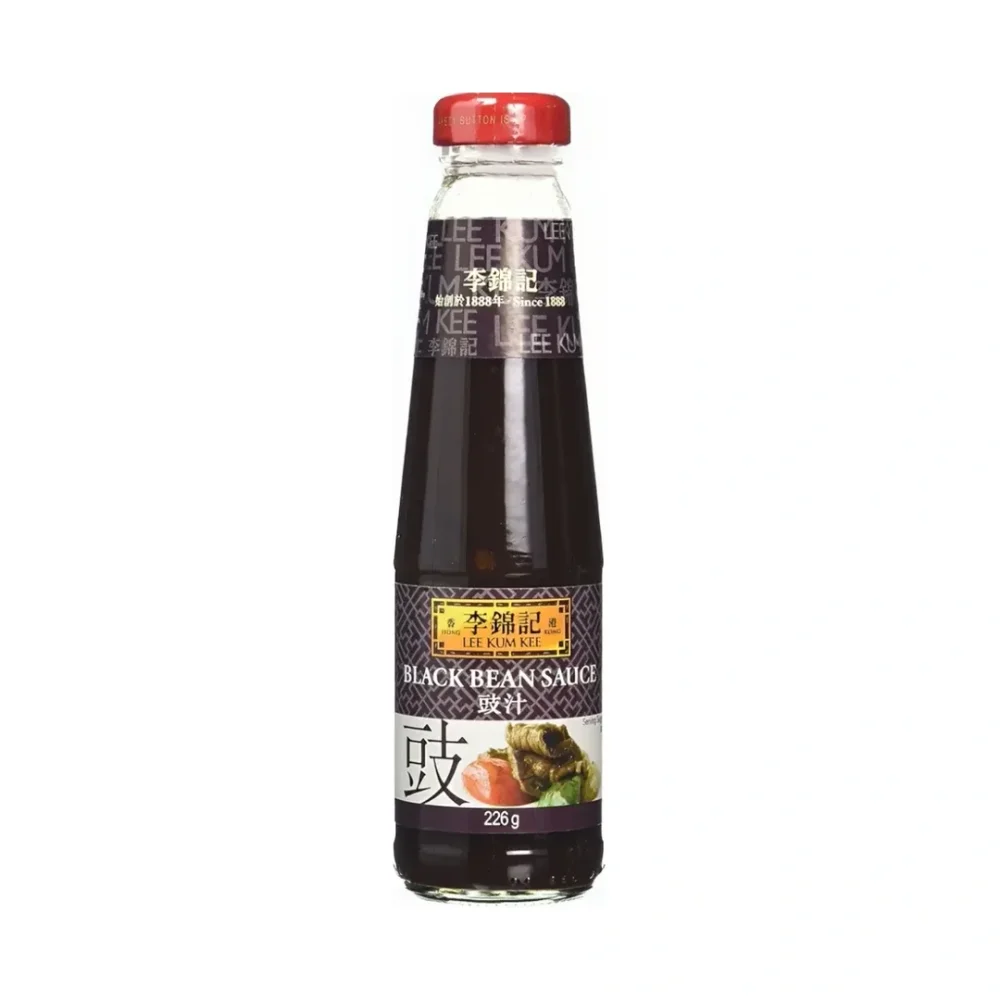
Besides soy sauce, there are other fermented or concentrated seasoning directions that can "awaken" tofu very quickly. A typical example is black bean sauce – its flavor is strong and salty, so it makes sense to start with a small amount and add gradually. A practical example: Lee Kum Kee black bean sauce can give tofu and vegetables quick umami depth in the pan.
Crispier surface: when a light coating helps
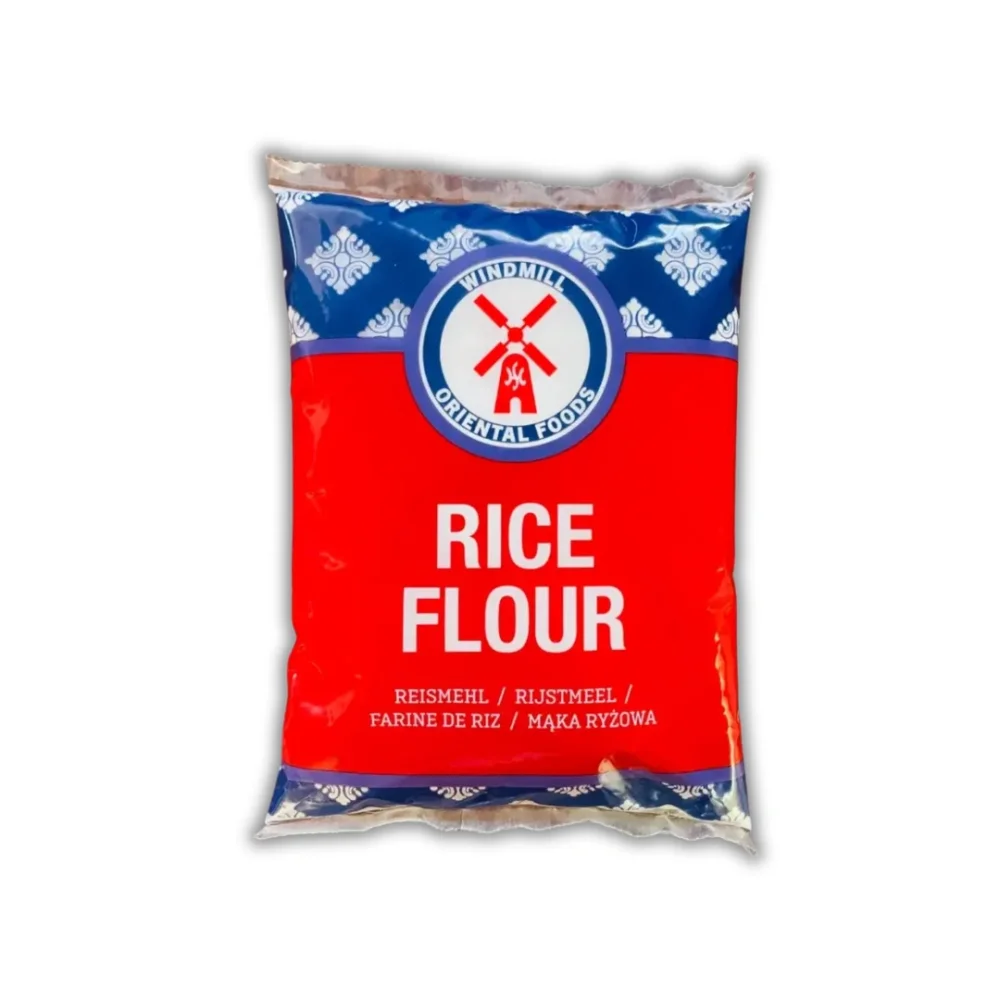
If you aim for a crispier surface (typically with firm tofu in a pan), a light coating in neutral flour or starch often helps so that a thin layer forms on the surface, and the sauce has something to cling to. For similar use, for example, Windmill rice flour is suitable – it is neutral in flavor and practical also for light sauce thickening.
Bonus for texture lovers: yuba and tofu rolls
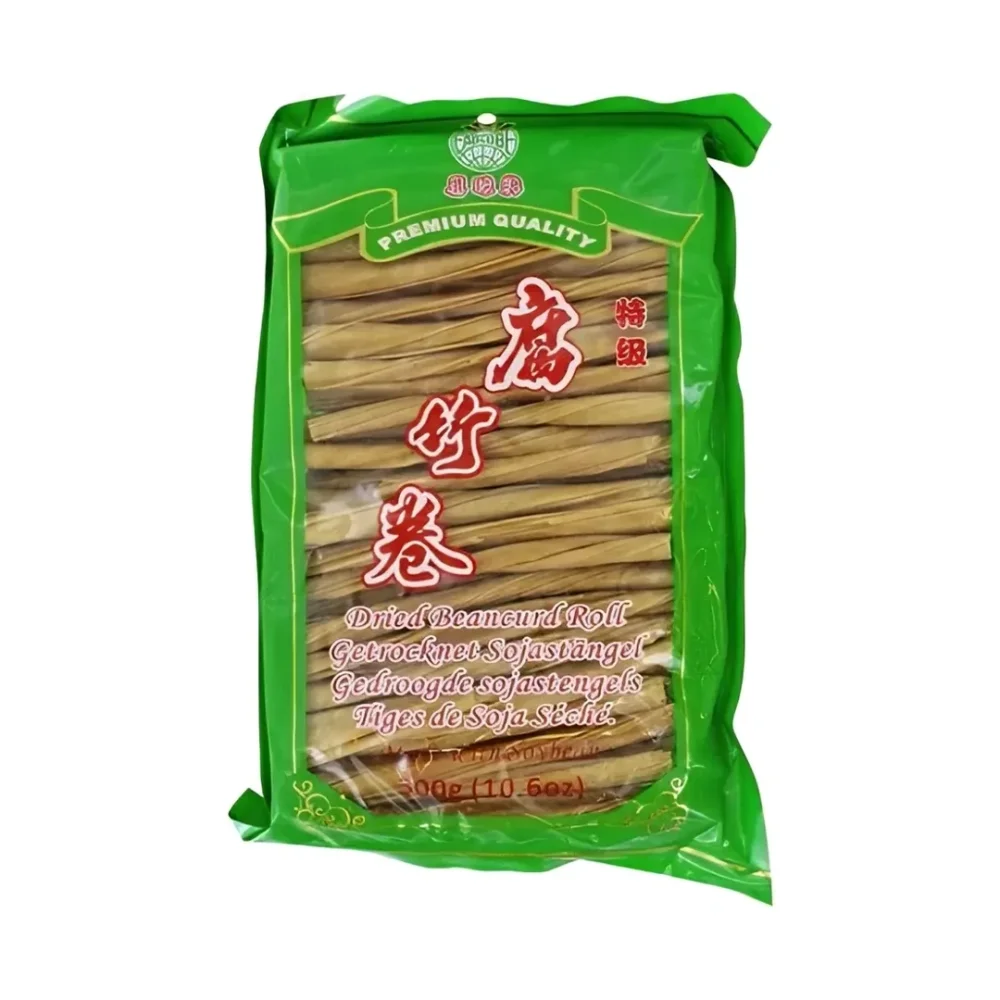
The broader tofu family also includes yuba (tofu skin): when soy milk is heated, a layer forms on the surface that can be collected and dried. The result is a layered, flexible ingredient with a more concentrated flavor than regular tofu, used among others in Chinese and Japanese cuisine in stews, broths, or stir-fries. A practical example of this kind of product is Eaglobe dried tofu rolls: after soaking they gain firm, layered texture and absorb broth and sauces well.
Most common mistakes: why tofu doesn't work (and how to fix it)
- Confusing types of tofu: soft silken tofu usually won't hold up in a wok pan. Conversely, firm tofu in soft creams won’t provide the smoothness you expect. Fix: first clarify if you want creaminess or a chewy texture.
- Treating soft tofu too roughly: silken tofu is not suitable for aggressive stirring or frequent flipping. Fix: handle it gently, rather heat it in a soup or gently "nestle" it into a sauce.
- Expecting tofu to taste strongly on its own: its typical role is to carry sauce, broth, and spices. Fix: build flavor through sauce (often soy) and additional seasoning, or choose a variant that has its own aroma (like smoked tofu).
- Mechanically confusing soy sauces: “light” and “dark” do not mean the same everywhere, and besides pure soy sauces, there are many derivatives and flavored blends. Fix: clarify if you mainly want to salt and carry umami with the sauce or also add color and roundness; always read the specific name and ingredients.
- Underestimating allergens: wheat is common in soy sauces, so those concerned with gluten must read the specific label of each bottle (you cannot rely on general impressions like “tamari = automatically gluten-free”).
- Confusing tofu with tempeh: tempeh is a fermented product from whole soybeans, usually more aromatic, “chewy,” and has a stronger presence in food than tofu. Fix: if you want a neutral sauce carrier, choose tofu; if you want a stronger, fermented component, tempeh is a different route.
What to take away from the article
- Tofu is not one thing: mainly water content and texture decide its use.
- Silken/soft tofu is soft and fragile: ideal for soups, cold dishes, dips, and creams; does not tolerate rough stirring.
- Firm/extra firm tofu holds shape: suitable for wok, baking, frying, and grilling.
- Smoked tofu adds its own smoky aroma – use it when you want a more pronounced flavor without complicated marinade, but always watch its specific texture.
- The taste of tofu is often built by sauce: soy sauces form the backbone of seasoning, but different styles do not behave the same and cannot be swapped without affecting the result.

Read next
If you want to explore this topic further, continue with these related blog guides and articles:
