


 Česky (CZK)
 Slovensky (EUR)
 Deutsch (EUR)
 Austria
 Belgium
 Bulgaria
 Croatia
 Denmark
 Estonia
 Finland
 France
 Germany
 Greece
 Hungary
 Italy
Italy Latvia
 Lithuania
 Luxembourg
 Netherlands
 Poland
 Portugal
 Romania
 Slovenia
 Spain
Spain Sweden










How to Start with Korean Cuisine: First Dishes, Basic Flavors, and Mistakes That Hold You Back
Korean cuisine can seem "wild" – spicy, fermented, and full of new names. In reality, however, it is very logical: it is based on rice, soups, smart fermented foundations, and small side dishes that balance flavor and texture. In this guide, you will clarify what is typical for Korea, which basics make sense to acquire first, and how to cook your first Korean week at home without unnecessary mistakes.
Introduction: Why Korean Cuisine Is Surprisingly Easy to Learn
Beginners often fall into one big trap: trying to start with "Asian cuisine" all at once. In practice, it is much easier to choose one entry point – and Korean cuisine is great for beginners because it has clearly readable pillars. Once you understand the role of rice, soup, and fermented "bases" (pastes and sauces), even seemingly complicated dishes will start to make sense.
Korean cuisine also doesn't rely only on spiciness and kimchi. It is built on contrasts (fresh vs. fermented, mild vs. spicy, warm vs. cold, crunchy vs. soft) and on combining the main dish with several smaller side dishes at the table.
🌶️ Definition and Orientation: What Is Really Typical for Korean Cuisine
Korean cooking (often described as hansik, that is, Korean cuisine as a whole) is not just a collection of recipes but a way of composing a meal. Typically, it does not involve one "main plate," but a whole: rice, soup, a more pronounced component, and several side dishes.
What a "Korean Table" Looks Like in a Home Version
- Rice as a neutral base that calms spiciness and saltiness.
- Soup (or broth base) for warmth, liquidity, and umami.
- Main dish or a more pronounced component (vegetables, tofu, meat, noodles).
- Banchan – several smaller side dishes that add acidity, crunch, freshness, or fermented umami.
This is also practically important: you don’t have to know "ten Korean dishes." You just need to know how to make one warm base and 1–2 small additions that open up the flavor of the dish.
Kimchi: More Than Just "Spicy Cabbage"
Kimchi is essential in Korean cuisine because it typically:
- adds acidity and freshness (helps balance richer dishes),
- carries fermented umami (makes the flavor fuller even without meat),
- functions as a side dish – that is, as banchan, which lifts the whole table.
At first, it's useful to perceive kimchi mainly as a "function" (sour + fermented + crunchy), not as an obligation to eat it with everything.
Jang: The Heart of the Korean Pantry (and Why It Makes Cooking Easier)
A large part of Korean flavor is based on fermented foundations called jang – pastes and sauces that can move a soup, sauce, or marinade into a "Korean" realm with just one spoonful. Examples include doenjang, ganjang, gochujang, and ssamjang.
Variants and Differences: How to Understand Korean Bases and Seasonings
Beginners are usually helped most by distinguishing two things: (1) cooking base versus (2) table dip/final seasoning. In Korean cuisine, "small bowls" and final seasoning are a full part of the flavor system – often they decide whether a dish feels flat or lively.
Cooking Sauce vs. Table Dip
- Cooking sauce/paste: added during heat treatment, forming the flavor base (e.g., fermented pastes in soup or sauce).
- Table dip: added at service, functioning as contrast and a "flavor amplifier."
- Final seasoning: intentionally small but concentrated – often half a teaspoon is enough to open the flavor.
Doenjang and Ssamjang: Two Good Starts (But Each Does Something Different)
If you want to start practically and without an overflowing pantry, it makes sense to pick one cooking base and one dip:
- Doenjang (fermented soybean paste) is typically a "structure": salty umami flavor for soups, sauces, and stewed dishes. A practical example is Sempio soybean paste Doenjang.
- Ssamjang (thick flavored paste) is typically a "service": a dip for meat and vegetables, a flavor accompaniment on the table. A practical example is Sempio soybean paste Ssamjang.
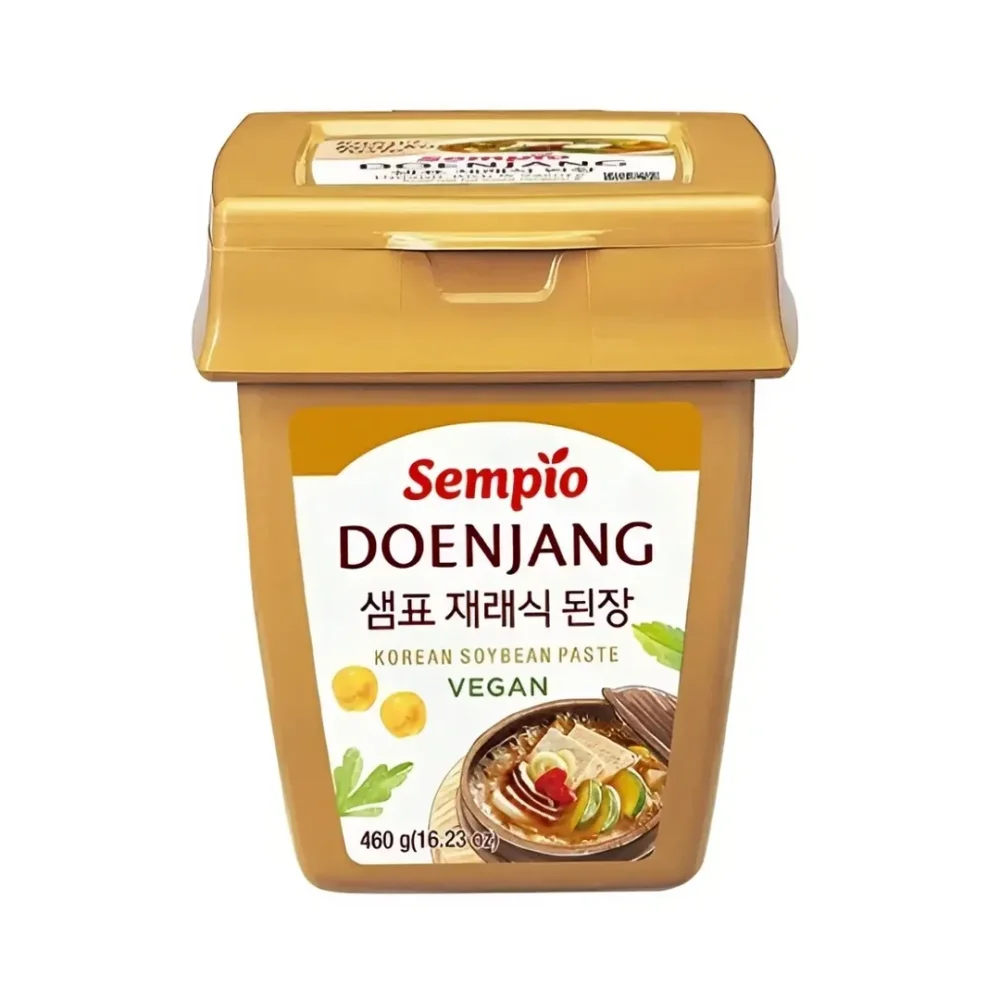
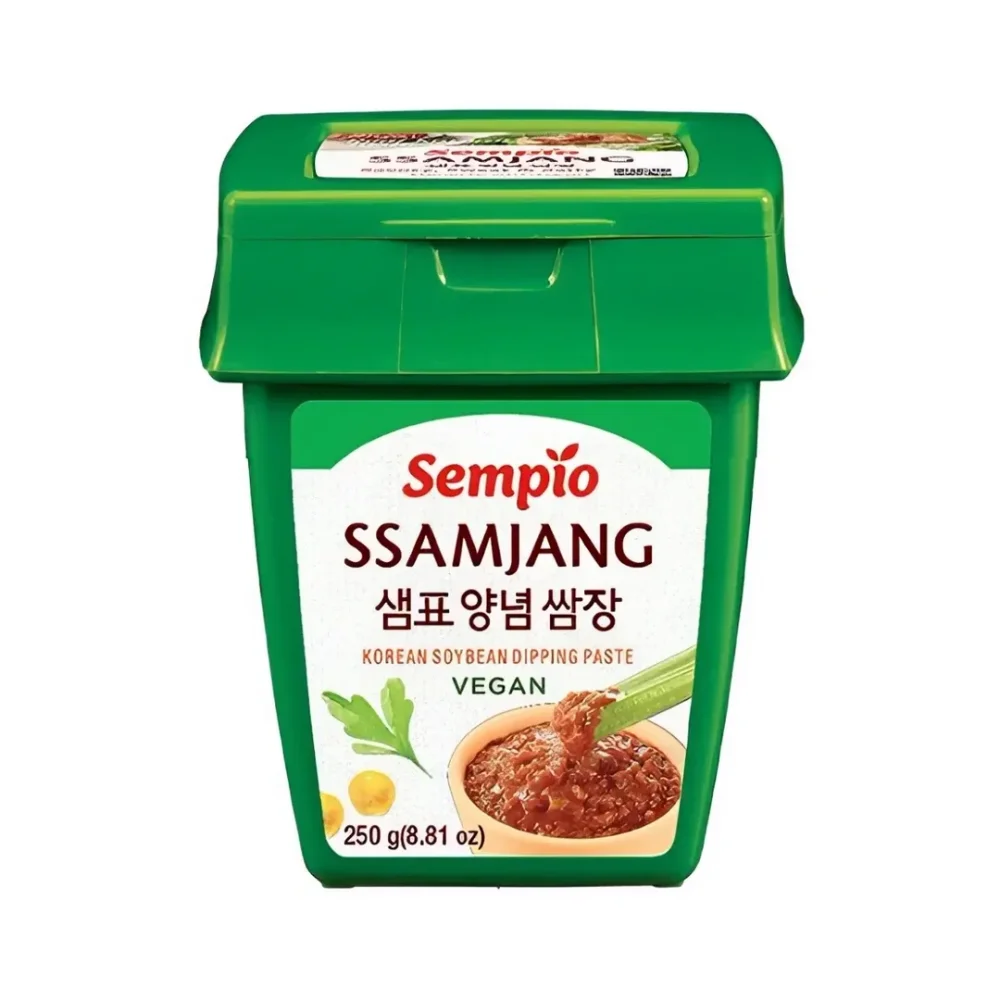
An important practical difference: you usually do not want to eat doenjang "raw by the spoonful" but cook with it. Ssamjang, on the other hand, often works best as a table accompaniment.
Gochugaru: Spiciness, Flavor, and Texture (Not Just "More Fire")
Korean chili flakes gochugaru are not just about spiciness – they also add pepper flavor and a typical granular texture. They are good for sauces, marinades, and soups. If you want to try the classic form, an example is Nongshim coarsely ground chili pepper Gochugaru.
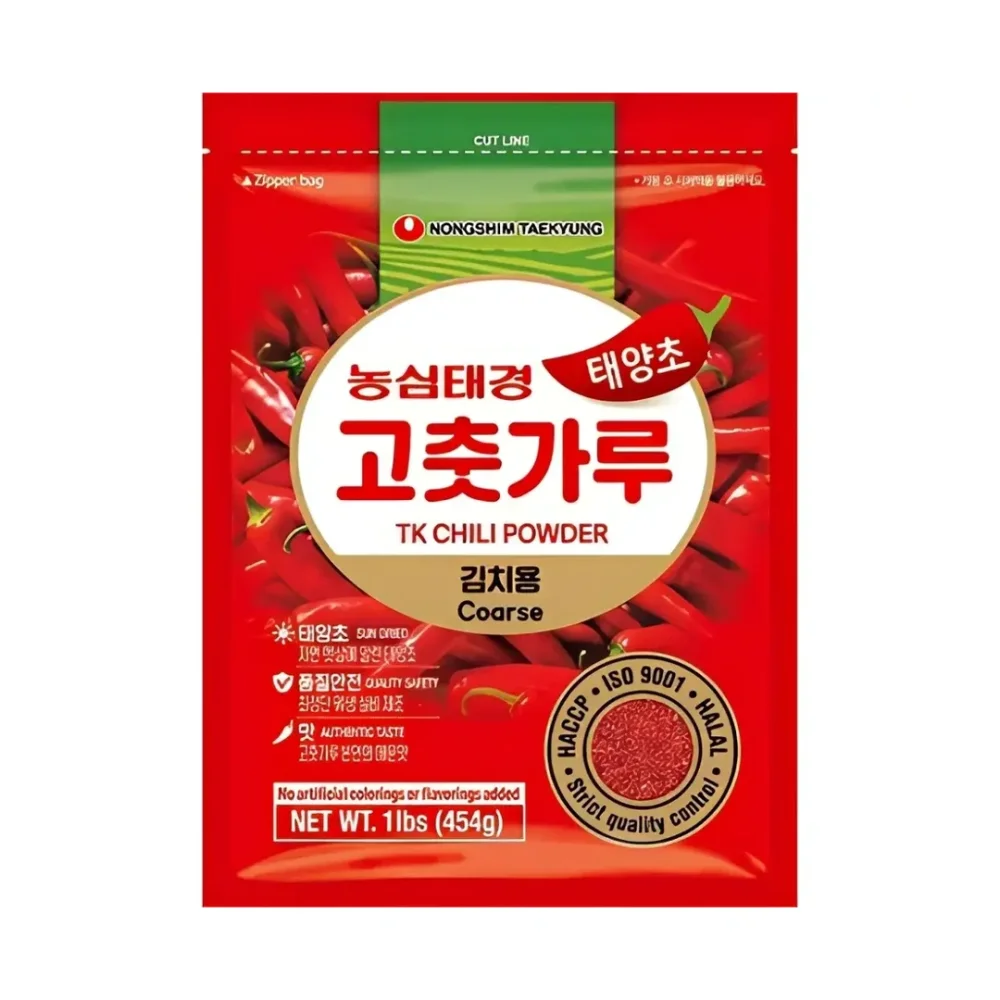
At the start, it’s useful to think of gochugaru as a spice to be dosed gradually: first for color and flavor, only then for spiciness.
Practically: What to Do as the First Step at Home (Shopping, First Dishes, Dosing)
Korean cuisine is best learned by setting up a simple "table": one warm base + one quick main dish + one small extra bowl. You don’t need dozens of ingredients right away – rather a few things that have a clear function.
1) Mini shopping for 3–5 meals: 4 things that will give you Korean flavor
- Fermented base for cooking – for example doenjang. Start with a dose 1 teaspoon per 1 serving of soup and adjust by half a teaspoon (it is concentrated).
- Table dip – for example ssamjang. Often 1 serving is enough 1–2 teaspoons as a complement to vegetables or meat.
- Chili flakes – for example gochugaru. Start very lightly: a pinch up to 1/2 teaspoon into sauce/soup for color and flavor.
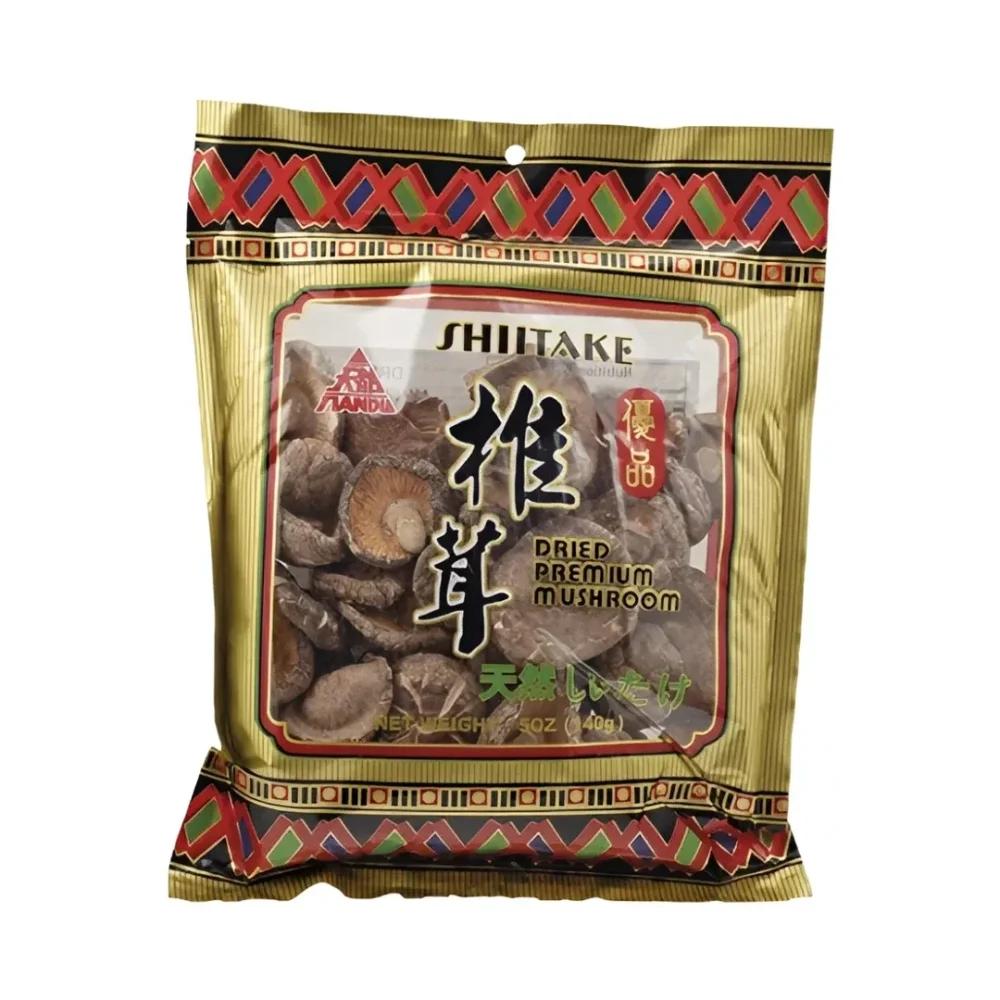
- Umami for broth/sauces – like dried mushrooms shiitake. Even a small amount can lift the broth base; add rather in small pieces and taste.
Tip for selection in general: “choosing well” does not automatically mean taking the most expensive option – it is more important to know, for what use you are buying the ingredient and whether it is a basic, or already seasoned product.
2) The first “most grateful” dish to start with: japchae (noodles with vegetables) without a complicated sauce
For the first Korean dish, it is advisable to choose something where you quickly learn to work with sauce and texture, but you do not have to deal with long fermentation or complicated techniques. A practical choice is glass noodles and a ready-made Korean-style sauce:
- Glass noodles (they absorb sauce, are neutral and forgiving).
- Sauce for Japchae noodles (Korean style) as a shortcut when you are not yet confident in balancing flavors.
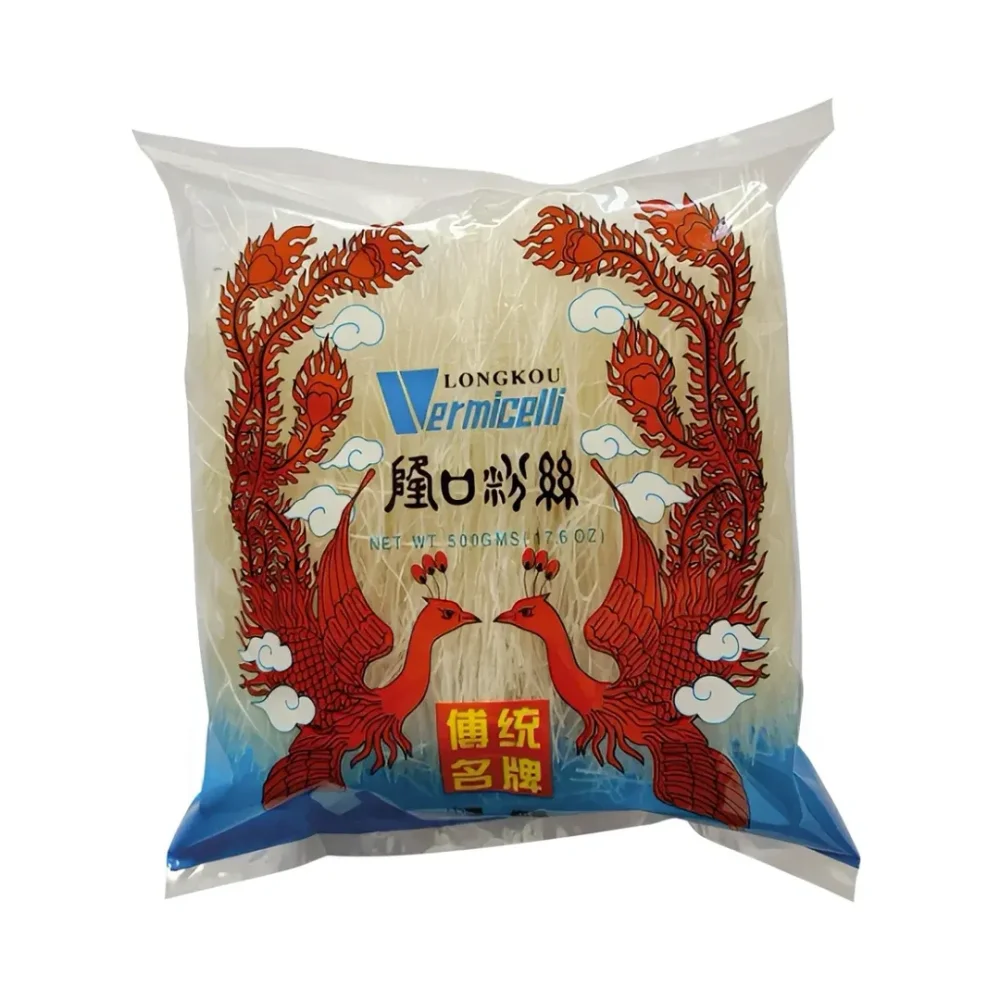
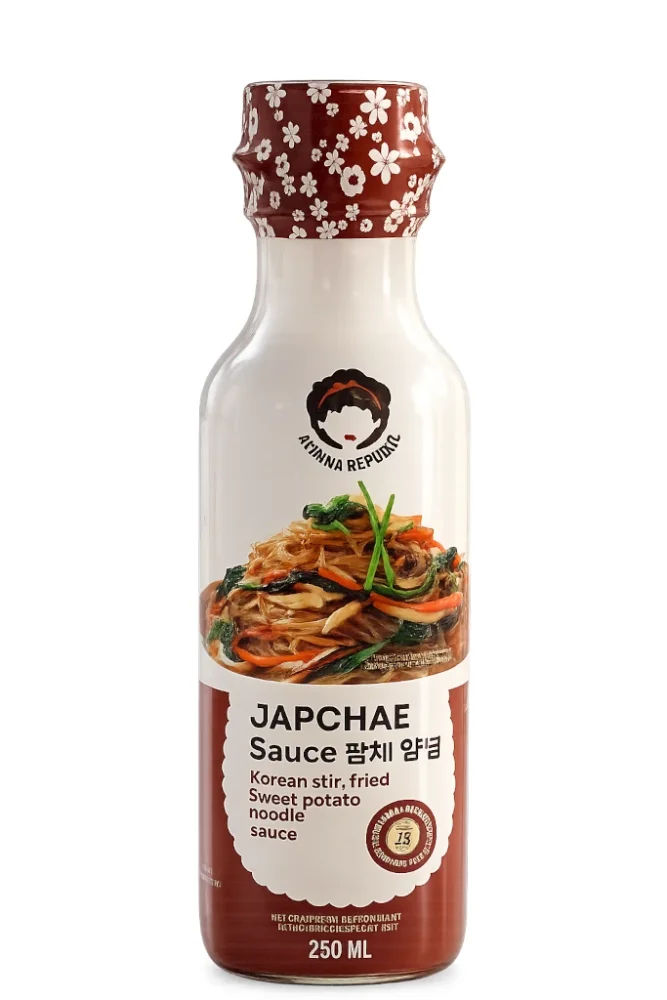
Gradually you will manage with the principle: prepare noodles as needed, quickly sauté vegetables in a pan, combine with sauce, taste and if necessary add only a small amount more. If you want to add a spicy Korean “touch”, sprinkle a pinch of gochugaru towards the end and taste again.
3) Second step: learn one simple soup/“base” with doenjang
Once you understand how fermented paste behaves in hot liquid, you gain a key you will use in the whole kitchen. With doenjang, the proven approach is “better less and gradually”:
- Mix 1 teaspoon of doenjang in part of the hot liquid (or in a bowl) and only then add it to the pot.
- Let simmer briefly, taste and adjust by 1/2 teaspoon.
- For fuller flavor, you can add a piece of shiitake (umami), but do not overdo it – the goal is a clear base, not a heavy "over-scented" soup.
4) Small bowl, big difference: ssamjang as “final seasoning”
Do you want your food to feel Korean even without a complicated sauce? Add a small bowl with ssamjang at service and use it as a dip for roasted/sautéed vegetables or meat. An important principle from Korean dining: the dip is not an “extra sauce”, but a consciously chosen contrast that brightens and livens the dish.
5) Tools: what is useful when you want to cook more often
Korean cuisine often means a lot of chopping and quick work at the stove. If you cook often, it may make sense to have a decent knife and pan/pot handy, in which you can sauté and stew well. The category Home Suppliescan serve as a guide for equipment.
💡 Common mistakes and what to watch out for (and how to fix it quickly)
- “Korean = always very spicy.” In reality, Korean cuisine is mainly about contrasts and balance. The solution: dose the spiciness only at the end and in small amounts (with gochugaru you can even start just for color).
- Mix-up of cooking bases and table dips. Seasoned dip can feel impure in soup, on the other hand, basic paste used as dip tends to be “hard” and overly salty. Solution: clarify the role – cooking vs. serving (typically doenjang = cooking, ssamjang = dip).
- Overdoing fermented flavor right from the start. Fermented pastes are concentrated. Solution: start at the level of a teaspoon per serving and adjust gradually.
- Chasing “authenticity” without understanding the function of the ingredient. Disappointment often does not arise from “bad ingredient” but a wrong choice for specific use. Solution: always ask yourself if you are buying a basic product (for building flavor) or already seasoned (for quick use).
- The food is good but tastes flat. Often there is a lack of contrast at the table. Solution: add a small bowl of dip or final seasoning – it is often what decides whether the flavor “pops.”
What to take away from the article
- Korean cuisine is a system: rice + soup + main component + several banchan (small side dishes) and contrasts.
- Kimchi is important mainly for its function: acidity, freshness and fermented umami as a side dish.
- The basics of “jang” simplify your cooking: part is for cooking (e.g., doenjang), part for the table as a dip (e.g., ssamjang).
- To start, a few things are enough – and learn on 2–3 simple dishes where you train dosing and balancing flavors.
- The most common obstacle is not lack of ingredients, but wrong ingredient role (cooking vs. serving) and over-dosing.

Read next
If you want to explore this topic further, continue with these related blog guides and articles:
