


 Česky (CZK)
 Slovensky (EUR)
 Deutsch (EUR)
 Austria
 Belgium
 Bulgaria
 Croatia
 Denmark
 Estonia
 Finland
 France
 Germany
 Greece
 Hungary
 Italy
Italy Latvia
 Lithuania
 Luxembourg
 Netherlands
 Poland
 Portugal
 Romania
 Slovenia
 Spain
Spain Sweden










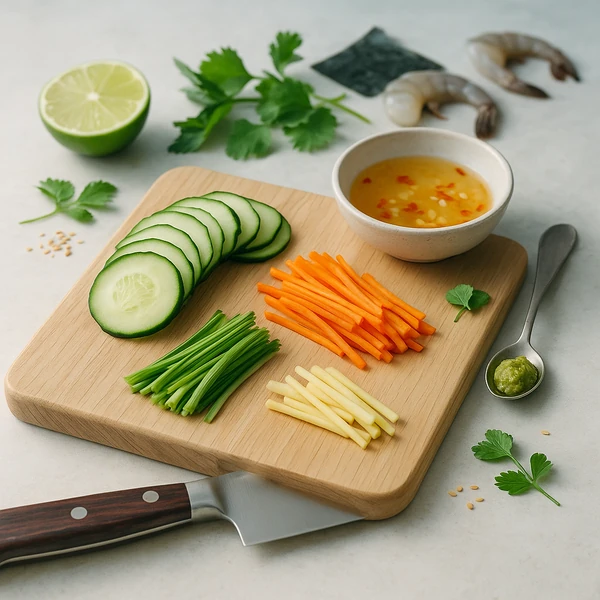
Cutting ingredients for Asian cooking: why success or failure happens on the cutting board
In many Asian kitchens, the outcome is decided not on the stove, but already on the cutting board. The shape, size, and uniformity of the cut directly determine what gets grilled in the pan, what only steams, what releases water, and what, on the contrary, burns. This guide gives you practical rules on how to adapt cutting to the technique (wok, soup, salad, grill, fillings) and how to set up preparation at home so that the food keeps the rhythm.
🍳 Why ingredient preparation is so important in Asian cooking
In dishes that cook quickly, at high heat or in several short steps, there is no room to "catch up" on prep during cooking. This typically applies to stir-fry in a wok, quick noodle dishes, fried rice, briefly sautéed vegetables, and dishes where ingredients are added in a precise order.
Once you start cutting only when the pan is already heated, usually one of these things happens: some ingredients remain raw while others are overcooked, aromatics (garlic, ginger, spring onion) burn before the rest is done, the sauce doesn’t spread evenly, or ingredients release water and start to stew instead of sautéing. In Asian cooking, this is one of the most common reasons why food "doesn't taste like from a bistro," even if you have good seasoning.
The size and shape of the cut change the taste and texture of the dish
Cutting is not just aesthetics. It is heat management: how quickly the ingredient heats through, how much juice it releases, how it browns on the surface, and how it will eat in the bowl or on the plate.
Thin cuts: speed, juiciness, and even browning
Thin slices or strips are typical for quick sautéing. In practice, they help especially where you want: quickly cooked meat without drying out, vegetables still crunchy yet warmed through, and minimal time in the pan (so the aromatics don’t burn).
Home test question: "Will it be done before the garlic/spices start to burn?" If not, the cut is probably too thick.
🍳 Larger pieces: when cooking takes time, layers build gradually
Larger and sturdier pieces make sense where there is time: in soups and broths the aromatics can be larger (they have time to release flavor), on the grill and in roasting pieces must "withstand" longer heat. In these techniques, shape stability is often more important than rapid heating.
🌶️ Even small pieces: control over what is soft and what crunches
Uniformity is often more important in practice than the "correct" specific shape. In fried rice, quick noodles or stir-fry, you add ingredients in layers – if each layer is similar in size, it is easier to hit the right moment for the next step. The result looks cleaner: nothing is overcooked simply because a piece twice as big lies next to it.
Irregular cuts: sometimes an advantage, sometimes a problem
Irregular cuts can work where you want different textures in one ingredient (some parts brown more, some stay juicier). In very quick cooking, however, irregularity often means chaos: a small piece burns while a large piece remains raw. If your wok dishes are unsuccessful, this is a simple thing you can improve right during preparation.
Cutting must correspond to the technique: wok, soup, salad, grill, and fillings
The key rule is: there is no "universal" cut. The cut must serve the technique, not the other way around.
For wok and stir-fry: smaller, uniform, prepared in the right order
- Rather smaller and uniform cuts, so everything gets ready in a short time.
- Thin slices of meat give a chance to brown quickly on the surface while remaining juicy.
- Cut vegetables according to hardness and time: harder things typically need smaller pieces than tender leaves and shoots.
- Avoid large pieces, which won’t cook in time – then you "rescue" them by cooking longer and end up stewing instead of sautéing.
Practically, it helps to prepare ingredients in separate bowls according to when they will go into the pan. Even a simple "separate aromatics, vegetables, and protein" can change the result.
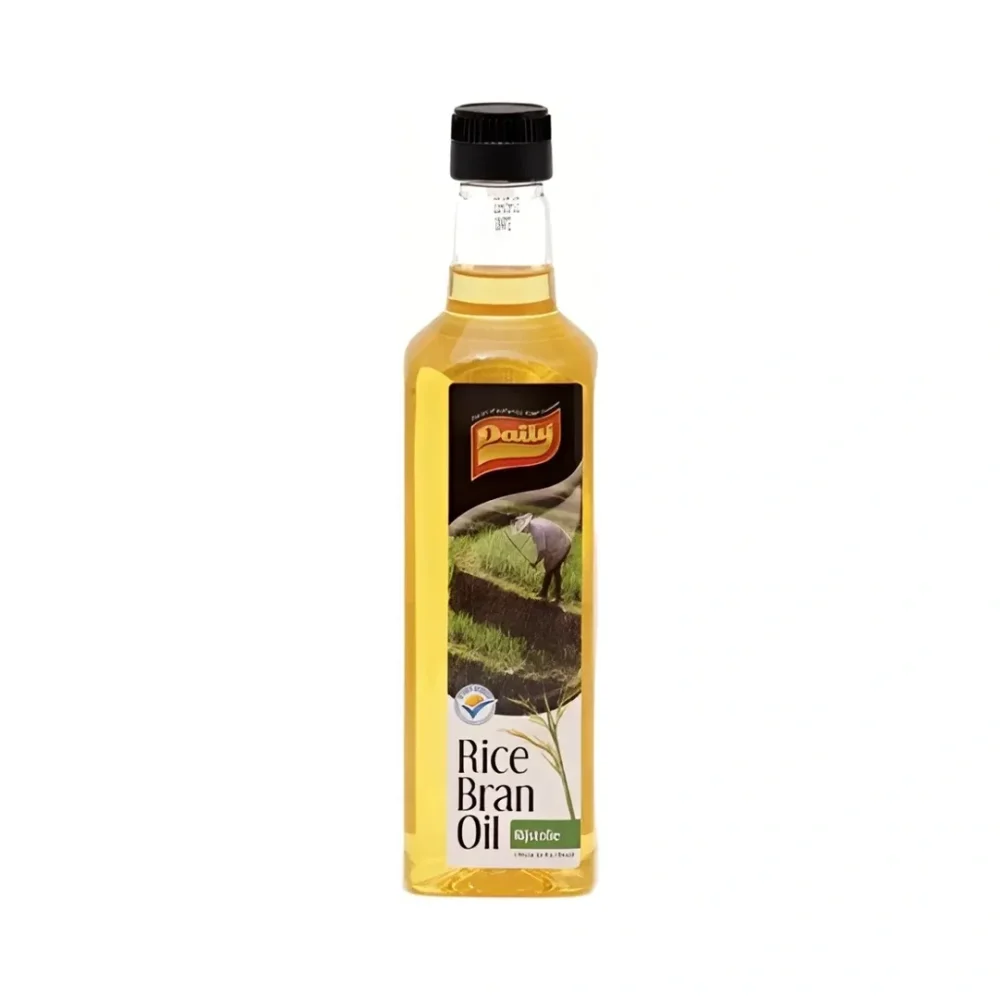
For stir-frying itself, a neutral oil that doesn’t overpower the flavor of the ingredients is ideal – as a practical example, rice oilcan be used.
For soups and broths: distinguish base and final topping
With soups, it makes sense to distinguish two roles: what goes into the base (can be bigger, sturdier) and what goes into the finished bowl (toppings tend to be finer so that they are easy to eat and don’t lose texture). If you cut everything finely the same and cook it all together, some flavors will "boil out" and some will fall apart.
For salads and cold dishes: fineness, fragility, and how it holds dressing
For cold dishes, easy consumption and surface handling are important: shape influences how much dressing the ingredient can hold. With rolled dishes, this is even more pronounced – for example, with spring rolls made from rice paper thin and uniform strips of vegetables typically work, which can be layered without "bumps" and then the roll is easier to close.
For grilling and roasting: pieces must withstand longer time
When grilling or roasting, extremely thin parts can burn before the thicker center heats through. For this technique, it often helps to cut pieces so they are similarly thick – not necessarily small, but consistent.
For dumplings, pancakes, and fillings: so the filling holds together but isn't "mush"
For fillings, the cut is important for a different reason: you need cohesion (so the filling holds together), but also texture (so it doesn’t feel like a paste without structure). If you chop everything to mush, the filling will bind easily, but flavor and bite will be flat. If pieces are too large, the filling will be hard to wrap and can tear the dough.
🍳 Preparation doesn't start with the knife, but with the plan (mise en place Asian style)
In fast cooking, mise en place – prepared ingredients and seasoning ahead of time – is essential. It’s not a "professional pose," but the fact that during 2–5 minutes in a wok there’s no time to look for more ingredients, cut, or even mix starch and sauces.
Good preparation means knowing:
- what goes into the pan first,
- what must be dry,
- what must be measured,
- what should only briefly touch heat,
- what is added last,
- what is mixed separately (sauce, thickening, marinade).
This includes working with "more finished" seasonings. A large part of Asian ingredients exists either as a basic building blockor as an already seasoned product (sweetened, thickened, strongly stylized). The practical consequence is simple: when you use a seasoned sauce as a "base" and still adjust it as if it were neutral, you can easily overshoot sweetness, saltiness, or thickness. That’s why it pays to read the label and know what actually holds the flavor of the dish together.
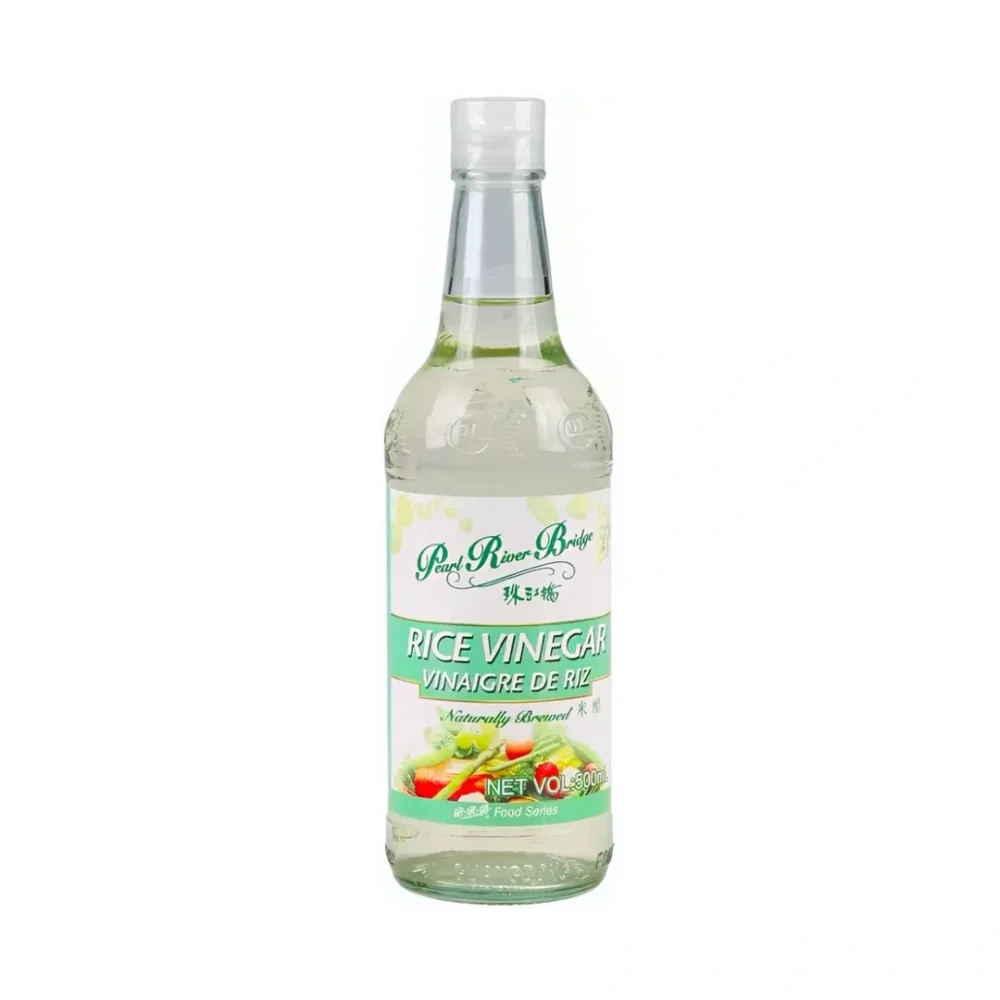
An example of an ingredient often pre-measured and prepared on the side (for sushi rice, dressings, or marinades) is rice vinegar. In practice, this is exactly the kind of ingredient you don’t want to "fish out" in fast cooking when the aromatics in the pan are starting to burn.
If you want to touch on sushi techniques too, it makes sense to continue through the hub Sushi Preparation, because with sushi working accurately (including cutting and sequence of steps) is very clearly demonstrated.
🍜 Dryness, moisture, and surface of the ingredient: when it’s a problem that everything is wet
Cutting is only part of preparation. Equally important is the surface of the ingredient – especially in quick sautéing. Excessive moisture is usually a problem with wok and stir-fry, tofu, mushrooms, meat that is supposed to brown, and vegetables that should stay fresh and not stew.
A frequent beginner's mistake is to throw everything straight into the pan after washing. If you want to really sauté (not stew), it is practical to adopt a simple rule: what should brown must have as dry a surface as possible. On the other hand, for broth bases, stewing, steaming, or ingredients cooked in sauce, moisture usually doesn’t hurt – sometimes it is even desirable.
Most common mistakes in cutting and preparation (and how to fix them quickly)
- All pieces are different sizes. Fix: choose one shape (slices / strips / small cubes) and make it consistent at least for the main ingredient. Uniformity often solves more than "better sauce."
- There are large pieces in the wok that don’t finish cooking in time. Fix: make the cut smaller or split cooking into several short steps (quickly sauté in batches and then combine).
- Aromatics burn. Fix: have them cut and prepared separately and know when to add them to the pan. If they burn repeatedly, it often means the other ingredients are cut too large and need too long in the pan.
- Sauce doesn’t cover food evenly. Fix: prepare sauce separately and add it when the ingredients are mostly done; also watch that pieces aren’t extremely large (then the sauce coats unevenly).
- Everything releases water and stews. Fix: dry ingredients, don’t overload the pan, and think about moisture as part of preparation, not detail.
- Mix-up of "base" and "seasoned product." Fix: read labels and use seasoned sauces/pastes as what they are: more finished flavors that often don’t need aggressive "adjusting."
- Gluten-free cooking: underestimating cross-contact. Fix: if you cook strictly gluten-free, be careful with shared cutting boards, knives and utensils (as well as shared wok/oil). For sensitive groups, relying on impression isn’t enough – the preparation process must also be monitored.
What to take away from the article
- In Asian cooking, often it is not the pan that decides, but the cutting board: size, shape, uniformity, and preparation order.
- Thin and uniform cuts are key for wok and stir-fry; large pieces often lead to stewing instead of sautéing there.
- Cut according to the technique: differently for soup, differently for cold dishes, differently for grilling, and differently for fillings.
- Mise en place (plan + measured ingredients) is a practical tool, not a formality – without it fast dishes lose their rhythm.
- Don’t just focus on cutting but also on surface and moisture: drying off is essential in quick sautéing.

Read next
If you want to explore this topic further, continue with these related blog guides and articles:
